
Complete guide to the history and highlights of Shimazaki Castle | The 33 well-preserved medieval castle forts in the south
Shimasaki Castle is located on the Ichigo Plateau in Ibaraki, Uchibanko City, and was the residence of the Shimasaki clan of the Yasutoshi family in Hitachi Province during the medieval period. From time to time, the castle fort remains, the outer fort, the dry castle Hewa earthworks, etc. are still perfectly preserved, and the history of the medieval castle fort structure is a treasure trove historical site for the study of missionary development. The main text covers the historical background, concrete structure of the fort, and comprehensive explanation of the progress of the castle.
Shimazaki Castle overview and geographical location
Shimasaki Castle location: Shimazu, Ibaraki, Banko City (Hara Shimasaki Village, Furuyakata District). This is a plains castle fortress in Nanbang on the Plateau, approximately 20 meters to 15 meters in distance. It is a key strategic location in the Hitachi Tone River basin near Lake Kasumura, an important strategic location for water traffic.
The Ibaraki castle is designated as a green land protection area, and the local “Imazaki Castle Site Protection Association” will be established in order to maintain the environment. Inside the main shrine is Misa Shrine (also known as Are Shrine), which is a ritual site for local residents.
History of the Shimazaki clan and thirty-three castles in the southern part of Hitachi
Established by the Shimazaki clan and the Hitachi Ogami clan
The Shimazaki clan is a descendant of the famous branch of the Hitachi Ogami clan, and is a powerful family. At the beginning of the history of the modern era, Takamoto, the second son of Nagata Munemoto (Kagemoto), was living here, then renamed to Shimazaki. The first half of Shimazaki Castle was built in the 15th century, and Shigemoto Yushimazaki built it.
Born during the Heian era, the permanent ruler of the Dajo clan was established and the country’s official ruler. The branch families are divided into multiple branches, including Nagata, Rokujima, Asu, Shimazaki’s four great families, and the southern part of Changli. ### Thirty-three castle heads in southern Chenghai Changlu
During the War period, the Shimazaki clan broke away from one of the most powerful clans in the southern part of the country, and became the leader of the “33 castles in the southern part of the country”. Of course, during the reign of the 16th generation Toshimoto Shimazaki, the Shimazaki family was actively involved in military affairs.
Major military activities of the Shimasaki clan:
- 2nd year of the Great War (1522) – Genji Chozan, the lord of Chozan Castle, belonging to the Shimasaki clan, who belonged to the same attack group, and the sako envoy were killed.
- Tenbun 5th year (1536) – Soumoto Tamazukuri of attack.
- Tensho 12 (1584) – Yukimoto Asu, the lord of Asu Castle.
- Conquest of the Rokushima clan – Invasion of the Rokushima clan.
Through all of these small military activities, the Shimazaki clan was established as the most powerful clan in southern Hitachi. The Shimazaki castle was developed, the first troupe was expanded, and the power of the elephants and others was strong. ### The stabbing death of Satake Shimazaki and his family’s destruction
The Shimazaki clan’s prosperity followed the Satake clan’s origin and the end, and the Satake clan’s goal was to become a permanent country. In 1590, the vassal Hideyoshi attacked Odawara, and after the death of the Hojo clan, the state of affairs in the country was changed.
Satake has full control over the country, and each of the 33 strong families in the southern part of the country is under self-restraint. In 1591, Satake’s trust was summoned to the southern part of the 33rd castle, the owner of Ota Castle (currently Ota City), and the group continued to organize and carry out assassinations.
The lord of Shimasaki Castle, Yasutaka Shimasaki, was subsequently assassinated, the Shimasaki clan’s status was overturned, and Joya Shimasaki was killed. This incident was called the “Minami 33 Castles”, and it was the turning point in the history of the Satake clan.
Shimazaki castle structure
Chiropractic defense work
Shimasaki Castle is a flatland castle built on the southern tip of the plateau, which is used by the Ichiza, and is composed of Yuichi-series burial mounds. The castle’s Yusan-za main temple is composed of a narrow north-south long shape. The highland topography makes good use of the land, combines the natural elevation, and the artificial castle is constructed with Hewa earthworks, and is constructed with a solid defense system.
It is a medieval castle fort with a length of 300 meters from north to south of the city, and a distance of 150 meters from east to west. The envoy is still here, and even though it has been a long time ago, it is still perfectly preserved, and the historical site of the envoy was a typical medieval castle fortress structure that people could visit.
Main burial mound (Furuzuka)
First burial mound (main burial mound)
At the southernmost tip of Iyu, this is the main burial mound, which is now the site of the Otaku Shrine. This is the core of the castle, and the residence of the castle lord. Earthworks completed around Yanbun, and defense work completed on Shanpa structure on the south, east, and west three sides.
Second wall
To the north of the first burial mound, there was a long dry river in the depths of the river. The second place was a high-class vassal’s address or an army’s residence.
Third basement
The northernmost point of Yiyu, the back gate of the Fortress of Yuyu. There is also a dry river in the second cave.
Dry river bed
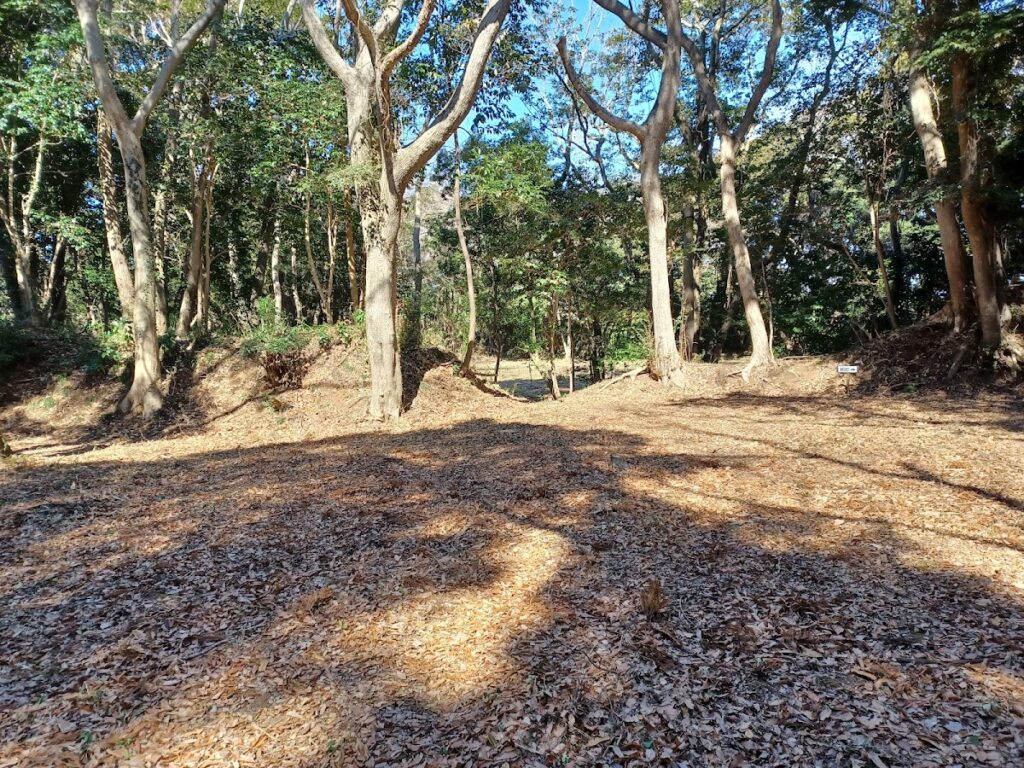
Shimazaki Castle’s greatest bright spot is the river of the river, which is located in every part of the city. Specially, the distance between the first bed and the second bed is about 7-8 meters deep, and about 10 meters long.
The riverbed of the city was flat, and the enemy attacked and destroyed the city. The angle of the bank of the river, the height of the river. Immediately, the envoy was present, and people were walking along the riverbed of the city, and felt a magnificent view of the river in the medieval period.
Hijikata Kogyo Entrance
Earthworks to be carried out around each temple. The idea is that the first fortification and the second fortification should be intersected, and the construction of the 3-4 meter high road is currently on hold, and the advanced fort construction technology will be developed.
Each cap has an entrance (small end), and its non-linear design realizes an enhanced defensive ability and clever structure. Between the first and second roads of the first and second roads, there is a small-scale wall with a special name: umadashi (horse-shaped outer wall), which is used for defense work at the entrance to the industry.
Mitsuda Shrine Yomori-kami
Otatsu Shrine in the burial mound of the emperor, and the guardian deity of Shimazaki Castle, where the capital was served since the first shift. Five ancient mengu were offered at the shrine, and the history of Shimazaki Castle’s history, which was a small and rare item, was presented to the general public.
Old mengu of generation companion:
- Large side
- Koketo
- Kita
- Old man
- Clothing Department
This small old men’s mask was also stamped on the official seal of Shimasaki Castle, and the elephants were conquered and the history and culture of the castle fort.
Shimazaki Castle Ryo Point and Visitor Guide
Main viewpoints
1. Ohori (dry river between the first and second caves)
This is Shimazaki Castle, the oldest building still in existence, with impressive construction. I hope that you will be able to reach the bottom of the castle river, and the talent is truly great. You can take a closer look at the riverbed of the castle’s riverbank, and take a closer look at the defensive works of medieval castle forts.
2. Hijikata process
Each stage of the construction of Hijikata’s engineering engineering exhibition was completed at the time of the advanced civil engineering engineering technology. The first citadel surrounding the citadel’s construction process is particularly well-preserved, the amount of exploration and its high degree of peace, and the scale of the citadel’s construction can be imagined.
3. Clothing Bureau
The three-part communication between the three parties allows you to understand the structure of the citadel. The difference between the height of the base and the height of the Japanese surface is different.
4.Otaku Shrine
The place where the shrine is located is located in the castle’s basement, which is a beautiful place for the history of the castle fortress. A strange story of the Ajishimazaki clan, which is a detailed story of the country’s history in Ning’s quiet and peaceful history.
Traffic Breath
Point: Ibaraki Usa Itako City Shimazu (Hara Shimasaki Village Furuyakata District)
Self-indulgence:
- Departing from East Expressway “Itako IC”, approximately 10 minutes by car
- Providing free parking
Public transportation:
- From JR Kashima Line “Itako Station” seated taxi, about 10 minutes.
- Approximate walking time: 40 minutes
Opening time: Opening all the sky (but please visit at night)
Account viewing time: Approximately 30 minutes to 1 hour (as detailed viewing, construction 1 hour or more time)
Visitor knowledge
- Guide to handicrafts produced by the Shimazaki Castle Ruins Preservation Association (8th issue) At the entrance to the castle fort. If you wish to carry this manual with you, please leave it in a better location.
- Many parts of Yuyu City Fortress are kept in their natural state, and the construction is suitable for walking.
- After rain, the ground may be wet and slippery, so please be careful and safe.
- When you reach the bottom of the river, don’t be afraid to slip.
- If you want to protect the land, please take care of the land construction process or the city river embankment.
How to get castle fort seal
Michi-no-Eki Itako has the seal of Shimazaki Castle. The design of the seal is unique, and the five ancient tools of the Shimazaki Castle guardian deity are the delight of those who love deep castle fortresses.
King point: Itai ancient road no hon
Land site: 1326-1 Maekawa, Ibaraki, Itaiko City
Operating hours: 9:00am – 6:00pm (subject to change)
Activities of the Shimasaki Castle Ruins Preservation Association
The preservation of the Shimazaki Castle Ruins is in good condition, and the “Shimazaki Castle Ruins Preservation Association”, an organization of local volunteers who have not left the area, is constantly working on its preservation.
The group regularly goes to work in peace and cleanliness, and then the environment is different for visitors to visit. In addition, the association will hold local activities such as the “Ushibori Community Center Festival”, exhibits report on the history and activities of the Shimazaki Castle ruins, and strive to promote the construction of the Shimazaki Castle ruins as well as knowledge of the local history, culture, and industry.
The activities of the Shimazaki Castle ruins and the interesting people and advisors association. Participating in the area’s historical activities, General Toshiba has a more in-depth understanding of the history of Shimazaki Castle.
Zhoukan Xiangguan Historical Site
At the same time, when I visited Shimazaki Castle, I visited the historical site of the historical site of the historical site of the historical site of the historical site of the historical site of the Imperial Palace, and I was able to understand the history of the Hitachi National Guard at that time.
Asu Castle Ruins
Asu Castle is the Asu clan’s fortress, and in 1584, it was conquered by the Ushimazaki clan. A branch of the Hitachi Ogami clan – the Asu clan, and the history of the Asu clan.
Shikashima Shrine
Kashima ShrineThe first shrine in Hitachi Province that has been revered since a long time ago. The Shimazaki clan also entered the area of the Shikashima clan, which has a deep history and a deep connection to the Shikashima Shrine area.
Historical ruins of the Yosatake clan
After the death of the Satake clan and the late Shimazaki clan, its location was Ota Castle (located in Hitachita City), the Wasatake clan’s ancestral temple – Seishinji Temple, an important historical site in the history of the Hitachi Kokukoku era.
Shimasaki Castle
Not in Hitachi Province (Ibaraki Prefecture, Itako City), but also in Kai Province (Yamanashi Prefecture, Hokuto City). Shimazaki Castle in Kai Province, also known as “Ooma Tsuda Castle”, was built by Mr. Yuto Kakashi.
In 1582, during the Tenshojin Gogo War, it was constructed and the front line fortress of the Hojo clan was built by the Yotokugawa Shogunate, and finally fell. Unfortunately, the castle fort has the same name, but it is a completely different castle, and the historical background of its builder is also different.
When you are looking for “Shimazaki Castle”, you should be careful about the castle fort. Main text summary: Shimasaki Castle in Ibaraki, Itaya City (Shimasaki Castle in Hitachi Province).
History of Shimazaki Castle
Important historical significance of Shimazaki Castle and other areas:
Preservation of medieval castle fortress heritage
Typical architectural elements of medieval castle forts, such as outer forts, dry castle rivers, earthworks, castle gates and outer forts construction, etc., are perfectly preserved, and are the source of valuable funds for castle fort construction techniques during the study of mission development. In particular, it is a large dry city river, which is an important monument in the medieval castle defense system.
History of Hitachi Province
Mr. Shimazaki was the leader of the thirty-three castles in the south, and his history was very important to understand and the structure of Hitachi’s power during the war. This is a concrete historical example of the region’s history, and the progress of the Satake clan since the comprehensive internal conflict.
Local culture heritage
Outside the castle fort, Shimazaki Castle has a wealth of cultural treasures, such as the old men and women of the Gosuda Shrine. The production of plastics is an important history and history that is important to the body, so it is best to take care of yourself now.
Overview
Shimasaki Castle is a rare medieval castle fortress site in Ibaraki, Kanban Lake City. It was built by the Shimazaki clan, a branch of the Daijo clan, and was the head of thirty-three castles in the south, but in the end, the Satake clan was killed.
The current status of the envoy, the fortifications of Shimazaki Castle, and the construction of Kawa Hijikata in the dry castle are still perfectly preserved, and the history of the envoy is studied and is a treasure trove of medieval castle fortifications. The connection between the first fort and the second fort made a deep impression on the city, and the masterful techniques of medieval fort construction were truly impressive.
The local “Shimazaki Castle Ruins Preservation Association” has been involved in conservation work, and the environment has been prepared for your visit. The history of Ibaraki Castle is interesting, or the visitors visit the castle fortress in the heat of the moment, and the history of the castle is not as good as it was.
Visiting Shimazaki Castle, you can experience the charm of the medieval fortress of Hitachi National War. A few hundred years ago, the life of a samurai lived on a static plateau.
