Complete Guide to Sashiki Castle (Kumamoto Prefecture): History and Highlights of the Stone-Walled Mountain Castle Built by Kato Kiyomasa
Located in Ashikita Town, Ashikita District, Kumamoto Prefecture, Sashiki Castle is known as a stone-walled mountain castle built by the renowned general Kato Kiyomasa. Built on Hanaokayama Mountain, approximately 87 meters above sea level, this castle holds a place in history as a strategic location overlooking the Shiranui Sea and as the site of the “Umekita Rebellion.” Designated a national historic site in 2008, Sashiki Castle is now a historical park. This guide provides a detailed explanation of its charm, from its history and highlights to access information.
History of Sashiki Castle: From Construction to Demolition
Sashiki and the Rule of the Sagara Clan during the Sengoku Period
The area around Hanaokayama Mountain, where Sashiki Castle was built, was under the rule of the Sagara clan during the Sengoku period. Due to its geographical importance along the southern coast of Higo Province, this region was recognized as a military base from an early stage. It was a crucial transportation hub where the Satsuma and Hitoyoshi roads intersected, and Sashiki Port, facing the Shiranui Sea, was also a logistics center.
Construction by Kato Kiyomasa (1588-1592)
In 1588 (Tensho 16), after Toyotomi Hideyoshi’s Kyushu campaign, Kato Kiyomasa was entrusted with the northern half of Higo Province (Northern Higo). Construction of Sashiki Castle began as a “border castle” to defend against the Satsuma and Shimazu clans to the south.
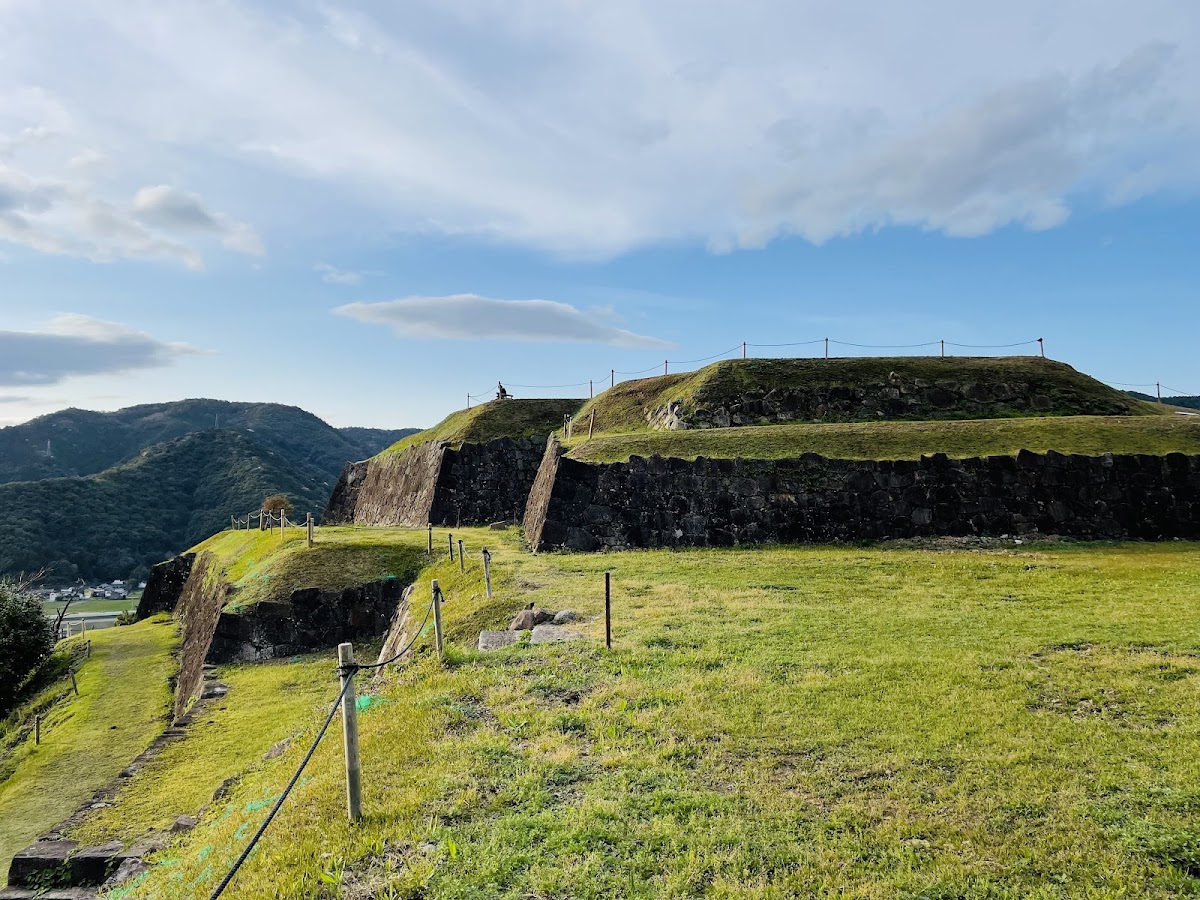
Kiyomasa was a master castle builder known for constructing Kumamoto Castle, and at Sashiki Castle, he employed the advanced technique of total stone wall construction for the time. The structure, with the main keep, second bailey, and third bailey arranged in a stepped fashion, combines defensive and practical design.
There are various theories regarding the construction period, but it is believed to have been completed between 1588 and 1592 (Bunroku 1). This castle was not merely a military facility, but was positioned as a crucial point for Kiyomasa’s southern defense in his domain’s administration.
The Umekita Rebellion and Sashiki Castle (1592)
Sashiki Castle first appears on the historical stage during the “Umekita Rebellion” that occurred in 1592 (Bunroku 1).
Taking advantage of the fact that the Higo provincial lords were in Korea for the Bunroku War (invasion of Korea), Umekita Kunikane and other former Higo provincial lords revolted. Umekita Kunikane occupied Sashiki Castle and rose up in revolt while Kato Kiyomasa was away, but the rebellion was suppressed by Kiyomasa’s retainers.
Although this rebellion ended quickly, it reaffirmed the strategic importance of Sashiki Castle. Even after the rebellion, Sashiki Castle remained under Kiyomasa’s control and continued to function as a base for southern defense.
Demolition under the One Castle Per Province Decree
In 1615 (Genna 1), when the Tokugawa Shogunate issued the One Castle Per Province Decree, Sashiki Castle became subject to demolition. This decree obligated each domain to abandon castles other than their principal residence, leaving only Kumamoto Castle in the Kumamoto domain.
The stone walls of Sashiki Castle were systematically destroyed, and the traces of this demolition, known as “hajō” (demolition), are still clearly visible today. The intentionally collapsed stone walls are valuable historical remains for understanding the demolition techniques of the time.
Furthermore, it is believed that the castle was demolished again after the Shimabara Rebellion in 1638 (Kan’ei 15) by order of the Shogunate, and it is recorded as a castle that underwent demolition twice.
Structure and Features of Sashiki Castle
A Mountain Castle with All-Stone Walls
The most distinctive feature of Sashiki Castle is its all-stone wall construction. The structure, which covers the entire 87.3-meter-high Hanaokayama mountain with stone walls, was a highly advanced technique for its time.
The stonework exhibits the “Kiyomasa-style stonework” technique characteristic of Kato Kiyomasa, and his castle-building philosophy is strongly reflected in the treatment of bends and corners. The stone walls, skillfully constructed using natural stones, maintain their robustness even after more than 400 years.
Arrangement of the Main Bailey, Second Bailey, and Third Bailey
Sashiki Castle has a tiered layout with the main bailey located at the mountaintop, and the second and third baileys arranged in a stepped fashion below.
- Main Bailey: Located at the mountaintop, it is the central part of the castle. Surrounded by high stone walls, this was the most defensible section.
- Ninokuruwa: Located below the main enclosure, it served as living quarters and a logistics center.
- Sannomaru: Extending further down, it formed the outer perimeter of the castle.
This stepped arrangement allowed for effective defense against enemies attacking from below.
Bends in the Stone Walls and Defensive Functions
The stone walls of Sashiki Castle feature numerous bends. This technique, which curves the stone walls rather than creating straight lines, creates blind spots for attackers, allowing for attacks from the flanks.
Kato Kiyomasa also employed this technique, which he frequently used at Kumamoto Castle, at Sashiki Castle, achieving a high level of defensive capability despite its small scale. The bends in the stone walls are an important element demonstrating Kiyomasa’s advanced castle-building skills.
Traces of Demolition
Another important feature of Sashiki Castle is the clear evidence of its demolition under the “One Castle Per Province” decree. The intentionally destroyed stone walls and scattered stones provide valuable archaeological evidence for understanding the castle-demolition techniques of the early Edo period.
Excavation work, which began in 1993, has restored the stone walls in their destroyed state, allowing for a visual understanding of the situation at the time of the castle’s destruction.
Highlights of Sashiki Castle
Restored Stone Walls
Excavation work conducted by Ashikita Town since 1993 has restored the stone walls in their destroyed state under the “One Castle Per Province” decree. The landscape, a mix of destroyed and preserved sections, creates a unique atmosphere not seen at other castle ruins.
The restoration work focused on faithfully recreating the state at the time of destruction, ensuring historical authenticity while maintaining a safe viewing environment for visitors.
Spectacular View from the Main Keep
From the main keep ruins, you can enjoy a panoramic view of the beautiful Shiranui Sea, Sashiki Port, and the mountains stretching towards Hitoyoshi. The panoramic view, which truly conveys the castle’s role as a “watchtower,” is one of the greatest attractions of visiting Sashiki Castle.
On a clear day, you can see as far as the Amakusa Islands, making it immediately clear why this location was considered a strategic stronghold. The castle’s stone walls can also be seen from the platform of Sashiki Station on the Hisatsu Orange Railway, allowing you to enjoy the scenery often referred to as “Kumamoto’s Machu Picchu.”
Observe the Stone Wall Techniques Up Close
Walking through the castle grounds, you can observe Kato Kiyomasa’s stone wall techniques up close. You can closely examine the structure, which represents the pinnacle of castle construction technology, including the skillful combination of natural stones in the nozurazumi (rough stone masonry) method, the sanukizumi (square stone masonry) at the corners, and the bends in the stone walls.
The high stone walls around the main keep are particularly impressive, and it’s astonishing that techniques from over 400 years ago are still functioning today. By comparing the destroyed and remaining sections, you can gain a deeper understanding of the original stone wall structure.
Development as a Historical Park
The Sashiki Castle ruins are currently developed as a historical park, with walking paths and information boards installed. The walking trails around the castle ruins are well-maintained, making it easy for even history novices to visit.
The information boards placed throughout the site provide detailed explanations of the castle’s history, structure, and highlights. Supplementing this information with a smartphone or other device will enhance your understanding.
Access and Visiting Information for Sashiki Castle
Access by Train
It’s approximately a 20-30 minute walk from Sashiki Station on the Hisatsu Orange Railway. You can see the castle’s stone walls from the station platform, allowing you to feel the atmosphere of Sashiki Castle the moment you step off the train.
The path from the station to the castle ruins is a gentle uphill slope, and guide signs are installed along the way, so you won’t get lost.
Access by Car
- Approximately 40 minutes from the Yatsushiro IC on the Kyushu Expressway via National Route 3
- Approximately 10 minutes from the Ashikita IC on the Minami-Kyushu West Bypass Expressway
Parking is available around the castle ruins and is free of charge. However, since the number of spaces is limited, early arrival is recommended on weekends and during peak tourist seasons.
Visiting Hours and Fees
- Visiting Hours: Open all day (however, it is recommended to avoid visiting at night for safety reasons)
- Admission Fee: Free
- Estimated Time Required: Approximately 1-2 hours for a thorough visit
As it is a mountain castle, comfortable clothing and walking shoes are recommended. In summer, don’t forget insect repellent and hydration.
Notes for Visitors
- The stone walls are valuable cultural assets. Please refrain from climbing or moving stones.
- Be careful as the ground can become slippery in rainy weather.
- Take thorough precautions against heatstroke, as temperatures in southern Kumamoto Prefecture are high in the summer.
- Please take all your trash with you.
Nearby Tourist Attractions
Hot Spring Facilities in Ashikita Town
After visiting Sashiki Castle, we recommend relaxing at a hot spring facility in Ashikita Town. The hot springs overlooking the Shiranui Sea are exceptional and will soothe your travel fatigue.
Yunoko Onsen is a hot spring resort facing the Shiranui Sea, with several facilities where you can bathe while enjoying the ocean view. It’s about a 15-minute drive from Sashiki Castle and is a popular spot visited by many tourists as part of a set.
Around Sashiki Port
Sashiki Port has flourished as a key point for maritime transport since ancient times and still functions as a fishing port today. There are markets and restaurants selling fresh seafood, where you can enjoy local cuisine.
Historical and Cultural Facilities of Ashikita Town
Besides Sashiki Castle, Ashikita Town has many other historical sites. The town’s museums display artifacts unearthed from Sashiki Castle and exhibits on local history, allowing visitors to learn more about the region’s history.
The Cultural Value of Sashiki Castle
Significance of National Historic Site Designation
In March 2008 (Heisei 20), the Sashiki Castle ruins were designated a National Historic Site. This was due to the following evaluations:
- A valuable historical site demonstrating Kato Kiyomasa’s castle-building techniques: As a mountain castle with all-stone walls, it clearly preserves Kiyomasa’s castle-building philosophy.
- A rare example of a castle with clearly visible traces of demolition: Important archaeological material for understanding the reality of demolition under the “One Castle Per Province” decree.
- The stage of the historical event known as the Umekita Rebellion: A site that shows political tension in Kyushu under the Toyotomi regime.
- Importance in regional history: A site that shows the transition period from the medieval to the early modern period in southern Higo Province.
Results of the Excavation
Since the discovery of a portion of the stone wall in 1979, full-scale excavation surveys have been conducted since 1993. This investigation revealed the following:
- The overall structure of the castle and the arrangement of each enclosure
- Construction techniques and methods of demolishing the stone walls
- The period of use and living conditions of the castle as seen from excavated artifacts
- Estimation of the castle’s construction date
These research findings have made a significant contribution to the study of castle history from the Sengoku period to the early Edo period.
Recommended Itinerary for Visiting Sashiki Castle
Half-Day Course
Morning: Arrive at Sashiki Station on the Hisatsu Orange Railway → Walk to Sashiki Castle (20-30 minutes) → Visit the castle ruins (1-2 hours)
Afternoon: Seafood lunch near Sashiki Port → Relax at Yunoko Onsen
Full-Day Course
Morning: Visit Sashiki Castle
Afternoon: Ashikita Town Historical Museum → Yunoko Onsen → Drive along the Shiranui Sea coast
Evening: Dinner at a hot spring facility while watching the sunset
Course for History Enthusiasts
A recommended route is to visit castles in southern Higo Province, including Sashiki Castle, Hitoyoshi Castle (the base of the Sagara clan), and Yatsushiro Castle (a branch castle of Kato Kiyomasa). By comparing the characteristics of each castle, you can gain a deeper understanding of the history of this region from the Sengoku period to the Edo period.
Summary: The Charm of Sashiki Castle
Sashiki Castle (Ashikita Town, Kumamoto Prefecture) holds a significant place in the history of Japanese castles as a mountain castle with all-stone walls built by Kato Kiyomasa, and as the site of the Umekita Rebellion.
Main Charms of Sashiki Castle:
- A mountain castle with all-stone walls where you can observe Kato Kiyomasa’s castle-building techniques up close
- Valuable remains with clear traces of destruction due to the “One Castle Per Province” decree
- Spectacular views of the Shiranui Sea from the main keep
- The site of the historical event known as the Umekita Rebellion
- A national historical site that can be visited free of charge
- Easily accessible from the Hisatsu Orange Railway
Built on Hanaokayama Mountain at an altitude of 87 meters, Sashiki Castle was an important military base as a “border castle” to defend against the Satsuma and Shimazu clans. Currently, it is maintained as a historical park, and the destroyed stone walls and restored remains convey the history of over 400 years ago.
When you visit Kumamoto Prefecture, be sure to visit not only Kumamoto Castle, but also Sashiki Castle, another masterpiece by Kato Kiyomasa. Standing atop the stone walls overlooking the Shiranui Sea, you can imagine yourself in the turbulent Sengoku period.
Combining this with the nearby hot springs and local cuisine will make for a fulfilling trip that combines historical exploration with sightseeing. Sashiki Castle, a hidden gem in southern Kumamoto Prefecture, continues to deeply impress visitors.