Otsu Castle History Explanation and Highlights | Mysterious Water Castle in the Movie
Otsu Castle is a castle located on the shores of Lake Biwa in Otsu City. Nowadays, the area between Keihan Lake Biwa and Otsu Station is located in the Chengdu City area, but during the Azuchi-Momoyama period, it was still an important strategic location facing Lake Biwa. That’s right, it was in the war in Hara, and the lord of the castle was Keihong Takashi Station, where there was one Eastern Army, and the success was not successful. Main text details: This is the mysterious water castle, the history of its construction, the current lords of the castle, its current construction, and the most comprehensive plan for Hikone Castle.
Is this Otsu Castle? Overview of a floating castle on Lake Biwa
Otsu Castle Koreichiza Akajo Castle Fort and Water Castle Fort, built by Hideyoshi Yu, a retainer of Yusei, in 1586 (Tensei 14). The current position is Kazuhisa Tomatsu, Otsu City, Keihan Biwako Tomatsu Station.
Features of Water Castle Fort
Otsu Castle’s most notable feature is the waterway transportation around Lake Biwa that has been fully utilized. At that time, the castle tower faced the shore of Lake Biwa, and the lake covered the river. The second and third outer forts are located in the U.S., and the castle tower has been jointly constructed and has one port entrance. Nowadays, the construction of Otsu Port, Ubara Otsu Castle, and the construction of the outer sea, and the extent to which the shoreline of Lake Biwa has been extended in the past.
Strategic importance
The Otsu area has been a thriving “tsu” (port entrance) since ancient times, and is an important center for shipping and shipping of waterways throughout Omi Province. In addition, it is an important base for the transportation of the Hokukokukaido, Tokaido and Watosando, and for the establishment of military missions. Otsu Castle is one of the castle’s fortifications, and it is a safe and secure place to visit Biwa Lake in Echizen Province. Toshin, Souya Zeng is a subsidiary in various parts of Omi Province (places under the direct control of the Hanshin clan).
History of Otsu Castle | History of construction
Osakamoto Castle to Otsu Castle
Before the construction of Otsu Castle, the central castle fort in the area was Sakamoto Castle. Sakamoto Castle was built in 1571, commissioned by Nobunaga Yukita and commissioned by Mitsuhide Akechi. Its purpose is to pass through Kyoto’s Kyoto road (Yamanaka Pass), and to visit Enku Temple and its temple town, Sakamoto.
However, after the change of Honnoji Temple, Sakamoto Castle was built by Hideyoshi, and Otsu Castle was decidedly built. Otsu Castle was built in 1586-1587, left and right, materials from Sakamoto Castle have been in use since then. Since the Otsu Castle location has been selected, the reason is that the Sakamoto Castle has been relocated, and the base has been changed to the Kintokaido-Wanakasendo (Tozando) area.
Early feudal lord built during the Tensho era
The first lord of Otsu Castle was Chokichi Asano (Chomasa Asano), and the last lord of Sakamoto Castle. Chokichi Asano was the chief vassal of Hideyoshi, and later became the fifth generation vassal of Chengdu. Otsu Castle was built and opened as a Japanese castle town by another owner.
After Asano, the castle lord was Nagamori Okada. Nagata Nagamiya was the first-rank vassal with deep pockets, and later became one of Hideyoshi’s five ministers, an important vassal of Otsu Castle.
Kyoto Takaji era and castle pond construction
In 1595 (Fourth year of Bunroku), Takaji Seikatsu of Keikoku became the lord of Otsu Castle. He was a feudal lord with a land of 60,000 koku, and his lawful wife was the first wife of Asai and his younger sister (Kokoin). The progress of the high school Otsu Castle, its construction, its construction, and its fortification functions.
During the period of the imperial rule in Tokyo, Otsu Castle was expanded to include a large fortress with a castle tower, two outer forts, and two outer forts. After the castle was built, the main castle tower was built, and the castle fort was built. The castle town also became an important commercial castle city in Omi Province.
Otsu Castle Battle with Tsubasa no Battle
Kyoto high level decision
In 1600 (the 5th year of the Qing Dynasty), the final battle of the original battle was launched. Takaji Kyoto first belonged to Mitsunari Ishida’s Western Army. However, I thought about other wives and children, younger sister Yodo-dono, and younger sister husband Tokugawa Ieyasu, and others who were finally determined to be cast in the eastern army.
The high level of defense of Otsu Castle, the strategy of taking control, and the main force of the Western Army, the battle of the original war. This is the most important outcome of the final battle.
The end of Otsu Castle Battle
On September 7, 1600, Motoyasu Yumori (a high-ranking vassal of Hidemoto Mori) attacked Otsu Castle with a large army of about 15,000 men led by Muneshige Tachibana of Wasai Army. At Aibinoshita, Otsu Castle’s garrison army had a high ranking of 3,000 people.
The military strength of the military is excellent, and the high level of the military is skillful in the use of the land, and the water of Otsu Castle is outstanding. With Otsu Castle behind and Lake Biwa, it was only possible to attack on this route, and the Western Army was in great disadvantage. A large part of the city was attacked by a large fire, and most of the area around the castle and castle were covered with fire.
Impressions of Surrender and Conquest
On September 15th, at the formal ceremony of the Battle of Kanbara, Otsu Castle surrendered. However, at this time, the main force of the Western Army was at Otsu Castle, and Kanbara no Kagata was without power.
Motoyasu Mori, Muneshige Tachibana, and others participated in the 15,000-strong elite force, and the direction of the battle was completely different. For this reason, the attack on Kyoto High School and Otsu Castle was recognized as a huge contribution to the victory of the eastern army.
After the war, Tokugawa Ieyasu achieved a high level of achievement, earned a salary of 85,000 koku, and was appointed to a small office in Wakasa Province.
The location of Otsu Castle and its former location
Functional skills
After the war of Ibara, Tokugawa Ieyasu Shigege established the ruling system of Omi Province. Others were decided to build a new castle on the shores of Lake Biwa, and Otsu Castle. Zamojo Castle was first constructed in 1601 (6th year of Wucho), and was occupied by Otsu Castle.
Otsu Castle goes deeper into Lake Biwa, and its design makes it stronger as a water castle. Parts of Otsu Castle were constructed using new materials such as stone walls and heavy construction materials.
The truth behind Hikone Castle’s castle tower
The most famous theory of Otsu Castle is that it was covered by the castle tower of Hikone Castle. Since the beginning of the war, the castle tower of Hikone Castle, Awahara Korehara, and the castle tower of Otsu Castle, have been built since then.
Hikone Castle was first constructed in 1606 (Kochō 11) and completed in 1622 (Mina 8). The castle tower has three floors above ground and one below, and is designated as a national treasure. Its construction style was a long time ago, so it was possible to see the castle tower.
However, the details of the castle tower of Otsu Castle, which is not yet in use, are completely original, but it is only a part of the content that has been used, and there is no dispute about its existence. Recent research results indicate that the main structural materials for the castle tower of Hikone Castle can be obtained from Otsu Castle.
Others
The castle tower of Hikone Castle was removed, and the construction of Otsu Castle and other areas was completed. The reason is that Hikone Castle’s Tenbin, Nishinomaru, and Mie Kōya are the same as those of Otsu Castle. In addition to this, the construction of Chikuwa stone tombs, which were used in large quantities by Sekijoya.
Installation: Otsu City’s Kōzaji temple, used by Otsu Castle. This is a rare historical material, and the history of Otsu Castle was revealed during its heyday.
List of lords of Mudai Castle
The lord of Otsu Castle:
1. Asano Chokichi (Asano Chomasa) 1586-1590
The number one lord of Otsu Castle. He was also a vassal of Hideyoshi, who was the vassal of Hideyoshi. Otsu Castle was built by another owner, and the foundations of the castle town were established. Not applicable in other areas, however, may be delegated to other positions or assigned directly to management in important areas.
2. Chomori Okada (1590-1595)
Second lord of Otsu Castle. Chosei Yoasano was one of the top vassals, and the other was the most wealthy vassal. Other details include Otsu Castle, which is a major feature of Omi Province’s government control system. Other than that, the land of Otsu is 200,000 koku.
3. Takatsugu Kyoto (1595-1600)
The third and final lord of Otsu Castle. He is the number one daimyo, with a land of 60,000 koku. The first wife of Asai’s three sisters and younger sister, who is also the first wife of Asai’s three sisters, is also a member of the Eastern Military Forces in the Central Station of the Battle of Yuan. Successfully thwarted the Western Army’s attack and contributed to the Eastern Army’s victory. After the war, the small army of Wakasa Province was visited by other people.
Current state of Otsu Castle | History and history of Otsu Castle
Castle ruins memorial monument and castle ruins
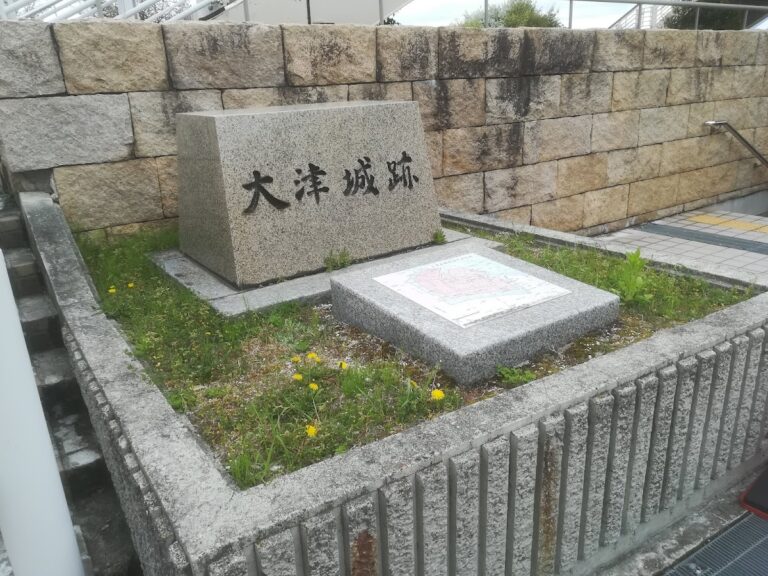
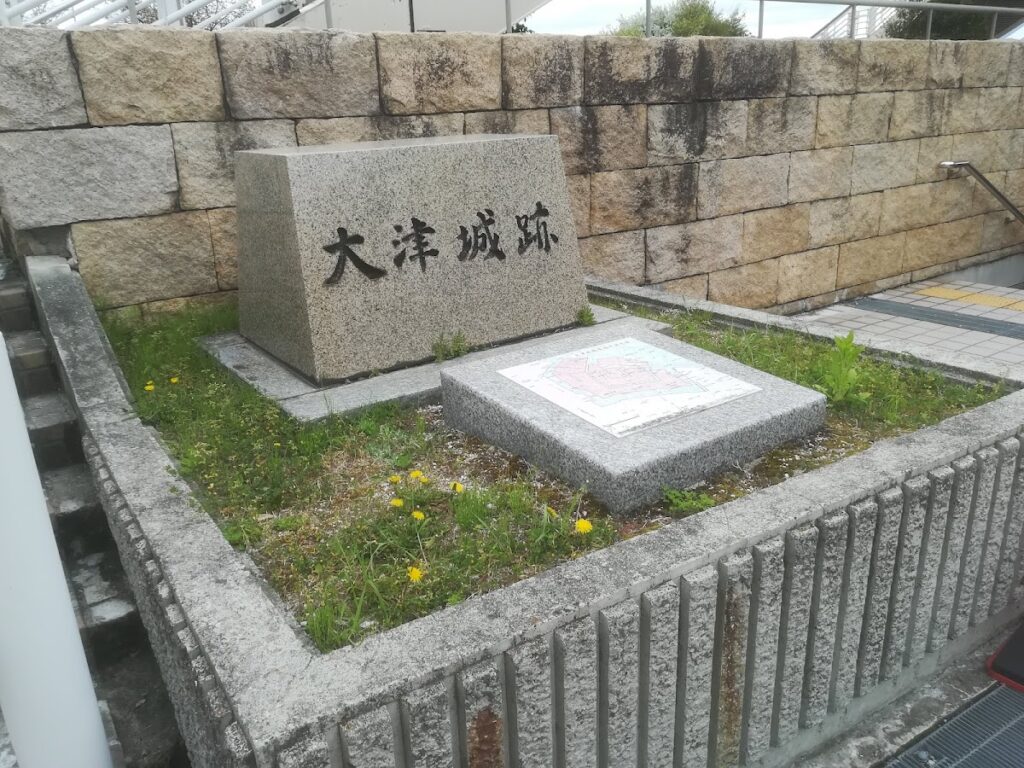
In front of you is the monument commemorating the ruins of Kenyuichiza, the castle ruins of the lord of Otsu Castle. The memorial monument was removed from the Keihan Lake Biwa station, about 1 minute walk from the Otsu station, and was removed from the castle. The area surrounding the memorial monument was completely transformed into a city, and the ground was covered with ashes.
Stone tombs during archaeological excavation
Since the Showa era, Otsu City has carried out numerous archaeological excavations, and the stone tombs of Otsu Castle have been revealed. This small stone burial mound is an important monument, and Otsu Castle is an early modern fort with a complete stone burial mound.
The techniques used to build stone forts in the Azuchi-Momoyama era are now being developed. Part of the original site of the stone burial ground is preserved, and visitors to the public are allowed to visit.
Underground Escape
Archaeological excavations have been carried out, currently within the city area, and there are a lot of monuments buried underground. The ruins of the castle river, the foundations of the stone mounds and buildings are perfectly preserved, the future promising research, and the conservation of the river.
Exhibited at Otsu City Museum of History: A model of Otsu Castle from the excavation results, and the appearance of Otsu Castle in its heyday, as understood by the envoys and visitors.
Castle town ruins
The layout of the castle town of Otsu Castle is located in the middle of the central road of Otsu City, with only a few traces left. In particular, the development of Kyomachi-doriwa Chuo-dori district, which has been observed, reflects the situation of the castle town era.
In addition to this, Otsu Castle Town’s inner-city distribution of Shita-ji temples, and the selection of temple temples are part of the castle town’s defense system. The temple grounds are still perfectly preserved, and the history of the temple is well preserved, as is the history of Otsu Castle.
Otsu Castle and Zhou Tour
Transportation method
Sitting electric car
- 1 minute walk from Keihan Electric Railway Shiyama Sakamoto Line/Keishin Line Biwa Lake Station Otsu Station
- Walk approximately 15 minutes from JR Biwako Line Otsu Station, or sit on the Keihan bus.
Self-indulgence
- Approximately 10 minutes by car from the Otsu Exchange Road on the Yumeishin Expressway
- Parking: Nearby parking lot
Visit Knowledge
Visiting Otsu Castle is free and open for 24 hours. However, if you go to the ground, you should visit the Otsu City Museum of History, and see the original model of Otsu Castle.
The Otsu City Historical Museum has a permanent exhibition of Otsu Castle, exhibits artifacts excavated from the ancient chisel excavation, a model of the castle fort, and other materials related to the role of Otsu Castle during the War of War.
Zhoukan Xiangguan Historical Site
Zamo Castle Ruins
After the construction of Otsu Castle on the site of Zamo Castle. The current work is completed, and some of the stone tombs are still perfectly preserved. Nobuo, the remaining walls of Otsu Castle have been adapted and used for other purposes.
Sakamoto Castle Ruins
The ruins of Sakamoto Castle were Akechi Mitsuhide’s fort, and the predecessor of Otsu Castle. Part of the stone burial mound is currently on hold on the shores of Lake Biwa. It takes about 20 minutes to reach Otsu station by car.
Miidera (Otjoji)
Iyu Otsu Castle Town, this is the main mountain of the Tendai Shinmen sect. Kariya is the number one battle in Otsu Castle. Terauchi’s rare clothing is a national treasure and important cultural item.
Omi Shrine
A shrine dedicated to Emperor Tenchi. On the site of Kenyubara Otsukyo (Kyoto). I understand that this is an important historical site in Otsu.
Otsu Castle restoration research and future prospects
Repair research status
Centered on the Otsu City Historical Museum, research on the restoration of Otsu Castle continues to be carried out. The results of archaeological excavation have been integrated, the history of the historical site has been analyzed, the construction of the city has been studied, and the historical aspect of Otsu Castle has been completed.
Special feature: Research on water level fluctuations in Lake Biwa and shoreline changes, key information provided by General Otsu Castle Heavy Construction and Water Fortress. The topography of the land during the time of the Edo period, the exact location of the castle tower, the exact location of the castle tower, the exact location of the castle tower, and the exact location of the castle tower.
Number correction
In recent years, humans have been experimenting with the use of computer graphics (CG) and virtual reality (VR) technology to digitize Otsu Castle. The appearance of Otsu Castle in its heyday when the envoys were encouraged to consider the development of the system, and the ability of the envoys to travel to the Otsu Castle.
Challenges and opportunities to open history
The Otsu Castle ruins will soon be completely transformed into a castle city, and the historical ruins will be opened on a large scale. However, the efforts of the human race to excavate the archeology and bring together important items are important monuments during the preservation and exhibition period.
In the future, when people want to walk, they can take a trip to the historical site, and when they visit the castle, they can read more about the layout of the city’s fort, and take another trip along the route. In addition, there is a collaboration between the museum and the Otsu City Museum of History, which includes a section on the opening of the “Palace of History Walking”, and a scenic spot for visitors to Otsu Castle.
Overview | History of Otsu Castle
Otsu Castle has been in existence for about 15 years, but it is one of the most important moments in the history of Japan. The position of Omi Province, where the chief minister and vassal Hideyoshi Koji was stationed, and Otsu Castle was in Kyoto and under the defense of Hakuji Castle, which had a significant impact on the end of the war in Takanohara.
At present, a large amount of remains have disappeared above ground, but a large amount of remains have been buried underground, and archaeological excavations are being carried out every time to bring about new developments in the city. Comprehensive construction of Hikone Castle’s castle tower and its interior, the capital is exhibited as a rare historical artifact of Otsu Castle’s ancient Japanese style.
Otsu Castle has many winning characteristics, such as its unique water castle design and clever use of land like Lake Biwa. Waterway transportation; During the time of the Japanese retainers, it was very important to return to work. When you visit Otsu Castle, you will be able to enjoy the detailed taste of the water castle fortress.
The young lecturer is currently in Otsu City’s History Museum and has learned about the history of Otsu Castle, visited the Otsu Castle ruins again, and has a deeper understanding of the history of Otsu Castle. In addition to this, you can also explore other historical sites in the surrounding area, such as the ruins of the castle in Wasakamoto Castle, and the history of castles in Omi Province.