Guidance on the completion of Rukashima Castle (Yonamaru Castle): History of the Shimazu domain residence and detailed explanation of the highlights
Lu’an Island Castle is located in Shiroyama-cho, Lu’an Island City, Lu’an Island City, which is a castle fort during the Edo era, also known as Zion Maru Castle. The total amount of rice in the Kauma domain was 770,000 koku. The lost castle tower, the envoy’s creation, an important history of history, and the unique military strategy of the Shimazu clan.
Luyu Island Castle History
Construction background and Shimazu Iehisa’s construction
Luyushima Castle was first built in 1601 (6th year of the Emperor’s reign), and was built by Iehisa Yushimatsu (the 18th lord of the Shimazu clan, the 1st lord of the Hauma clan). At the time of the movement after the war in the original war, the Shimazu clan’s decision was established and a new era began.
Luyu Island City was built approximately 10 years ago, and the left and right sides were completed in 1611. Its official name is `Luyu Island City'', but the name is also `Yuanmaru City”. The origin of the name Yumaru Castle, however, is universally acknowledged due to its fortress shape and auspicious symbol.
Medieval extension: Yoshiroyama (Kamiyama Castle) series
The main feature of Luyu Island Castle is the medieval Kamiyama Castle ruins located on the castle mountain (107 meters above sea level), which was jointly constructed by the two parties and has an integrated defense system. It was possible to trace back to the Middle Ages, where the mountain base of the mountain was located, and the features of the Warring States period (Warring States period).
The castle was located in the city and was the center of political and administrative power during the peace period. This is the embodiment of the defense philosophy that the Island clan has practiced for many years. ### Residence of Mr. Shimazu for 270 years
Since the construction and construction of Luyu Island Castle in 1601, the residence of the Shimazu clan has been approximately 270 years since the beginning of the Meiji period. During this period, the Suma domain had the highest rice production in the Kyushu region, with a total of 770,000 koku, which played an important role in the development of modern Japan during the post-Koji era period.
The castle was established as a central administrative center for feudal administration, and important political decisions were made here. In particular, during the post-Korean period, under the guidance of the British rulers such as Hisamitsu and others, the Souma clan was led by the Western technology development, and the modernization of the Souma clan was progressed.
Changes from the Meiji era to the new era
After the beginning of the Meiji period, Luyu Island Castle was placed under the control of the new government. However, in 1873 (6th year of the Meiji era), a large fire destroyed the entire main shrine, and many of the main buildings were built inside. The big fire in this area was the most important turning point in the history of Luxun Island City Castle, and the function of the fortification was lost.
After the fire, public facilities such as a museum and other public facilities were built on the original site by the Lugu Island government and are now in direct use. The original appearance of the castle is still intact, and the original appearance of the castle is still intact, and I can imagine the ancient Japanese brilliance of the castle.
Hauma Clan Ran Yokajima Castle
In 1877 (Meiji 10), the explosion of the Kabuma Clan Rebellion resulted in the production of the surrounding area of Rokushima Castle, with deep effects. As Yusaihan’s rise rate increased, the army of the Suma domain and the Luguan Island government station expanded in fierce battles, and the surrounding area of the Luguan Island castle was bombed in a fierce battle.
From time to time, the stone tombs of Luxun Island Castle were still there, and the openings in the Ranma clan’s ruins were recorded. This is a rare cultural relic, and it is a historical story from the end of the Jiang Dynasty to the Meiji period.
Features of Luxian Island City
Simple castle-free plain castle
The most important feature of Lu’an Island Castle is that it has a simple architectural style, and its residence is 770,000 koku (770,000 koku) per year. This is a look at Mr. Shimazu’s “practical but solid” style, with attention to practicality and non-luxury decoration.
Castle fort Yuhonmaru Waninomaru, two temples, and other towers. Various design ideas represent the practicality of the country’s time, and the city’s fortress is suitable for the transition period.
Medieval Zhuzhuang Garden Temple Building
The castle tower was lost, but the temple hall was built inside the castle fort. Due to its small construction, the construction of the medieval castle garden was completed, and at the same time it also had the status of a daimyo palace during the Edo period.
The palace is the main residence, it is also the place for administrative affairs, and the interior has many rooms with different uses. Unfortunately, in 1873 (Meiji 6), there was a huge fire in the U.S., but the current situation was still unclear.
Seishin’s special conquest techniques
The stone mound of the castle tower, Eiwa’s second outer fort, and the surrounding area have been completely preserved, and the historical site of the envoy was a rare treasure, and the construction techniques used at the time of its expansion. It is understood that this small stone tomb construction technique can be used for rough stone masonry to fine stone masonry, and is an important material in the early 17th century stone tomb construction technology.
It is a particularly advantageous idea, the strategic use of the citadel-like land, the fortress-like topography, and the excellent design that is both honorable and defensive, as well as aesthetically pleasing. The remains of the stone tomb were confirmed to have been built by a stone craftsman.
Goro Gate Repair: Japan’s largest castle gate
History of Goro Gate
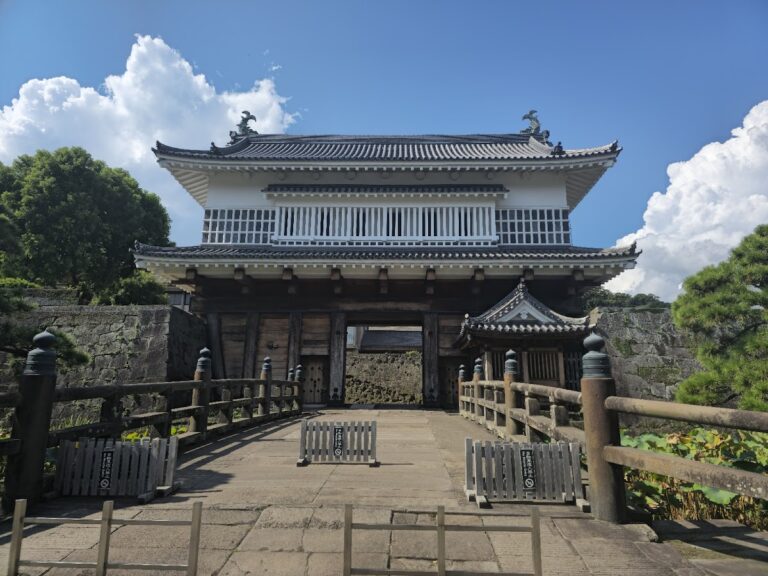
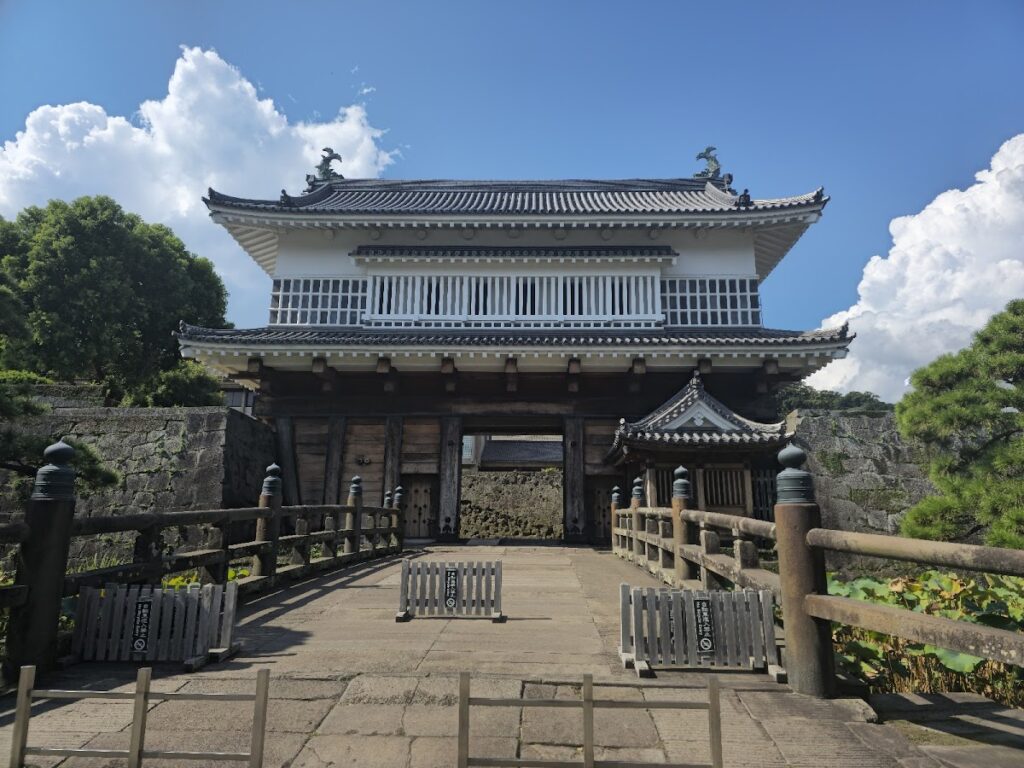
The Goro Gate is the first important building in the history of the self-construction of Luoshima Castle, and it is also the main gate of Luoshima Castle. In 1873 (Meiji 6), there was a huge fire in the Yu area.
The castle gate construction cost is 20 meters, the depth is 10 meters, the height is 20 meters, and the fort construction is mid-range. The castle gate of Luyu Island Castle was lost, and the castle gate of Yuyu was its most important construction, and the majesty of the elephant conqueror.
Repair completed in 2020
140 years since completion, Goro Gate was completed and repaired on March 31, 2020 (Reiwa 2). This restoration process is based on the existing paper, old and new archeology, and the original appearance of the original land is exhaustible.
During the repair process, the construction technique of the wooden structure was used, and the technique of modern craftsmanship was fused. The lumber used is mainly from Japan, and the metal fittings and sills are also produced on a case-by-case basis.
One of the largest castle gates in Japan
After modification, the main gate is currently the largest gate in existence and after modification, it is the largest in size. The grandeur of the show left a serious impression on the audience, and the new wave of the city’s new arrival.
The inner part of the castle gate was opened to the outside, allowing visitors to understand the construction techniques and historical background of Japanese cuisine. In addition, the castle gate and the castle mountain view also provide people with a perfect opportunity to enjoy the scenery of the heavy hot river cruise.
Rui Island Castle Site Liang Point
Traces of the Hauma Domain Rebellion remain on the stone burial mound
A large amount of remains still exist on the stone burial mound at Rokushima Castle, and there are many traces of the ruins of the Hauma domain in 1877. The diameter of the circle was only a few meters, and the dents were clearly visible.
The marks were concentrated on the stone burial ground north of the castle tower, and it was declared that this was the place of great war. This is a story that has been preserved and recorded since the end of the Edo period and the beginning of the Meiji era.
Luyu Island City Beauty Museum Japanese Dawn Museum
Luyun Island City Museum of Fine Arts is currently located in the Luyun Island Castle Site, and major exhibitions include works from the Luyun Island Museum. The original architecture of the museum is a classic example of modern architecture, and a perfect fusion of the scenery of Yoseongbo.
In addition, there is a history of Lume Island, the second outer fort site of Reimei Museum, and visitors can visit here to learn more about the history and culture of the Kabuma clan. The main themes of the exhibition, the comprehensive history of the Shimazu clan, the industry of the Hauma clan, and the events that occurred after the Edo era, during the Meiji era, and into the new era.
History of private school and Takamori Nishino
The history of the surrounding area of Luxian Island and the surrounding area of Xi’an Takamori. The ruins of private schools are the former ruins of the educational institutions of Nishiwan’s rise and rise, and are also the site of the explosion of the Touma Rebellion.
From the top of the stone burial mound to the present, there is a hole in the middle of the battle, and the situation was tense at the time of the call. Nearby, there is a statue of Kazuichi, who was killed during his death in Saitama, in the footsteps of the new heroes of the Meiji period.
Monument to the loyal retainers of the Hauma clan
A memorial monument commemorating the loyal retainers of the Habuma clan is located near the castle ruins. This memorial monument is a monument to the samurai of the Haima clan who made huge sacrifices during the Edo era during the Kiso Mikawa flood prevention project. The dedication of the warriors to public projects and the spirit of selfless dedication of the samurai has been achieved.
Tenshoin Sculpture
Atsushi Tenshoin was the woman who was ranked first in the Hauma clan. It was an active work at the end of the Edo period, and Tokugawa Iesada’s wife and children visited the Irie Castle Palace, which was supported by the Tokugawa family from the Meiji period to the beginning. The statue was located near the ruins of the castle, and was the first place in the castle to be built, and was the first place in the Kyoto Shogunate.
Understood Luxury Island Castle and its Yoshiroyama (Kamiyama Castle Ruins) comprehensive structure
Shiroyama: A solid fortification
It is necessary to understand Luyu Island City, and the castle mountain on the other side (107 meters). This is the site of Kamiyama Castle in the Middle Ages, and the initial design of Kamiyama Castle is a solid fortification for the construction of one seat, and a shelter for feudal owners and their vassals in case of emergency situations.
A bird’s-eye view of Lucheng Mountain and the Jinjiang Bay, an important strategic point for the mission. As of now, the construction of the castle mountain and the upper part of the mountain has been completed, and the observation platform has been opened to provide a comprehensive view of the magnificent scenery within the island.
Mountains and plains double defense system
The defense system of Luxu Island Castle is a double structure: during peacetime, administrative affairs are carried out on the plains under the foot of the mountain; during war, the defense is carried out on the mountain fortress in a solid manner. This is a detailed guide to the medieval defense concept used for castles in the Jiangzhou era.
The details are based on the actual design of the military, and the sense of military strength that has been maintained since the beginning of the Shimazu clan. At the same time, he was able to develop various rational plans, administrative capabilities in peacetime, and defense capabilities in times of crisis.
Luyu Island City: Outer City Systematic Center
Unique defense system of the Hauma clan
A unique defense system built by the Yuma clan, located at the base of the “outer castle system”. Over the years, 113 outer castles (east castles) were built within the domain, and the Shimazu family and their high-ranking vassals were brought in as private landowners (land managers) to directly control the Yushimatsu main family, during which time the domain was completely consolidated and defended.
This is a system that allows military personnel to take advantage of the military’s ability to use and live in the country. Luyu Island City is a big defense system based on guidance.
Yobushimoto Juraku series
Under the overseas castle system, the samurai were formed in various places where they lived, giving them the nickname “Fushimoto” (mountain foothills), which created the unique scenery of the Ibarama clan. It is a small village at the foot of the mountain, a comprehensive village surrounding the city of Lu’an Island, a necessary amount for defense from the capital, and the special feature is that it is a well-organized and exclusive residence for samurai, and the stone wall and the fence are separated.
A group of samurai residences at the time of the arrival of the envoys, the samurai culture at the time of the arrival of the envoys, and the samurai culture of the Ibarama clan.
Transportation and travel information
Basic information
Location: 7-2 Shiroyama-cho, Luyushima City
traffic:
- Walk approximately 5 minutes from the “Municipal Office” train station
- Approximately 7 minutes from the “Suizokuen Entrance” train station
- Approximately 10 minutes from JR Luyu Island Central Station
- Sitting on the bus overlooking the city of Rui Island City, there is a “Memorial Monument to the Masters of Busma”.
Opening time: Opening the main gate 24 hours, offering external viewing (internal opening time changes depending on the season)
Gateway: Exemption fee for visiting the fort (includes fees for visiting Dawn Hall, etc.)
Car stop: Vehicle parking area nearby
Zhoukan tourism scenic spot
There are many sightseeing spots in the surrounding area of Luyu Island City, many sightseeing spots in the area, and many tourist attractions and culture. You can easily walk to the statue of Saihan Takamori, Terukuni Shrine Wasen Rock Garden (矶园), and quickly understand the history of Luen Island.
In addition, you can walk or sit at the Ocheng Mountain Observation Deck, where you can enjoy the magnificent view of Jinjiang Bay on the island. A comprehensive itinerary that includes a tour of nearby entertainment and shopping streets, dining, Japanese shopping, and more.
Recommended light route
After passing through the highly effective land, the castle was built, and the heavy construction was carried out before entering the main gate. After that, the recommended route was to understand the history of the Soma domain, which was located in the early morning, and then to see the history of the old Japanese private school and the history of Nishinata Takamori.
How long does it take to enjoy time, how long is the castle mountain observatory, and how can you experience the island’s castle, how can the mountains and hills be integrated, and is a complete defense system. Visiting the area around the city gate takes about 30 minutes, and if you want to see the surrounding history, it will take about 2-3 minutes.
Luxun Island City Cultural Market
Selection of Japan’s 100 Famous Castles
Luyu Island Castle was chosen as one of Japan’s 100 most famous castles by the Japan Castle Fortress Association (ranked 97th in the ranking). The castle tower was destroyed by the control of Rokujima Castle, but the historical meaning of the castle was extraordinary. For 270 years, its unique defensive philosophy was also present during the construction of the castle, and its development became an important stage in the Meiji period.
The memorial ticket for “Japan’s 100 Famous Castles” is Yulu Island’s historic museum “Reiming Hall”, a hot entrance scenic spot for those who love the castle fortress. ### Historical cultural heritage of the Hema clan
The castle is not a castle, but it is also an important cultural legacy, and the history and culture of the Suma clan is now on full display. The Yujimazu family’s private spirit, unique castle management system, innovative efforts in the new Meiji era, and the important developments of the Meiji era–the Fuuma Rebellion, the beginning of Rokushima Castle, which was an important stage in the history of Japan.
After the reform, the main gate was conquered and the history was changed, and the generals accepted the new culture.
Debut of the Yoshimatsu clan
History of Shimazu clan Yoshikashima Castle
The Shimazu family was one of Japan’s most famous feudal lords, having lived for about 700 years in the Meiji and Hyuga provinces. During the Jiang Era, it was built in 270 years and was the residence of the Shimazu clan, and was acclaimed as the masterpiece of the Shimazu clan’s history.
Of course, in the post-Jiang period, the development of Japan’s modernization was very important, for example, the development of the capital, the development of the city, and the establishment of the city of Luxembourg were important points. A key figure in the Meiji era was Takamori Saito, Toshimichi Okubo, and the establishment of this castle town.
The spirit of Haguma is here now
The culture of the samurai warriors in Toma, which was introduced to the castle on the island of Luka, has continued since the arrival of the castle on the island of Luka. The unique “Five Middle School Education” education system, from the spirit of worship and simplicity to the spirit of development, is an important component of the same understanding of people’s bodies.
After the reform, the main gate has been changed, and the new spiritual concept has been conquered.
overview
Rokujima Castle (Yonamaru Castle) had no castle tower, but had 770,000 koku of land, was the residence of the Haima clan, had important historical significance, and had been the residence of the Haima clan for 270 years. The castle was first built in 1601 by Iehisa Yushimatsu, and its unique defense system was integrated with the mountain hills on both sides (the location of Kamiyama Castle).
The main building was established in 1873, and the main gate was renovated in 2020. It is a new tourist attraction in Chengdu. This is the best place in history from the end of the Edo era to the end of the Meiji period to the end of the Meiji period, when the Shouma clan revolt occurred on the stone burial ground, and the history of Nishi-no-Takamori was intertwined.
The construction of Rokushima Castle was the structural center of the outer castles of the Hauma domain, the unique administrative system of the branch, and the development of modern Japan during the Meiji period. It is one of the top 100 famous castles in Japan because of its history and culture. As you can see, you will be able to visit Lugu Island, the historical fort of eternal history, and feel the history of the samurai’s life.