Complete guide to the history of Komyoji Castle and all the good points | Complete story of Nobunaga Soda’s conquest of Miho’s base
Guangmyoji Castle is a castle fortress during the war period, and the main residence of Guangmyoji Temple in Ichimachi City, Yuanji. It is the northernmost point of the province of Yuwei, and is the key strategic point of the conquest of Meihong. However, I understand that it is not possible to make this work, but it is a historical site that is impossible to reach in Japan, but from the perspective of a history lover.
Komyoji Castle overview and geographical location
Guangmyoji Castle was located in Yuwei, a strategic strategic point in the international communication world, and was very important for the conquest of Meiyuan, who was the commander of the city.
Castle Fort Basic Information
- Location: Honguyashiki, Guangmyoji District, Erzhiguan City
- Construction date: Early Eiroku era (approximately 1560)
- Constructor: God Guard
- 废弃年份: Eiroku 12th year (1569)
- Castle Fortress Structure: Plain Castle
- Main owner: Shinkoho Hokushi, Yamada Hanbeiha
Battle strategy
Komyoji Castle is located at the northernmost tip of Ubi Province, and is located near the Kiso River and Yomiho Province. The demand for Nobunaga Qiang has been established in the area, and the talented Mr. Saito has conquered the area. The road leading to and from Guangmyoji Castle was also an important security base at that time.
History of Komyoji Castle
Construction background and Shinko Hakikami
Komyoji Castle was built in the Eiroku era, when Nobunaga’s vassal Shinko Hokikami built it. He was born in a powerful local family in the country of Yu, and was a very effective man under the command of Yutian Shinlong.
The owner of the castle was the owner of the castle, and the owner of the castle was the owner of the castle. In addition, Komyoji Temple was established, and Nobunaga Soda served as an advisor to the conquering country.
The effect of conquering beauty in the country
In the 16th century and the 1960s, a fierce war ensued between Nobunaga Ida and the Saito clan in the country. During the battle during the conquest, Komyoji Castle played an important front line base. During the course of the operation of the army, it is a gathering place, and it is also a counter-offensive defense fortress. ### The death of Kōki no Mori and the replacement of the castle lord
In 1569 (12th year of the Eiroku era), Nobunaga no Mikoto, who served as the governor of Kamiko, attacked Okochi Castle in Ikuri Province as a counselor. Okochi Castle is the residence of Tomoaki Kitabatake, the governor of the country, and his son Tomonori Kitabatake, and is also the key to the invasion of Japan by Nobunaga Kitabatake.
During a night battle at Okochi Castle, the guardian of the sacred warship passed away. Written by Yusei Yong, another’s sacrifice was a huge loss.
Yamada Hanbai’s ascension
After the death of Shinko Hokishu, Nobunaga Sota’s military commander, Yamada Hansei, became the lord of Komyoji Castle. The department is Nobunaga Ta’s elite training department, and he is in charge of the samurai homeroom.
In the 12th year of the Eiroku era (1568), when Yamada Hanbei arrived in the country, Taira no Sadabi was established, and Ashikaga and Shoichi also moved to Kyoto. After the mission of conquest and conquest of Komyo-ji Temple, it was installed in the same year or the following year.
Cause
Komyoji Castle was occupied in such a short period of time, which is why the conquest of the city was completed. In 1567, Nobunaga Ida conquered Kanoyama Castle (later known as Gifu Castle), and Shobi-Han entered the country completely. After the destruction of Komyoji Castle, the northernmost front line fortification of the country was attacked.
Nobunaga Ida is a military commander who is highly effective in managing the land, and is a fort that is not in demand. The Komyoji castle service is the first of its kind, and its existence has been declared insufficient for 10 years.
Komyoji Castle Summary
Komyoji Castle is a typical plains castle fort. Although I have no detailed information about the layout of the country, I can refer to it as a reference, but I can’t help but deduce the universal structure of the plains fortress at the time.
Fortress Special Expedition
During the war, the plains fortifications were usually more extensive than the river surroundings, and the fortifications were strengthened over the land. The structure is similar to that of Komyoji Castle. Fengyu’s work was a conquest of Meihan’s national front line base, and the statue was a moving military base, and a large fort.
Castle town appearance
A story about the people living in the castle town, Komyoji Castle is a small castle town. However, the construction of the castle was not completed ten years later, so it was not possible to build a large castle.
Current status of Komyoji Castle ruins
Existence
In front of us, the surrounding area of Guangmyoji Castle ruins has been fully developed, the residential area, the Chongcheng River, the Hijikata construction site, etc. have existed for a long time. As the city of Yuyu progressed, traces of the fortress appeared in the topography of the city.
Komyoji Castle Memorial Monument and Information Plate
Approximately 150 meters north of Komyoji Temple Children’s Park, one stone monument at the end of the road, a Japanese information tablet, with the title “Komyoji Castle Ruins” on the top. This is the only existing Noh expression at Komyoji Castle.
The memorial monument records the history of Komyoji Castle, which is an important place in the history of the country when Nobunaga conquered the city.
Zhoukan environment
The castle ruins memorial monument is surrounded by a quiet residential area, a ruined castle fort during the days of the Japanese Empire. However, if you don’t walk far, you can see the flowing water of the Kiso River, and if you feel the truth, you will be located in the geographical location of the international exchange world.
Komyoji Castle Ryoten
Guangming Temple does not exist in front of the castle, but it is still an important historical site, and the surrounding area also has many scenic spots to visit.
Komyoji Castle Ruin Memorial Monument Historical Exploration
It is understood that the Komyoji Castle Ruins Memorial Monument marks the historical demise of the area. The information plaque records the progress of the construction of Komyoji Castle by Shinko Hokishu, and the progress of Yamada Hanwari’s entry into the castle and the place where Hokishu was killed. On the small stone monument of this place, it is possible to imagine the image of a Japanese chef.
Zhoukuan Historical Scenic Spot
The history of Komyoji Castle and the surrounding area of Shintaro Tanaka. Ichimiya city also has other historical castle forts and temples, and the generals visit together to understand the historical history of the war in the area.
138 pagoda park view
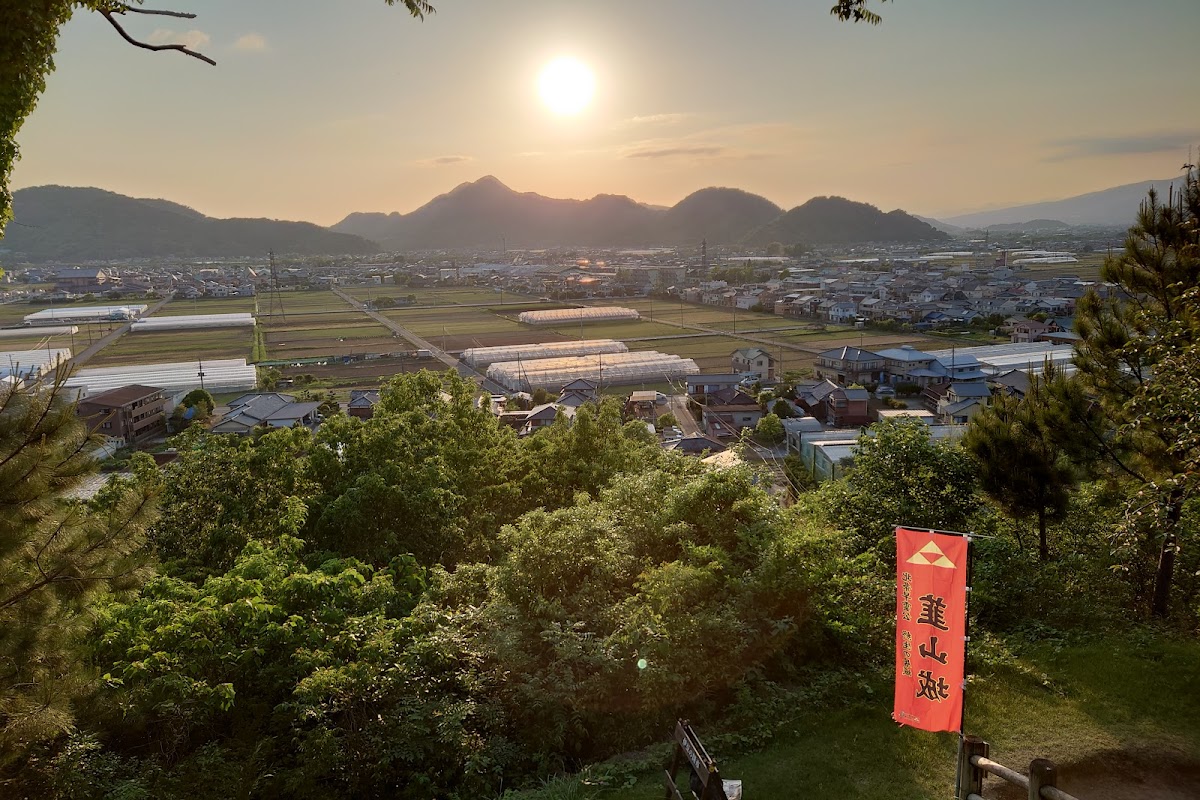
A panoramic view of the nearby 138 pagoda park, the Kiso River and the plains. A bird’s-eye view of the ruins of Guangmyoji Castle, you can see the strategic importance of the fort in the international communication world.
Transportation
Below is the detailed route of the former Komyoji Castle ruins.
Public transportation
Ride on a bicycle/Hashi
- Take a train down the Haiming Station on the famous railway line, and the journey is approximately 20 minutes.
- 您也可以从JR Tokaido Main Line’s tailgate station or famous railway Nagoya Main Line’s famous railway station.
- The public bus “i-Bus” is also available.
Selfishness
From the main road
- Exit the Ichinomiya IC on the Meishin Expressway, and it will take approximately 15 minutes to arrive.
- Exit from Kisochuan IC on the East Coast Expressway, approximately 10 minutes by car.
- National Highway No. 22 is prohibited.
Car stop information
- A private parking lot surrounding the ruins of Komyoji Castle.
- There is a parking lot near the construction site or 138 Tower Park parking lot (free of charge).
地址和地图
Komyoji Castle Ruins Location
- Komyojibo Book House, Yizhiku City
- I went to Guangmyoji Temple Children’s Park and traveled north for about 150 meters.
Tour guide
Notes
Visit the main contents of the castle ruins of Komyoji Temple: see the stone monuments and Japanese information tiles. It takes about 15 minutes to view the book, but it takes about 30 minutes left and right to explore the area around you.
Recommended tour time
I have visited Komyoji Castle ruins for a year and four seasons, but here are the recommended times:
- Spring season (March to May): Heavenly weather, very suitable man walking.
- Autumn season (October to November): The best time to enjoy autumn leaves.
- Winter season (December to February): Fresh air and spectacular views of the Kiso River.
Driving precautions
- Guangmyoji Castle Site Surrounding District, please be careful and rest.
- If you don’t have a car, please stop by the road.
- Summer shielding is low, construction hats or shielding.
- Please write down the contents of the information board and refer to it later.
Zhoujian scenic spot
Below are some of the memorable surrounding views that can be seen when visiting Komyoji Castle.
138 Tower Park
The park is located on the Kiso River coast, and has 138 American twin gates. A panoramic view of the Wakomyoji Castle ruins on the viewing platform. Flowers are available at the park entrance.
Kiso River Momoka
In the spring, about 400 lilies were planted on the banks of the Kiso River, and the envoy was established as one of Japan’s “100 great lilies”. You can enjoy the beautiful scenery of Kiso River. In the same year, when Nobunaga Qiang conquered Meihuan, he also passed the river.
Ichigo City Museum
Learn about the history and culture of Ichimiya City. Inside the hall, there is an exhibition of the historical district of Kokumyoji Castle, and a deeper understanding of the historical background of Komyoji Castle.
Masumida Shrine
This is the first shrine in the country, and the surname of Ichimyo City is also here. Since ancient times, it has been the center of faith in one area, and has been established as a place of worship for many years.
Komyoji Castle and Nobunaga Conquering Miho
You need to understand the history of Komyoji Castle, and you need to understand the strategy of Nobunaga’s conquest of the country.
Background of Conquest Beauty
His father was born at the time of Nobuhide Akuta, and Nobunaga Akuta took over and left the Hito clan in the country of Liangzi. At the beginning, other problems were encountered, however, the situation was reversed when it started in 1564.
Other clever use of the land led to internal divisions within the Saito clan, which resulted in multiple strategies, including Yukinoshita Tokichiro (later his successor, Hideyoshi), who built a castle overnight, and then later conquered the city. During one series of battles, the construction of Komyoji Castle and the construction of bases in the north played an important role.
Komyoji Castle positioning
The following costumes are played during the conquest of Miho by Nobunaga Kuta while staying at Komyoji Castle:
- Forward base: Military base
- Link base: Security network safety
- Defense base: Defense of the defense base
- Information Collection: Viewing Meihong’s Internal Bureaucracy Exhibition
Pingding Meihuan’s transformation
In 1567 (Ei 60), Nobunaga Ida attacked and conquered Kanoyama Castle, and the name was changed to Gifu Castle, which was established and restrained by the country. At this time, the strategy of Komyoji Castle decreased significantly, and the direction of the battle decreased.
Kamiko Hokikami Wayamada Hanwei
Please understand that I have come here to investigate the history of Komyoji Castle.
Shinko Hokimori Summary
He was a samurai of the Shinko clan and a vassal of Nobunaga. In addition to his wisdom and courage, he is also well-known and deeply loved as a benevolent monarch.
After the construction of Komyoji Castle, the conquest of the province by the advisor, Tokiya Shikoku, who was in charge of the castle at the same time, and the security of the peasants within the castle were in jeopardy. In 1569, during the Battle of Okochi Castle, the army died, a huge loss.
Written by Yamada Hanbei
Yamada Hanbai is a member of Nobunaga Kuda’s military. Yamada Hanwari is the elite force of Nobunaga Tada, and is the only one with the honorable rank of being in charge of a small number of talented samurai.
After the death of Kōmyoji Hokishu, Yamada Han was appointed as the lord of Komyoji Castle, but at this time the conquest of the country was completed, and Komyoji Castle was transferred to Kōmyoji Castle. The historical records of Yamada Han’s activities after he was defeated are very small, and the specific circumstances are unknown.
History of Guangmyoji Castle
Nobunaga Shirota’s Shiroike Strategy
Komyoji Castle is a standard for the management of the castle pond and Shintian Shinlong. There are other places where the city is located, where the city is built in a timely manner, and after its use is completed, it is not released on the land. A variety of highly effective strategies can be used to support fast and effective strategies.
Position in local history
In the history of Ichigo City, Komyoji Castle was an important historical site during the Warring States period. However, it is still possible for the exhibition to be completed, and the presence of Nobuaki Tada in the castle pond is an important part of the performance of the Japanese military commander.
Castle Fortress Research Center
After the construction of Guangmyoji Castle, it was not long after its construction, and this is a valuable example of a functional fort during the war. A typical example of a military troupe with a specific military purpose, non-production, permanent restraint base, and a built fort, which is of great significance during historical research.
overview
Guangmyoji Castle was built in the early Eiroku era, and was an important military strategic point for the country. At the northernmost tip of the province of Yanwei, it is Meihuan’s fortress fortress. However, the result was that Miho was pacified, Komyoji Castle was not built, and it took 10 years for the castle to be built.
However, the castle’s fort remains unaltered, but the memorial monument at the site of the castle’s fort is still in its place. The work was divine, the wisdom of war, the loyalty of Yamada, and the military loyalty of Yamada. Since then, Nobunaga’s reason for military strategy and exchange, Komyoji Castle occupied an important position in the history of Japan’s war period.
In front of the small castle fortress memorial monument, in front of the small castle ruins monument, in front of the small and small castle fortress ruins, a Japanese-style restaurant. A stone monument in the middle of the residential area, standing calm and quiet, and a history of the history of the country’s history.