Iigaki Castle (Wakayama Prefecture) Complete Guide: A Thorough Explanation of History, Remains, and Access
What is Iigaki Castle?
Iigaki Castle is a medieval mountain castle located in Chikatsuyu, Nakabeji-cho, Tanabe City, Wakayama Prefecture. Built in the mountainous region of Kii Province, this castle held a strategically important position as a key point along the Kumano Kodo pilgrimage route.
Currently, as a mountain castle site with surviving remains, it attracts attention from castle enthusiasts and history buffs. Built on a mountaintop approximately 400 meters above sea level, it is a typical medieval mountain castle characterized by its layout that skillfully utilizes the natural terrain.
Basic Information on Iigaki Castle
- Location: Chikatsuyu, Nakabeji-cho, Tanabe City, Wakayama Prefecture
- Castle Structure: Mountain Castle
- Construction Period: Sengoku period (around the 16th century)
- Builder: Believed to be the Iigaki clan
- Main Lords: Iigaki clan
- Year of Abandonment: Unknown (estimated to be the end of the Sengoku period)
- Remains: Enclosures, moats, earthworks, etc.
- Designated Cultural Property: Not designated
History of Iigaki Castle
Background and Era of Construction
Iigaki Castle is believed to have been built during the Sengoku period. At that time, Kii Province was an important region through which the Kumano Kodo, a pilgrimage route to the Kumano Sanzan shrines, passed. To control this region, local powerful families built mountain castles in various locations to maintain their power.
The Iigaki clan, believed to be the builders of Iigaki Castle, was a powerful local family in this region. By controlling key points along the Kumano Kodo pilgrimage route, it is believed that Iigaki Castle played a role in monitoring traffic, collecting taxes, and serving as a military defense base.
The Sengoku Period in Kii Province
During the Sengoku period, Kii Province was a region where various forces, such as the Hatakeyama clan, Negoro clan, and Saika clan, were intricately intertwined. It is presumed that Iigaki Castle functioned as a regional defense base within this complex regional situation.
Especially in the latter half of the 16th century, with the expansion of Oda Nobunaga’s power, Kii Province was engulfed in the waves of war. During Toyotomi Hideyoshi’s conquest of Kii Province in 1585 (Tensho 13), many castles within Kii were captured, and it is highly likely that Iigaki Castle was abandoned around this time.
About the Iigaki Clan
Historical records concerning the Iigaki clan are limited, but tradition remains that they were local powerful families who controlled the area around Chikatsuyu. During the peak of the Kumano pilgrimage, they may have been involved in ensuring the safety of pilgrims and managing accommodation facilities.
Along the Kumano Kodo pilgrimage route in the Middle Ages, small local lords established bases in various locations and exercised regional control. The Iigaki clan is believed to have played an important role in the history of this region as one such clan.
Layout and Structure of Iigaki Castle
Location and Utilization of Topography
Iigaki Castle was built on a mountaintop approximately 400 meters above sea level, boasting an excellent location with panoramic views. It is a medium-sized mountain castle, characterized by a layout that makes maximum use of the natural terrain.
The terrain, surrounded by steep slopes, functioned as a natural defensive structure, making enemy intrusion difficult. The arrangement of baileys utilizing the ridgeline is a typical technique of medieval mountain castles, efficiently utilizing limited flat land.
Main Enclosure (Honmaru)
The main enclosure, the heart of the castle, is located at the highest point of the mountaintop. A relatively large flat area is secured here, and it is presumed that the lord’s residence and important facilities were located here.
Traces of earthworks can be seen around the main enclosure, indicating that defensive structures were in place. Furthermore, the main enclosure offered excellent views of the surrounding area, serving as a lookout post for early detection of enemy movements.
Arrangement of Enclosures
Several enclosures are arranged in a stepped pattern around the main enclosure. These enclosures are thought to have been used as troop encampments and storage areas for supplies.
By utilizing the elevation differences between the enclosures, the structure allowed for defense from higher enclosures to lower ones, creating an efficient defensive system.
Moats and Defensive Structures
Multiple moats blocking the ridgeline can be observed. Moats were crucial defensive structures preventing enemy intrusion, serving to halt attacks along the ridge.
In particular, double and triple moats were constructed towards the main entrance, indicating a strong defensive system against frontal attacks.
Vertical Moats and Cut Slopes
Traces of vertical moats remain on the slopes. Vertical moats are defensive structures designed to restrict the movement of enemies climbing the slopes and make lateral movement difficult.
Furthermore, cut slopes (artificially carved steep slopes) were constructed along the edges of the enclosures, a measure taken to further hinder enemy intrusion.
Remains of Iigaki Castle
Condition of Existing Remains
The remains of Iigaki Castle remain in relatively good condition even more than 400 years after its abandonment. Because it is covered with trees, it appears at first glance to be a natural terrain, but careful observation reveals traces of artificial processing in many places.
Traces of Earthworks
Traces of earthworks remain around the main enclosure and each of the enclosures. Although the original height has been lost due to weathering and collapse, the arrangement pattern of the earthworks allows us to understand the castle’s defensive plan.
Presence or Absence of Stone Walls
No large-scale stone walls have been confirmed at Iigaki Castle. This is common for mountain castles of the Sengoku period, indicating that castles in this region were primarily constructed using civil engineering for defensive purposes.
However, it is possible that some stone walls utilizing natural stones, or the arrangement of stones around the entrance (koguchi), may be found.
Well Sites and Water Sources
Securing a water source was a matter of life and death for mountain castles. It is presumed that there were wells or springs within or near Iigaki Castle, but no remains that can be clearly identified as well sites have been reported.
Iigaki Castle and the Kumano Kodo
Relationship with the Kumano Kodo
Nakabeji-cho, Tanabe City, where Iigaki Castle is located, is an important point along the Nakabeji route of the Kumano Kodo. Chikatsuyu was the location of an important shrine called “Chikatsuyu Oji” and was also a major lodging place for pilgrims on the Kumano pilgrimage.
Iigaki Castle, situated overlooking the Kumano Kodo pilgrimage route, is believed to have played a crucial role in monitoring and defending the road. It likely had multifaceted functions, including ensuring the safety of pilgrims on the Kumano route and monitoring military activities along the route.
Medieval Transportation and Castles
In the medieval period, strategically placing castles along major roads was a vital control strategy for feudal lords. Mountain castles overlooking the roads were ideal bases for collecting taxes from travelers and monitoring the movements of enemy forces.
Iigaki Castle is thought to have been built as part of this strategic placement and functioned as a base for regional control.
Highlights of Iigaki Castle
Layout and Design of Enclosures
For castle enthusiasts, the greatest highlight is undoubtedly the layout of the castle. The skillful use of terrain in the placement of enclosures and the establishment of defensive lines using moats allow for firsthand observation of Sengoku period castle construction techniques.
The Power of the Moat
The moat, especially the one cutting across the ridge, is a relic that truly conveys the scale of the civil engineering work of the time. Standing at the bottom of the deeply excavated moat, you can feel firsthand the effort and ingenuity required to prevent enemy intrusion.
Harmony with Nature
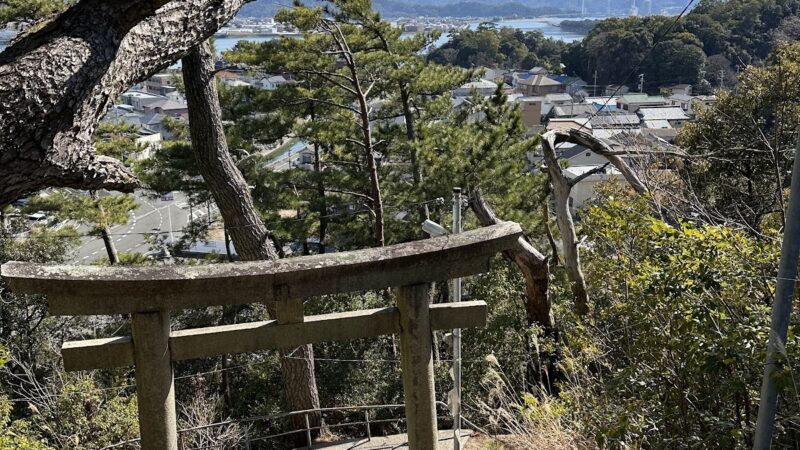
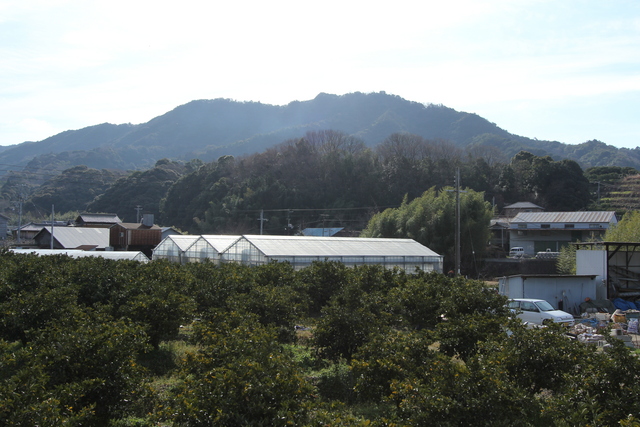
The current Iigaki Castle ruins are surrounded by abundant nature. You can enjoy the beautiful scenery of each season, from the fresh greenery in spring to the vibrant autumn leaves. A visit combining historical exploration and hiking is possible.
Views
The views from the mountaintop are also a highlight. You can overlook the surrounding mountains and valleys, and truly understand why the castle was built in this location.
Access to Iigaki Castle
Using Public Transportation
Nearest Station: JR Kisei Main Line “Kii-Tanabe Station”
- Take the Ryujin Bus bound for “Hongu Taisha” from Kii-Tanabe Station
- Get off at the “Chikatsuyu” bus stop (approximately 50 minutes)
- Walk from the bus stop to the trailhead (approximately 15 minutes)
- Walk approximately 30-40 minutes from the trailhead to the castle ruins
Notes:
- Bus service is limited, so please check the timetable in advance.
- Be sure to check the return bus schedule as well.
Using a Car
Route:
- Approximately 40 minutes from Hanwa Expressway “Kamitonda IC” via National Route 42 and National Route 311
- Or approximately 40 minutes from Kisei Expressway “Nanki-Tanabe IC” via National Route 42 and National Route 311
Parking:
- There is a public parking lot in the Chikatsuyu area (for Kumano Kodo hikers).
- There is no dedicated parking lot for the castle ruins, so please use the parking lot in Chikatsuyu.
From the trailhead to the castle ruins
There may not be a clearly defined hiking trail to the Iigaki Castle ruins. Please note the following before your visit:
- Check the latest information at the local tourist information center or Tanabe City Hall.
- Wear appropriate hiking gear (trekking shoes, long-sleeved shirt and long pants, hat, etc.).
- Bring a map and compass, or a smartphone with GPS functionality.
- Bring drinking water and emergency food.
- Bring insect repellent (especially in summer).
Estimated Time Required
- From the trailhead to the castle ruins: 30-40 minutes one way.
- Visiting the castle ruins: 30 minutes to 1 hour.
- Descent: Approximately 30 minutes.
- Total: Approximately 2-3 hours.
Precautions When Visiting Iigaki Castle
Safety Precautions
- Avoid traveling alone: Visit in groups whenever possible.
- Check the weather: It is slippery and dangerous in rainy weather or after rain.
- Descent before sunset: It is extremely dangerous to be in the mountains after dark.
- Cell phone signal: There are areas in the mountains where there is no signal.
- Wildlife: Please be careful of wild boars, venomous snakes, etc.
Manners and Rules
- Protection of Historical Structures: Please be careful not to damage earthworks or trenches.
- Take Your Trash Home: Always take your trash home with you.
- No Plant Collection: Please refrain from collecting wild plants, etc.
- No Open Flames: Absolutely do not use open flames to prevent forest fires.
- Respect for Private Property: Please do not enter private property in the surrounding area.
Equipment and Clothing
- Clothing: Long-sleeved shirt, long pants, hat (to prevent insect bites, sunburn, and injuries)
- Shoes: Trekking shoes or hiking boots
- Items to Bring:
- Drinking water (500ml or more)
- Snacks/Snacks
- Towel
- First-aid kit
- Map and compass
- Mobile phone (check battery level)
- Camera (for recording)
- Insect repellent spray
- Rain gear (in case of sudden weather changes)
Nearby Tourist Attractions
Kumano Kodo Nakahechi Route
In conjunction with a visit to Iigaki Castle, we recommend walking the Kumano Kodo Nakahechi Route, part of the World Heritage Site “Sacred Sites and Pilgrimage Routes in the Kii Mountain Range.” You can enjoy walking the ancient path from Chikatsuyu to Tsugizakura-oji, Kohiro-oji, and other locations.
Chikatsuyu-oji
Chikatsuyu-oji is one of the 99 Kumano Oji shrines and was an important resting place for pilgrims on the Kumano pilgrimage. A stone monument remains today, allowing you to feel the history.
Ushiba-doji Statue
Located a short walk from Chikatsuyu, the Ushiba-doji statue is a symbolic presence on the Kumano Kodo. This stone statue is said to represent Emperor Kazan, a nobleman of the Heian period, and attracts many pilgrims.
Nonaka-no-Shimizu Spring
In the Chikatsuyu area, there is a spring called “Nonaka-no-Shimizu,” which has been used as a valuable water source for pilgrims on the Kumano pilgrimage. Pure water still springs forth today.
Kumano Kodo Nakahechi Roadside Station
Located along National Route 311, this roadside station offers local specialties and meals. It’s also convenient for gathering information about the Kumano Kodo pilgrimage route.
Research on Iigaki Castle and Future Challenges
Limitations of Historical Materials
Documentary materials concerning Iigaki Castle are extremely limited, leaving many questions unanswered regarding the castle’s detailed history, construction date, and changes in its lords. Further excavations of local historical materials and archaeological investigations may reveal new facts.
The Need for Archaeological Excavations
Because full-scale archaeological excavations have not been conducted, dating based on excavated artifacts and detailed clarification of the castle’s structure have not been achieved. Further academic research will likely clarify the realities of the Sengoku period in Kii Province.
Preservation and Utilization
Currently, the remains are relatively well-preserved, but they may gradually deteriorate due to tree growth and natural collapse. Balancing proper preservation and management with its utilization as a tourist resource will be a challenge going forward.
Position in Local History
Iigaki Castle is an important example for understanding the local history of Kii Province, particularly the castle network along the Kumano Kodo pilgrimage route. Comprehensive research, including its relationship with surrounding castles (such as Tsugizakura-oji Castle), is anticipated.
Significance of Visiting Iigaki Castle
The Reality of Local Powerful Clans in the Sengoku Period
Small mountain castles like Iigaki Castle are valuable historical sites for understanding the realities of local powerful clans in the Sengoku period. Visiting these castles of local lords, not just those of famous daimyo, allows for an understanding of the diverse aspects of the Sengoku period.
A Typical Example of a Medieval Mountain Castle
Iigaki Castle possesses typical characteristics of a medieval mountain castle. With its earthen walls (without stone walls), layout utilizing the terrain, and defenses using moats, it serves as excellent material for learning the fundamentals of medieval castles.
Kumano Faith and Castles
Located along the Kumano Kodo pilgrimage route, Iigaki Castle is a fascinating site for understanding the relationship between religion and politics/military affairs in the Middle Ages. It allows us to consider the role that castles along the route played during the heyday of Kumano pilgrimages.
Fusion of Nature and History
The current Iigaki Castle ruins are surrounded by abundant nature. The opportunity to enjoy historical exploration and hiking simultaneously is a major attraction. Spending time reflecting on history amidst nature will be a valuable experience, far removed from the hustle and bustle of modern life.
Summary
Iigaki Castle is a Sengoku period mountain castle located in Nakabeji-cho, Tanabe City, Wakayama Prefecture. Situated at a strategic point along the Kumano Kodo pilgrimage route, it is said to have been built by the local powerful Iigaki clan.
Even today, remnants such as baileys, moats, and earthworks remain, making it a valuable historical site where one can learn about the structure of a medieval mountain castle firsthand. While many aspects remain unclear due to limited historical records, this is precisely what makes the castle so romantic and intriguing.
Visiting Iigaki Castle in conjunction with a walk along the Kumano Kodo pilgrimage route will allow you to reflect on the era of Kumano pilgrimage in the Middle Ages. When visiting, please take sufficient safety precautions and be mindful of the preservation of the historical remains while experiencing the history of the Sengoku period.
Iigaki Castle is not a famous castle, but it is an important heritage site that tells the story of the region’s history. Visiting such locally rooted castles allows you to appreciate the depth and diversity of Japanese castle culture. It is a historical site that history buffs and castle enthusiasts should definitely visit at least once.