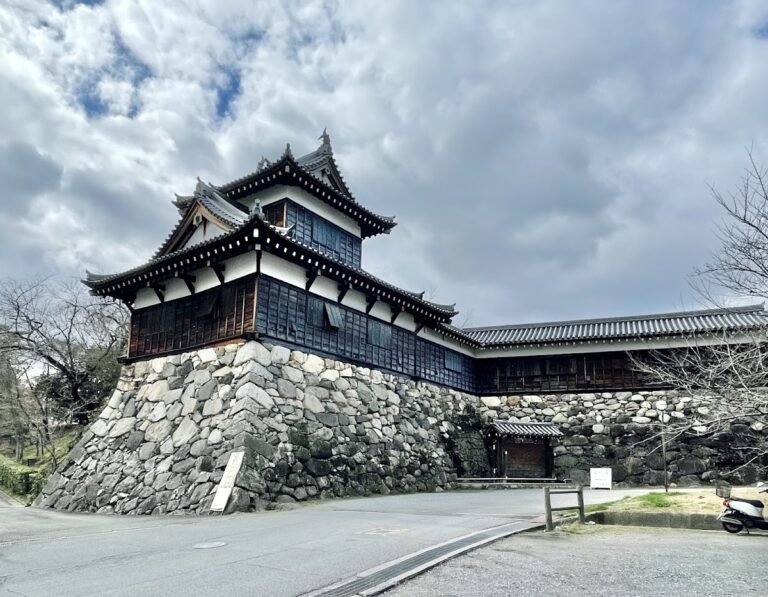
Complete Conquest of Koriyama Castle: History of famous castle forts in Nara and other famous castles.
In the history of castle forts in Japan, Koriyama Castle is one of the most important forts. The most famous of these is Koriyama Castle in Nara, Yamatokoriyama City, where he was the residence of a distinguished vassal. Full text summary: Koriyama Castle, historical background, construction features, and current state of construction.
Is this Koriyama Castle? :Japanese transcription method and Taza castle fort
“Koriyama-jō” written in Japanese and written in Japanese, “Koriyama-jō” copied from Japanese characters. The Japanese precincts Yutaza castle fort same name, the most historical meaning of the two is:
- Nara Koriyama Castle (Yamato Koriyama Castle): A flat castle fort located in Yamatokoriyama City, Nara.
- Guang Island Guang Mountain City (An’ai Guangyama Castle): Guang Island, An’an’i Takada City, Zheichiza Mountain City Fortress.
The historical background of the Duza Castle Fort, the builder’s abilities and abilities are different, but it was an important military strategy during the time when Japan was under war.
Koriyama Castle (Nara): Residence of a long-time feudal vassal
Historical background and construction
Koriyama Castle was located in Yamatokoriyama City, Nara, and was a flat fort in one area, and was the center of politics and military affairs in Yamato Province (now Nara) during the warring period and the Edo period.
History of Koriyama Castle traced back to the Muromachi era, but arrived in 1585 (Tensho 13), by Hideyoshi’s younger vassal Hideyoshi. The owner of Yamato, Chii, and Izumi’s three kingdoms, the owner of a million stone territory, the owner of Koriyama Castle, and the complete fortress of a talented general. Hideyoshi was Hideyoshi’s second person at the time, and his status was synonymous with that of the other Hideyoshi castles.
Features of Koriyama Castle
Koriyama Castle was designed by the troupe Ringata Hiragen Castle Fort. The circular fort design is the second and third outer fort, and the concentric fortification is the main outer fort. The fort was built on a hill about 50 meters above sea level, overlooking a strategic strategic point on the surrounding plains.
The goal is to use a large amount of stone tombs for castles. At the time of its construction, the Japanese materials were quickly purchased and the stone tomb was constructed, which resulted in the remodeling of the Japanese five-storied pagoda of the stone Buddha statue that was brought to the nearby temple and the Japanese tomb during the funeral. The envoy was present at this time, and the inverted stone Buddha statue could be seen inside the castle.
Koriyama domain during Edo era
After the death of Hidetoshi, the chief retainer, the lord of the Koriyama domain was replaced, but during the Edo period, he was the administrative center of the Koriyama domain. This is especially true during the reign of the Liuxi clan (from 1724 to the beginning of the Meiji era), when the castle town was prosperous and became the center of business and Japanese culture in Chengdu.
The Koriyama domain is a medium-sized domain, with an annual production of 150,000 koku, but is the only domain in Yamato Province, and has a significant influence on regional politics and politics. The castle town’s Izen Yujo, samurai residences, Shoroku ward, Terakowa Shrine Tonjisagi, and the Jokon part of the castle ward are still perfectly preserved.
Current situation and bright points
After the Meiji period, Shingo Castle was removed and the fort was abolished, many buildings were removed from Koriyama Castle, but some of the stone mounds and castle river walls were perfectly preserved.
Main highlights:
- Tenshū 遁遗 :The castle tower 遁已 does not exist, but the castle tower 遁遗 remains standing still, with a bird’s-eye view of Yamatokoriyama City.
- Castle Gate Site: The site of the castle gate, as it is now, the stone wall of the castle river.
- Stone sculpture reuse: Stone sculptures in various stone tombs, examples of which are Japanese tombstones with Buddha statues, attracting attention from history enthusiasts.
- Enjoy Victory: In the spring, there are about 800 flowers and flowers, and this is the “City Fort Festival”.
Koriyama Castle Site is designated as Nara Castle Site and is open to the public. The nearby historical museum is a residence of a Japanese samurai, and a museum of the castle town during the Edo period.
Koriyama Castle, Korishima Castle: Motonari Mori’s position
Mori clan, feudal lord of Kankoku
Koriyama Castle is located in Yoshida-cho, Takada City, Yuan Island, and is a mountain castle that is representative of the Chinese region during the time of the War. This fort was the main point of Motonari Mori and his family, and played an important role in the course of the establishment of the Mori clan and the rulers of the Chugoku region.
The exact date of construction of Koriyama Castle is unclear, however, it was built in the 15th century, and was the residence of the Mori clan. Mori was born in 1497 and became a feudal lord in the Chugoku region until the middle of the 16th century.
Yamashiro Construction
Koriyama Castle is a typical mountain castle for the troupe, built around 390 years ago. The defensive construction of the mountain capital was completed, the main castle was built, and the inner temple (inner castle area) was built in the form of a staircase.
The castle is located in a castle, the main castle is in a mountainous area, the main castle is in a mountainous area, and the vassals and other government officials live in a cellar.护城川, earthworks, stone tombs, and other defense constructions were skillfully arranged, and the envoys formed a stronghold for the first time.
Mouri Mori’s “Sanken” teachings
Mouri Mori is recognized as one of the greatest military strategists of the era, with outstanding talent in various fields such as diplomacy, military strategy, and military affairs. Koriyama Castle is the center of other activities, and is also the strategic center of the Chugoku region.
The famous “Sanken” teachings are important stories written by Moto Mori and the other Sanpaku (Takamoto, Motoharu Kazu Takakage). The teachings are based on the teachings of Koriyama Castle, and are an example of the history of the Mori clan, which was a prosperous Japanese colony.
Yuandu Guangdao City and Bicheng
In 1591 (Tensho 19), Mori Motonari’s son, Mori Genyu, moved to Koriyama Castle and moved to Korishima Castle. This is the place where the castle redoubt was transferred to the mountain castle and the plains fort.
Koriyama Castle has been designated as a national historical monument.
Koriyama Castle Site Overview
The ruins of Koriyama Castle in Uguang Island are a rare piece of history, and the appearance of Yamashiro during the time of the country has been revealed.
Main highlights:
- Main castle site: Ushanye, former residence of Mori Motonari.
- Stone Bound: The stone masonry technique was exhibited at the time of the exhibition.
- 围墙: The appearance of the 众多围墙 body in the all-encompassing seiza-san body is a large scale model of the castle fort.
- Morimotosu Mausoleum: Morimotosu Mausoleum is located on the northwest side of Ukoriyama Castle, and is visited by many history lovers.
- History and Folklore Museum: Located near the Koriyama Castle ruins, exhibits materials from the Yomori family’s collection of the history of the Koriyama Castle castle.
It takes about 30 minutes to climb the mountain road along the mountain fortress, but the scenery is spectacular, and visitors can experience the beauty of the mountain castle in the country’s time. In recent years, the museum has been opened and visitors can explore the history of Koriyama Castle.
Comparison of Koriyama Castle
Koriyama Castle in Nara, Japan has the same name, but it is clearly different in many places.
Geographic location and fortress type
- Naraguchi: Mountain Castle (located on a hill about 50 meters from Uhai)
- Guangjiao县:Mountain City (approximately 390 US mountains above)
The mountain castle is the center of cooperation and political coordination on the plains; the mountain castle has excellent defense construction, and is an ideal war base.
Historical background of the builder Yoku
- Nara 县: Large-scale construction in 1585, representing the power of the government of the vassals.
- 广岛县: First built by the Yumori clan in the 15th century, it was a strategic strategic point during the period of war.
Preservation status
- NARA: Perfectly preserved stone citadel and castle river, Yucheng District, Biwa-dong Tourist Scenic Spot
- Guangjiao: Completely preserved mountain castle ruins, visitors can visit the natural environment and the history of the museum
Visit to Koriyama Castle
Former Nara Koriyama Castle transportation system
- Fire car: From the Kinteki Kashihara Line to the Kintetsu Koriyama Station, the journey takes approximately 10 minutes, or from the JR Yamato Route to the Koriyama Station, the journey takes approximately 15 minutes.
- Drive: Depart from the Koriyama IC on the Meishi-Meihan Expressway, approximately 10 minutes by car.
- Opening time: Full open (limited partial opening time)
- Key vote: Disclaimer
Transportation method of Qianwang Island
- Travel: From the JR Yoshida Exit Station, take a taxi or bus for about 10 minutes.
- Self-driving: Approximately 20 minutes from China Expressway Takada Interchange Road
- Climbing time: Climbing route is open all the way; Climbing time is approximately 30 minutes.
- Key vote: Disclaimer
History and culture
Koriyama Castle, Koriyama Castle, has a very high history and culture, and is an important history and culture in Japan. Koriyama Castle in Nara is an important historical site, and the history of the Mori family in Yamashiro during the time when the country was in power.
In recent years, human resources have been used to provide information on local resources, history, resources, wealth, and future development, and information on comprehensive numerical technology has been enhanced. Visitors are not allowed to visit the place, so you can understand social life from many angles, and explore Japanese culture.
Overview: Experience Japanese castle fort culture
The fort was named “Koriyama Castle”, was built at different times, was designed by different builders, and was used for different purposes, but it held an important position in the history of castle forts in Japan.
Koriyama Castle in Nara is a flat plain castle fort, with its unique architectural characteristics, the reuse of stone materials, and the history of the area. On the other hand, Koriyama Castle, located on the island of Uchu Island, was the home of one of the greatest military strategists in the era of war, Motonari Mori’s home, and the spirit of the great war of the mountain castle was revealed.
The fortress is now open to the world, and those who love history will not be able to see it.It will also be an interesting sight to see Japanese culture and construction. Visiting the ruins of castle forts, the general’s understanding of the subject, the deep foundation of Japanese history without law, and the wisdom and efforts of our predecessors.
The Japanese language search for “Koriyama Castle”, the group’s historical castle fort, and its unique historical past. As a result, you must visit Koriyama Castle, and experience the culture of Japan’s traditional castle fortress.