Guide to completing the former castle: Mr. Chiba’s last fortification and “Japan’s 100 greatest castle forts (completed)” highlights
Is this the former castle?
Former Castle is a medieval castle fort built during the Yu state period, located on the top of the mountain at the top of the mountain. It was built during the Chiba Yutane era (1469-1486), and has been in production for about 120 years.
The former castle is about to be designated as a national historical monument, and was selected on April 6, 2017 as one of Japan’s 100 greatest castle forts (ranked 121st in the ranking). The construction of the castle’s extensive earthworks, the dry construction of the castle river, and the preservation of the castle’s river have been perfected, and the important cultural heritage of the construction of the medieval castle fortifications has been studied, and the construction work is currently underway to preserve its current status.
History of Honjo Castle
Construction background and Yutane Chiba
Built in the style of a castle during the Yu-Jing Dynasty War (1454-1483), a large-scale internal battle in the eastern part of the city. Shigeji Ashikaga, a military commander supported by the Chiba clan, decided to build a new site on the south shore of Lake Inba, and the current site was Inohana Castle in Chiba City. It is located near the south shore of Lake Inba, and is a strategic strategic point for navigating the waterway.
Chiba Yutane is the leader of the Chiba clan, the ruler of the country under the Chiba clan, and the strong force of the eastern region of the country. Other selections include the excellent geographical location of the mountain, the use of semi-island-like hilly terrain, and the southern mountain valley, and the construction of one three-sided water-rich natural barrier. This area is facing Inba Lake (now Inba Lake), the main road of transportation, strategic strategic point, and military coordination conditions. ### The prosperity of Chiba clan Yomoto Castle
After the construction of Honjo Castle, the Chiba clan had a long history of about 120 years. The exhibition of the castle town’s history is magnificent, and the exhibition is the most powerful and grandiose of the daimyo in the eastern region. During the reign of the Chiba clan, the country was ruled by the Hojo clan, and the Hojo clan remained in power for a long period of time.
As the time progresses, the fort’s structure is constantly built and repaired, and the final development is completed, and the fort’s construction continues. The archaeological excavation has confirmed the history of the six castle gates, and the construction of the castle fort has been completed to a high degree.
Odawara Yochiba clan’s overthrow
In 1590, when the vassal Hideyoshi attacked Odawara, an alliance of the Yohojo clan and the Chikano clan station occupied the Hojo clan. However, the Hojo clan was defeated, the Chiba clan was destroyed, the castle was never rebuilt, and the Chiba clan took up residence.
Afterwards, Tokugawa Ieyasu moved into the eastern district, and the first district was established under the Tokugawa family’s rule. In the early modern period, Honka Castle was built as the administrative center of the Kakashi clan, and was the newly built Kabuki Castle (Imakagi City). At this time, the exit from Hongqiao City was the historical stage, and the long period of silence continued.
This castle’s structure and distribution office
Topographical distribution of use
The most important feature of Benjo Castle is its skillful use of natural topographical layout. The fort was built around 30-40 years on the mountain, with natural defensive barriers: the south side was Fukaya, and the north side was the wetland of Hu Lake.
The east and west sides of the castle fortress are about 700 meters long, the north and south sides are about 600 meters long, and a series of interconnected fields are established. The main areas include Shiroyama, Toyama and Okunoyama, and each area includes land construction and dry river areas.
Hijikata construction Japanese dry castle river ruins
The greatest highlight of this castle is the perfectly preserved earthworks and the dry and dry castle river. The idea is to build up a large castle in the East and the mountains, with a total area of 10 meters and a total area of 20 meters, and the development of medieval fortifications and defense techniques.
Inside the castle, there were many construction works on the high ground, and the inside of the castle wall was used to block the invasion of enemies. In this case, the civil engineering process is a valuable asset in terms of technical ability and dynamic performance.
Archaeological excavation panel Rokuza castle gate
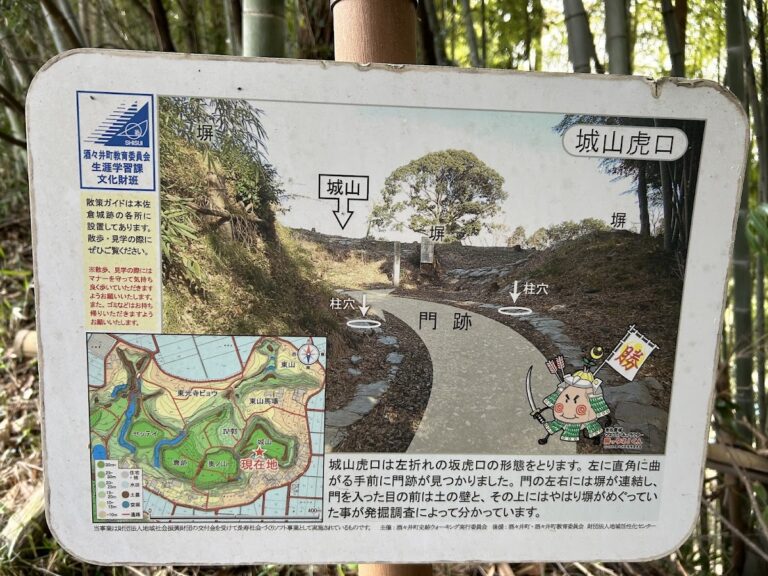
Recent archaeological excavations have revealed that the main gate of the castle is very small. This is a small castle gate with a fortress-like entrance and exit, which is an important defensive fortress. The castle gate’s final location shows the castle’s traffic flow and defense strategy.
Of course, it is important to be careful about the size of the castle gate. There are many kinds of castle gates, there are many kinds of gates, and there are many kinds of gates.
Chiba Domain Residence Site
Tatenobu lived in the residence of the Chiba clan in Ujo. Archaeological excavations have unearthed construction materials, garden structures, pottery and other everyday items. This is a trivial cultural artifact that I understand was created by the Chiba domain, the life style of the feudal lords during the war, and the Japanese culture, as well as the trade conditions at the time.
The reason for this is that it has been excavated from Chinese blue porcelain, Japanese white porcelain, and other high-quality ceramics. However, this is not the case with other people, who are local dependents, but also have the strength of one of the major feudal lords in the eastern region.
Designated as “Japan’s 100 Famous Castles”
Background of National History Designation
The site of Hongqiao Castle was designated as a National Palace Museum on September 11, 1998. The castle fort is a well-preserved and well-preserved medieval castle fort, which has been studied in the area of high school buildings, and since then, it has been an important historical record with the stronghold of the Chiba clan, a powerful daimyo family in the eastern part of Tokyo.
Since its designation, the city of Washisui-cho has been working together to develop and protect the items, and the balance between the acquisition and use of the space has been maintained. Archaeological excavation work continues, and new developments continue to occur.
Selected “Japan’s 100 Famous Castles”
On April 6, 2017, “Castle Day”, the Japanese castle association selected “Japan’s 100 Famous Castles (121st)”. After being selected as one of Japan’s 100 most famous castles, the famous castle forts were selected by the Japan Castle Association for the second time, and since then it has been selected as one of the most famous castles in the country.
The number of visitors to the castle also increased as the number of visitors to the castle continued to increase. “Japan’s 100 Famous Castles” commemorative inscription is located in the main castle ruins national historical ruins information center, attracting many people who love castle forts.
National Palace Museum Information Center
Information Center and Exhibition Overview
The National Historical and Historical Site Information Center for Hongqiao Castle is a site for visitors to view the entrance to the Hongqiang Castle Ruins, and includes an exhibition board containing the history of the Japanese Chiba clan in the Hongqiang Castle, as well as artifacts excavated from the exhibition. From the information center to the popular and easy-to-understand method, this is the ideal place for visitors to understand and understand each other before visiting the city.
Exhibits include pottery, tile fragments, metal objects and other objects unearthed during the comprehensive archaeological survey, as well as a heavy model of a fort, and a Japanese ancient land map. In addition, we have provided visual materials, a comprehensive review of some of the famous sites (excavated castle gates and Chiba clan residences), and archaeological excavation results that have been directly viewed by visitors.
Seal location of Japan’s 100 most famous castles (续)
Japan’s 100 most famous castles (续) seal rank in front of the customer center washroom. If you visit this castle, you will be able to visit this castle. The visitor center is open to visitors, and the main building of the castle is advertised and paid for, and the construction is in progress before the visit.
Hongqiao Castle Site Liang Point and Walking Route
Departure from East Light Route Pavilion
Visit the main park castle site, usually the opening of East Light Road Pavilion, the distance from Jingcheng University Station is about 10 minutes. As the city progressed, it was easy to see the landslide construction and drying up of the castle river, etc.
The walking route is in good condition, and there are many main routes to visit. A complete tour will take approximately 1.5 to 2 hours. Due to the undulating terrain of Yu Yue’s travels, we have constructed shoes that are suitable for wear.
Spectacular Hijikata Engineering Waho Castle River
When I walked to Seongshan (Seongqiu), the Hijikata Engineering Works of Hijikata and Hijikata were shaken by the dissemination of various articles. Specially, it is a large castle river in East Mountain and West City, which is large in size and well preserved, and is one of the most representative constructions of Chengdu’s main castle. When you look down on the river bottom of the castle, you can see the height of the construction, and when you feel the true sense of defense, the fort’s defensive ability.
Scenery and environment
The site of the castle fort, you can take a bird’s-eye view of the surrounding area of Hetian Lake, and understand the importance of waterway transportation due to the topography at the time. Visit this place, where the fort-like construction of the Eunhui has been fully utilized, and the mountainous terrain of the land surrounding it.
When you visit the castle, you can enjoy the four seasons: the blooming of maple flowers in spring, the green leaves in early summer, and the red leaves in autumn.
Transportation and visitor information
Public transportation
The most recently located station is Keisei Railway Station. It takes about 10 minutes to walk to the parking lot entrance. Directional tiles along the way, convenient way to turn the pin.
Driving and stopping
It takes about 15 minutes to get out of the IC on the eastbound expressway, and it takes about 10 minutes to get out of the Shisui IC. Near the visitor center, there are free parking spaces, and parking available for multiple viewing cars. However, at the end of the Zhou period, during the tourist season, the parking lot can be crowded, and the public transportation tools can be used for construction purposes.
Precautions for viewing
The construction of the castle’s historical remains is protected, and it is prohibited to destroy or destroy plants. In addition, the ground is undulating, the ground may be slippery during rainy weather and after rain, and the construction is suitable for wearing Japanese sandals.
When visiting in summer, you must carry water for drinking water to avoid mosquitoes, especially during the mid-summer heat. Customer-centered, external hand-operated space or motor vehicle, well-prepared before construction.
The series of the main castle and the castle
The history of the original castle, and the history of the castle that was built after that, are very important. After the construction of Hongqiao Castle, Yudoi Toshiyuki built Chongqianqi Castle in the early Jiang Dynasty (15th year of Wucho, 1610 to Genna 2nd year, 1616).
The current castle fort is located approximately 5 kilometers west and north of the base of the castle. The castle was a medieval mountain castle fort, and the castle was a plains castle fort. It was the residence of a modern daimyo (feudal lord).
In front of us, the castle is also designated as a national historical monument. Visit the original castle castle ruins, Yusuke Yu understands the castle fortifications from medieval to modern performances.
The site of the castle has now been designated as a historical monument of the country, and visitors will understand that the castle has changed from the medieval period to the early modern period. ## Archaeological excavation results and future prospects
Archaeological excavation in the right way
Since the history of Hongqiao Castle and its designation, archaeological excavation work has continued unabated. Until now, we have confirmed that there are many kinds of sightseeing, comprehensive castle gates, construction, roads, gardens and forests, and the real face of the fortress.
The reason for this is that large-scale constructions have been excavated in recent years, the residences of the Chiba clan have been established, and the stones have been used as pseudo-uses to view the gardens, and the lives of feudal lords from the time of heavy construction have been investigated.
Looking at excavated artifacts Chiba clan culture
An exhibition of excavated cultural relics of the highly excavated culture of the Chiba clan has been completed. There are many kinds of excavated pottery, including Chinese blue porcelain, Japanese white porcelain, and 烑户烧和美浓烧 pottery from Tokoname 烧罐子, which is confirmed to exist at that time and is available for purchase.
In addition, archaeologists have unearthed parts of weapons, horse tools, and other metal products, providing an understanding of the true life of samurai society. Small cultural artifacts are exhibited at the Information Center Japanese Museum and opened to the public.
Protection and expansion work
The ruins of Sagu Castle, located in Masane, Wajimizu-cho, Sagu City, and used by the government to protect and protect the city. As we continue to repair and build the road, the installation and explanation of the plaques, the progress of the management, the improvement of the environment, and the efforts of more people to understand the history of the site.
Considering the current situation, we are currently taking steps to utilize the technology, such as the use of augmented reality (AR) technology. Everyone should make efforts to maintain the positive outlook, and provide a wealth of cultural treasures, cultural heritage, and travel resources in the area.
Abstract: The history of this castle
Honjo Castle was a powerful feudal lord of the Chiba clan in the eastern part of the country, and was an important influence for about 120 years. The castle is designated as a national historical monument, selected as one of Japan’s 100 famous castles (now), and is a typical medieval castle fortress that has been perfectly preserved. A rare historical site, such as a clever use of natural topography, a large-scale earthwork construction and a dry city river, and a castle in a castle.
The existing Rokuza castle gate, Chiba clan’s residence, cultural artifacts excavated from archaeological excavations, and treasured information that provides a true picture of samurai society during the war. In addition to this, Shunya is the site of the last attack on Odawara when Hideyoshi, a retainer of the Chiba clan, attacked Odawara, and has important historical significance.
At present, the protection and construction work is currently underway, and we are currently looking at improvements. I understand that the castle will not be left behind, but it is the ideal place for those who love history to leave the castle. In addition, it is far away from Keisei University Station, convenient transportation, and is sure to attract more and more visitors in the future.
What is the old castle ruins in the past, where the expedition goes to conquer the ancient castles from the middle ages to early modern times, and the Chiba clan’s decline history?