Haga Castle (Hyogo Prefecture) Complete Guide: A Thorough Explanation of History, Highlights, and Access
Located in Haga-cho, Shiso City, Hyogo Prefecture, Haga Castle is a medieval mountain castle built in the mountainous region of Harima. Situated on the summit of Shiroyama Mountain at an altitude of 456 meters, this castle played a crucial role from the Heian period to the Sengoku period as a strategic point overlooking the important Inaba Road. Currently, it is maintained as Haga Castle Historical Park, and the restored two-story turret and gatehouse evoke its former glory, making it a popular tourist spot.
History of Haga Castle: From the Heian Period to the Sengoku Period
Construction by Haga Shichiro and Early History
The history of Haga Castle dates back to the Heian period. It is believed that Haga Shichiro, a local powerful family who ruled this area, built the castle on the summit of Shiroyama Mountain to monitor the Inaba Road and control the region. The Haga clan, whose name is the origin of the place name Haga, held considerable power in the mountainous region of Harima Province.
The castle was built in an excellent location overlooking three major roads: the Inaba Road connecting Himeji and Tottori, and the road leading to Chikusa. This location was not only strategically important for military surveillance but also economically significant as a transportation hub.
The Nakamura Clan’s Era: Western Migration from Musashi Province
With the arrival of the Kamakura period, Haga Castle underwent a major transformation. The Nakamura clan, who had migrated west from Chichibu District in Musashi Province (present-day Saitama Prefecture), entered the area as retainers of the Kamakura Shogunate and made Haga Castle their residence. The Nakamura clan was a family that had traveled all the way from the Kanto region to the mountainous region of Harima, and it is believed that they were tasked with governing the area by order of the Shogunate.
The Nakamura clan’s rule continued until the end of the Sengoku period. During the Sengoku period, Harima Province was a region where powerful daimyo such as the Akamatsu and Bessho clans held sway. However, the Nakamura clan, based at Haga Castle, remained a small lord in the mountainous area, protecting the land while sometimes being subservient to larger forces.
The End of the Sengoku Period and the Abandonment of the Castle
Towards the end of the Sengoku period, as Hashiba Hideyoshi (later Toyotomi Hideyoshi) pacified Harima, Haga Castle was also affected. During the Tensho era (1573-1592), it is believed that Haga Castle disappeared from the historical stage during Hideyoshi’s campaign to conquer various castles in Harima. In the Edo period, due to policies such as the “One Castle Per Province” decree, Haga Castle was completely abandoned.
Structure and Characteristics of Haga Castle
Location and Layout as a Mountain Castle
Haga Castle is a typical mountain castle built on the summit of Shiroyama, an isolated peak with an elevation of 456 meters. Unlike castles on flat land, mountain castles are defensive structures that make maximum use of the natural terrain, and Haga Castle strongly exhibits this characteristic.
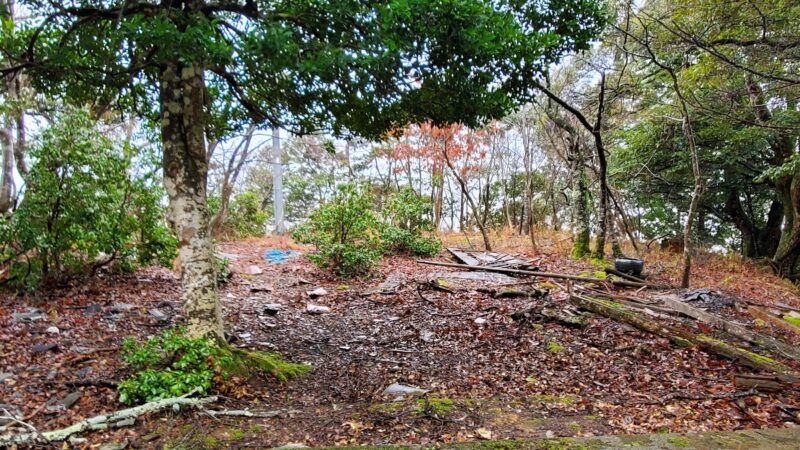
The castle’s layout unfolds around the mountaintop, with multiple baileys (kuruwa) arranged around the main enclosure (honmaru). The steep slopes acted as natural barriers, making enemy intrusion difficult. Even today, traces of the original defensive structures can be seen along the walking trails.
Features of the Stone Walls and Remains
The stone walls are a notable feature of Haga Castle’s remains. Relatively solid stonework remains for a medieval mountain castle, providing valuable information about the castle-building techniques of the time. These stone walls were constructed using a technique called “nozurazumi,” characterized by a simple yet robust construction using natural stones piled up as they were.
At the site of the main enclosure on the mountaintop, the arrangement of stones believed to be building foundations can be seen, suggesting the presence of watchtowers and residences here in the past. Furthermore, the layout of the baileys and the traces of the cliffs indicate that this castle was not merely a fort, but possessed the functionality to withstand a siege for a certain period of time.
Relationship with the Inaba Road
The most distinctive feature of Haga Castle is its location overlooking the important Inaba Road. The Inaba Road was a major transportation route connecting the Sanyo Road and the Sea of Japan side, and was extremely important for the distribution of goods and information, as well as military movements.
From the castle hill, it was possible to observe the movements of people traveling along this road, effectively functioning as a “road watchtower.” Additionally, the road leading to the Chigusa area was also visible, making it an ideal location for early detection of approaching enemies from multiple directions.
Highlights of Haga Castle Historical Park
Restoration through the Hometown Revitalization Project
The current Haga Castle Historical Park was developed using the “100 Million Yen Hometown Revitalization Project” implemented by the Takeshita Cabinet in 1989 (Heisei 1). This project provided 100 million yen to local governments nationwide to be used for regional revitalization. Haga Town (at the time) used these funds to restore Haga Castle and develop the park.
Through this restoration project, the historical mountain castle was revived in the modern era and reborn as a valuable tourist resource for the region. Excavation surveys and document research were conducted during the development, aiming for a restoration that was as historically accurate as possible.
Restored Two-Story Turret (Haga Castle Learning Museum)
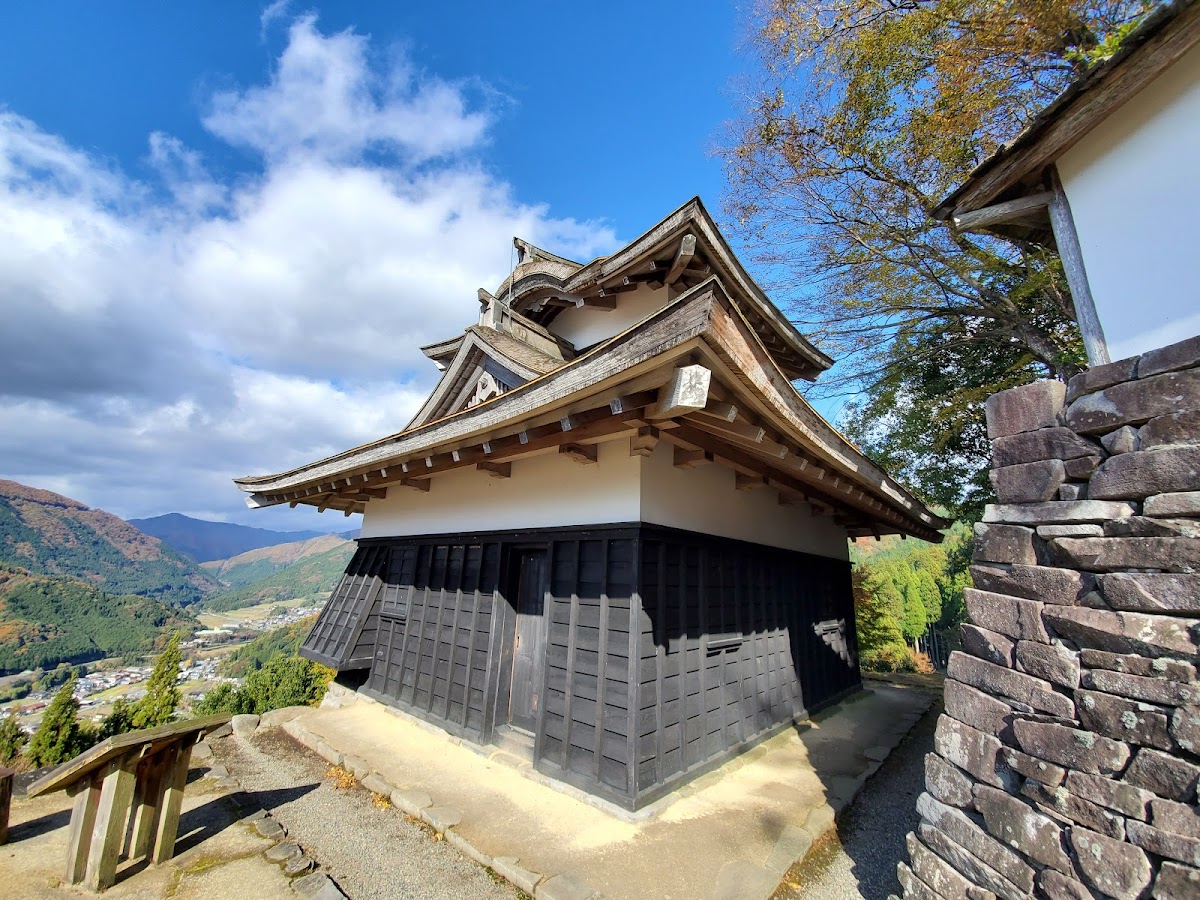
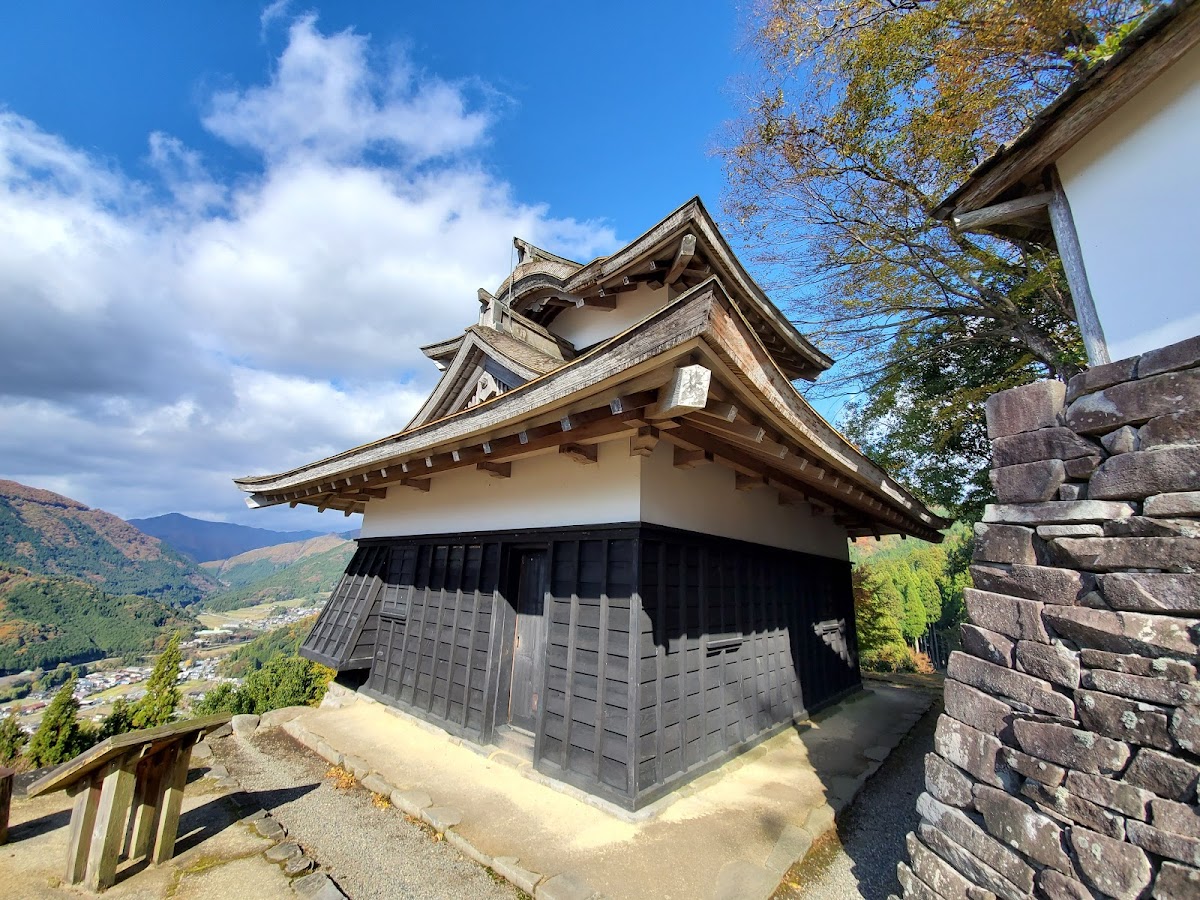
The central facility of Haga Castle Historical Park is the two-story turret, which has been reconstructed in wood. This turret is not merely a reconstructed building; its interior is open to the public as the “Haga Castle Learning Museum,” where visitors can learn about the history of Haga Castle and medieval mountain castles. The museum displays historical materials related to Haga Castle, artifacts unearthed during archaeological excavations, and replicas of medieval weapons and everyday items. It also functions as an observation space, offering stunning views of the Harima Mountains on clear days.
The turret’s architectural style replicates the simple yet practical construction seen in medieval mountain castles, allowing visitors to experience the atmosphere of castle architecture from that period. The warmth unique to wooden construction and the sturdy, no-nonsense appearance characteristic of mountain castles are particularly impressive.
Kabukimon Gate and Castle Facilities
Restored alongside the two-story turret is the Kabukimon gate. The Kabukimon gate is a common gate style used in medieval castles, characterized by its simple structure of a horizontal beam resting on two pillars. Haga Castle’s Kabukimon gate has been restored as the formal entrance to the castle, inviting visitors into the world of the Middle Ages.
Passing through this gate, you’ll find yourself in the former castle grounds, where you can experience the layout of the main keep and baileys firsthand. Well-maintained walking paths allow for safe exploration of various parts of the castle, making it possible to observe the remains of stone walls and earthworks up close.
Nighttime Illumination and a Fantastical Landscape
One of the most noteworthy attractions of Haga Castle Historical Park is its nighttime illumination. After sunset, the reconstructed two-story turret is lit up, creating a fantastical scene that stands out against the dark night sky—a truly picturesque sight.
The illuminated turret presents a completely different appearance from its daytime counterpart, exuding the mystical atmosphere of a medieval mountain castle. The illumination is particularly stunning in the crisp autumn and winter air, making it a popular spot for many photography enthusiasts and tourists.
Looking at the illuminated castle in the tranquil mountain setting, one can almost picture the samurai who once defended this land. This fantastical landscape is an experience unique to Haga Castle Historical Park.
The Magnificent View
The view from Haga Castle, located on a mountaintop 456 meters above sea level, is a major attraction that captivates visitors. If the weather is good, you can enjoy a magnificent panorama of the Harima Mountains.
In particular, the view of the settlements along the Inaba Road and the center of Haga Town spread out below is breathtaking. It’s impossible not to feel a sense of historical romance when you imagine that the former lords of the castle also gazed upon this same view while watching over their territory.
You can also enjoy the beauty of nature throughout the seasons, from the fresh greenery of spring to the vibrant autumn leaves. Especially during the autumn foliage season, the mountains are painted in shades of red and yellow, creating a magnificent landscape.
Access and Visitor Guide
Location and Basic Information
Location: 2-51 Ueno, Haga-cho, Shiso City, Hyogo Prefecture 671-4221
Opening Hours: 8:30 AM – 5:00 PM
Closed: Every Monday, New Year’s Holidays (December 28th – January 4th)
Admission Fee: Free
Parking: Available (approx. 15 spaces), Free
Inquiries: Haga Cultural Creation Center, Haga Citizens’ Affairs Bureau, Shiso City (TEL: 0790-75-3688)
Access by Car
The most convenient way to access Haga Castle Historical Park is by car. However, the road to the castle hill is a mountain road with some steep sections, so caution is required when driving.
Main Routes:
- Approximately 30 minutes from Yamazaki IC on the Chugoku Expressway via National Route 29
- Approximately 40 minutes from Kanzaki-Minami IC on the Bantan Expressway via National Route 29
You can drive up a paved forest road from the foot of the mountain to the parking lot near the summit of Shiroyama. There are narrow sections and sharp curves along the way, so it is recommended to drive slowly and carefully, paying attention to oncoming traffic. The parking lot is located near the summit, and the castle ruins are just a few minutes’ walk from there.
Access by Public Transportation
Access by public transportation is somewhat inconvenient. The nearest stations are Senbon Station or Harima-Shingu Station on the JR Kishin Line, but you will need to take a local bus or taxi from there.
Since the number of buses is limited, it is recommended to check the timetable in advance and plan your visit accordingly. Also, since it is quite a distance from the station to the summit of Shiroyama, taking a taxi is a more practical option.
Important Notes for Visitors
When visiting Haga Castle Historical Park, please note the following:
- Clothing and Equipment: As it is a mountain castle, comfortable walking shoes and clothing are essential. While the walking paths are well-maintained, you will be walking on mountain trails.
- Season and Weather: In winter, there is a possibility of snowfall, and the ground may freeze. Also, be careful as the ground can be slippery in rainy weather.
- Insect Repellent: From spring to autumn, we recommend taking precautions such as insect repellent spray.
- Drinking Water: There are no vending machines at the summit, so please bring your own drinking water.
- Checking Closing Days: The museum is closed on Mondays, so you cannot visit the interior. However, the park itself is open for strolling.
Nearby Tourist Attractions
Nature and Culture of Haga Town
After visiting Haga Castle Historical Park, we recommend enjoying other tourist attractions in Haga Town as well. Haga Town is blessed with abundant nature, offering beautiful scenery throughout the seasons.
Hara Fudo Falls: A magnificent waterfall selected as one of Japan’s Top 100 Waterfalls, with a drop of 88 meters. Located about 20 minutes by car from Haga Castle, it’s a popular spot for relaxation, full of negative ions.
Onzui Lake: An artificial lake formed by the Hikihara Dam, the surrounding area is the base for the Onzui Lake Canoe Club. The lakeside scenery is beautiful, making it an ideal driving route.
Other Castle Ruins in Shiso City
History buffs might want to visit other castle ruins in Shiso City.
Shinomaru Castle Ruins: A medieval mountain castle located in Yamazaki Town, Shiso City, associated with the Akamatsu clan.
Nagamizu Castle Ruins: A castle ruin located in Nagamizu, Yamazaki Town, an important site for understanding the mountain castle culture of Harima.
Visiting these castle ruins will allow you to gain a deeper understanding of the characteristics of medieval mountain castles in the Harima region and the history of the area.
Hot Springs and Gourmet Food
Around Haga Town, there are also hot spring facilities to soothe your fatigue from sightseeing.
Haga Onsen: This is a day-trip hot spring facility located in Haga Town, popular with locals. After exploring the castle ruins, a relaxing soak in the hot springs is highly recommended.
Furthermore, Shiso City is known as a production area for Tajima beef, and there are many restaurants where you can enjoy dishes made with local ingredients. You can also purchase local specialties and fresh vegetables at the roadside station in Haga Town.
Cultural Value and Preservation Activities of Haga Castle
As a Regional Historical Heritage Site
Haga Castle is not merely a tourist facility, but is carefully preserved as a valuable historical heritage site of the region. The remains of this medieval mountain castle are a valuable cultural asset on a national level, and serve as important material for understanding the castle construction techniques and defensive systems of the time.
In Shiso City, Haga Castle Historical Park is also used as a site for local history education, and local elementary and junior high school students sometimes visit as part of their local history studies. Through such initiatives, the transmission of history to future generations is being ensured.
Development and Maintenance
While Haga Castle has been developed as a historical park, continuous effort is required for its maintenance. Due to its location as a mountain castle, it is susceptible to damage from natural disasters, making regular inspections and repairs essential.
Shiso City and local organizations carry out various maintenance activities, including maintaining walking paths, mowing grass, and preserving restored structures. They also focus on creating an environment where visitors can easily learn about history by installing information boards and improving explanatory materials.
The Mountain Castle Boom and Haga Castle
In recent years, a “mountain castle boom” has occurred throughout Japan, and the number of history enthusiasts visiting medieval mountain castles is increasing. Haga Castle, with its well-maintained state and the beauty of its restored structures, is attracting attention among mountain castle enthusiasts.
Castle information websites such as “Kojodan” (Castle Attack Group) feature numerous reviews and comments from actual visitors, spreading the charm of Haga Castle throughout Japan. In particular, the beauty of the illuminated night view is highly praised, making it a popular spot for photography.
Points to Enjoy Haga Castle
Best Time to Visit
Haga Castle Historical Park can be visited throughout the year, but each season offers its own unique charm.
Spring (March-May): A beautiful season of fresh greenery, with the mountains covered in vibrant green. The weather is mild, making it ideal for strolling.
Summer (June-August): The greenery deepens, enhancing the castle’s mountain castle atmosphere. However, precautions against heat and insects are necessary.
Autumn (September-November): The autumn foliage season is one of the most beautiful times. The mountains of Harima are dyed in red and yellow, offering a magnificent view.
Winter (December-February): The air is clear, providing excellent views. When snow falls, the scenery transforms into a different world, but caution is necessary when accessing the site.
Best Photography Spots
Haga Castle Historical Park offers numerous excellent photography spots.
- Front View of the Two-Story Turret: The angle capturing both the main gate and the turret together is a representative composition of Haga Castle.
- View from the Mountaintop: You can take landscape photographs with the mountains of Harima as a backdrop.
- Illumination: The nighttime illumination allows for fantastical photographs using long exposures with a tripod.
- Close-up of the Stone Walls: The stone walls, showcasing medieval stonework techniques, are a valuable subject that conveys historical value.
Utilizing the Learning Museum
At the Haga Castle Learning Museum (located inside the two-story turret), you can learn in detail about the history of Haga Castle. Gaining some background knowledge at this museum before exploring the castle ruins will allow you to understand the history more deeply.
The museum displays maps and reconstructions of Haga Castle’s layout, as well as excavated artifacts, allowing visitors to learn about the structure and function of this medieval mountain castle in detail. It also contains materials on the local history and culture, providing insight into the historical background of Haga Town as a whole.
Summary: Experience the Charm of Haga Castle
Haga Castle (Shiso City, Hyogo Prefecture) is a historic mountain castle built by Haga Shichiro during the Heian period and later becoming the residence of the Nakamura clan. Located on the summit of Shiroyama Mountain at an altitude of 456 meters, it played a crucial role from the medieval period to the Sengoku period as a strategic point overlooking the important Inaba Road.
Currently, it is maintained as Haga Castle Historical Park, and the two-story turret (Haga Castle Learning Museum) and the gate, restored through a local revitalization project, evoke its former glory. The nighttime illumination, in particular, is fantastic and a popular attraction for many tourists.
With its magnificent panoramic views of the Harima mountains, the remains of a medieval mountain castle including stone walls and baileys, and well-maintained walking trails, this spot is recommended not only for history buffs but also for nature lovers.
Located at 2-51 Ueno, Haga-cho, Shiso City, Hyogo Prefecture, it is easily accessible by car. Admission is free, and it is open from 8:30 AM to 5:00 PM (closed on Mondays). Nearby attractions include Hara Fudo Falls and Onzui Lake, making it a place you can enjoy at a leisurely pace for a whole day.
Haga Castle Historical Park offers a chance to experience the romance of a medieval mountain castle and the rich natural beauty of Harima simultaneously. Why not visit it at least once? You’re sure to feel the spirit of the samurai who once protected this land.