Full view of Chizen Castle: The largest medieval Keiyama Castle in southern Kyushu—Exploration point on Hakusu Plateau
Is this Chiran Castle? : Southern Kyushu most famous sexual medieval Kiyama Castle
Chiren Castle is located in Ulu, Chiran Island, Minamikyushu City, Chiren Town, and is a Japanese medieval Chizan Castle. Built on a fully utilized volcanic ash deposit called “Hakusu Plateau”, it is a large and well-preserved fortress site, one of the most representative castles in southern Kyushu.
In 1993, the 24th official period of the Chiran City (Yanmian 41st official period) was designated as a national historical monument. In 2017, Chiren Castle was selected as one of Japan’s 100 greatest castle forts. Zhiran City is located in Yu Zhiran, the samurai residence is 1 km to the south, it is a castle with important historical significance, and it is the foundation stone of the samurai residence under the foot of the mountain.
Usage of Hakusu Plateau terrain construction castle fortress standard
Most of the area covered by the “Baishu Plateau” is covered by the Plateau, which is composed of volcanic debris flowing from the Plateau. The special feature of the Shirasu Plateau is that it is easy to receive rain water erosion, and the formation of the Fukaya and Happeong cliffs. Chiren Castle has a unique topography.
The Baizhou Plateau’s 陡峭悬 Cliffs constitute a natural defensive wall, and the need for a large-scale reduction in the size of the artificial excavation of the river. The existing castle, the use of natural mountains and valleys, the use of dry castle rivers, and the construction of the dry castle river in the depths of each castle city, and the formation of a stronghold in the castle. This is a medieval fortress in southern Kyushu with various construction styles, and it is a famous castle in the middle of nowhere.
History of Chichi Castle: From the Heian period to the Conqueror period
Origin of Chira Castle Tadanobu Yochira
The origin of Chira Castle is still unclear, but it is said that it was built on this site by local government official Tadanobu Chira at the end of the Heian period. The fort was built by Tadanobu Chino, a local member of his family, and was built in the area. However, the specific details of the fort at that time, historical records are rare, and the details are not clear.
Muromachi period: The foundation of the castle of the Sada clan, owned by the Yoshimatsu family
The history of the castle is very clear since the beginning of Muromachi era. In 1353, Takauji Hoashikaga became the third son of Tadamune Shimazu, the fourth head of the Shimazu family, and Tadamitsu Sada became the owner of the area. From the Azuchi-Momoyama era to the Azuchi-Momoyama era, it was a castle that arrived during the long reign of the Sada clan.
The Sada clan is a branch of the Shimazu clan, has a prestigious status, and is located in the surrounding area of the castle center. As people know, the basic structure of the fortress, as we see it now, is the same as it was at the time.
Knowledgeable Castle of the Ages of War
During the war, Chili Castle was an important base for the Shimazu clan’s efforts. During the course of the establishment of the Tsu family in Imazu, Osumi, and Hyuga, the construction of castles in the southern part of the country played an important role.
The Sada clan was not part of the Ushimatsu clan, but it still held an important position in the area. The construction of a solid defensive construction in the castle was confirmed by the military situation at the time.
Construction of castle pond system
During the long years (1596-1615), the Shimazu domain’s administrative system was fully developed. During this period, the castle town was inhabited by unknown people, the administrative system was changed to the “outer castle system”, and the samurai were concentrated in the castle town.
The outer castle system was the unique administrative system of the Haguma domain, and its special feature was the mountain castle, located at the foot of the mountain, where the samurai lived. This is a typical representative of the foreign castle system, and is still a beautiful samurai residence.
Zhizu Castle Structure: Hiroya’s Castle Pond
Castle Pond Department
The area of Zhiyan City is approximately 800 meters from north to south, 900 meters from east to west, and the land area is 450,000 square meters. It is easy to take advantage of the unique topography of Hakusu Plateau, and the independent construction of a castle pond.
Main castle ponds such as the central `honmaru'' (main castle) and the surrounding area, Ima Castle'', Kura Castle'', and Yumi Castle''. In addition, outpost castles such as Shikibu Castle,'' Old Castle,'' Eastern Castle,'' Western Castle,'' Southern Castle,'' and `Izu Castle” were also used for defense in the surrounding areas.
Features of Honmaru
The main enclosure is located in the center of Uzhiguan Castle, and is the most important outer fort within the castle. The highest point on the Baishu Plateau, Yushenyu’s dry castle, Hewahuan’s cliffs. The main Maru overlooks the surrounding area, and the administrative center of the city is centrally located.
Ima Castle, Kurano Castle, Japanese Archery Castle
There are three main castles in the main castle (main castle): Ima Castle, Kurano Castle, and Archery Castle. In addition, the construction of a small burial mound and defense construction, protection of the main castle, and the construction of a dry castle river in the depths of the two layers of the capital city.
This is the second most important part of the castle, which is the second most important part of the city. Kurano-shiro is a place for weapons, food, and other resources. “Yumiba-shiro” (Yumiba-shiro) is a defensive fortress that can be used as an archery site or as an archery site.
Outpost defense system
There are several outposts outside the main castle. `Shikibu-dono-shiro'' (Shikibu-dono-shiro) and `Ko-shiro” (Ko-shiro), etc., are outpost actions and early invasion of the enemy army, and the invasion of the main castle by the enemy army.
“Higashi-no-kakoi”, “Nishi-no-kakoi”, “Minami-no-kakoi”, and “Minami-no-kakoi” are defense works on the outer wall of the castle fort. This means that the castle is constructed with a powerful defense system that allows you to attack from all directions on all sides.
Utilization of natural topography of Kawayo Castle
Chiren Castle’s most famous special expedition was its dry river system, which resulted in maximum land use and the natural topography of the Hakusu Plateau. The mountains and valleys of the mountains and valleys are directly used to dry up the city, and each city is completely independent, and one person immediately destroys the castle, and it also has a great influence on the construction of other castles.
An artificial stone tomb with a vertical wall unique to the Shirasu Plateau, with a height of more than 10 meters in a certain area, which was built without demand. A variety of natural defense construction works, Chiran Castle, and one of the strongest and most fortified castles in southern Kyushu.
Chiren Castle Ruins: Today’s Castle Ruins
Perfectly preserved
After 400 years of envoys, the ruins of Chiran Castle were preserved perfectly. The layout of each castle, from the dry and dry castle river shape to the steepness of the wall, the capital is a rare legacy, and the clear land has been revealed as a medieval mountain fortress. ### Exploration castle defense
In front of us, there is a walking path to Zhimu Castle, which is a convenient way for visitors to explore the main fortifications. Throughout the journey, you will be able to walk through the main castle tower (main tower), the current castle site, and the Japanese castle site.
The original appearance of the flat surface of the city defense, and the layout of its construction in the same year. A bird’s-eye view of the city’s fortifications, the deep dryness of the city’s river, and the strong defensive construction of the city’s fort.
The embankment of the dry river
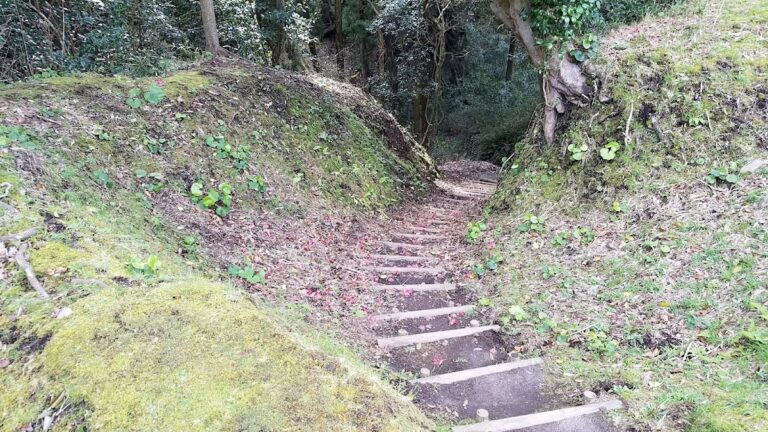
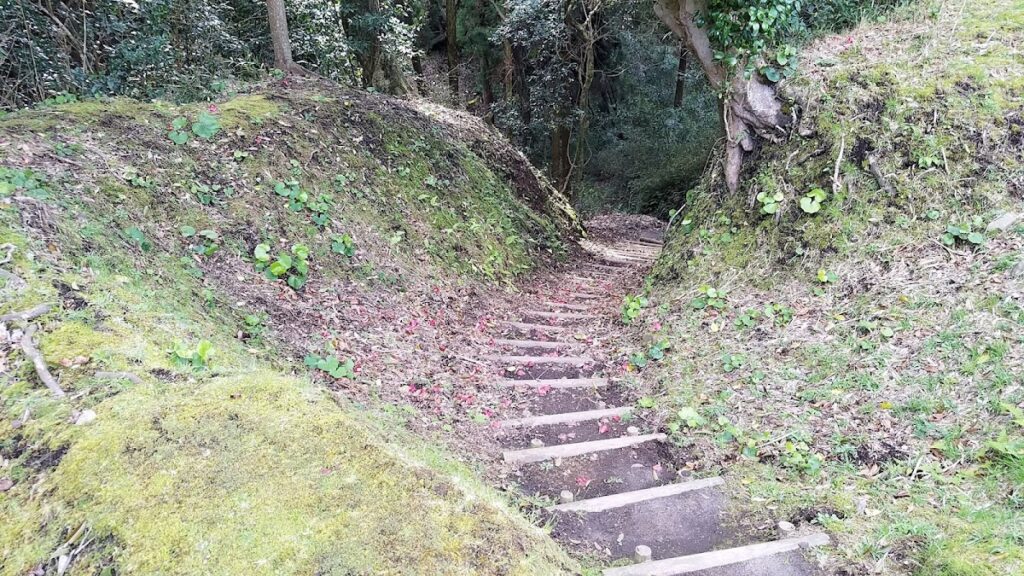
The most attractive feature of Zhizhu Castle is the development of the white sand (volcanic ash) plateau, deep dryness of the city, and the vertical embankment of Hehe neighborhood. That’s right, the river around the main enclosure was dry, the depth was over 10 meters, the depth was over 10 meters, and the people stopped looking at it.
The opening of the embankment, the exposed white sandstone horizontal surface, and the unique scenery of the castle. A special expedition of medieval castle forts in southern Kyushu reveals a variety of unique topography and clear terrain.
Cultural relics
While the castle was still in ruins, artifacts such as medieval ceramics, pieces of Japanese ironware, etc. were discovered. Please understand that the small cultural items will be provided at the fortress’s Japanese culture. The archaeological dig shows the concrete structure of the citadel and the base of the ruins.
Chirenjo Yochirenfu book: typical representative of the outer castle system
Unique governance system of the Hauma domain: Outer castle system
After the arrival of Chiren Castle, this area was introduced to the Souma domain’s unique administrative system – the “outer castle system”. The outer castle system was abolished, the castle ponds in the mountains were abolished, generals and samurai were concentrated under the foot of Uyama, agricultural cultivation was carried out during the peace period, and military power was conquest during the war.
The Soto Castle (Fushimoto) was jointly built by the Habama clan in 113, and is the representative of the Fushimoto branch. The first system enshrined in the Hauma domain resulted in a highly effective, peaceful and powerful army.
Known Fushimoto Samurai Residence: Garden Garden and Liang Point
Today’s situation was like that of the time when the residence of a samurai was still reserved and the foreign castle system was in place. The layout of the castle, the arrangement of the residence of the samurai, and the living space of the samurai at the time of its completion.
It is also known as a beautiful garden where a famous samurai lived. Among them, seven gardens have been designated as nationally famous, and the cultural essence of the samurai of the Jiangzhou era, which has attracted visitors. It has a unique flower garden style, deep Ryukyu, Japanese and Chinese influences, and the beautiful atmosphere of the samurai of the Ima domain.
When visiting a samurai’s residence, pay attention to the location of the residence, and the distance between the stone walls and the sandstone fences. In addition, the castle tomb system with a small stone wall and a sandstone fence has a defensive function, and at the same time it was also created with an aesthetic view.
Samurai residence in Yuzhicheng City
After visiting the castle, you must walk around where the samurai lived. From the castle to the mountain, you can experience the change of history from the medieval mountain castle to the early modern samurai settlement.
From the time when the castle was built, the time when the samurai lived in the mountains and the time when peace was established, and the period when Japan changed and conquered Japan from the middle ages to the early modern period.
Chiren Castle transportation and visit information
Transportation method
Zhiran Castle is located here, and the samurai residence of Zhiran is approximately 1 km to the south. There is plenty of convenience for driving around, and there is a parking lot nearby.
If you want to take public transportation, you can take a taxi or walk to the city of Luyuan. It takes about 20 minutes to travel to the known samurai residence.
Precautions for viewing
Yuyu Chiran Castle is a mountain fort, with a built-in design and customary clothing and walking shoes. The ground is wet and slippery after the rain, and I’m extremely cautious.
The castle river is dry and dry in the castle grounds, so be careful when visiting and be safe. Summer construction work and mosquito trap.
Time to visit
Approximate demand for visiting the castle ruins is 1.5 to 2 hours. We built a leisurely and fulfilling time, leisurely walked around the main cliffs, and looked at the dry city river cliffs.
Chiranjo’s cultural scene
Historical importance of the National Palace Museum
Chiran Castle Site was designated as a National Palace Museum in 1993. It has been confirmed that Chiren Castle occupied an important position in the history of medieval fortifications in Japan.
In particular, Chiren Castle has been fully utilized for its unique geographic environment on the Hakuhoku Plateau, and the fort structure unique to southern Kyushu has been preserved to the best of its ability. Researched during the Japanese medieval fortress period, Chiren Castle is an indisputable classic.
Selected “Japan’s 100 Great Castles (End)”
In 2017, Chiren Castle was selected as one of Japan’s 100 greatest castle forts. After being selected as one of the top 100 castle forts in Japan, it was selected as one of the top 100 castle forts by Japan Castle Fortress Association.
This time, I will be selected to become famous throughout the country and attract a lot of fans. The seal station has been established within the city, and the mission is a hot destination for lovers of the city fortress.
Academic Research Exhibition
Archaeological excavation and research work at the Chiran Castle ruins continues. This is a detailed study of the structure of the fortress, and the social situation of the time since the beginning of the theater.
In particular, it is important to understand that the study of natural castles and the techniques used to build forts on the Hakusu Plateau, as well as the true appearance of medieval society in southern Kyushu during the Mei period, are important.
Chizen Castle Yoshimazu family lineage
Shimazu clan’s fortress Yochinen Castle
Chiranjo’s military history and the Shimazu clan’s power attack. From the time he was appointed as the guardian of the Hauma domain, he worked hard to expand the Shimazu clan and eventually became the ruler of southern Kyushu.
The Sada clan was a branch of the Shimazu clan, and the castle was owned by the Sada clan, which was an important location for the Shimazu clan in the south. During the war, the Shimazu clan played an important role in the development of Chizu Castle during the Kyushu period.
Shimazu clan Yogai castle system
For many years, the Shimazu clan expanded the castle, and the outer castle system was used, which was part of the rationalization and reform of the Shimazu clan’s governing system. After the War of Kanbara, the Shimazu clan was under the control of the Tokugawa shogunate and became a heavily occupied area.
Through the introduction of the foreign castle system, the decline of the Shimazu clan led to the establishment of mountain castles, and through the passage, the decentralized samurai group was realized and highly effective. The route to the foot of Mt. Chizu was a record of institutional success, and its direct extension reached the beginning of the Meiji era.
The meaning of visiting the castle
Experience the spirit of medieval Qishan Castle
Visit Chiran Castle, where you can fully experience the essence of Japan’s medieval Qiyama Castle. Its unique construction structure, full use of the unique geography of the White Mountain Plateau, is a rare land that other areas can’t see.
A close look at the dry city river in the deep sea, the high cliffs of the mountains, and the fort construction techniques and solid defense construction of the fort at the time of real attack.
Understand the history of southern Kyushu
Chiren Castle is an ideal place for those who have lived in southern Kyushu, from the Middle Ages to the early modern period. The castle fortress was the residence of the Japanese samurai, and the change occurred during the time of the visit.
The castle was in existence, the history of the Hauma clan was traced back, and the Yushimatsu clan brought in the system of foreign castles, and with the arrival of the Meiji period, all of the castles were in existence.
Natural and historical harmony
The site of Zhihuan City is a tranquil place with beautiful natural scenery. Walking through the city’s forts, exploring medieval history, and enjoying leisurely time in nature.
The landscape of the castle fortress is naturally natural in spring, the forests are exhausted in autumn, and the beauty is not won. Zhihuan City, a place with a history and a harmonious coexistence with nature, a place that can be enjoyed for a long time.
Summary: The charm of the city and its future protection
Chien Castle is a Japanese medieval castle built in the mountains, and has been fully utilized in the unique geographical environment of the Hakusu Plateau in southern Kyushu. After the Heian era and the end of the war, it was the center of the district; after that, it was also built as a systematic foundation of the castle pond, and the base of the mountain was expanded.
The site of Zhicheng City is fully preserved, has been officially recognized as a national historical monument, and is listed as one of Japan’s 100 Famous Castles. The scenery in the city is Duduo, the river is deep and dry, and the elaborate castle is surrounded by the cliffs and walls of Huanjie.
At the same time, you should explore the ruins of castles and the residences of samurai, and experience the historical changes from the medieval period to the early modern period. Until the realization of a sense of ability, the history of history has been engraved on a single piece of land, and since then, the wisdom of the future has been given and efforts have been made.
Our hope is that you will be able to take advantage of the reasonable protection of your city, and take advantage of our cultural heritage. It is an indispensable part of the history of southern Kyushu, and is a must-see for many visitors.