Yamana Castle (Gunma Prefecture) Complete Guide | History, Structure, and Highlights Explained in Detail
Overview
Yamana Castle (Yamana-jo) is a Sengoku period mountain castle located in Maejo, Yamana-cho, Takasaki City, Gunma Prefecture. Also known as “Maejo” and “Teraoshimojo,” it is preserved as a Takasaki City designated historical site.
Built on a mountain approximately 330 meters above sea level, it is a full-fledged mountain castle that functioned as a stronghold for the Kibe clan until 1590. Even today, the remains of the castle, including earthworks, dry moats, and trenches, remain in good condition, making it a valuable historical site for understanding the structure of Sengoku period mountain castles.
From the castle ruins, you can see the city of Takasaki and the three mountains of Joshu, allowing you to appreciate its strategic importance at the time. In recent years, walking trails have been developed, making it a popular spot for history enthusiasts and castle fans.
History of Yamana Castle
Origin of the Castle and the Legend of the Yamana Clan
There are several theories regarding the construction period of Yamana Castle. The most plausible legend suggests that it was built by Yamana Yoshinori at the end of the Kamakura period. Yamana Yoshinori was the son of Minamoto no Yoshishige (Nitta Yoshishige), a grandson of Minamoto no Yoshiie, and is said to have established a base in this area and adopted the name “Yamana.”
This region is identified as Yamana-go, Tago-gun, Kōzuke Province, and there is a legend that it is the birthplace of the Yamana clan, which expanded its power to the point of being called the “Lord of One-Sixth” during the Muromachi period. The Yamana clan later established its base in Tajima Province (present-day Hyogo Prefecture) and became a prestigious family, producing figures such as Yamana Sōzen (Mochitoyo), who served as the commander-in-chief of the Western Army in the Ōnin War.
However, there is no conclusive evidence that Yamana Yoshinori actually built this castle, and archaeological evidence is insufficient. The remains that can be confirmed today are mainly thought to date from the Sengoku period (Warring States period).
The Nanboku-cho Period and Prince Yukiyoshi
During the Nanboku-cho period (Northern and Southern Courts period), Yamana Castle is believed to have functioned as a subsidiary castle of Terao Castle (Terao-naka Castle). Terao Castle is said to have been the base of Prince Yukiyoshi, and Yamana Castle played a part in its defense network.
Records from the Oei era (1394-1428) describe the activities of the Southern Court in this region, suggesting that Yamana Castle may have played a militarily important role during this period.
The Sengoku Period and the Rule of the Kibe Clan
With the arrival of the Sengoku period (Warring States period), Yamana Castle became the residence of the Kibe clan, a local powerful family. The Kibe clan was a local lord with considerable influence in western Kozuke Province, and they sought to survive amidst the complex political situation of the Sengoku period.
From the Tenbun era (1532-1555) onward, the Kibe clan became vassals of the Takeda clan following Takeda Shingen’s invasion of Kozuke Province. As the Takeda clan expanded their control over Kozuke Province, they established their system of rule by bringing local forces like the Kibe clan under their control. Yamana Castle was positioned as one of the Takeda clan’s important bases in their control of western Kozuke.
When the Takeda clan fell in 1582, the Kibe clan came under the influence of Oda Nobunaga. However, after the chaotic period following the Honnoji Incident, they ultimately became subordinate to the Hojo clan. During this period, Kozuke Province was a disputed territory with a complex web of powers including the Hojo, Uesugi, and Sanada clans. The Kibe clan sought security in their territory by securing the Hojo clan’s backing.
Abandonment of the Castle and the Siege of Odawara
In 1590, Toyotomi Hideyoshi’s Siege of Odawara began. The Kibe clan, who were allied with the Hojo clan, fought on the Hojo side, but the Hojo clan surrendered in the face of the overwhelming Toyotomi forces.
After the Siege of Odawara, many of the generals who had served the Hojo clan were dispossessed of their lands, and the Kibe clan also lost their territory. It is believed that Yamana Castle was abandoned around this time. Since then, Yamana Castle has not been used as a military facility and remains a castle ruin to this day.
Structure
Layout and Arrangement
Yamana Castle is a typical Sengoku period mountain castle built on a mountain approximately 330 meters above sea level. The castle grounds extend approximately 400 meters from north to south and 200 meters from east to west. The main keep is located at the highest point, and the second and third baileys are arranged in a stepped pattern around it, employing a linear layout.
The core of the castle consists of the main keep and the second bailey, and this part is designated as a historical site by Takasaki City. The main enclosure (Honmaru) measures approximately 50 meters east-west and 30 meters north-south, and is surrounded by an earthen rampart. The second enclosure (Ninokuruwa) is located south of the main enclosure and is a slightly larger flat area.
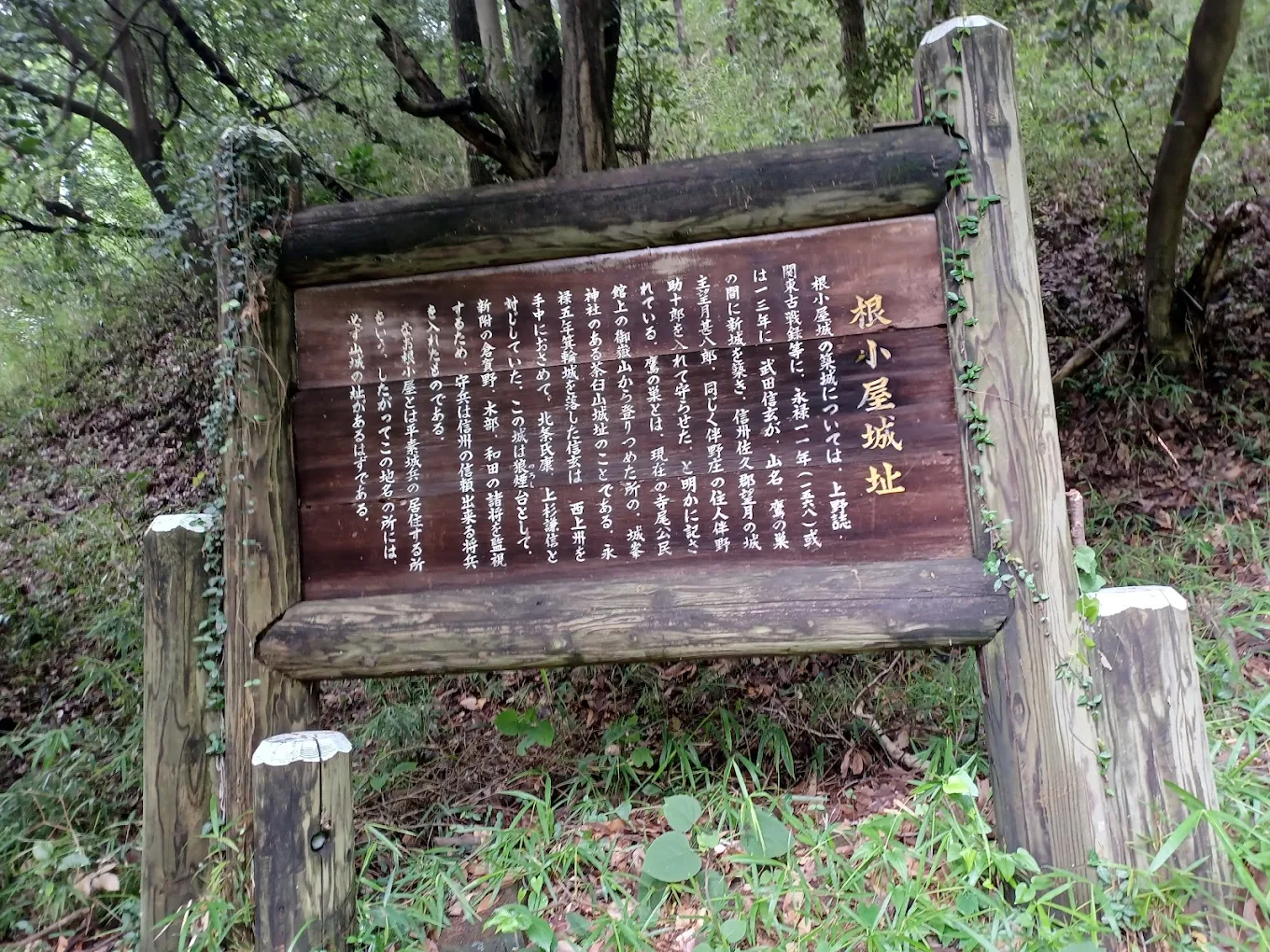
To the south of the castle, the remains of a residence called Negoya Castle have been confirmed, suggesting it was used as a living space during peacetime. Most mountain castles were wartime fortresses, and it was common to live in residences at the foot of the mountain during peacetime.
Defensive Structures
Notable defensive features of Yamana Castle include the well-preserved earthen ramparts, dry moats, and trenches.
Earthen ramparts were constructed to surround the main enclosure and the second enclosure, and earthen ramparts approximately 2-3 meters high can still be seen today. The tops of the ramparts are flat, suggesting the possibility of fences or walls being installed there.
Dry moats functioned as defensive structures separating the enclosures. In particular, dry moats 4-5 meters deep remain on the north and east sides of the main enclosure, playing an important role in preventing enemy intrusion. The bottom of the dry moat is still clearly visible, exhibiting a typical Sengoku period moat form with a V-shaped cross-section.
Moats are defensive structures built to divide ridges, and several moats have been identified at Yamana Castle. Large moats remain, particularly on the north and west sides of the castle, and these were constructed to block enemy advances. Some moats reach a depth of 7-8 meters, demonstrating the advanced civil engineering techniques of the time.
Structure of the Enclosures
The structure of Yamana Castle’s enclosures is as follows:
Honmaru: Located at the highest point of the castle, it was the lord’s final defensive base. It was surrounded on all four sides by earthen ramparts, with a koguchi (entrance) on the south side. A stone monument now stands at the site of the Honmaru, indicating its central location.
Ninokuruwa: Located south of the Honmaru, it was the second most important defensive base. It had a relatively large flat area and is thought to have been used for troop garrisoning and supply storage.
Third Bailey: A bailey located further south of the Second Bailey. While part of it has collapsed, traces of the earthworks can still be seen.
Belt Bailey: Long, narrow baileys are positioned on the east and west sides of the main bailey; these are called belt baileys. Their purpose was to strengthen defenses and secure movement routes.
Entrance and Passages
The main access route to the castle is believed to be along the ridge on the south side. The current approach to the castle follows this route, passing through several baileys before reaching the main bailey.
The entrance (gateway) is clearly visible on the south side of the main bailey, created by cutting into the earthworks. This entrance is not straight but has a slightly curved shape, suggesting a design to prevent enemy incursions.
Water Sources and Wells
The greatest weakness of a mountain castle is securing a water source. At Yamana Castle, several depressions believed to be well sites have been identified within the castle grounds, but detailed investigations have not been conducted. It is believed that water was transported from the foot of the mountain and rainwater was also stored.
Presence or Absence of Stone Walls
Like many mountain castles in the Kanto region, Yamana Castle is basically an earthen castle. No stone walls have been confirmed, and all defensive structures consist of earthen ramparts and moats. This is a typical characteristic of mountain castles in the Kanto region, in contrast to mountain castles in western Japan that make extensive use of stone walls.
Even within Gunma Prefecture, Kanayama Castle in Ota City is known for its large stone walls, but earthen construction was common for small to medium-sized mountain castles like Yamana Castle.
Highlights of the Remains
Main Enclosure Site
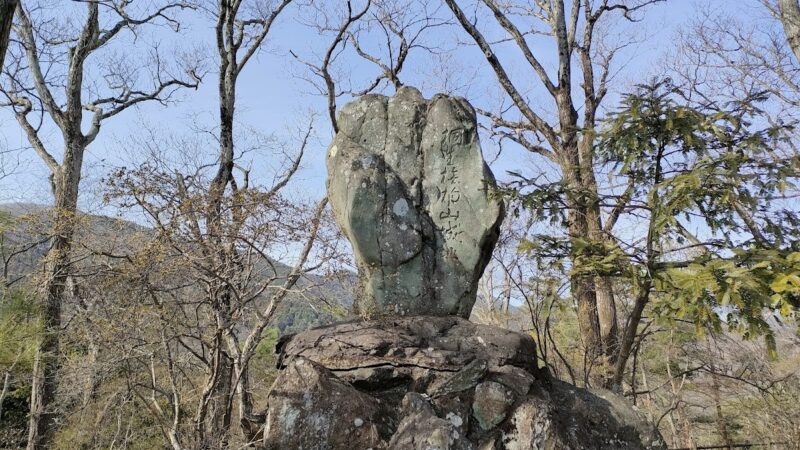
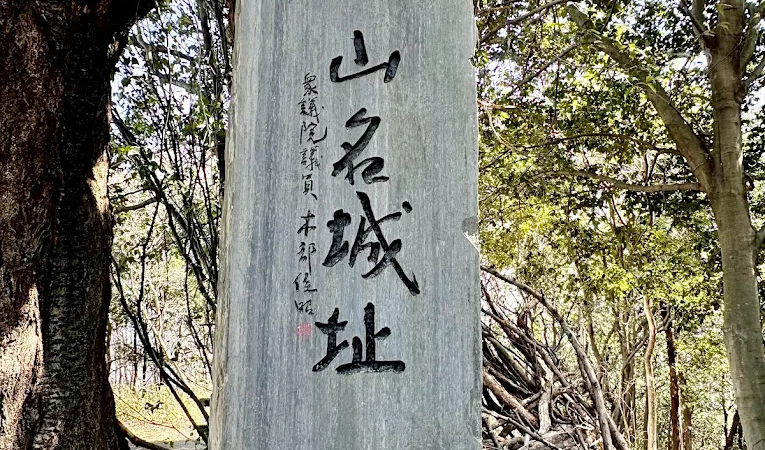
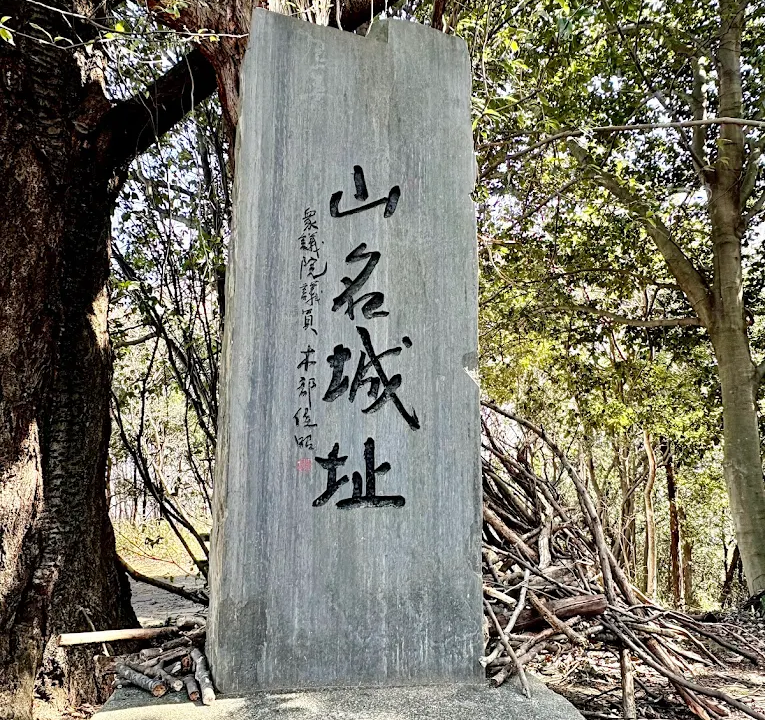
The greatest highlight of Yamana Castle is the well-preserved main enclosure site. The main enclosure is located at the highest point of the castle, and the surrounding earthen ramparts remain clearly visible. A stone monument inscribed “Yamana Castle Site” stands in the center of the main enclosure, making it a popular spot for commemorative photos.
The view from the main keep is magnificent; on a clear day, you can see the city of Takasaki, Mount Haruna, Mount Akagi, and Mount Myogi—the three mountains of Joshu. This view demonstrates the excellent location of Yamana Castle for monitoring the surrounding area.
Earthworks and Dry Moats
The earthworks surrounding the main keep and the second keep remain, reaching a height of 2-3 meters, making them valuable historical remains that allow for direct observation of Sengoku period civil engineering techniques. It’s possible to walk along the top of the earthworks, experiencing the defensive line of the time.
The dry moats are particularly well-preserved on the north and east sides of the main keep. The V-shaped moats, 4-5 meters deep, are still clearly visible, revealing the ingenuity used to prevent enemy intrusion. It’s possible to descend to the bottom of the moats, and the height of the earthworks viewed from below is impressive.
Moats
The moats remaining on the north and west sides of the castle are important historical remains for understanding Yamana Castle’s defensive system. The northern moat, in particular, reaches a depth of 7-8 meters, completely severing the ridge. Excavating this moat required immense labor, demonstrating the Kibe clan’s mobilization capabilities.
Enclosures
Several enclosures are arranged in a stepped pattern, centered around the main enclosure (Honmaru) and the second enclosure (Ninmaru). Visiting these enclosures in sequence allows one to appreciate the ingenuity of the mountain castle’s layout. Earthen ramparts and moats are constructed at the boundaries of each enclosure, demonstrating a consistent concept of multi-layered defense.
Negoya Castle Ruins
At the foot of the mountain lies the remains of a residence called Negoya Castle. This is thought to have been used as a living space during peacetime, and thus has a different character from the main mountain castle. Although the area is now largely residential, traces of earthen ramparts and moats can still be seen in some places.
Access and Visiting Guide
Location
Address: Maeshiro, Yamana-cho, Takasaki City, Gunma Prefecture
Transportation Access
Public Transportation:
- From JR Takasaki Line “Takasaki Station,” take the Gunma Bus bound for “Yamanahara” or “Minosato,” get off at the “Yamana” bus stop, and walk for approximately 20 minutes.
- Approximately 25 minutes on foot from Joshin Dentetsu “Yamana Station.”
By Car:
- Approximately 20 minutes from Kan-Etsu Expressway “Maebashi IC.”
- Approximately 25 minutes from Joshin-Etsu Expressway “Fujioka IC.”
- Parking: Several parking spaces available around the castle ruins (unpaved).
Time to Visit and Estimated Time Required
- From the entrance to the main keep: Approximately 15-20 minutes on foot.
- Time required to visit the castle ruins: Approximately 30 minutes to 1 hour.
- Total time for exploring: Approximately 1-2 hours.
Points to Note When Visiting
- Clothing: Since you will be walking on mountain trails, comfortable walking shoes and clothing are essential.
- Season: Insect repellent is necessary in summer, and warm clothing is necessary in winter.
- Weather: Be careful as the ground can be slippery in rainy weather.
- Facilities: There are no toilets or vending machines at the castle ruins. Please prepare in advance.
- Information Boards: Information boards are installed along the path to the castle, but it is recommended to check a map beforehand.
Best Season for Visiting
- Spring (March-May): The fresh greenery is beautiful, the weather is mild, and it is ideal for a stroll.
- Autumn (October-November): The autumn foliage is magnificent, and the views are excellent.
- Winter (December-February): The air is clear and the views are excellent, but warm clothing is necessary.
- Summer (June-September): The greenery is lush, but be careful of the heat and insects. ## Related Historical Sites in the Surrounding Area
Terao Castle (Terao Nakajo Castle)
Terao Castle, considered the main castle of Yamana Castle, is located approximately 2 kilometers northeast of Yamana Castle. It is said to have been the base of Prince Tadayoshi and was an important strategic point during the Nanboku-cho period. Remains of earthworks and moats still exist today.
Negoya Castle
Located at the foot of Yamana Castle, this is the site of a former residence and is thought to have been the peaceful living space of the Kibe clan. Although the area is now largely residential, some remains can still be seen.
Takasaki Castle
A modern castle located in the center of Takasaki City, built by Ii Naomasa, one of the Four Heavenly Kings of Tokugawa. While from a different era than Yamana Castle, it is important for understanding the castle history of Takasaki City.
Minowa Castle
A nationally designated historic site and one of Japan’s 100 Famous Castles. Located in Misato-cho, Takasaki City, it is known as a famous castle where Nagano Narimasa repelled numerous invasions by Takeda Shingen. It is approximately a 20-minute drive from Yamana Castle.
Cultural Property Designation and Preservation Activities of Yamana Castle
The main keep and second bailey of Yamana Castle were designated as a Takasaki City Historic Site in 1965. This has led to ongoing preservation and maintenance of the remains.
In recent years, local history enthusiasts and cultural property protection groups have been conducting cleaning activities and installing information boards, creating an environment that makes it easier for visitors to understand the castle ruins. Furthermore, the Takasaki City Board of Education conducts regular surveys, and new discoveries are expected.
Relationship between Yamana Castle and the Yamana Clan
The Yamana clan became a powerful force during the Muromachi period, known as the “Lord of One-Sixth,” and produced Yamana Sozen (Mochitoyo), who served as the commander-in-chief of the Western Army during the Onin War. The legend that Yamana Castle is the birthplace of the Yamana clan is cherished and passed down locally.
However, from a historical perspective, there is no conclusive evidence that Yamana Yoshinori actually built this castle, and the remains that can be confirmed today mainly date from the Sengoku period (Warring States period). Nevertheless, the fact that this area is the origin of the place name “Yamana” and the origin of the prestigious samurai family of the Yamana clan evokes a sense of historical romance.
The Yamana clan later expanded their power, based in Tajima Province (present-day Hyogo Prefecture), and became a powerful shugo daimyo (provincial governor) under the Muromachi Shogunate. Although their power declined after the Onin War, they survived as daimyo of Tajima Province from the Sengoku period through the Edo period, and continued until the Meiji Restoration.
Strategic Value of Yamana Castle
Yamana Castle occupied an important position in the defense of western Kozuke Province, particularly the Takasaki region. The castle’s location was strategically valuable for the following reasons:
- View: Situated on high ground offering a wide view of the surrounding area, it allowed for early detection of enemy movements.
- Key Transportation Point: Relatively close to the Nakasendo and Mikuni Kaido roads, it facilitated traffic monitoring.
- Coordination with Terao Castle: Its appropriate distance from the main castle, Terao Castle, enabled mutual support.
- Utilization of Terrain: Its location, utilizing steep mountainous terrain, provided excellent defensive advantages.
The fact that the Kibe clan survived the Sengoku period using this castle as their base demonstrates the high strategic value of Yamana Castle.
Current Status of Archaeological Excavations and Research
While no large-scale archaeological excavations have been conducted at Yamana Castle, surveying and archaeological confirmation surveys have been carried out by the Takasaki City Board of Education.
These surveys are gradually revealing the castle’s layout and the arrangement of its remains, providing valuable data for the study of Sengoku period mountain castles. Further investigations may reveal more details about the castle’s construction date, changes in its owners, and its specific usage.
Significance of Visiting Yamana Castle
While Yamana Castle doesn’t have large-scale reconstructed structures, it’s a valuable historical site where you can observe the structure of a Sengoku period mountain castle in excellent condition. The remains, such as earthworks, dry moats, and trenches, allow you to directly experience the castle-building techniques and defensive philosophies of the time.
Furthermore, the view from the castle ruins is magnificent, offering a panoramic view of the Jomo Three Mountains and Takasaki city. Enjoying this view while contemplating what the Sengoku period warlords saw and thought in this place will be a valuable experience for learning history.
This spot is recommended not only for castle enthusiasts but also for those who enjoy hiking and nature walks. If you’re interested in the Sengoku history of Gunma Prefecture, be sure to visit.
Summary
Yamana Castle is a Sengoku period mountain castle remaining in Takasaki City, Gunma Prefecture, and was used as the residence of the Kibe clan until 1590 (Tensho 18). This historical site, traditionally considered the birthplace of the Yamana clan, is carefully preserved by the local community.
The layout of the castle, centered around the main keep and second bailey, along with the well-preserved earthworks, dry moats, and trenches, are extremely valuable for understanding the structure of a mountain castle from the Sengoku period. Furthermore, the views from the castle ruins are magnificent, making it a well-rewarded spot to visit.
While access by public transport is somewhat inconvenient, it is relatively easy to reach by car. Since the route involves walking along mountain paths, appropriate clothing and preparation are recommended.
Gunma Prefecture boasts numerous famous castle ruins, such as Kanayama Castle and Minowa Castle, but Yamana Castle is also an essential historical site for understanding Gunma’s Sengoku period history. It’s a recommended destination not only for history enthusiasts and castle fans, but also for those who enjoy hiking.