Miyazaki Castle (Tomioka City, Gunma Prefecture) Complete Guide: From a Branch Castle of the Obata Clan to the Residence of Okudaira Nobumasa
What is Miyazaki Castle?
Miyazaki Castle was a flatland castle located in Miyazaki, Tomioka City, Gunma Prefecture, and is now the site of Tomioka Municipal Nishi Junior High School. It functioned as an important branch castle of Kunimine Castle, built by the Obata clan during the Sengoku period, and later became the castle lord of Okudaira Nobumasa, a retainer of Tokugawa Ieyasu. While few remains today, information boards have been installed to convey its past history.
History of Miyazaki Castle
Construction and the Obata Clan Era
Miyazaki Castle is believed to have been built during the Tenbun era (1532-1555) by the Obata clan, whose main castle was Kunimine Castle. The Obata clan was a family centered around Obata Nobumasa, who served Takeda Shingen and was counted as one of the Twenty-Four Generals of Takeda, and they wielded considerable power in western Kozuke Province.
Nobumasa Obata appointed his younger brother, Masataka Obata, the governor of Harima Province, as the lord of Miyazaki Castle. Masataka Obata was a highly regarded figure within the family, having been asked by the Takeda clan to participate in battles independently and even acting as Nobumasa’s substitute. This suggests that Miyazaki Castle was not merely a subsidiary castle, but a strategically important base for the Obata family.
Miyazaki Castle, which played a role in securing the western side of Kunimine Castle, functioned as a crucial point protecting the Obata clan’s sphere of influence. Miyazaki-juku at that time was a bustling central town in the Tomioka region and is said to have prospered as a castle town.
Developments after the fall of the Takeda clan
When the Takeda clan fell in 1582, the Obata clan became vassals of the Hojo clan. However, this choice would later significantly alter the Obata clan’s fate.
In 1590, when Toyotomi Hideyoshi’s “Siege of Odawara” began, the Obata clan, who had sided with the Hojo clan, came under attack from the combined forces of Uesugi Kagekatsu and Maeda Toshiie. Under the fierce assault of the Uesugi-Maeda alliance, Miyazaki Castle, along with Kunimine Castle, fell. This battle marked the end of the Obata clan’s rule in Kozuke Province.
The Appointment of Okudaira Nobumasa and the Castle’s Demolition
After the Siege of Odawara, when Tokugawa Ieyasu entered the Kanto region, Okudaira Nobumasa, Ieyasu’s son-in-law, became the lord of Miyazaki Castle with a stipend of 30,000 koku. Okudaira Nobumasa was known as a warrior who defended Nagashino Castle against Takeda Katsuyori’s forces at the Battle of Nagashino, and was a highly trusted figure by Tokugawa Ieyasu.
Nobumasa was transferred from Kameyama in Mikawa Province and made Miyazaki Castle his residence, governing the Tomioka region. However, this rule did not last long.
In 1601, following his military achievements in the Battle of Sekigahara, Okudaira Nobumasa was transferred to Kano in Mino Province with an increased stipend of 100,000 koku. Consequently, Miyazaki Castle ceased to serve its purpose and was abandoned. Although it lasted only a short period of about 11 years, the Okudaira clan’s rule occupies an important chapter in the history of Miyazaki Castle.
Structure and Layout of Miyazaki Castle
Castle Layout
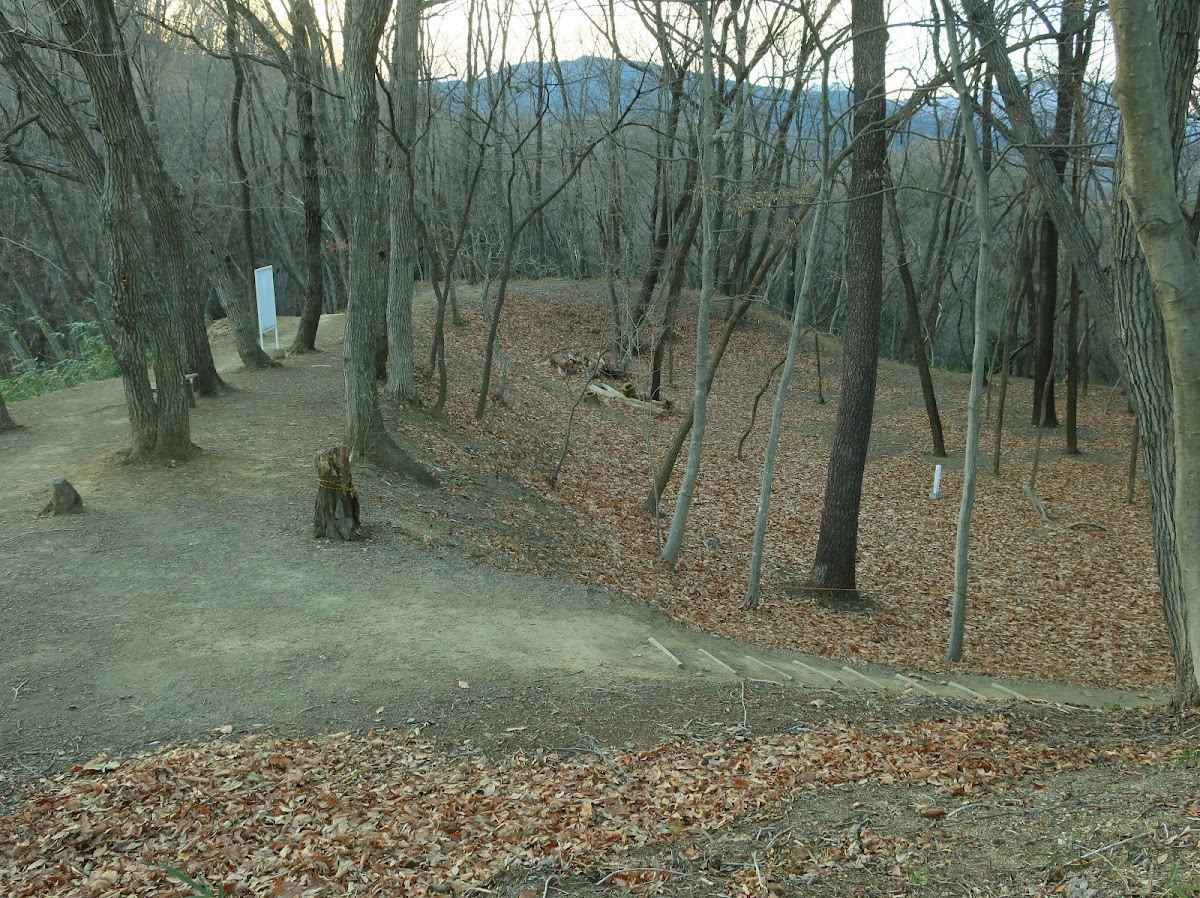
Miyazaki Castle was built in the area of the present-day Tomioka City Nishi Junior High School. The main keep (Honmaru) was located on the west side, and the second enclosure (Ninokuruwa) was on the east side. A dry moat separated the Honmaru and Ninokuruwa, enhancing its defensive capabilities.
As a flatland castle, Miyazaki Castle was built on relatively flat land, making use of the terrain. It is believed that the design considered a balance between habitability and defense.
Defensive Facilities
Dry moats played a crucial role as defensive facilities for the castle. The dry moat separating the main keep and the second enclosure served to prevent enemy intrusion and clearly define the castle’s layout. It is also believed that other defensive structures, such as trenches, were present, but details are currently unknown.
Given its nature as a subsidiary castle, it is presumed that large-scale stone walls and a main keep did not exist. However, it is thought to have possessed sufficient defensive capabilities through earthworks and wooden fences.
Current State of Miyazaki Castle Ruins
Current Status of Remains
Unfortunately, very little remains of Miyazaki Castle exist today. With the construction of Tomioka City Nishi Junior High School, the dry moat between the main keep and the second enclosure was filled in, and a large portion of the castle disappeared.
While it is difficult to directly observe the former castle’s features due to school grounds development, there are some places where slight traces of the past can be felt in the topography.
Information Board and Monument
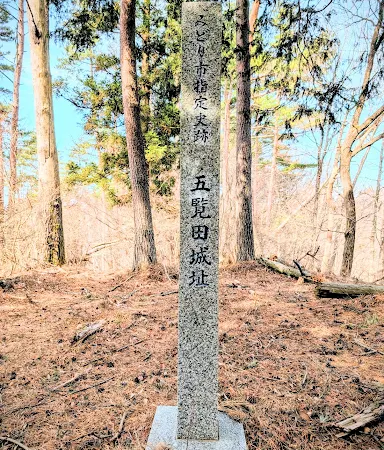
An information board detailing the history of Miyazaki Castle is installed at the site. This board contains information about the castle’s history and the Obata and Okudaira clans, allowing visitors to learn about the history of Miyazaki Castle.
Now that the remains have been lost, this information board is a valuable document that conveys the existence of Miyazaki Castle.
Access and Visiting Information
Location
Address: 20 Miyazaki, Tomioka City, Gunma Prefecture (Tomioka Municipal Nishi Junior High School)
Transportation Access
Access by Train:
- Approximately 10 minutes on foot (approx. 700m) northwest from Kannohara Station on the Joshin Electric Railway Joshin Line
- Approximately 20 minutes on foot from Joshu-Tomioka Station on the Joshin Electric Railway Joshin Line
Access by Car:
- Approximately 10 minutes from Tomioka IC on the Joshinetsu Expressway
- Parking is restricted to school facilities and is not available for general use. Please use nearby public parking lots.
Notes for Visitors
The Miyazaki Castle site is currently the grounds of Tomioka Municipal Nishi Junior High School, so please be careful when visiting.
- Please refrain from entering the school grounds during school hours.
- Information signs are located in places visible from outside the school.
- Please keep your visit brief and be considerate so as not to disrupt school operations.
- When taking photographs, please be careful not to include students or school facilities in your shots.
Related Historical Sites in the Surrounding Area
Kunimine Castle Ruins
Kunimine Castle, the main castle of Miyazaki Castle, is a mountain castle located in Kannari, Tomioka City. It was the base of the Obata clan and had a close relationship with Miyazaki Castle. The remains of the mountain castle at Kunimine Castle are relatively well-preserved, and you can see moats and baileys.
A hiking trail is maintained from the entrance of the Kannari Mountain hiking course, allowing access to the castle ruins. When visiting Miyazaki Castle, visiting Kunimine Castle as well will give you a deeper understanding of the Obata clan’s castle network.
Kannari Castle
Kannari Castle is also a castle ruin related to the Obata clan and is located near Kunimine Castle. These castles worked together to form a defensive line protecting the territory of the Obata clan.
Tomioka Silk Mill
The Tomioka Silk Mill, a representative tourist spot in Tomioka City, is located about 2 km from the Miyazaki Castle ruins. As a World Heritage Site and a modern industrial heritage site, it conveys the industrial development of Japan during the Meiji era. Visiting it in conjunction with a visit to Miyazaki Castle allows you to gain a comprehensive overview of Tomioka City’s history from the Sengoku period to the modern era.
About the Obata Clan Who Built Miyazaki Castle
Origins and Power of the Obata Clan
The Obata clan were powerful local lords in Kōzuke Province, building their power centered in Kanra District. Originally, they served the Yamanouchi Uesugi clan, the Kanto Kanrei (governor of the Kanto region), but switched allegiance to the Takeda clan during Takeda Shingen’s invasion of Kōzuke.
The Obata clan, through Obata Nobusada and Obata Nobumasa, played an important role as collaborators in the Takeda clan’s control of western Kōzuke. In particular, Obata Nobumasa was a warrior counted among the Takeda’s Twenty-Four Generals, enjoying the deep trust of the Takeda clan. ### The Role of Obata Masataka
Obata Masataka, the lord of Miyazaki Castle, held an important position within the family as the younger brother of Obata Nobumasa. Historical records confirm that he played a role far beyond that of a mere lord of a branch castle, sometimes being ordered to lead independent campaigns by the Takeda clan.
Masataka assisted his brother Nobumasa and contributed to maintaining the Obata clan’s power from Miyazaki Castle. His achievements demonstrate the strategic importance of Miyazaki Castle to the Obata clan.
Okudaira Nobumasa and Miyazaki Castle
Hero of the Battle of Nagashino Castle
Okudaira Nobumasa was a warrior who rose to fame in the Battle of Nagashino in 1575. He successfully defended Nagashino Castle, which was besieged by Takeda Katsuyori’s large army, contributing to the victory of the Tokugawa-Oda allied forces. This achievement earned him the trust of Tokugawa Ieyasu, and he married Ieyasu’s daughter, Kamehime.
Okudaira Nobumasa and the Hero of the Battle of Nagashino Castle
Okudaira Nobumasa was a warrior who made a name for himself in the Battle of Nagashino in 1575. He defended Nagashino Castle, which was besieged by Takeda Katsuyori’s large army, and contributed to the victory of the Tokugawa-Oda allied forces. Because of this achievement, he married Tokugawa Ieyasu’s daughter, Kamehime, and gained Ieyasu’s trust. ### Reign as Lord of Miyazaki Castle
In 1590, following Tokugawa Ieyasu’s entry into the Kanto region, Okudaira Nobumasa was transferred from Kameyama in Mikawa Province to Miyazaki in Kozuke Province. As a lord with a 30,000 koku domain, he governed the Tomioka region.
Although Nobumasa’s rule at Miyazaki Castle was relatively short, lasting only about 11 years, he strived to establish a new system of governance under the Tokugawa regime. He is believed to have contributed to the stabilization of the region during the transitional period from the turmoil of the Sengoku period to an era of peace.
Transfer to Kano
In 1601, in recognition of his contributions to the Eastern Army in the Battle of Sekigahara, Okudaira Nobumasa was transferred to Kano in Mino Province with an increased domain of 100,000 koku. This transfer led to the abandonment of Miyazaki Castle, bringing its history to an end.
Historical Significance of Miyazaki Castle
The Obata Clan’s Castle Network
Miyazaki Castle played a crucial role in the Obata clan’s castle network, centered around Kunimine Castle. As a subsidiary castle protecting the western side of the main castle, Kunimine Castle, it played a vital role in preventing enemy invasions and ensuring control of the territory.
Such a network of subsidiary castles was a common form of regional governance during the Sengoku period, and Miyazaki Castle can be considered a typical example.
Transition Period from Sengoku to Early Modern Period
The history of Miyazaki Castle is a prime example of the changes in regional governance during the transition from the Sengoku period to the Edo period. The history of this castle reflects the shift from the Sengoku-era rule of the Obata clan, through the Toyotomi regime, to the early modern system of governance under the Tokugawa shogunate.
Its relatively short period of abandonment can be understood as part of the Tokugawa shogunate’s policy of consolidating and abolishing castles through measures such as the “One Castle Per Province” decree.
Position in Local History
In the history of Tomioka City, Miyazaki Castle was an important center from the medieval to the early modern period. Miyazaki-juku, which flourished as a castle town, functioned as the economic and cultural center of the region.
Although the remains have now been lost, the existence of Miyazaki Castle remains an indispensable element in recounting the history of Tomioka City.
Challenges and Prospects of Miyazaki Castle Research
Limitations of Historical Materials
Historical materials concerning Miyazaki Castle are limited, leaving many questions unanswered regarding the castle’s detailed structure and daily operations. Further research is needed, particularly regarding the specific activities during the time of Obata Masataka and the state of the castle town.
Possibility of Archaeological Investigation
Currently, the site is a school, making archaeological approaches such as excavation difficult. However, if an opportunity arises in the future, investigation of the remains remaining underground could potentially yield new insights.
Contribution to Local History Research
Research on Miyazaki Castle occupies an important position in the study of the local history of Tomioka City. Further comparative research with surrounding castle ruins and related historical materials is expected to shed more light on the actual state of regional control in western Kōzuke Province during the Sengoku period.
Summary
Miyazaki Castle was a Sengoku period castle located in Tomioka City, Gunma Prefecture. It was built by the Obata clan as a branch castle of Kunimine Castle and later became the residence of Okudaira Nobumasa. It fell during the Siege of Odawara in 1590, and afterwards, the Okudaira clan became the lords of the castle under the Tokugawa shogunate, but it was abandoned in 1601.
Currently, the site is occupied by Tomioka City Nishi Junior High School, and although few remains exist, an information board has been installed to convey its history. As an important historical site that played a part in the Obata clan’s castle network and demonstrates the changes in regional control during the transition from the Sengoku period to the early modern period, it occupies an important position in regional history research.
When you visit Tomioka City, you can gain a deeper understanding of the region’s rich history by visiting not only the Tomioka Silk Mill, a World Heritage Site, but also historical sites from the Sengoku period such as the ruins of Miyazaki Castle and Kunimine Castle.