Saikazaki Castle (Wakayama Prefecture) Complete Guide: The Charms of the Castle Ruins Associated with Saika Magoichi and Surrounding Sightseeing
What is Saikazaki Castle?
Saikazaki Castle was a castle from the late Sengoku period located in Saikazaki, Wakayama City, Wakayama Prefecture. Situated on the tip of Saikazaki, a cape in the southwestern part of Wakayama City, it was built in a strategically advantageous location overlooking the Kii Channel. Currently, the castle ruins are home to the “Takanosu Amusement Park,” and the white Saikazaki Lighthouse stands there.
Saikazaki Castle is believed to have been built by Saika Magoichi (Suzuki Shigehide), the leader of the Saika-shu, a renowned group of musketeers. It was used to shelter Honganji Kyonyo, who was defeated in the Ishiyama War against Oda Nobunaga. It was abandoned after Toyotomi Hideyoshi’s “Kishu Campaign” in 1585 (Tensho 13), and despite its short history, it was an important stage in the late Sengoku period.
Differences from Saika Castle
Saikazaki Castle is often confused with “Saika Castle.” However, they are different castles located in different places. Saika Castle is a hill castle built on Mt. Myoken near Wakaura-naka 3-chome, Wakayama City, and is also known as “Myokenyama Castle.” It is believed to have been built by Suzuki Sadaifu Shigeoki, the father of Saika Magoichi, and served as the headquarters of the Saika clan.
On the other hand, Saikazaki Castle is located at the tip of the Saikazaki cape, approximately 2 km west of Saika Castle. The main difference is that while Saika Castle is located on an inland hill, Saikazaki Castle was built on a strategic location on a cape jutting out into the sea.
History of Saikazaki Castle
Background of Construction and Saika Magoichi
While there are few clear historical records regarding the construction period of Saikazaki Castle, and many details remain unknown, it is estimated to have been built in the early 1580s. The central figure in the castle’s construction was Saika Magoichi (Suzuki Shigehide), the leader of the Saika-shu.
The Saika-shu were a group of local lords in Kii Province, and were active during the Sengoku period as a mercenary group skilled in the use of firearms. Composed of samurai families such as the Suzuki, Dobashi, Shimamura, Kurimura, Matsue, and Miyamoto clans, they allied with Honganji Temple and confronted Oda Nobunaga in the Ishiyama War (1570-1580), where their firearms skills caused significant trouble for Nobunaga’s army.
The Castle that Hidden Kyonyo
In 1580, a peace agreement was reached between Ishiyama Honganji Temple and Oda Nobunaga, but Kyonyo, the eldest son of Honganji’s head priest Kennyo, opposed the peace and advocated for continued resistance. Ultimately, Kyonyo was forced to leave Ishiyama Honganji Temple and fled to Kii Province.
At this time, Saika Magoichi is said to have built Saikazaki Castle to protect Kyonyo. Its strategic location, utilizing the topography of a cape, and the possibility of escape by sea, suggest it was a strategic choice to prepare for any unforeseen circumstances. Kyonyo spent some time here and later became the founder of Higashi Honganji Temple.
The Kii Campaign and the Abandonment of the Castle
In 1585 (Tensho 13), Toyotomi Hideyoshi, advancing his unification of Japan, invaded Kii Province with a massive army of approximately 60,000 men to subdue the Saika and Negoro clans. This was the “Kii Campaign.”
Faced with Hideyoshi’s overwhelming military strength, the Saika clan continued to resist but were ultimately forced to surrender. Saika Magoichi also surrendered to Hideyoshi, and it is believed that Saikazaki Castle was abandoned at this time. After the Kii Campaign, Kii Province came under the control of Hideyoshi’s younger brother, Toyotomi Hidenaga, and later the Asano and Tokugawa clans became its rulers.
Saikazaki Castle’s existence was extremely short, estimated to have lasted only a few years, but it remains in history as a castle symbolizing the turmoil of the late Sengoku period.
Structure and Layout of Saikazaki Castle
Location and Topography
Saikazaki Castle was built on the tip of the Saikazaki cape, which juts out into the Kii Channel on the western side of Wakayama Bay. Surrounded by the sea on three sides, it was a natural stronghold, a maritime castle that only needed to defend the landward side behind it.
The cape’s elevation is approximately 30-40 meters, utilizing the terrain where steep cliffs drop into the sea. This terrain made it difficult for enemies to approach and allowed for defense with a small force. It was also an excellent location for monitoring maritime traffic and securing escape routes by sea in emergencies.
Scale and Remains of the Castle
Many details of Saikazaki Castle’s layout remain unknown, and most of the remains have been lost due to later development. The castle grounds were relatively small, centered around the tip of the cape, suggesting it served more as an emergency fort or refuge than a full-fledged castle.
Currently, no clear remains of stone walls or moats can be found at the castle site, but it is possible that defensive structures utilizing the terrain existed. It is presumed that moats and earthworks were constructed at the base of the cape, but details are unknown.
Edo Period Battery Site
Saikazaki also has the remains of a battery (artillery fort) built by the Kishu Domain in the late Edo period. This is a separate facility from Saikazaki Castle, established to prepare for the arrival of foreign ships. Built at the tip of the cape known as Tonga-no-hana, it was defended by the chief retainer, Miura Nagato-no-kami.
The battery was surrounded by earthworks, with the lower part of the earthworks constructed of stone. While this battery site is from a different era than Saikazaki Castle, it demonstrates that the strategically important location of Saikazaki was considered militarily significant across different periods.
Current Saikazaki Castle Ruins: Takanosu Amusement Park
Development of Takanosu Amusement Park
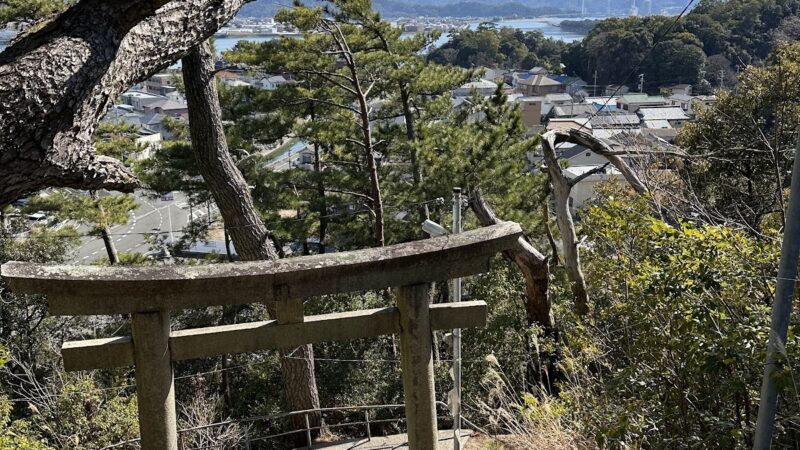
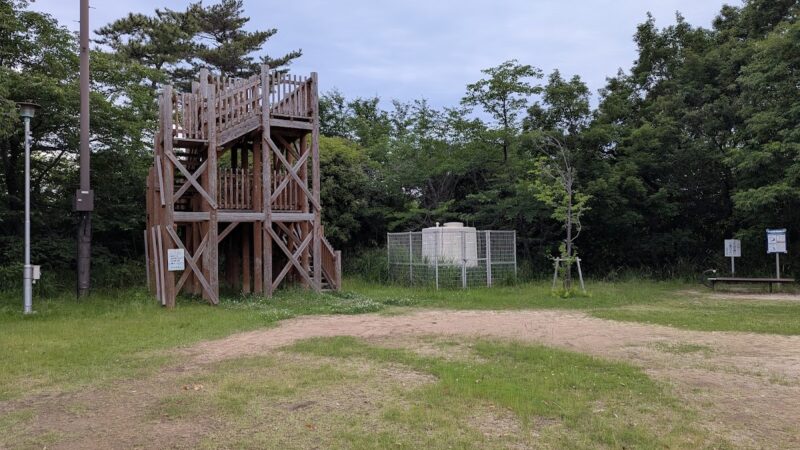
The Saikazaki Castle ruins have been developed into “Takanosu Amusement Park,” a place of relaxation for local residents and tourists. The park features observation decks and rest facilities, offering stunning views of the Kii Channel.
Although called an amusement park, it’s not a playground with equipment, but rather a facility that emphasizes natural scenery and observation. Information boards and explanatory signs about the castle ruins are also installed, allowing visitors to enjoy a stroll while learning about history.
Saikazaki Lighthouse
Within Takanosu Amusement Park stands the beautiful white Saikazaki Lighthouse (officially known as Saikazaki Lighthouse). Established in 1960 (Showa 35), this lighthouse plays a vital role in ensuring the safety of ships navigating the Kii Channel.
The lighthouse is approximately 13 meters tall, 41 meters above sea level, and has a white, cylindrical shape. From the area around the lighthouse, you can see Wakayama Bay, the Kii Channel, and on clear days, even Awaji Island and Shikoku, making it a popular spot for breathtaking views.
While the lighthouse itself is usually closed to visitors, the views from the surrounding observation areas are magnificent, especially at sunset.
Views and Scenery
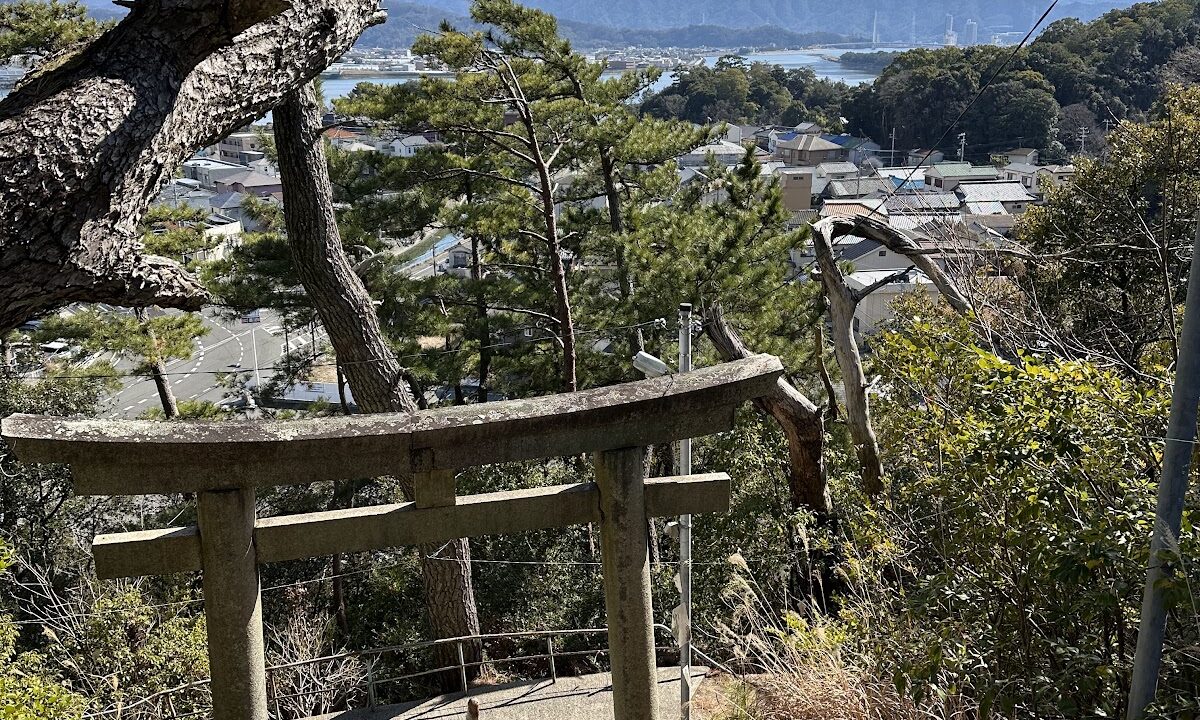
The view from Takanosu Amusement Park is one of the greatest attractions of visiting the Saikazaki Castle ruins. Below, the blue sea of the Kii Channel stretches out, and you can see the white waves crashing against the rocks. To the east, you can see Wakayama city across Wakayama Bay, and to the northeast, you can see Wakayama Castle in the distance.
To the west, the coastline of the Kii Peninsula continues, and to the south, the horizon of the Pacific Ocean stretches out. If the weather is good, a grand panorama unfolds, allowing you to see as far as Awaji Island and the mountains of Shikoku.
In spring, you can enjoy cherry blossoms; in summer, the lush blue sea; in autumn, the clear air and panoramic views; and in winter, the sunset sinking below the horizon—you can enjoy the beautiful scenery of each season.
The Charms of the Saikazaki Area
A Townscape Known as “Japan’s Amalfi”
In recent years, Saikazaki has attracted attention as “Japan’s Amalfi” due to its unique landscape. The scenery of houses densely built on steep slopes resembles the scenic Amalfi in Italy, hence the nickname.
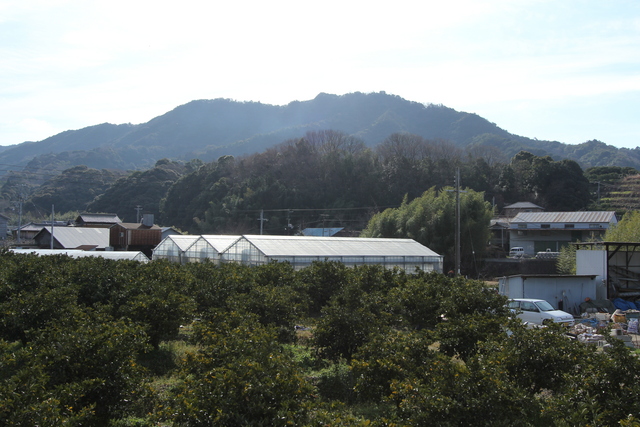
Developed as a fishing town, Saikazaki built houses in a stepped fashion on the slopes to make effective use of the limited flat land. Narrow alleys and stone steps intertwine like a maze, creating a nostalgic atmosphere.
Looking back as you climb the slopes, you can see the blue sea over the rooftops of the houses, creating a unique and beautiful landscape. This townscape is also popular with photography enthusiasts and is known as a spot perfect for social media photos.
Japan Heritage Site “Waka-no-ura: A Treasure Trove of Spectacular Scenery”
Saikazaki is one of the important areas that make up the Japan Heritage Site “Waka-no-ura: A Treasure Trove of Spectacular Scenery,” which was certified in 2017. Waka-no-ura has been known as a scenic spot since the Manyo period, and many poets have composed waka poems about its beautiful scenery.
Saikazaki is part of Waka-no-ura and is also called “Oku-Waka-ura.” Known as a place of scenic beauty since ancient times, the landscape, where history and nature are in harmony, remains to this day. Its value is being re-recognized as a component of the Japan Heritage Site.
Bansho Garden
Bansho Garden is another popular tourist spot near Saikazaki. Bansho Garden is a garden developed on the site of a guardhouse established by the Kishu Domain during the Edo period, and is known as a garden with spectacular views facing the sea.
From the garden, you can enjoy a panoramic view of the Kii Channel, and the contrast between the blue sea nurtured by the Kuroshio Current and the sky creates a beautiful landscape. There is also a tea house in the garden where you can enjoy matcha while admiring the scenery (fee required). The Saikazaki Castle Ruins and the Guardhouse Garden are within walking distance, making them must-visit spots when exploring Saikazaki.
Access to Saikazaki Castle
Access by Public Transportation
From JR Wakayama Station/Nankai Wakayamashi Station
To reach Saikazaki Castle Ruins (Takanosu Amusement Park), take a Wakayama Bus from either Wakayama Station or Nankai Wakayamashi Station.
- From JR Wakayama Station: Take the Wakayama Bus “Saikazaki Loop Line,” get off at the “Saikazaki” bus stop, and walk for approximately 10 minutes.
- From Nankai Wakayamashi Station: Take the Wakayama Bus “Saikazaki Loop Line,” get off at the “Saikazaki” bus stop, and walk for approximately 10 minutes.
The bus journey takes approximately 30-40 minutes. Since you will need to walk uphill from the bus stop to Saikazaki Lighthouse, comfortable walking shoes are recommended.
Access by Private Car
From the Hanwa Expressway
- Approximately 30 minutes from the Hanwa Expressway “Wakayama IC” via National Route 24 and National Route 42
- Approximately 25 minutes from the Hanwa Expressway “Wakayama Minami Smart IC” via Prefectural Road 151 and National Route 42
Parking Information
There are small parking spaces around Takanosu Amusement Park, but the number of spaces is limited. It can get crowded during tourist season and on weekends, so we recommend considering using public transportation.
Location
641-0062 Saikazaki, Wakayama City, Wakayama Prefecture
Nearby Tourist Attractions
Kishu Toshogu Shrine
Located approximately 4km northeast of Saikazaki, Kishu Toshogu Shrine is one of the Toshogu shrines dedicated to Tokugawa Ieyasu. It was founded in 1621 (Genna 7) by Tokugawa Yorinobu, the first lord of the Kishu Domain.
The vermilion-lacquered shrine, located at the top of 108 stone steps, was built in imitation of Nikko Toshogu Shrine and is designated as a National Important Cultural Property. From the shrine grounds, you can enjoy a panoramic view of Wakayama Bay, making it a spot where you can enjoy both history and scenery.
Wakayama Tenmangu Shrine
Wakayama Tenmangu Shrine is a shrine dedicated to Sugawara no Michizane, the god of learning, and is located near Kishu Toshogu Shrine. Founded in 1606 (Keicho 11), the vermilion-lacquered main hall is a National Important Cultural Property.
The view from the main hall, reached by climbing steep stone steps, is magnificent, offering beautiful views of Wakayama Bay. Many worshippers visit during exam season.
Wakayama Castle
Located in the heart of Wakayama City, Wakayama Castle is a famous castle known as the residence of the Kishu Tokugawa family. Founded in 1585 by Toyotomi Hideyoshi, who had his younger brother Hidenaga build the castle, it flourished as a castle town of the Kishu Tokugawa family, who held a domain of 555,000 koku during the Edo period.
The current castle tower was rebuilt in 1958, but the stone walls and moats remain as they were at the time. From the castle tower, you can enjoy a panoramic view of Wakayama city, and the interior displays materials related to the Kishu Tokugawa family.
It’s about a 20-minute drive or a 50-minute bus and walking trip from Saikazaki Castle Ruins.
Notes and Recommendations for Visiting
Best Time and Season for Visiting
Saikazaki Castle Ruins are open year-round, but the best times to visit are spring (March-May) and autumn (October-November). The weather is mild, the chances of sunny days are high, and it’s ideal for enjoying the panoramic views.
The best time to visit is at dusk. The sunset over the Kii Channel is a spectacular sight, and the way the sky turns crimson is breathtakingly beautiful. The view in the crisp morning air is also exceptional.
Clothing and Items to Bring
Saikazaki is an area with many slopes and stone steps, so comfortable shoes such as sneakers are essential. Avoid visiting in heels or sandals.
It can be windy due to its coastal location, so a light jacket or cardigan is recommended. Also, bring a hat and sunscreen during sunny seasons. Bringing a camera or binoculars will enhance your enjoyment of the scenery.
Time Required
Visiting only the Saikazaki Castle Ruins (Takanosu Amusement Park) takes about 30 minutes to an hour, but if you want to explore the townscape of Saikazaki and visit the Bansho Garden, allow 2-3 hours.
If you want to stroll around and take photos at a leisurely pace, we recommend allocating half a day.
Food and Souvenirs
Saikazaki is a fishing town, so there are restaurants where you can enjoy fresh seafood dishes. We especially recommend the set meals and rice bowls made with locally caught seafood.
While there are no large souvenir shops around Saikazaki, Wakayama city has numerous shops selling local specialties such as Wakayama ramen, pickled plums, and mandarins.
Summary: The Historical Value and Modern Charm of Saikazaki Castle
Saikazaki Castle existed for only a short period at the end of the Sengoku period, but it was an important historical stage connecting Saika Magoichi, the legendary leader of a group of musketeers, and Honganji Kyonyo, a religious leader. It is also remembered as a symbol of resistance in Kii Province during Toyotomi Hideyoshi’s conquest of Kii Province, part of his process of unifying Japan.
Although no clear remains of Saikazaki Castle exist today, the site has been developed into Takanosu Park, and along with the beautiful Saikazaki Lighthouse, it attracts many people as a scenic spot. This area, often called “Japan’s Amalfi,” boasts a unique townscape, is part of the Waka-no-ura area designated as a Japan Heritage site, and offers magnificent views of the Kii Channel, making it a captivating place where history and nature harmonize.
When visiting Wakayama, be sure to stop by the Saikazaki Castle ruins and enjoy the beautiful sea views while reflecting on the history of the Sengoku period. The same sea and sky that Saika Magoichi saw still stretch out before you today.