History and Highlights of Sakunobe Castle (Kawasaki City, Kanagawa Prefecture) | A Key Defense Point for Kamakura Built by Inage Shigenari
What is Sakunobe Castle?
Sakunobe Castle is a hilltop castle located in Shimosakunobe, Takatsu Ward, Kawasaki City, Kanagawa Prefecture. Built on the hilly area on the right bank of the Tama River, at the eastern edge of the Tama Hills, this castle is said to have been built in the early Kamakura period by Inage Saburo Shigenari, a retainer of the Kamakura Shogunate.
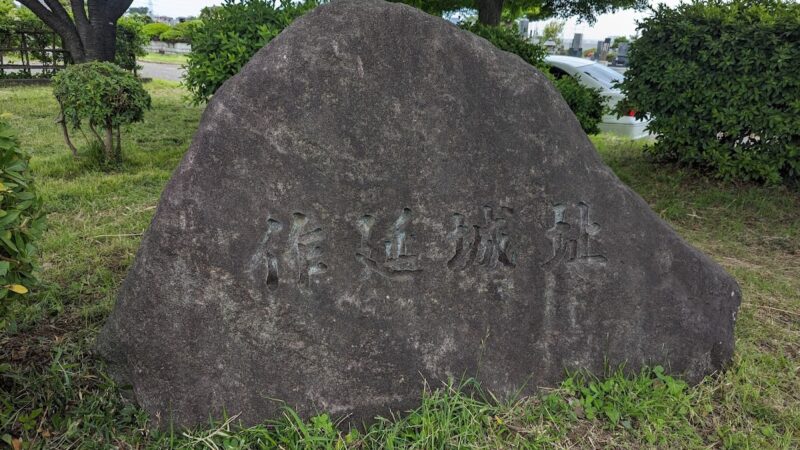
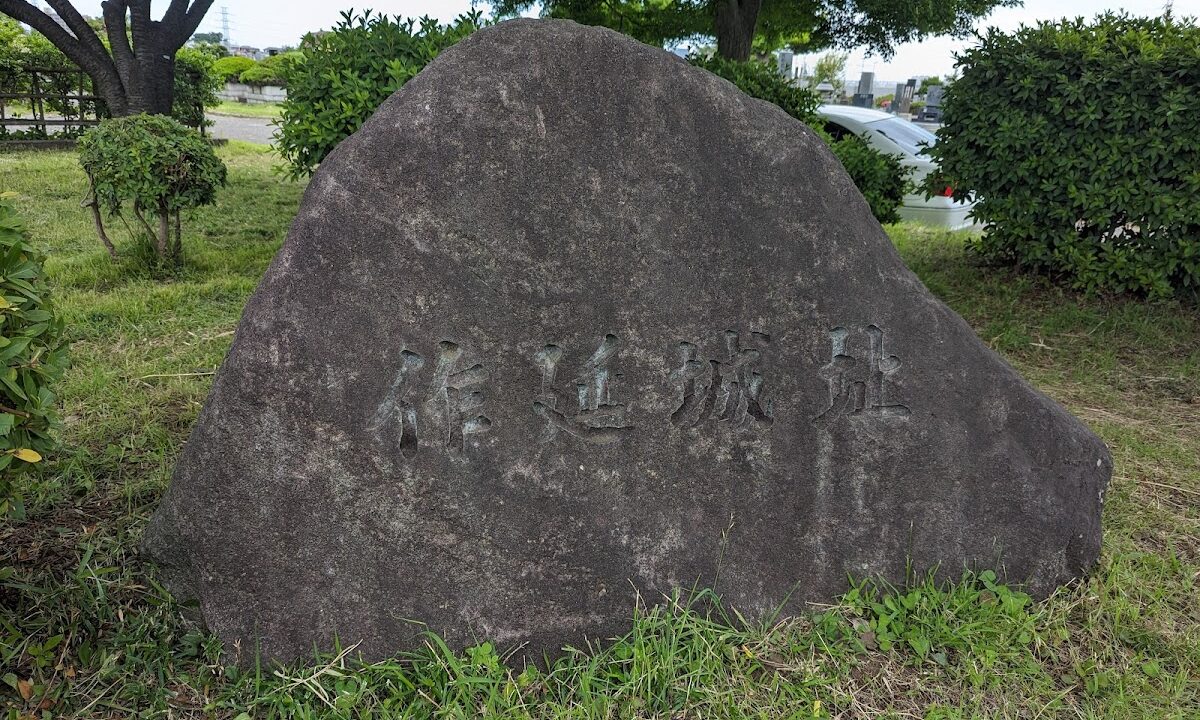
Currently, the castle site is the Kawasaki City Midorigaoka Cemetery, and although few remains of the original structure exist, a castle site monument and explanatory sign are installed near the cemetery entrance, conveying that this area was once an important military base. Located in an urban area, about a 10-minute walk from Tsudayama Station on the JR Nambu Line, it is a valuable historical site where you can feel the history of the Kamakura period.
History of Sakunobe Castle
Background of Construction and Inage Shigenari
Sakunobe Castle was built in the early Kamakura period by Inage Saburo Shigenari (Inage Shigenari), a member of the Chichibu clan, which was descended from the Kanmu Taira clan. Inage Shigenari was a member of the Oyamada clan, whose base was Oyamada Castle, and was a powerful warlord with strong influence in the Tama region.
Shigenari married the sister of Hojo Masako (or possibly her cousin) and was highly valued as a close confidant of Minamoto no Yoritomo. He enjoyed Yoritomo’s deep trust and played a crucial role in the early days of the Kamakura Shogunate. Shigenari’s base was Masugatayama Castle (present-day Masugata, Tama Ward, Kawasaki City), and Sakunobe Castle is thought to have been built as a branch castle.
Part of the Kamakura Defense Network
Sakunobe Castle was not a standalone fortress, but rather functioned as part of a network of castles designed to defend Kamakura. On the Tama Hills on the right bank of the Tama River, castles such as Ozawa Castle, Masugata Castle, and Sakunobe Castle were built, forming a northern defensive line for Kamakura.
These castles monitored major roads such as the Tokaido and Kamakura Kaido, and played a role in preventing enemy invasions from the north. Sakunobe Castle was located at the eastern end of this defensive network, and was an important base that prevented approaches to Kamakura, utilizing the Tama River as a natural moat.
The Hatakeyama Shigetada Rebellion and the Castle’s Demolition
The history of Sakunobe Castle was short-lived. In 1205 (Genkyu 2), the “Hatakeyama Shigetada Rebellion” broke out. This incident was a political purge in which Hojo Yoshitoki used a stratagem to eliminate Hatakeyama Shigetada, a powerful samurai.
Inage Shigenari was related to Hatakeyama Shigetada by marriage and is also said to have murdered Shigetada’s son, Shigeyasu, at his own residence. Following this incident, Shigenari himself was killed by Hojo Yoshitoki. In the process of the Hojo clan consolidating power after the death of Minamoto no Yoritomo, the Inage clan became targets of purges.
It is believed that with the downfall of Inage Shigenari, Sakunobe Castle was also abandoned. It was a castle that fulfilled its role in a short period of only a few decades after its construction.
Structure and Characteristics of Sakunobe Castle
Location
Sakunobe Castle is a flatland castle built on a hill approximately 40 meters above sea level, at the eastern edge of the Tama Hills. Its location takes advantage of the topography, with the east side facing the lowlands of the Tama River and the west side bordering the hilly region.
Its position allowed it to utilize the Tama River as a natural moat, giving it an advantage in intercepting enemies attacking from across the river from a high vantage point. Furthermore, its location overlooking the road to Kamakura suggests it also served to monitor a strategic transportation hub.
Layout and Remains
Unfortunately, due to the development of the current Midorigaoka Cemetery, the remains of Sakunobe Castle have been almost completely lost. Records show that place names such as Shiroyama (Castle Mountain), Hori (Moat), Yagurazuka (Watchtower Mound), and Tenshudai (Castle Tower Base) once existed, and these place names allow us to infer the castle’s structure.
The “Shinpen Musashi no Kuni Fudoki-ko” (New Compilation of the Topography of Musashi Province) mentions the presence of Inage Saburo’s residence, suggesting that traces of it could still be confirmed during the Edo period. The place name Shiroyama is thought to indicate the location of the main enclosure, Hori the location of defensive structures, and Yagurazuka the location of a watchtower.
Regarding the place name Tenshudai, since it is unlikely that a castle tower existed in a Kamakura-period castle, it is possible that this is a later designation or that it referred to a high place where a watchtower or similar structure might have existed.
Characteristics as a Hilltop Castle
Sakunobe Castle is classified as a hilltop castle. A hilltop castle is a castle built on terrain intermediate between plains and mountains, combining the convenience of plains with the defensive capabilities of a mountain castle.
Castles from the Kamakura period are thought to have had relatively simple structures, unlike the complex layouts of castles from the Sengoku period. The general form involved a central enclosure (main citadel) fortified with moats and earthworks, with fences and watchtowers added as needed.
Sakunobe Castle is also presumed to have had a relatively simple structure, with the main citadel located on the top of a hill and surrounded by moats and earthworks. It likely did not have a large permanent military presence and functioned as a base for surrounding samurai to gather in times of emergency.
Current Site of Sakunobe Castle
Midorigaoka Cemetery
The site of Sakunobe Castle is now the Kawasaki City Midorigaoka Cemetery. The cemetery was developed during the Showa period, and in the process, the castle’s remains were lost. Many tombstones line the vast grounds of the cemetery, making it difficult to imagine the castle’s former appearance.
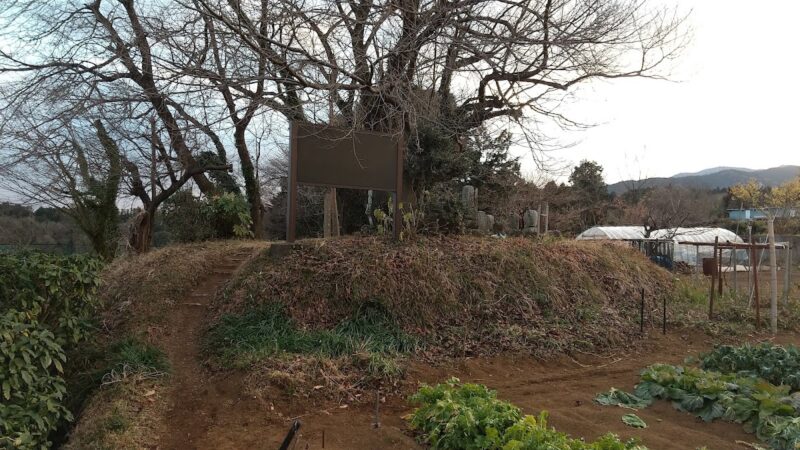
However, an explanatory sign about Sakunobe Castle and a monument marking the castle site are located near the cemetery entrance, indicating that this area was once an important historical center. The hilly terrain on which the cemetery is located still reflects the topography from the time the castle was built.
Information Board and Castle Site Monument
An information board located near the entrance of Midorigaoka Cemetery concisely summarizes the history of Sakunobe Castle. The board includes the following information:
- On the Tama Hills on the right bank of the Tama River, castles such as Ozawa Castle, Masugata Castle, and Sakunobe Castle were built as defensive strongholds of medieval Kamakura.
- Place names such as Shiroyama (Castle Mountain), Hori (Moat), Yagurazuka (Watchtower Mound), and Tenshudai (Castle Tower Base) exist, suggesting that this area is the site of Sakunobe Castle.
- It is said to have been built by Inage Saburo Shigenari, who had his base on Masugatayama.
The castle site monument is modest, but it is an important landmark for castle enthusiasts visiting this area.
Surrounding Topography and Landscape
While the area around Midorigaoka Cemetery is being developed as a residential area, the topography of the Tama Hills still remains. To the east of the cemetery is a steep cliff, below which lies a low-lying area. This topography suggests that the castle was built on high ground, monitoring the Tama River to the east.
From around Tsudayama Station, the elevation difference of the hills is clearly visible. The road from the station to the cemetery is uphill, indicating that the castle was built on a defensible high ground.
Access and Visiting Information
Access by Train
The nearest station to the Sakunobe Castle Ruins is Tsudayama Station on the JR Nambu Line. Midorigaoka Cemetery is approximately a 10-minute walk from the station. The Nambu Line connects Kawasaki Station and Tachikawa Station, offering relatively good access from central Tokyo.
Tsudayama Station is a small station where only local trains stop, but the surrounding area is a quiet residential neighborhood. There are signs from the station to the cemetery, so you are unlikely to get lost.
Access by Car
If you are visiting by car, Midorigaoka Cemetery has a parking lot. However, the cemetery’s parking lot is for those visiting graves, so please be considerate if you are only visiting the castle ruins.
When setting your car navigation system, it is best to search for “Kawasaki City Midorigaoka Cemetery.” However, be careful, as if you do not know the exact location of the cemetery, you may be directed to an apartment building on the other side of a cliff.
Points to Note During Your Visit
Since the Sakunobe Castle ruins are located within a cemetery, please note the following points when visiting:
- Respect the fact that it is a cemetery: Please visit quietly so as not to disturb those visiting graves.
- Limited Points of Interest: Since there are almost no remaining structures, the main content of your visit will be checking the information boards and the castle ruins monument.
- Estimated Time Required: Reading the information boards and checking the surrounding terrain will take approximately 15-30 minutes.
- Photography: When taking photographs within the cemetery, please be careful not to include tombstones or other objects in your photos.
Visiting Nearby Castle Ruins
When visiting Sakunobe Castle, visiting the related castle ruins in the surrounding area will help you understand the overall picture of the Kamakura defense network:
- Masugata Castle: The base of Inage Shigenari. Approximately 3km from Sakunobe Castle.
- Ozawa Castle: The western base of the Kamakura defense network. Approximately 5km from Sakunobe Castle.
- Kozukue Castle: A castle from the Sengoku period, but located in the same Tama Hills.
It is possible to visit these castles in one day, allowing you to experience the history of castles in the Tama region from the Kamakura period to the Sengoku period.
Historical Significance of Sakunobe Castle
Research on Kamakura Period Castles
Sakunobe Castle is one of the important examples for the study of Kamakura period castles. Although the remains are lost, we can infer the appearance of the castle at the time from historical documents and place names.
Castles of the Kamakura period differed significantly in character from those of the Sengoku period. They had fewer permanently stationed troops, functioned as the lord’s residence in peacetime, and served as a base for surrounding samurai to gather in times of conflict. Sakunobe Castle is thought to be a typical example of such a Kamakura period castle.
The Inage Clan’s Scope of Influence
The existence of Sakunobe Castle indicates that the Inage clan held extensive influence in the Tama region. With Masugata Castle as their base, and branch castles such as Sakunobe Castle and Ozawa Castle, they controlled a wide area of the Tama River basin.
This reflects the system in which the Kamakura Shogunate granted vast territories to powerful vassals and entrusted them with governing those regions. The Inage clan functioned as a military and administrative base in the Tama region.
The Hojo Clan’s Power Consolidation Process
The abandonment of Sakunobe Castle symbolizes the process by which the Hojo clan consolidated power within the Kamakura Shogunate. The rebellion of Hatakeyama Shigetada and the subsequent purge of Inage Shigenari were part of a series of actions by the Hojo clan to eliminate powerful samurai during the political turmoil following the death of Minamoto no Yoritomo.
The short history of Sakunobe Castle holds significant importance as a historical site that tells the story of the political upheaval of the early Kamakura period.
Memories of the Castle Remaining in Place Names
Shimosakunobe and Kamisakunobe
In present-day Takatsu Ward, Kawasaki City, the place names Shimosakunobe and Kamisakunobe remain. These place names are believed to have originated in relation to Sakunobe Castle.
According to tradition, Sakunobe Castle was located on the hill where Midorigaoka Cemetery now stands, and the area below the castle came to be called “Shimosakunobe,” while the area above it was called “Kamisakunobe.” Although the character for “castle” no longer remains in the place names, the name “Sakunobe” itself conveys the memory of the castle to this day.
The Place Name of Tsudayama
The place name “Tsudayama,” the nearest station, is also related to the history of this area. Tsudayama originates from the fact that it was the territory of the Tsuda clan, a hatamoto (direct retainer of the shogun) during the Edo period. Prior to that, it was a hilly area where Sakunobe Castle stood.
The changes in place names indicate that this area passed through the hands of various rulers over time.
The Significance of Visiting Sakunobe Castle
Medieval Memories Remaining in an Urban Area
The ruins of Sakunobe Castle are a valuable medieval historical site remaining in a modern urban area. While most of the remains have been lost, the explanatory signs and topography reveal that this area was once an important base for the defense of Kamakura.
In Kawasaki City, which is undergoing rapid urbanization, preserving and passing on such historical heritage to future generations is of great importance.
As Part of a Castle Tour
Sakunobe Castle might be classified as a so-called “minor castle.” It doesn’t have a keep or stone walls, nor does it have a vast remaining fortification. However, that’s precisely why it’s worth visiting for castle enthusiasts.
Visiting not only famous castles but also smaller castle ruins like these allows for a deeper understanding of the overall history of Japanese castles. What were castles like during the Kamakura period? Why were they built in this location? And how did castles eventually lose their role in history? Sakunobe Castle is a historical site that provides answers to these questions.
Understanding Local History
Visiting Sakunobe Castle is an entry point to understanding the history of Kawasaki City and the Tama region. While Kawasaki is now part of a major metropolitan area, it was once an important region connecting Kamakura and Musashi Province, and a place where many samurai were active.
Knowing the history of Sakunobe Castle provides a clearer picture of the region’s historical background. It will also be an opportunity for local residents to learn about the history of their own area.
Summary
Sakunobe Castle is a flatland castle from the Kamakura period, located in Takatsu Ward, Kawasaki City, Kanagawa Prefecture. Built by Inage Saburo Shigenari, a retainer of the Kamakura Shogunate, Sakunobe Castle played a vital role in Kamakura’s defense network. However, it was abandoned in 1205 following the downfall of the Inage clan during the Hatakeyama Shigetada Rebellion.
Currently, the site is the Kawasaki City Midorigaoka Cemetery, and while few remains exist, an explanatory sign at the cemetery entrance and a castle site monument convey the history of the area. Its convenient location, approximately a 10-minute walk from Tsudayama Station on the JR Nambu Line, makes it easily accessible.
While the points of interest are limited, it is a valuable historical site for learning about Kamakura-period castles, the history of the Inage clan, and the process by which the Hojo clan seized power. Visiting it along with the nearby Masugata Castle and Ozawa Castle will provide a comprehensive understanding of Kamakura’s defense network.
In today’s increasingly urbanized world, Sakunobe Castle quietly reminds us of the importance of cherishing and passing on such historical legacies to future generations.
Frequently Asked Questions
Q: Are there any remaining structures of Sakunobe Castle?
A: Unfortunately, due to the development of the current Midorigaoka Cemetery, almost all of the remains of Sakunobe Castle have been lost. Only an explanatory sign and a castle site monument remain near the cemetery entrance; structures such as moats and earthworks cannot be confirmed. However, the hilly terrain itself retains its original form, allowing us to understand the site conditions for the castle’s construction.
Q: How long does it take to visit Sakunobe Castle?
A: Visiting the Sakunobe Castle ruins mainly involves reading the explanatory sign and examining the surrounding terrain, so 15-30 minutes is sufficient. However, if you also visit related castle ruins such as Masugata Castle and Ozawa Castle in the vicinity, it will be a half-day to full-day trip.
Q: When was Sakunobe Castle built, and when was it abandoned?
A: Sakunobe Castle is believed to have been built in the early Kamakura period, from the late 12th to the early 13th century, by Inage Saburo Shigenari. It is presumed to have been abandoned in 1205 (Genkyu 2), when the Inage clan was destroyed during the Hatakeyama Shigetada Rebellion. The castle had a very short lifespan, lasting only a few decades from its construction to its abandonment.
Q: Who was Inage Shigenari, the builder of Sakunobe Castle?
A: Inage Saburo Shigenari was a member of the Chichibu clan, descended from the Kanmu Taira clan, and a powerful warrior in the Tama region. He married the sister of Hojo Masako and served as a close confidant of Minamoto no Yoritomo. The Hatakeyama clan controlled the Tama River basin, with their main base at Masugatayama Castle and branch castles such as Sakunobe Castle. However, they were purged by Hojo Yoshitoki during the Hatakeyama Shigetada Rebellion in 1205.
Q: How do I get to Sakunobe Castle?
A: If using public transportation, it’s about a 10-minute walk from Tsudayama Station on the JR Nambu Line. If traveling by car, aim for Kawasaki City Midorigaoka Cemetery. There is a parking lot at the cemetery, but please be considerate as it is a facility for visitors. When setting your car navigation system, we recommend confirming the exact location of the cemetery before you depart.