Complete Guide to Fusemada Castle (Kanagawa Prefecture): The Hojo Clan’s Border Defense Base and the History of Ozaki Kamonnosuke
What is Fusemada Castle?
Fusemada Castle is a Sengoku period mountain castle located in Makino, Midori Ward, Sagamihara City, Kanagawa Prefecture. It is also known by many other names, including Ozaki Castle, Fusemada Castle Mountain Beacon Tower, Fusemada Pass, Sugai Castle Mountain, Ozaki Kamonnosuke Castle, Ozaki Peak, Ozaki Mountain, and Kanetsukimaru.
Built on the summit of Shiroyama Mountain at an altitude of 539m, this castle was located in the border region between Sagami Province (present-day Kanagawa Prefecture) and Kai Province (present-day Yamanashi Prefecture), and functioned as a strategic base to monitor the important transportation route along the Doshi River. Built on high ground on the left bank of the Doshi River, which connects Sagamihara to Doshi, it is a natural stronghold utilizing the terrain between the Sagamiko Country Club and the Doshi River.
During the Sengoku period, this region belonged to the sphere of influence of the Later Hojo clan and was the front line of tension with the Takeda clan of Kai Province. Fushimata Castle was not merely a military base; it is believed to have also functioned as a signal fire station, playing a role in the information transmission network.
History and Lord of Fushimata Castle
Ozaki Kamonnosuke and the Tsukui Group
The lord of Fushimata Castle is said to be Ozaki Kamonnosuke. Ozaki Kamonnosuke was a vassal of the Hojo clan and a member of a local samurai group called the Tsukui Group. The Tsukui Group was a group of samurai under the Hojo clan based in the Tsukui region of Sagami Province, responsible for border security with Kai Province and regional governance.
The Ozaki clan is believed to have controlled the then-existing Makino Village and used Fushimata Castle as their base to defend and govern the surrounding area. The exact construction date of the castle is unknown, but it is presumed to have been fortified during the mid-to-late Sengoku period in preparation for invasions by the Takeda clan.
Relationship with Ozaki Yukio
Interestingly, the name of Ozaki Yukio (Ozaki Gakudo), a politician who was active from the Meiji to Showa periods and a descendant of Ozaki Kamonnosuke, is passed down locally. Ozaki Yukio is an important figure in Japanese political history, known as the “God of Constitutional Government,” and local tradition suggests that his ancestors may have been the lords of Fushimata Castle. However, this lineage lacks sufficient historical evidence, and further research is needed.
Role as a Border Region in the Sengoku Period
During the Sengoku period, the Fujino region (formerly Fujino Town) was the front line between the Takeda clan of Kai Province and the Hojo clan of Sagami Province. Takeda Shingen considered the Doshi River basin important as an invasion route from Kai to Sagami, and the Hojo clan also needed to strengthen their defenses in this region.
Fushimata Castle was an important base for monitoring traffic along the Doshi River and detecting enemy movements early. From its high elevation of 539m, it offered a wide panoramic view of the surrounding area. It is believed that upon detecting approaching enemy forces, signal fires were lit to transmit information to the rear, towards Tsukui Castle and Hachioji Castle.
Layout and Remains of Fushimata Castle
Characteristics of the Main Enclosure (Honmaru)
The main enclosure, the heart of Fushimata Castle, is located at the mountaintop. The main enclosure is not particularly large, suggesting it was more of a surveillance post for a small number of defenders rather than a base for a large army.
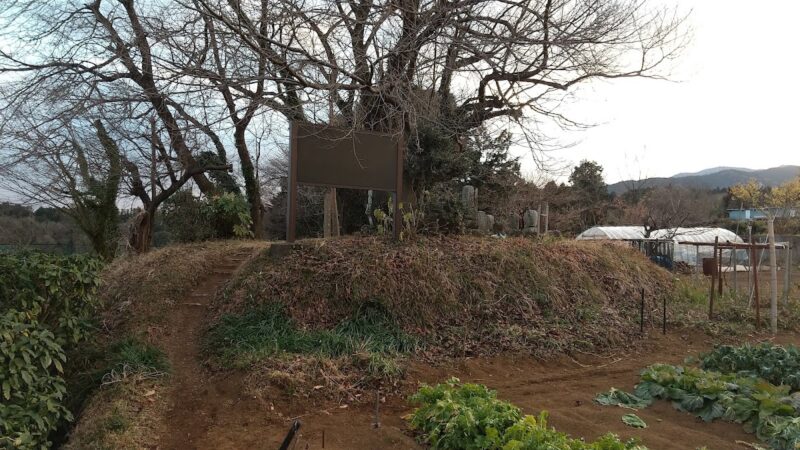
Currently, a castle site monument stands in the main enclosure, allowing visitors to confirm its status as a castle site. Several stone pagodas are also enshrined within the main enclosure, likely erected later for memorial purposes. While no clear traces of earthworks have been found in the main enclosure, this may be due to later alterations or weathering, or it may have originally been a simple structure.
Secondary and Belt Enclosures
Around the main enclosure are auxiliary enclosures known as secondary and belt enclosures. A belt enclosure has been identified on the north side of the main enclosure, and it is thought to have functioned as a defensive structure to prevent approach to the main enclosure. Furthermore, a secondary enclosure exists on the south side of the main enclosure, creating a multi-layered defensive structure for the castle.
These enclosures exhibit a typical mountain castle layout pattern, arranged concentrically around the main enclosure, demonstrating ingenuity for efficient defense with limited personnel.
Moats and Defensive Structures
The remains of moats have also been confirmed at Fushimata Castle. Moats are dry moats dug to cut across ridges, and are important defensive structures that prevent enemy intrusion. In mountain castles, moats have the effect of slowing the advance of the attacking army and giving the defending army time to react.
The castle’s location itself utilizes the steep terrain, with an elevation difference of approximately 280-300 meters acting as a natural defensive wall. Therefore, it’s likely that artificial defensive structures were kept to a minimum.
Function as a Beacon Tower
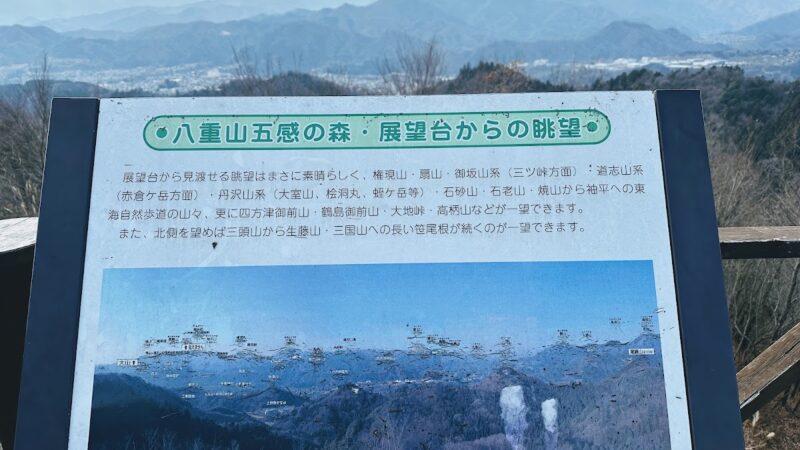
As evidenced by the fact that one of Fushimata Castle’s alternative names is “Fushimata Castle Mountain Beacon Tower,” this castle played a crucial role as an information transmission hub. From the mountaintop at an elevation of 539 meters, the view is unobstructed, allowing for panoramic vistas.
During the Sengoku period, beacons were the most effective means of rapidly transmitting military information. Upon detecting an enemy invasion, smoke was lit during the day and fire at night to transmit information to the next base, which was then relayed back to the main base. Fushimata Castle played a vital role in monitoring the movements of the Takeda army from the Doshi River basin and issuing warnings to Hojo-controlled castles within Sagami Province.
Access and Visiting Information for Fushimata Castle
Location and Basic Information
Location: Near 12665 Makino, Midori-ku, Sagamihara City, Kanagawa Prefecture
Castle Type: Mountain Castle
Elevation: 539m
Relative Height: Approximately 280-300m
Construction Period: Sengoku period (details unknown)
Lord: Ozaki Kamonnosuke (Hojo clan retainer, Tsukui group)
Access by Car and Parking Information
Access to Fushimata Castle is most convenient by car. From the Sagamiko Interchange on the Chuo Expressway, take National Route 20 and a prefectural road to the Makino area. The mountain towering behind the Sugai settlement is Shiroyama (Castle Mountain), and you can drive quite far up.
Regarding parking, there may be a few parking spaces near the trailhead, but there is no clearly designated dedicated parking area. When visiting, please be considerate so as not to obstruct the use of the area by local residents. Please avoid parking on the street and secure a suitable parking space.
Ascent Route and Hiking Course
Fushimata Castle is accessible via a well-maintained hiking course, featuring relatively easy mountain trails. While the elevation difference is approximately 280-300m, the well-maintained trails make it accessible even for beginner hikers.
The time required from the entrance to the main enclosure is approximately 40-60 minutes one way at a normal pace. Allow around 2 hours round trip. Including time spent exploring the castle ruins, the entire trip will take approximately 2.5-3 hours.
Thanks to the efforts of local residents, signposts and trail markers are in place, and maintenance such as grass cutting is carried out even in summer, making it relatively easy to visit. However, as it is still a mountain castle, it is recommended to prepare appropriate equipment (trekking shoes, drinking water, map, etc.) before visiting.
Points to Note When Visiting
- Season and Weather: Spring to autumn is the best time to visit, but insect repellent is necessary during the summer. Avoid hiking during rainy weather or immediately after rain, as mountain trails can become slippery.
- Clothing and Equipment: Please prepare appropriate clothing for mountain hiking, non-slip shoes, drinking water, a towel, and insect repellent.
- Time Allocation: Please allow ample time to descend before sunset.
- Cell Phone Signal: Signal strength may be weak in the mountains. It is recommended to inform family members of your hiking plans in advance.
Surrounding Castles and Historical Background
Relationship with Tsukui Castle
Fushimata Castle is thought to have been a subsidiary castle of Tsukui Castle, an important stronghold of the Hojo clan. Tsukui Castle was a key castle in northern Sagami Province, with the Naito clan serving as its castellan. Fushimata Castle was located northwest of Tsukui Castle and functioned as an outpost to monitor invasion routes from the Kai region.
Sagami Province’s Castle Network
The Hojo clan built numerous castles within Sagami Province, creating a meticulous defense network. Fushimata Castle was also part of this network, integrated into an information transmission system using signal fires.
It coordinated with major castles within Sagami Province (such as Odawara Castle, Tsukui Castle, and Hachioji Castle) to establish a defensive system against external enemies such as the Takeda and Uesugi clans. Even small mountain castles like Fushimata Castle played a crucial role in this wide-area defense system.
Battles with the Takeda Clan
Takeda Shingen attempted to invade Sagami Province numerous times, and the Doshi River basin was one of the important invasion routes from Kai to Sagami. The garrison of Fushimata Castle was tasked with constantly monitoring the movements of the Takeda army and immediately transmitting information if anything unusual occurred.
While there are no clear records of actual battles taking place at Fushimata Castle, it is certain that they maintained constant surveillance in a tense environment. It is believed that this castle continued to serve as a border defense until 1590, when the Odawara Hojo clan surrendered to Toyotomi Hideyoshi.
Highlights and How to Enjoy Fushimata Castle
Points to Note When Visiting the Castle Ruins
- Main Enclosure Castle Site Monument: A monument marking the castle site has been erected, making it a popular spot for commemorative photos.
- Stone Pagodas: The stone pagodas enshrined in the main enclosure evoke a sense of historical significance.
- View: From the mountaintop at an altitude of 539m, you can see the surrounding mountains and the direction of Lake Sagami on a clear day.
- Observation of Remains: You can actually see the structure of a Sengoku period mountain castle, such as moats and outer baileys.
- Natural Environment: Hiking while enjoying the changing seasons is also a great attraction.
Recommended Points for History Fans
- Hojo Clan’s Border Defense Strategy: As an example of a small but strategically important mountain castle, you can learn about the defense systems of the Sengoku period.
- Function of the Signal Fire Platform: Visiting while imagining how signal fires were used as a means of communication will lead to a deeper understanding.
- Role of Local Samurai Groups: This is a good opportunity to consider the role played by local samurai groups such as the Tsukui-shu.
Photography Tips
The castle ruins monument and stone pagodas are attractive subjects for photography. You can also take landscape photos from the mountaintop, or with autumn leaves or fresh greenery as a backdrop, depending on the season. When photographing remains such as moats, adjusting the lighting will make the topography more clearly visible.
Current Status and Future Challenges of Fushimata Castle Research
Limitations of Historical Sources
Contemporary historical sources concerning Fushimata Castle are extremely limited, leaving many unknowns regarding the castle’s detailed history and structure. Regarding Ozaki Kamonnosuke, who is believed to be the castle lord, there is little information based on reliable historical sources, and much of the current information relies on local traditions.
The Need for Archaeological Investigation
Further, full-scale archaeological investigations could potentially reveal more detailed history, including the castle’s construction date, its transformations over time, and the artifacts used. Further refinement of the castle layout is also crucial for understanding its characteristics and function.
Contribution to Regional History Research
Research on Fushimata Castle is important for understanding the regional history of northern Sagami Province, particularly the nature of local communities in border areas during the Sengoku period. It may also contribute to clarifying the realities of local samurai groups like the Tsukui-shu.
Summary: The Historical Significance of Fushimata Castle
Fushimata Castle (Ozaki Castle), located in Makino, Midori Ward, Sagamihara City, Kanagawa Prefecture, was a mountain castle that stood on the front lines of border defense and information transmission during the Sengoku period. Built on a mountaintop at an altitude of 539m, this castle, though not large in scale, played a vital role in monitoring the border between Sagami and Kai Provinces and serving as a signal fire station, playing a vital part in the information network.
Lord Ozaki Kamonnosuke, a retainer of the Hojo clan and a member of the Tsukui group, dedicated himself to the defense and governance of the region. The legend that his descendants are connected to the Meiji-era politician Ozaki Yukio adds to the historical romance of the area.
Currently, the Fushimata Castle ruins are maintained as a hiking trail and are in good condition thanks to the efforts of local residents. Visiting the castle ruins, including the monument, stone pagodas, and moats, allows you to experience firsthand the tension of the Sengoku period and the lives of the people who lived in this land.
For those interested in mountain castles in Kanagawa Prefecture, those interested in the battles between the Hojo and Takeda clans during the Sengoku period, or those who want to combine historical walks with hiking, Fushimata Castle is a historical site worth visiting. When visiting the Sagamiko area, why not extend your trip and visit this historic mountain castle?
FAQ (Frequently Asked Questions)
Q1: How long does it take to climb to Fushimata Castle?
A: The one-way trip from the entrance to the main keep takes about 40-60 minutes, and the round trip takes about 2 hours. Including time to explore the castle ruins, it’s best to allow about 2.5-3 hours in total. Since it’s a well-maintained hiking trail, it’s possible to climb to the castle if you have average physical fitness.
Q2: Is there a parking lot at Fushimata Castle?
A: There isn’t a designated dedicated parking lot, but there may be a few parking spaces near the trailhead. However, consideration should be given to avoiding inconveniencing local residents. When visiting, please secure a suitable parking spot and avoid parking on the street.
Q3: Why does Fushimata Castle have so many alternative names?
A: Fushimata Castle has many alternative names, including Ozaki Castle, Fushimata Castle Mountain Beacon Tower, Fushimata Pass, Sugai Castle Mountain, Ozaki Kamonnosuke Castle, Ozaki Peak, Ozaki Mountain, and Kanetsukimaru. This is because the castle was called by various names based on different factors, including the name of the lord (Ozaki Kamonnosuke), the place name (Sugai, Fushimata), its function (beacon tower), and its topographical features (peak, mountain).
Q4: Is there a real connection between Fushimata Castle and Ozaki Yukio?
A: According to local tradition, the descendants of the castle lord, Ozaki Kamonnosuke, are said to be connected to the Meiji-era politician Ozaki Yukio (Ozaki Gakudo). However, this lineage lacks sufficient reliable historical evidence and remains in the realm of tradition. Further research is needed to clarify this.
Q5: What is the best season to visit Fushimata Castle?
A: Spring to autumn is the best time to visit. In spring, you can enjoy the fresh greenery, and in autumn, the autumn leaves. You can also visit in summer, but insect repellent and heat protection are necessary. In winter, there is a possibility of snow and freezing, so please check the weather conditions before visiting.
Q6: What kind of remains can be seen at Fushimata Castle?
A: Remains such as the main enclosure (honmaru), secondary enclosure, outer enclosure, and moat can be seen. A castle site monument and a group of stone pagodas are located in the main enclosure. While the traces of earthworks are not clear, the basic structure of a mountain castle can be observed. The view from the mountaintop at an altitude of 539m is also one of the highlights.
Q7: Can beginners climb the castle?
A: The trail is well-maintained as a hiking course, and there are signposts and markers provided by local residents, so even beginner hikers can climb the castle. However, since it is still a mountain castle, it is recommended to prepare appropriate equipment such as trekking shoes and visit with ample physical strength and time.