Complete Guide to Yusaka Castle (Kanagawa Prefecture): A Thorough Explanation of the Hakone Strategic Point Captured by Hojo Soun
What is Yusaka Castle?
Yusaka Castle is a medieval mountain castle located in Yumoto, Hakone-machi, Ashigarashimo-gun, Kanagawa Prefecture. Also known as Yunoseyama Castle, it was built on a mountain ridge approximately 600 meters above sea level, behind the Hakone Yumoto hot spring resort. Its strategic location, west of the confluence of the Sukumo River and Hayakawa River, on a ridge extending eastward, cleverly utilized the terrain, functioning as a strategic stronghold that allowed for direct monitoring and control of the Kamakura Road (Yusaka Road).
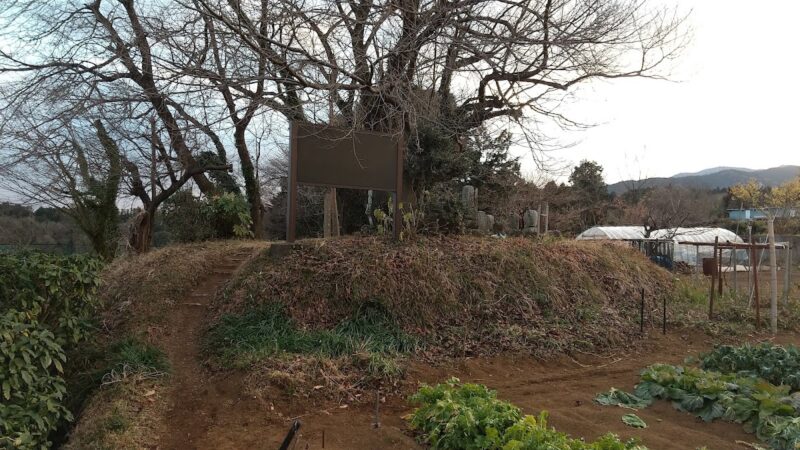
Currently, it is located along a hiking trail that has been developed as part of the old Hakone highway, and is a popular tourist spot visited by many hikers. The castle remains are relatively well-preserved, and earthworks, moats, baileys, and vertical trenches can be seen.
History of Yusaka Castle
Construction and the Era of the Omori Clan
Yusaka Castle is said to have been built during the Muromachi period by the Omori clan, who ruled the western part of Sagami Province. The Omori clan, based at Odawara Castle, exerted their power in western Sagami, and Yusaka Castle functioned as a subsidiary castle to control the Yusaka Road, an important point along the Kamakura Road.
While several routes crossed Hakone during the medieval period, the Yusaka Road was one of the oldest and most widely used major highways. Controlling this road meant controlling a crucial transportation hub connecting Sagami and Izu Provinces, making it extremely important both militarily and economically. Yusaka Castle is thought to have also served as a checkpoint, the final gateway on the route towards Odawara.
Conquest by Hojo Soun
In 1495 (Meio 4), Ise Sozui (later Hojo Soun), aiming to expand into Sagami Province, launched a surprise attack on Odawara Castle, destroying the Omori clan. It is believed that Yuzaka Castle also came under the control of the Hojo clan at this time. Hojo Soun’s conquest of Odawara Castle was a historical event that significantly altered the power dynamics of the Kanto region during the Sengoku period, and Yuzaka Castle is one of the castles that experienced this turning point in history.
Function and Development during the Hojo Period
Even after coming under Hojo control, Yuzaka Castle continued to function as an important subsidiary castle protecting Odawara Castle. As the Hojo clan expanded their power in the Kanto region, they developed a defense network centered around Odawara Castle, and Yuzaka Castle was a crucial base that formed part of the Hakone defense line.
In particular, it is believed that the castle was renovated during the Tensho era (1573-1592) in preparation for Toyotomi Hideyoshi’s siege of Odawara. During this period, the Hojo clan positioned numerous subsidiary castles and forts around Odawara Castle, creating a wide-area defense system known as the “sogamae.” It is highly probable that Yuzaka Castle was also renovated and strengthened as part of this defense network, and some of the currently identifiable remains are presumed to date from this period.
The Siege of Odawara and the Abandonment of the Castle
In 1590 (Tensho 18), Toyotomi Hideyoshi launched the Siege of Odawara. Hideyoshi’s army also invaded from the Hakone area, and Yusaka Castle may have been involved in this battle. With the surrender of Odawara Castle and the fall of the Hojo clan, it is believed that Yusaka Castle also ceased to exist and was abandoned.
Structure and Remains of Yusaka Castle
Characteristics of the Castle Layout
Yusaka Castle is a typical mountain castle built on a ridge extending east-west, characterized by its cleverly utilized terrain. The castle grounds cover a relatively wide area, with multiple baileys arranged in succession. The main section is located on a high point of the ridge, from which baileys extend in a stepped fashion east-west.
Multiple trenches are constructed to cut off the ridge, preventing enemy intrusion and demarcating the baileys. Furthermore, vertical trenches are dug on the slopes, providing a defensive function against attacks from the flanks. ### Main Remains
Kuruwa (Enclosures) Multiple enclosures can be identified within the castle grounds. The flat area, believed to be the main enclosure, is relatively large and is presumed to have functioned as a garrison for soldiers and a command post. Each enclosure is demarcated by elevation changes, creating a defensive structure that utilizes the difference in height.
Dorui (Earthworks) Earthworks surround the enclosures, and some sections are still clearly visible. These earthworks served to prevent enemy intrusion and acted as a defensive wall against arrow and gunfire.
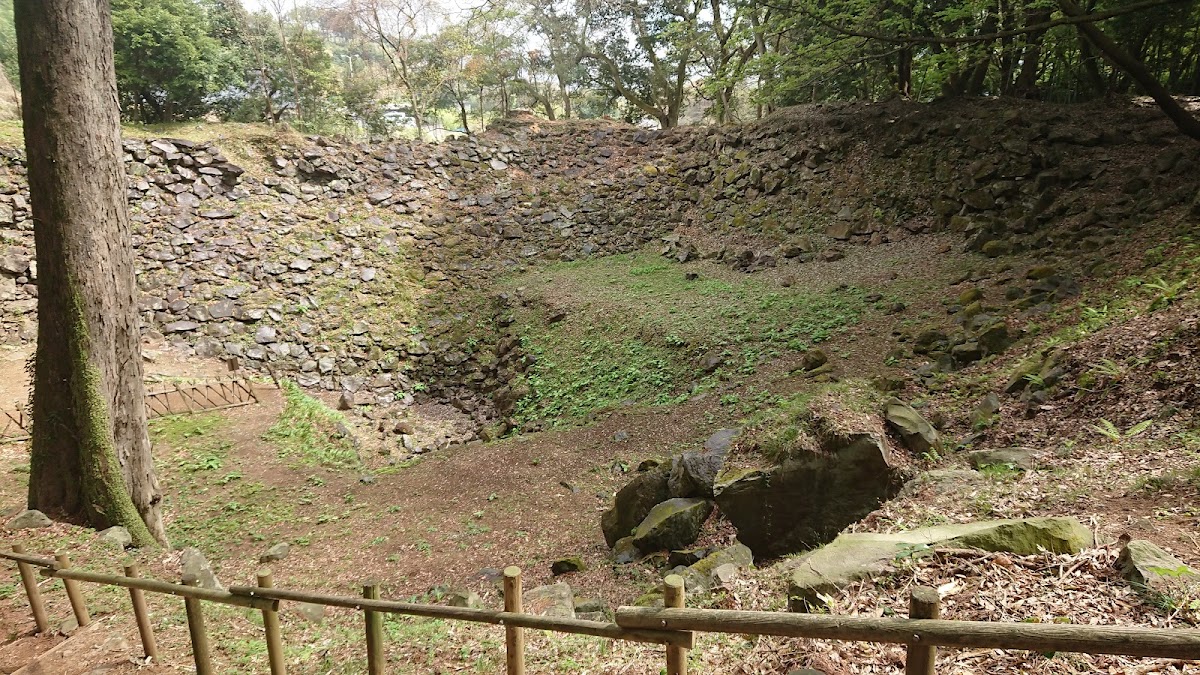
Horikiri (Moat) Several moats, dug to cut across the ridge, remain. These moats were important defensive structures that prevented enemies from attacking along the ridge, and are a key element in enhancing the defensive capabilities of Yusaka Castle. The depth varies depending on the location, but they are clearly recognizable as changes in the terrain.
Vertical Moats
Vertical moats dug along the slope have also been confirmed, functioning as a defense against flanking attacks. These moats also served as rainwater drainage channels, likely contributing to maintaining the castle’s environment.
Gate Entrance (Koguchi)
Traces of gate entrances to the baileys remain. Since gate entrances are a weak point in a castle’s defenses, it’s possible they were reinforced with earthworks or stone walls.
Elevation Relatives and Location
The main part of Yusaka Castle is located approximately 200-250 meters above the Hakone Yumoto hot spring resort at the foot of the mountain. This height posed a considerable burden for attackers, providing a favorable position for the defenders. Furthermore, its location overlooking the confluence of two rivers, the Sugumo River and the Hayakawa River, made it suitable for monitoring water transport and managing roads.
The History of the Yusaka Road and the Tokaido Road
The Yusaka Road as an Ancient Kamakura Road
The Yusaka Road was an ancient road used since the Kamakura period, and was part of an important transportation route connecting Kamakura and Kyoto. It is considered one of the oldest routes among the multiple routes crossing Hakone, and many samurai and merchants traveled this road during the Kamakura shogunate.
Yusaka Castle was located in a position to directly monitor the Yusaka Road and is thought to have also functioned as a checkpoint, managing travelers and collecting tolls. Controlling a highway was an important factor that brought not only military advantage but also economic benefits.
Transition to the Tokaido Road
In the Edo period, the Tokugawa shogunate developed the Tokaido Road, and the route over Hakone was also changed. The Yusaka Road gradually fell into disuse, and a new route with a gentler gradient became the main highway. However, the Yusaka Road was not completely abandoned and continued to be used by local people as a daily route.
Currently, the Yusaka Road, as part of the old Hakone highway, has been re-recognized for its historical value and is maintained as a hiking course. Some of the old stone pavement remains, allowing visitors to imagine the atmosphere of yesteryear.
How to Access Yusaka Castle
Access by Public Transportation
Nearest Station
Hakone-Yumoto Station (Hakone Tozan Railway) is the nearest station. From Tokyo, take the Odakyu Line to Odawara Station, then transfer to the Hakone Tozan Railway and get off at Hakone-Yumoto Station.
From the Station to the Castle Entrance
It’s about a 10-15 minute walk from Hakone-Yumoto Station to the entrance of Yusaka Castle. After leaving the station, walk through the hot spring town and cross the Asahi Bridge (a designated industrial heritage site) to reach the trailhead. There are signposts, making it a relatively easy route to follow.
Access by Car
Parking
There are several paid parking lots around Hakone-Yumoto. It is common to use the parking lot in the hot spring town and walk from there to the castle entrance. There is no dedicated parking lot near the castle entrance, so please be sure to use the parking lot in the hot spring town.
Access Roads
From the Atsugi Interchange or Odawara-Nishi Interchange on the Tomei Expressway, head towards Hakone-Yumoto via National Route 1. The journey time varies depending on traffic, but it is approximately 40 minutes from Atsugi IC and approximately 15 minutes from Odawara-Nishi IC.
Castle Ascent Route
From the castle entrance to the main part of Yuzaka Castle, it is a 15-20 minute climb along a mountain path that is well-maintained as a hiking trail. The path is relatively well-maintained, but since it is a mountain trail, we recommend wearing comfortable shoes such as athletic shoes or trekking shoes.
The hiking trail is part of a route that goes through Mt. Asama and Mt. Takasuyama to Ashinoyu, and Yuzaka Castle is located along this route. If you have the time and energy, traversing the entire Yuzaka trail would be a good experience.
Points to Note and Recommendations for Visiting
Clothing and Equipment
Since Yusaka Castle is a mountain castle, we recommend preparing the following equipment when visiting:
- Comfortable walking shoes: Trekking shoes or athletic shoes are essential.
- Comfortable clothing: Long sleeves and long pants are recommended (to prevent insect bites).
- Drinking water: Sufficient hydration is especially necessary in summer.
- Rain gear: Rain gear is recommended as the weather in this mountainous area can change quickly.
- Map or smartphone: For checking hiking trails.
Best Season for Visiting
The best season for visiting is from spring to autumn. May, with its fresh greenery, and November, with its beautiful autumn foliage, are particularly ideal for hiking. In winter, there is a possibility of snow and ice, so adequate equipment and experience are necessary.
During the rainy season and typhoon season, hiking trails can become slippery, so caution is advised. We recommend checking the weather forecast in advance and refraining from visiting if bad weather is expected.
Estimated Time Required
Allow approximately 2-3 hours for the round trip from Hakone-Yumoto Station. Including time for sightseeing at the castle ruins, we recommend allocating about half a day to allow ample time.
Nearby Tourist Attractions
Hakone-Yumoto Onsen
Located at the foot of Yusaka Castle, Hakone-Yumoto Onsen is a hot spring resort town known as the gateway to the Hakone Onsenkyo (hot spring area). You can soothe your fatigue after climbing the castle in the hot springs. There are many day-trip bathing facilities, making it easy to enjoy the hot springs.
Next to the castle climbing path is the site of a horizontal-cave hot spring source, and the hot springs that gushed from the slopes of Yusaka Castle are considered the origin of Hakone-Yumoto Onsen. Be sure to visit this spot to experience the history of the hot springs.
Odawara Castle
Odawara Castle, the main castle of Yusaka Castle, is a famous castle that flourished as the base of the Hojo clan. Currently, the keep has been restored and is open to the public as a museum. Visiting both Yusaka Castle and Odawara Castle will give you a deeper understanding of the Hojo clan’s castle network. From Hakone-Yumoto Station, it’s about a 15-minute ride on the Hakone Tozan Railway to Odawara Station, and then about a 10-minute walk from the station to Odawara Castle.
Ishigakiyama Castle (One-Night Castle)
Ishigakiyama Castle, built by Toyotomi Hideyoshi during his conquest of Odawara, is a historical site closely related to Yusaka Castle. It’s also known as the “One-Night Castle” due to the legend that Hideyoshi built it overnight. The stone walls are well-preserved, allowing visitors to learn about the castle-building techniques of the Sengoku period.
Hakone Checkpoint
The Hakone Checkpoint, established on the Tokaido road during the Edo period, has been restored and is open to the public as a museum. Visitors can learn about the history of the Yusaka Road’s transformation from a checkpoint function to a formal checkpoint during the Edo period.
The Charm and Highlights of Yusaka Castle
Historical Value
Yusaka Castle is an important historical site that tells the story of the power struggles in the Kanto region during the Sengoku period. This castle truly embodies the history of the Sengoku period, having changed rulers from the Omori clan to the Hojo clan, and ultimately ending its role with Toyotomi Hideyoshi’s siege of Odawara.
Hojo Soun’s capture of Odawara Castle was a groundbreaking event in the Kanto region during the Sengoku period, and Yusaka Castle is a witness to that history. Standing on the castle ruins, you can feel the tension and strategic importance of the time firsthand.
Harmony with Nature
The current Yusaka Castle ruins are a hiking course surrounded by abundant nature, allowing you to enjoy historical exploration and nature walks simultaneously. Imagining the castle in its heyday while listening to the sounds of birds and observing the changing vegetation throughout the seasons is an experience unlike any other castle.
Excellent Preservation of Remains
Because it is a mountain castle, it escaped development, and remains such as earthworks and moats are relatively well preserved. Although it is an earthen castle without stone walls, it conveys the typical form of a medieval mountain castle to the present day, making it a valuable site from the perspective of castle research.
Combining with Hakone Sightseeing
Hakone is one of Japan’s leading tourist destinations, boasting diverse attractions such as hot springs, art museums, and natural landscapes. Incorporating a visit to Yusaka Castle as part of your Hakone sightseeing will allow for a more fulfilling travel experience. It’s a worthwhile spot not only for history buffs but also for general tourists.
Yusaka Castle and the Hojo Clan’s Castle Network
Defense System Centered on Odawara Castle
The Hojo clan established a defense system centered on Odawara Castle, with numerous branch castles and forts positioned around it. Yusaka Castle, as an important base in the Hakone area, played a role in monitoring and defending the routes leading to Odawara Castle.
Coordination with Other Branch Castles
Besides Yusaka Castle, several other castles were located in the Hakone area, and it is believed they coordinated their defenses. It’s possible that a system was in place to rapidly transmit information about enemy invasions using communication methods such as signal fires.
Role in Toyotomi Hideyoshi’s Siege of Odawara
During the 1590 Siege of Odawara, the Toyotomi army also invaded from the Hakone area. While there are no clear records of the extent of resistance offered by Yusaka Castle, it is presumed to have played some role as part of the Hojo clan’s defensive line.
Summary
Yusaka Castle is a Sengoku period mountain castle located in Hakone Town, Kanagawa Prefecture. It played a crucial role as a strategic point protecting the Kamakura Road. Built by the Omori clan, and after being captured by Hojo Soun, it served as a branch castle of the Hojo clan, responsible for the defense of Odawara Castle.
Currently, it is maintained as a hiking trail, allowing visitors to see remnants such as earthworks, moats, and baileys. It is easily accessible on foot from Hakone-Yumoto Station, making it a convenient place to visit in conjunction with Hakone sightseeing.
Yusaka Castle, where you can experience the history of the Sengoku period firsthand while enjoying Hakone’s rich nature, is a recommended spot not only for history buffs but also for hiking enthusiasts and general tourists. When you visit Hakone, why not stop by Yusaka Castle and reflect on the historical romance of yesteryear?