Hayakawa Castle (Ayase City, Kanagawa Prefecture) Complete Guide | History, Remains, and Access Information
What is Hayakawa Castle?
Hayakawa Castle is a medieval mountain castle site located in Hayakawa-Shiroyama 3-chome, Ayase City, Kanagawa Prefecture. It sits approximately 700 meters west of Ayase City Hall, on the southern end of a tongue-shaped plateau on the left bank of the Mekujiri River, a tributary of the Sagami River. It is said to have been built by Shibuya Shigekuni, a samurai of the Kamakura period, and is now maintained as “Hayakawa-Shiroyama Park (Shiroyama Park),” designated as a Kanagawa Prefecture Historic Site.
This castle site, affectionately known locally as “Shiroyama” (Castle Mountain), was the subject of numerous castle-related remains, such as moats, earthworks, lookout mounds, and baileys, discovered through academic surveys conducted from 1989 to 1994. It is highly regarded as a valuable historical site that preserves the appearance of a medieval mountain castle to the present day.
History of Hayakawa Castle
Construction from the Late Heian Period to the Kamakura Period
There are various theories regarding the construction date of Hayakawa Castle, but the most widely accepted theory is that it was built by Shibuya Shigekuni in the late Heian period. Shibuya Shigekuni was a samurai descended from the Chichibu Taira clan and was the local lord who managed the “Yoshida Manor (Shibuya Manor)” established in Takaza District, Sagami Province.
An important event in Japanese history involving the Shibuya clan is their 20-year protection and upbringing of Sasaki Hideyoshi of the Omi Minamoto clan and his four sons after their defeat in the Heiji Rebellion (1159). This relationship with the Sasaki clan led to a crucial role in Minamoto no Yoritomo’s later uprising. The anecdote that the Shibuya clan conveyed to Yoritomo, through the Sasaki clan, that the Taira clan had learned of Yoritomo’s preparations for an uprising, demonstrates the importance of the Shibuya clan at a turning point in Japanese history.
The Shibuya Clan’s Residence During the Kamakura Period
Throughout the Kamakura period, Hayakawa Castle functioned as the residence of the Shibuya clan. The Shibuya clan served as retainers of the Kamakura Shogunate and were one of the powerful samurai groups in Sagami Province. While historical records are scarce and details about the size and structure of Hayakawa Castle during this period are unclear, archaeological excavations suggest it was already a residence with a certain level of defensive capability.
Renovations during the Sengoku Period and the Hojo Clan’s Rule
During the Sengoku period, Hayakawa Castle was renovated and used by the Later Hojo clan, who controlled Sagami Province. During this time, more practical defensive structures were strengthened, and many of the moats and earthworks visible today are believed to have been constructed during this period. Under the Later Hojo clan’s rule, Hayakawa Castle served as one of the key castles within Sagami Province, playing a role in regional control and defense.
From the Edo Period Onward
After Toyotomi Hideyoshi’s siege of Odawara in 1590, Tokugawa Ieyasu entered the Kanto region, and Ishikawa Shigehisa’s encampment was established at Hayakawa Castle. However, with the advent of the Edo period, its military importance declined, and its function as a castle gradually deteriorated.
After the Meiji era, it became privately owned land, and although it was affectionately known as “Shiroyama” (Castle Mountain) by locals for a long time, its historical value was never formally recognized.
Modern Archaeological Excavations and Historic Site Designation
From 1989 to 1994, the Ayase City Board of Education conducted a full-scale academic survey. This survey uncovered numerous castle-related remains, such as moats, earthworks, lookout mounds, and baileys, scientifically proving it to be a medieval mountain castle site.
As a result, it was highly valued as a well-preserved site of a medieval mountain castle, and on February 5, 2008, it was designated a Kanagawa Prefecture Historic Site. Currently, it is maintained as Hayakawa Shiroyama Park, serving as a place of recreation for citizens while also being protected as a valuable historical heritage site.
Structure and Layout of Hayakawa Castle
Location and Topography
Hayakawa Castle is located on the southern end of a tongue-shaped plateau on the left bank of the Mekujiri River, at the tip of a plateau approximately 15 meters above sea level. This terrain is excellent as a natural stronghold; with a steep cliff to the south and valleys to the east and west, it offers a tactical advantage, as defense only needed to be maintained from the north.
The plateau itself is relatively flat, making it suitable for arranging multiple baileys. Its location along the Mekujiri River, part of the Sagami River system, is thought to have been important for controlling a key point for water transport and transportation.
Major Remains
Baileys (Kuruwa)
Multiple baileys have been identified at Hayakawa Castle. A bailey is a flat area within the castle grounds where buildings were constructed or soldiers were stationed. Archaeological excavations have revealed the existence of multiple baileys arranged in a stepped pattern around the main bailey, indicating that it possessed a typical structure for a medieval mountain castle.
Within the current Shiroyama Park, the topography of these baileys is well-preserved, allowing visitors to experience the castle’s structure in its heyday.
Moats and Dry Moats
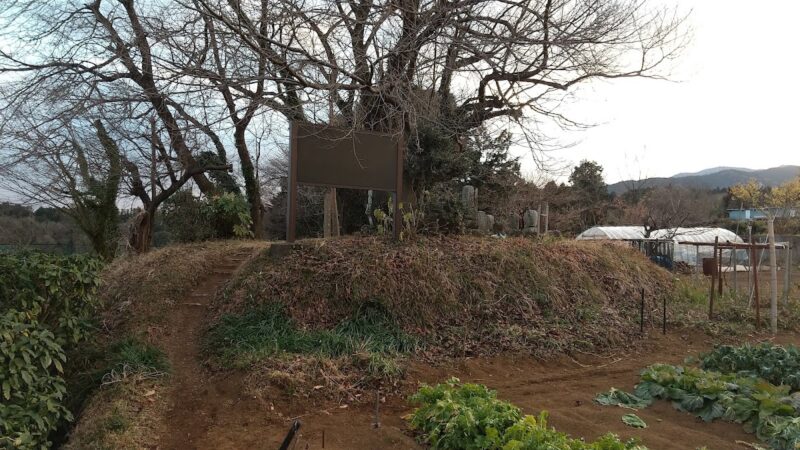
One of the greatest highlights of Hayakawa Castle is its well-preserved moats. These moats, dug to cut across ridges, were crucial defensive structures designed to prevent enemy intrusion. They are still clearly visible today, and their depth and width demonstrate the high level of defensive technology employed in medieval castles.
Dry moats have also been identified in multiple locations, suggesting they demarcated baileys and formed defensive lines. These moats are believed to have been reinforced during renovations in the Sengoku period.
Earthworks
Earthworks are defensive structures built by piling up earth. They prevented enemy intrusion, and their defensive capabilities could be further enhanced by constructing fences or walls on top. Earthworks have been identified around several baileys at Hayakawa Castle, and their elevations can still be observed today.
The scale and arrangement of the earthworks indicate a planned castle design, confirming that it was not merely a residence but a mountain castle designed with actual combat in mind.
Lookout Mound
A lookout mound was a facility for observation, built to monitor the surrounding area from a high vantage point. It is believed that the lookout mound at Hayakawa Castle offered a view of the Sagami River and surrounding roads, playing a role in information gathering and early warning.
Earthen Bridge
An earthen bridge crossing the moat has also been confirmed. The earthen bridge was a passage created by leaving some of the moat intact, functioning as an entrance to the castle. It was one of the techniques used to simplify defense by limiting enemy incursion routes.
Castle Scale
The castle area of Hayakawa Castle is estimated to extend approximately 150 meters east-west and 200 meters north-south, centered on the southern end of the plateau. While this is a standard size for a medieval local lord’s residence, the excellent state of preservation of the remains is particularly noteworthy.
Earthen Bridge ## Highlights of Hayakawa Castle
Well-Preserved Medieval Castle Remains
The greatest appeal of Hayakawa Castle is the remarkably well-preserved remains of this medieval mountain castle. In Kanagawa Prefecture, which has undergone significant urbanization, castle ruins where moats and earthworks can be clearly seen are rare. The fact that it has been developed into a park is a major advantage for visitors, as it allows for safe observation of the remains.
By actually walking across the moats, experiencing the height of the earthworks, and confirming the size of the baileys, visitors can truly understand how medieval castles functioned defensively. It is also a historical site with high educational value, allowing visitors to learn about the relationship between the actual terrain and the remains, something that cannot be understood from history books or drawings alone.
Development as a Castle Mountain Park
Currently, the Hayakawa Castle ruins have been developed into Hayakawa Castle Mountain Park (Shiroyama Park), balancing historical site preservation with its function as a place of relaxation for citizens. Playground equipment has also been installed within the park, making it a space that families can enjoy.
The park is well-equipped with facilities such as parking and restrooms, making it easily accessible. In particular, the large parking lot on the north side ensures convenient access by car.
Information Boards and Explanations
Information boards about the castle ruins are installed within the park, allowing visitors to learn about the history of the Shibuya clan and the castle’s structure. Even first-time visitors can understand the history and structure of Hayakawa Castle by reading the information boards while exploring the ruins.
Surrounding Historical Landscape
From Hayakawa Castle, you can enjoy views of the Mekujiri River and the Sagami River. Strolling through the area while imagining the scenery that the former lords and soldiers must have seen will allow you to feel a sense of historical romance.
Access Information
Location
3-chome, Hayakawa-Shiroyama, Ayase City, Kanagawa Prefecture
Access by Public Transportation
- From Ebina Station (Odakyu Line/Sotetsu Line): Take the Sotetsu Bus bound for Ayase City Hall, get off at Ayase City Hall bus stop, and walk for approximately 10 minutes.
- From Chogo Station (Odakyu Line): Take the Kanagawa Chuo Kotsu Bus bound for Ayase City Hall, get off at Ayase City Hall bus stop, and walk for approximately 10 minutes.
- From Ebina Station (JR Sagami Line): Take the Sotetsu Bus bound for Ayase City Hall, get off at Ayase City Hall bus stop, and walk for approximately 10 minutes.
It’s easy to find using Ayase City Hall as a landmark; it’s approximately 700 meters west of the city hall.
Access by Car
- From Tomei Expressway “Ayase Smart IC”: Approximately 5 minutes
- From National Route 467: Towards Ayase City Hall
A free parking lot is available on the north side of the park with ample parking space. We recommend checking the official Ayase City information for parking lot hours and capacity.
Visiting Information
- Visiting Hours: Open as a park at all times (nighttime use is not recommended)
- Admission Fee: Free
- Estimated Time Required: Approximately 30 minutes to 1 hour
- Facilities: Parking, restrooms, playground equipment available
Points to Note When Visiting
Clothing and Preparation
As the park is well-maintained, no special equipment is required. However, if you wish to carefully observe the ruins, we recommend wearing comfortable walking shoes. In the summer, insect repellent is recommended, and on sunny days, a hat and sunscreen are advisable.
Photography
Photography of the ruins is permitted. In particular, by photographing moats and earthworks from different angles, you can capture their scale and structure more effectively. Combining photographs of information boards and historical remains creates a clear record that will be easier to review later.
Nearby Attractions
There are other historical sights within Ayase City. If you have time, it is recommended to visit Ayase City Hall and other cultural facilities in the city to learn about the local history. You can also combine this with a nature walk along the Sagami River.
Historical Significance of Hayakawa Castle and the Shibuya Clan
Role in the Genpei War
Shibuya Shigekuni’s protection of the Sasaki Hideyoshi family had a significant impact on the subsequent uprising of the Minamoto clan and the establishment of the Kamakura Shogunate. The sons of the Sasaki clan later became important retainers of Minamoto no Yoritomo, contributing to the establishment and development of the Kamakura Shogunate.
It is also said that by conveying information about Yoritomo’s uprising, Shigekuni was able to prepare in advance, which ultimately led to the Minamoto victory. The actions of the Shibuya clan, based at Hayakawa Castle, were crucial events related to a major turning point in Japanese history.
Base of a Samurai Group in Sagami Province
Throughout the Kamakura period, Hayakawa Castle functioned as a base for a powerful samurai group in Sagami Province. As a retainer of the Kamakura Shogunate, the Shibuya clan balanced regional control with service to the shogunate, and Hayakawa Castle was the center of their activities.
Regional Control during the Sengoku Period
During the Sengoku period, it came under the control of the Later Hojo clan and was renovated and strengthened as a key castle within Sagami Province. The fact that the remains from this period are still well-preserved demonstrates the high level of castle construction technology of the Later Hojo clan and indicates the strategically important location of Hayakawa Castle.
Preservation and Utilization of Hayakawa Castle Ruins
Value as a Prefectural Designated Historic Site
The designation of Hayakawa Castle Ruins as a Kanagawa Prefecture Historic Site in 2008 signifies the official recognition of its historical and academic value. As a well-preserved example of a medieval mountain castle, Hayakawa Castle Ruins is a valuable historical site in Kanagawa Prefecture, and appropriate preservation and management are required for the future.
Use in Local History Education
Hayakawa Castle Ruins are also used as a site for local history education. Elementary and junior high schools in Ayase City provide opportunities for students to visit Hayakawa Castle as part of their local history studies. By seeing and touching the actual ruins, children can gain a tangible sense of history that cannot be obtained from textbooks alone.
Function as a Place of Relaxation for Citizens
Balancing historical site preservation and public use is a challenge faced by many castle ruins, but Hayakawa Castle Hill Park is a good example of how both can be balanced. While functioning as a place of relaxation for citizens with playground equipment and open spaces, important ruins are preserved, and their historical value is conveyed through information boards.
For local people, “Shiroyama” (Castle Hill) is a familiar presence, and while it is a park used daily, it also provides opportunities to recognize its historical value.
Current Status and Challenges of Hayakawa Castle Research
Lack of Documentary Sources
The biggest challenge regarding Hayakawa Castle is the scarcity of documentary sources. Many aspects, such as the construction date, changes in castle lords, and records of specific battles, must rely on tradition and speculation. Further discovery of new historical materials and research into the surrounding area may reveal a more detailed history.
Results of Archaeological Surveys
The excavation surveys conducted from 1989 to 1994 significantly contributed to understanding the reality of Hayakawa Castle. However, a detailed survey of the entire castle area is not yet complete, and there remains the possibility of new discoveries through future investigations.
Balancing Preservation and Utilization
While the site is used by many citizens as a park, balancing its use with its preservation as a historical site remains an ongoing challenge. Appropriate management and regular maintenance are necessary to prevent the deterioration of the remains while maintaining an environment where visitors can learn about and enjoy history.
The Significance of Visiting Hayakawa Castle
Unlike modern castles with large stone walls and keeps, Hayakawa Castle retains its simple, earthen appearance. However, it holds the vivid history of medieval samurai who actually lived there and prepared for battle.
Walking along the moats, standing on the earthen ramparts, and experiencing the vastness of the baileys, you can feel the essential functions of a castle: the mechanisms of “defense” and “control.” You can also feel the historical romance connected to major currents of Japanese history, such as the relationship between the Shibuya and Sasaki clans and their involvement in Minamoto no Yoritomo’s uprising.
As a valuable historical site with well-preserved medieval castle remains in Kanagawa Prefecture, and as a cultural asset that conveys the history of the region, Hayakawa Castle is a place worth visiting. When you visit Ayase City, why not stop by Hayakawa Castle Park and reflect on the history of the medieval period?
Summary
Hayakawa Castle is a medieval mountain castle built by Shibuya Shigekuni, a retainer of the Kamakura period, and later renovated as a castle of the Later Hojo clan during the Sengoku period. Currently, it is maintained as Hayakawa Castle Mountain Park, with well-preserved remains such as moats, earthworks, lookout mounds, and baileys.
Protected as a Kanagawa Prefecture designated historical site, it also functions as a place of relaxation for citizens, making it enjoyable for a wide range of people, from history enthusiasts to families. Its easy accessibility, including parking and restrooms, makes it an attractive and convenient place to visit.
As a valuable historical site where one can experience the reality of a medieval castle, and as a place where one can feel the historical romance surrounding the Shibuya clan and Minamoto no Yoritomo’s uprising, Hayakawa Castle is an indispensable presence for understanding the history of Kanagawa Prefecture.