Soga Castle (Kanagawa Prefecture) Complete Guide: History and Highlights of the Castle Ruins Associated with the Soga Brothers
What is Soga Castle?
Soga Castle (also spelled Soga-jō) is a medieval mountain castle located in Soga-yatsu, Odawara City, Kanagawa Prefecture. Known as the residence of the Soga clan, a powerful family in Sagami Province, it is particularly noteworthy among history enthusiasts as the castle where the Soga brothers, Jūrō Sukenari and Gorō Tokimune, famous for the “Soga Brothers’ Revenge,” one of Japan’s three greatest revenge stories, grew up.
Currently, the castle ruins are within the grounds of Jōzenji Temple, the Soga brothers’ family temple. The remains of the castle and the brothers’ five-tiered pagoda quietly tell the story of history. Among the medieval castles remaining in the Kanto region, especially in Kanagawa Prefecture, it holds an important position in terms of both narrative significance and historical value.
History of Soga Castle
The Soga Clan and the Establishment of the Castle
The Soga clan was a powerful family that ruled western Sagami Province from the late Heian period to the Kamakura period. Soga Castle was built as the Soga clan’s base. While the exact construction date of the castle is unclear, it is believed that a residence of the Soga clan already existed there by the late Heian period.
The Soga clan was a powerful samurai group in Sagami Province and played an important role in the establishment of Minamoto no Yoritomo’s Kamakura Shogunate. The castle is located in the hilly area north of Odawara City, built in a strategic location overlooking the Sagami Plain.
The Story of the Soga Brothers’ Revenge and the Castle
An essential part of the story of Soga Castle is the story of the Soga brothers’ revenge. In 1178, Soga Sukenobu’s wife, Mango Gozen, had her first husband, Kawazu Saburo Sukeyasu, murdered by Kudo Suketsune. Lady Mitsue remarried Soga Sukenobu, taking her two orphaned sons, Ichimanmaru and Hakoomaru, with her, and raised them at Soga Castle.
The brothers came of age at this castle, and Ichimanmaru took the name Soga Juro Sukenari, while Hakoomaru took the name Soga Goro Tokimune. In 1193, during the Fuji hunting expedition, the brothers avenged their father’s death by killing Kudo Suketsune. This revenge is counted among the three great revenge stories of Japan, along with the Ako Incident and the Iga Crossing, and is widely known as a subject for Noh and Kabuki plays.
Soga Castle, as the place where the brothers spent their youth and the setting for this historical revenge drama, holds special significance in Japanese history.
Soga Castle in the Sengoku Period
From the Kamakura period onward, the Soga clan continued to exist as a local powerful family in Sagami Province. From the Muromachi period to the Sengoku period, the Soga clan served the Uesugi clan, who were the Kanto Kanrei (governor of the Kanto region), and the Omori clan, who were based in Odawara.
In 1559, during the time of Soga Nobumasa, the then-lord of the castle, Soga Castle was attacked by the Later Hojo clan (Odawara Hojo clan). During the process of Hojo Ujiyasu and Ujimasa’s unification of Sagami Province, Soga Castle fell, marking the end of the Soga clan’s rule.
Afterward, Soga Castle came under the control of the Hojo clan, but it is believed that when the Hojo clan was destroyed in Toyotomi Hideyoshi’s Odawara campaign in 1590, Soga Castle was abandoned.
Structure and Layout of Soga Castle
Location and Topography of the Castle
Soga Castle is built on an isolated hill approximately 80 meters above sea level in the hilly area north of Odawara City. The castle boasts an excellent location, with the Sakawa River flowing to the north and the Sagami Plain stretching out to the south. This natural terrain allowed it to function as a formidable stronghold.
The castle measured approximately 150 meters east-west and 200 meters north-south, exhibiting a typical form of a flatland castle that developed from a medieval clan residence. A characteristic common to medieval castles in the Kanto region was the adoption of a defensive system combining earthworks and moats.
Major Remains
Several important remains remain within the current grounds of Jōzenji Temple.
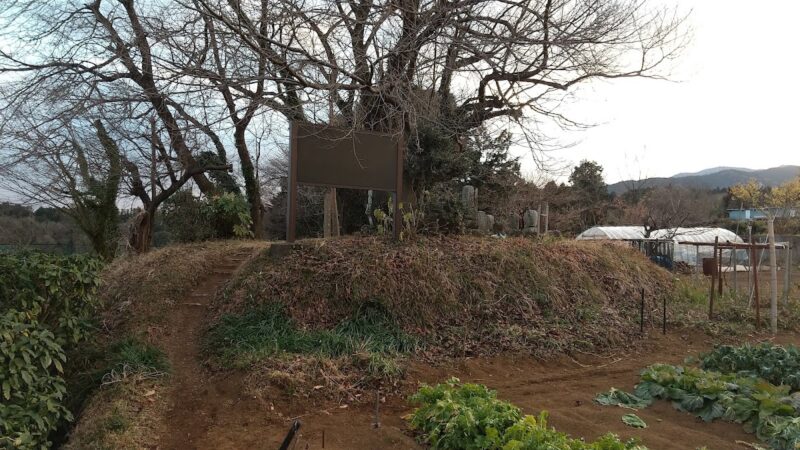
Earthwork Remains: A portion of the earthworks built as a defensive structure for the castle still exists within the temple grounds. The five-tiered pagoda of the Soga brothers stands on this earthwork site, giving a glimpse into the castle’s former scale. The earthworks are approximately 2-3 meters high, a typical structure for medieval castles in the Sagami region.
Well Remains: A well was located within the castle grounds to secure water for daily life. Even today, traces of a well can be seen, making it a valuable historical site that tells the story of medieval castle life.
Flat Area (Former Enclosure): The area around the main hall of Jōzenji Temple is presumed to be the site of the former main enclosure (honmaru). Although it is now developed as temple grounds, the flat terrain suggests it was the central part of the castle.
Moat Remains: Traces of a moat, which cut across the ridge of the hill, remain in some areas. This was an important defensive structure to prevent enemy intrusion.
Castle Spatial Structure
Soga Castle is a castle that developed from a typical medieval local lord’s residence, and it is believed that multiple enclosures (kuruwa) were arranged around the main enclosure. The residence was located in the main enclosure, with the houses of retainers and warehouses arranged around it.
Compared to other medieval castles in Kanagawa Prefecture, such as Kozukue Castle and Ōba Castle, Soga Castle is relatively small, but it functioned sufficiently as a base for regional control. Unlike early modern castles such as Ishigakiyama Castle, Soga Castle did not utilize stone walls; its defenses primarily consisted of earthworks and moats.
Highlights of Soga Castle
Jōzenji Temple and the Soga Brothers’ Five-Ring Pagoda
The greatest highlight of a visit to the Soga Castle ruins is the five-ring pagoda of the Soga brothers located within the grounds of Jōzenji Temple. This pagoda was erected to commemorate the brothers and stands quietly atop the remains of an earthwork.
Jōzenji Temple is said to have been built as the Soga brothers’ family temple after their revenge. The temple houses numerous documents and legends related to the brothers, making it a valuable space to experience the world of the Soga tale.
Earthworks and Castle Remains
Walking through the grounds of Jōzenji Temple, you can find traces of the medieval castle in many places. The well-preserved earthworks, in particular, are valuable resources for learning about the castle construction techniques of the time.
Walking along the top of the earthen ramparts and looking around, a panoramic view of the Sagami Plain unfolds, allowing you to truly appreciate why the former castle lords chose this location. It’s well worth visiting as part of a tour of medieval castles in Kanagawa Prefecture.
Surrounding Historical Landscape
The area around Soga Castle is known as “Soga no Sato” and is famous for its plum blossoms. Especially from February to March, the Soga Plum Grove is in full bloom, offering a beautiful landscape of the castle ruins and plum blossoms.
Numerous historical sites related to the Soga brothers are scattered throughout the area, including the place where the brothers are said to have come of age, and places associated with their mother, Lady Mitsue, making it an enjoyable historical walking course.
Access and Visiting Information
Location
Address: Sogayatsu, Odawara City, Kanagawa Prefecture
Facility Name: Jōzenji Temple
Transportation Access
Access by Train:
- Approximately 15 minutes on foot from JR Gotemba Line “Shimosoga Station”
- Approximately 10 minutes by bus from Odakyu Odawara Line “Shin-Matsuda Station,” then a 5-minute walk from “Sogayatsu” bus stop
Access by Car:
- Approximately 10 minutes from Tomei Expressway “Ōi-Matsuda IC”
- Approximately 15 minutes from Odawara-Atsugi Road “Odawara-Higashi IC”
- Parking: Limited parking available at Jōzenji Temple (can be crowded during the plum blossom festival)
Visiting Information
Visiting Hours: The grounds of Jōzenji Temple are generally open for free viewing (daytime only)
Admission Fee: Free
Estimated Time Required: Approximately 30 minutes to 1 hour
Notes for Visitors
- Jōzenji Temple is an active temple, so please observe proper etiquette when visiting.
- The earthworks and remains are valuable cultural assets, so please be careful not to climb on them or damage them.
- The area becomes crowded during the plum blossom festival (February to March), so please allow ample time for your visit.
- As the castle ruins are located in a mountainous area, we recommend wearing comfortable shoes.
Nearby Tourist Spots
Soga Plum Grove
Soga Plum Grove, within walking distance of Soga Castle, is one of the most famous plum blossom viewing spots in the Kanto region. Approximately 35,000 plum trees are planted here, and the “Odawara Plum Blossom Festival” is held from February to March. From the grove, you can see Mt. Fuji and the Hakone mountains, making it a popular spot for its spectacular views.
Odawara Castle
Odawara Castle, located about 6 kilometers south of Soga Castle, is a representative castle of Kanagawa Prefecture. It flourished as the base of the Hojo clan during the Sengoku period, and the castle tower has now been restored. Visiting Soga Castle and Ishigakiyama Castle together allows you to compare the development of castles from the medieval to the early modern period.
Ishigakiyama Castle
Located on a mountaintop approximately 240 meters above sea level, west of Odawara Castle, Ishigakiyama Castle (also known as Ichiyajo Castle) was built by Toyotomi Hideyoshi during his siege of Odawara. It’s a rare example of a castle entirely constructed of stone walls in the Kanto region, offering a contrasting example of early modern castle architecture compared to Soga Castle.
Other Nearby Spots
- Hoshinji Temple: A temple associated with the Soga brothers, where their belongings are preserved.
- Soga Brothers’ Hidden Rock: A place where the brothers are said to have planned their revenge.
- Fujimizuka: A scenic viewpoint offering a magnificent view of Mount Fuji from Soga Village.
Soga Castle and Medieval Castles in Kanagawa Prefecture
Positioning within the Castle Group of Sagami Province
Numerous medieval castles existed in Kanagawa Prefecture (formerly Sagami Province and southern Musashi Province). Soga Castle is positioned within this group of castles as a typical flatland castle that developed from a local lord’s residence.
Major Medieval Castles in Kanagawa Prefecture:
- Kozukue Castle (Kohoku Ward, Yokohama City): A castle of the Nagao and Hojo clans, with well-preserved earthworks and dry moats.
- Oba Castle (Fujisawa City): The residence of the Oba clan, an important castle that also appeared in the Genpei War.
- Tamanawa Castle (Kamakura City): A sturdy mountain castle built as a branch castle of the Hojo clan.
- Tsukui Castle (Sagamihara City): An important base of the Hojo clan, a typical example of a mountain castle.
Compared to these castles, Soga Castle is small to medium in scale, but it holds unique importance due to the cultural value of the story of the Soga brothers.
Characteristics of Medieval Castles in the Kanto Region
Medieval castles in the Kanto region have several characteristics compared to castles in western Japan.
- Earth Castle: Defended with earthen ramparts and moats, with little use of stone walls.
- Complex Moats: Frequent use of moats cutting across ridges.
- Vast Enclosures: Large enclosures utilizing the flat terrain of the Kanto Plain.
- Utilization of Natural Terrain: Skillful use of hills and plateaus.
Soga Castle possesses these characteristics and serves as an important example for understanding medieval castles in the Kanto region.
Cultural Value of Soga Castle
The Soga Monogatari in Literature and Performing Arts
The Soga brothers’ revenge was fictionalized as the “Soga Monogatari” (Tale of the Soga Brothers) from the medieval to the early modern period, becoming widely popular among the people. It has been repeatedly used as a subject in Noh, Joruri, and Kabuki, occupying an important position in traditional Japanese performing arts.
In particular, the Kabuki play “Kotobuki Soga no Taimen” (The Confrontation of Soga Brothers) is known as a staple of New Year’s performances and continues to be performed today. Soga Castle, as a source of these cultural traditions, also holds value in literary and performing arts history.
Role in Local History Education
In Odawara City and Kanagawa Prefecture, the story of Soga Castle and the Soga brothers is used in local history education. Local elementary schools provide opportunities for students to visit Soga Castle as part of their local history studies.
In Soga no Sato (Soga Village), community development is also being carried out using history, with events and exhibitions related to the Soga brothers held in conjunction with the plum blossom festival.
Recommended Itinerary for Visiting Soga Castle
Half-Day Course (3-4 hours)
- Arrive at Shimosoga Station (10:00)
- Stroll through Soga Plum Grove (10:15-11:00): Enjoy seasonal flowers
- Visit Soga Castle Ruins (Jōzenji Temple) (11:15-12:00): See the five-tiered pagoda, earthworks, and well remains
- Visit Hōshinji Temple (12:15-12:45): A temple associated with the Soga brothers
- Lunch (13:00-14:00): Enjoy Sagami cuisine at a local restaurant
Full-Day Course (7-8 hours)
We recommend completing the above half-day course in the morning and visiting Odawara Castle or Ishigakiyama Castle in the afternoon. You can experience the development of castles from the medieval to the early modern period in one day.
Photography Tips
- Five-tiered pagoda and earthen rampart: An iconic landscape of Soga Castle
- Plum blossoms and Mount Fuji (February-March): A spectacular view from Soga Plum Grove
- Main Hall of Jōzenji Temple: Value as a historical building
- Surrounding rural landscape: The charm of Sagami’s countryside
Current Status and Challenges of Soga Castle Research
Archaeological Investigation
Regarding Soga Castle, full-scale excavation surveys are still limited. Because Jōzenji Temple is an existing temple and the remains are well-preserved, large-scale excavations have not been conducted.
Future investigations using non-destructive testing techniques (laser surveying, ground-penetrating radar, etc.) may reveal a more complete picture of the castle.
Research on Documentary Materials
Historical materials concerning Soga Castle mainly consist of military chronicles such as the Soga Monogatari, and reliable primary sources are limited. Historical materials concerning the Soga clan during the Sengoku period are also fragmentary, leaving challenges in reconstructing the detailed history of the castle. In recent years, through projects such as the compilation of the Odawara City History, the excavation and research of local historical materials have progressed, and new insights are expected.
Summary: The Charm of Soga Castle
Soga Castle, a medieval castle remaining in Odawara City, Kanagawa Prefecture, possesses the following multifaceted charms:
Historical Value: As the castle where the Soga brothers, known for one of Japan’s three greatest revenge stories, grew up, it is the setting for an important story in Japanese history.
Preservation of Remains: Because it is still used as a temple in front of the castle, remains such as earthworks and wells are relatively well preserved.
Cultural Significance: Through the Soga Monogatari (Tale of the Soga Brothers), it influenced traditional performing arts such as Noh and Kabuki, contributing to the formation of Japanese culture.
Beauty of Landscape: The beautiful landscape, integrated with the Soga Plum Grove, creates an attractive space where history and nature harmonize.
Ease of Access: It is relatively close to the city center and easily accessible by public transportation.
While Kanagawa Prefecture boasts large castles such as Odawara Castle and Ishigakiyama Castle, Soga Castle holds unique value as a precious historical site that conveys the life and culture of a medieval powerful clan. For those interested in medieval castles in the Kanto region, or those fascinated by the story of the Soga brothers, it’s a castle site well worth visiting.
Please do visit Soga Castle, where historical romance and beautiful nature blend seamlessly. Standing atop the earthen ramparts and gazing out over the Sagami Plain, you might just relive the view the Soga brothers saw more than 800 years ago.