Ajigasawa Castle (Aomori Prefecture) Complete Guide: History, Highlights, Access, and Castle Stamp Information
Ajigasawa Castle, located in Ajigasawa Town, Nishitsugaru District, Aomori Prefecture, is a historical castle site that played an important role as a branch castle of the Tsugaru Domain during the Edo period. Currently, it is maintained as Tendōzan Park and is a valuable spot that conveys the history of the region. This article provides a detailed introduction to Ajigasawa Castle, from its history to its current highlights, access methods, and surrounding tourist information.
History and Overview of Ajigasawa Castle
Basic Castle Information
Ajigasawa Castle is also known as Tendōzan-kan or Chōshō-kan and functioned as an important branch castle of the Tsugaru Domain. Its location is in Maido-machi, Ajigasawa Town, Nishitsugaru District, Aomori Prefecture, situated at a strategic transportation hub facing the Sea of Japan.
Classified as a hilltop castle, it was built on a hill approximately 40 meters above sea level. This location was ideal for monitoring maritime trade in the Sea of Japan and serving as a defensive stronghold in western Tsugaru.
History of Construction and Lords
Ajigasawa Castle first appears in history during the time of Tsugaru Nobuhira, the second lord of the Tsugaru domain. His fourth son, Tsugaru Momosuke Nobutaka, the younger brother of the third lord, Nobuyoshi, established his castle here.
Tsugaru Momosuke Nobutaka resided in this castle during the Kan’ei era (1624-1644) and was responsible for governing the Ajigasawa region. As an important member of the Tsugaru family, he dedicated himself to managing the west coast region and overseeing the Kitamae-bune trade.
The Role and Development of the Castle
Throughout the Edo period, Ajigasawa Castle played the following important roles:
Center for Maritime Management: It managed Ajigasawa Port, an important port on the Sea of Japan side, and prospered as a port of call for Kitamae ships. It played a crucial role in supporting the Tsugaru Domain’s economy through trade with Osaka, Hokuriku, and Hokkaido.
Defense Base: As a military stronghold protecting the western part of the Tsugaru Domain, it functioned to prepare for threats from the Sea of Japan.
Center of Regional Governance: As the administrative and economic center of the Ajigasawa area, it contributed to the development of the local community.
Structure and Layout of Ajigasawa Castle
Castle Structure
Ajigasawa Castle was a flatland castle, with a layout that skillfully utilized the hilly terrain. Multiple baileys were arranged around the main enclosure, and defenses were strengthened by moats and earthworks.
The castle was of medium size and had a standard structure for a branch castle of the Tsugaru Domain. The castle was designed with the main keep at its center, surrounded by the second and third baileys, each with its own independent defensive function.
Defensive Structures
The castle’s defensive structures included the following elements:
- Moat: A moat surrounded the castle, preventing enemy intrusion.
- Earthwork: Earthworks were built around the baileys, enhancing defensive capabilities.
- Tiger’s Moat: The entrances to the castle had complex structures, increasing their defensive strength.
- Watchtower: Watchtowers were strategically placed, serving as bases for surveillance and defense.
Current Ajigasawa Castle Ruins: Tendōyama Park
Park Development
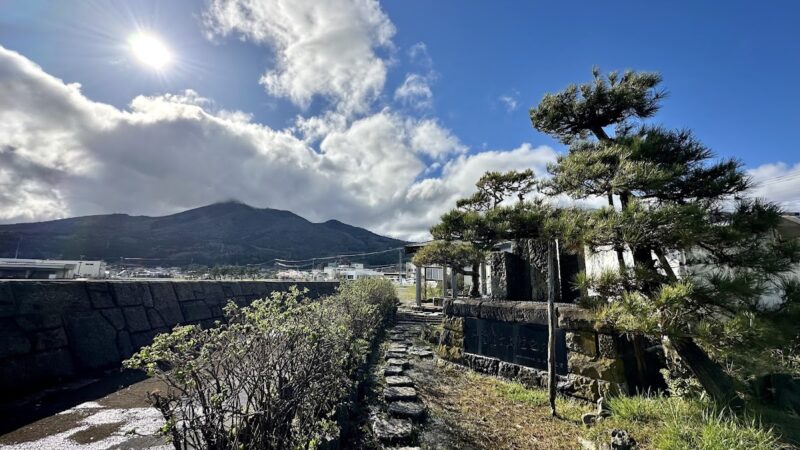
Currently, the Ajigasawa Castle ruins have been developed into Tendōyama Park, a popular spot for local residents and tourists. Unfortunately, none of the original structures remain, and clear remains such as stone walls and moats have been lost. However, the park offers a space where visitors can still experience the atmosphere of the castle ruins.
The park features well-maintained walking paths, allowing visitors to enjoy the changing seasons. In particular, the cherry blossoms in spring make it a popular spot for cherry blossom viewing.
Restored Kabukimon Gate
At the entrance to Tendōyama Park, a restored Kabukimon Gate has been erected. This gate was installed to recreate the atmosphere of a castle, inviting visitors into a world of history.
The Kabukimon Gate is a popular photo spot, attracting many castle enthusiasts and history buffs. Passing through the gate, visitors can truly feel the presence of the castle that once stood here.
Information Boards and Markers
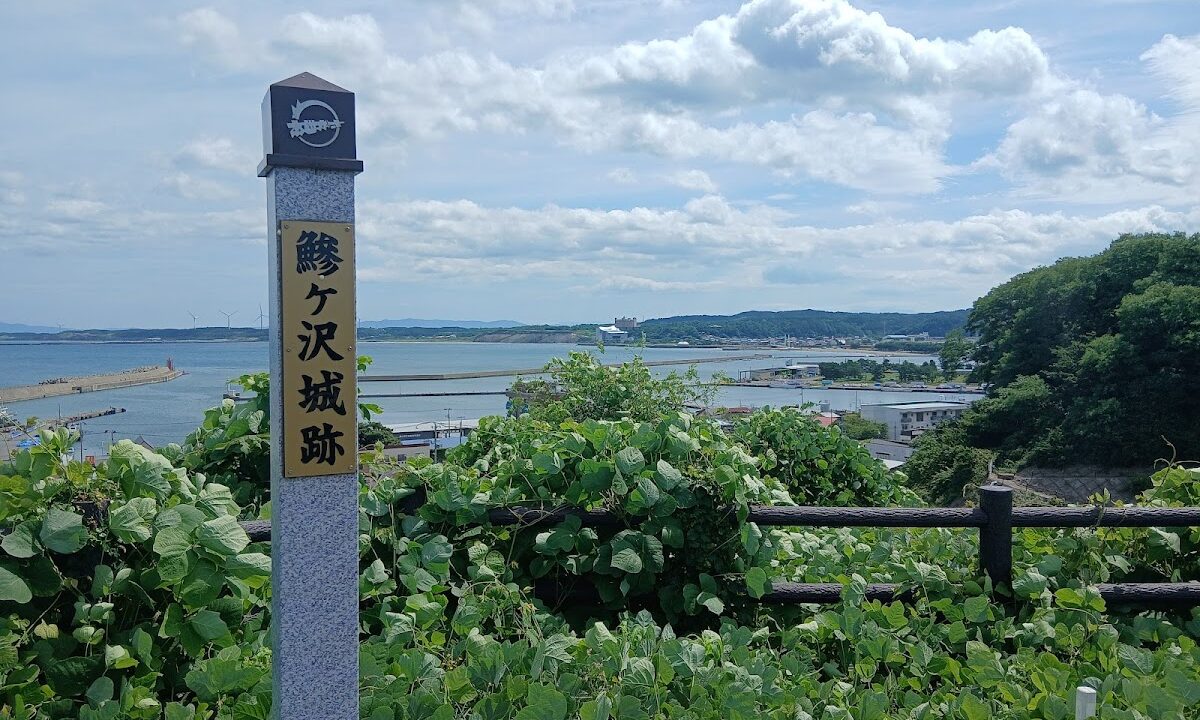
Within the park, there are information boards and castle site markers explaining the history of Ajigasawa Castle. These provide information about the castle’s history, structure, and lords, helping visitors understand the castle’s history.
The information boards contain detailed information about Tsugaru Hyakusuke Nobutaka, the castle’s role, and the state of Ajigasawa at the time.
Highlights of Ajigasawa Castle
Historical Value
The greatest highlight of Ajigasawa Castle lies in its historical value. As a branch castle of the Tsugaru Domain, it is a valuable historical site that conveys the realities of regional governance and maritime management during the Edo period.
As a castle ruled by a branch of the Tsugaru clan, it occupies an important position in understanding the history of the Tsugaru region. In particular, its role as a base for Kitamae-bune (northern route trading ships) is an interesting element for understanding the economic system of the time.
Views
From Tendōyama Park, you can enjoy a beautiful view of the Sea of Japan. The former castle lords likely enjoyed this view while monitoring the movements of the sea.
On clear days, you can even see the mountains of Hokkaido in the distance, allowing you to imagine the former Kitamae-bune shipping route. At dusk, the sunset over the Sea of Japan is beautiful, making it an ideal spot for photography.
Seasonal Charms
Tendoyama Park offers different charms in each season:
Spring: Cherry blossoms are in full bloom, making it a popular spot for cherry blossom viewing. The combination of the castle ruins and cherry blossoms evokes a sense of traditional Japanese beauty.
Summer: The lush green park becomes a relaxing place where cool sea breezes blow through.
Autumn: The autumn leaves turn beautiful colors, further enhancing the historical atmosphere.
Winter: The castle ruins amidst a snowy landscape tell the story of the harsh climate of Tsugaru.
Castle Stamp Information
Features of the Castle Stamp
The castle stamp of Ajigasawa Castle is a popular item among castle enthusiasts and collectors. The stamp features a design related to Tsugaru Hyakusuke Nobutaka, the lord of the castle.
Of particular note is the commemorative edition featuring the calligraphy from the peony crest curtain donated to Shirahachiman Shrine by a descendant of Lord Nobutaka. This castle stamp has high historical value and is popular among collectors.
Purchase Location and Time
Please note that the purchase location for the castle stamp varies depending on the day of the week:
Weekdays: Sold at Ajigasawa Town Central Community Center
- Address: 259-2 Sayo, Maido-cho, Ajigasawa-machi, Nishitsugaru-gun, Aomori Prefecture
- Business Hours: Please check
Weekends and Holidays: Sold at the Ajigasawa Station Tourist Information Center
- Address: 36-2 Shimotomita, Maido-cho, Ajigasawa-machi, Nishitsugaru-gun, Aomori Prefecture
- Business Hours: Please check
We recommend checking business hours before purchasing. Telephone inquiries are also possible.
Castle Stamp Price
The price of a castle stamp is generally around 300 yen, but special and limited editions may have different prices. Please check at the time of purchase. ## Access Information
Access by Public Transportation
By JR:
- Get off at Ajigasawa Station on the JR Gonō Line, approximately 15 minutes on foot.
- The route from Ajigasawa Station to Tendoyama Park is flat and easy to walk.
- Maps are available at the tourist information center inside the station.
By Bus:
- Take the Konan Bus bound for Ajigasawa from Hirosaki Station.
- Get off at the Ajigasawa bus stop, approximately 15 minutes on foot.
Access by Car
By Expressway:
- Approximately 50 km (about 1 hour) from the Ōwani-Hirosaki IC on the Tohoku Expressway.
- Take National Route 101 towards Ajigasawa Town.
Parking:
- Free parking is available around Tendoyama Park.
- Due to limited spaces, early arrival is recommended during event periods.
Notes for Visitors
- During winter, snow can accumulate, so caution is needed when walking.
- Some parts of the park are unpaved, so comfortable walking shoes are recommended.
- Taking photos of the information boards beforehand will be helpful when reviewing the history later.
Nearby Tourist Spots
Shirohachimangu Shrine
Shirohachimangu Shrine, located near the Ajigasawa Castle Ruins, is a shrine known for its votive ema (votive tablets) depicting Kitamae ships. It preserves valuable cultural artifacts that convey the prosperity of maritime transport during the Edo period, making it an important spot for understanding the history of Ajigasawa.
The peony-crested curtain donated by a descendant of Tsugaru Hyakusuke Nobutaka is also a valuable historical artifact related to this shrine.
Tanesato Castle Ruins (Mitsunobu’s Residence)
Tanesato Castle Ruins, located in Ajigasawa Town, is an important castle site designated as a National Historic Site. Built in 1491 by Oura Mitsunobu, it is known as the birthplace of the Tsugaru clan.
There is a historical museum called “Mitsunobu-ko no Yakata” on site, where you can learn about the history of the Tsugaru clan and the details of Taneri Castle. There is also a bronze statue of Lord Oura Mitsunobu and his mausoleum, making it a spot where you can gain a deep understanding of Tsugaru history.
Akaishi Castle Ruins
Akaishi Castle, located in Akaishi-cho, Ajigasawa Town, is the castle ruins believed to be the birthplace of Tsugaru Tamenobu. It is said to have been built by Oura Mitsunobu as a branch castle of Taneri Castle and was also called “Fushija Castle” (Crouching Snake Castle).
Three oblique square-shaped dry moats remain on the southwest side of the main gate, making them valuable remains for understanding the castle structure of the Sengoku period.
Shirakami Mountains
Ajigasawa Town is one of the gateways to the World Natural Heritage site Shirakami Mountains. The Shirakami Mountains, with their vast primeval beech forests, are a precious area where you can experience rich nature and ecosystems.
You can enjoy nature walks in conjunction with visiting castle ruins. Particularly popular are tourist spots such as the Twelve Lakes and Anmon Falls.
Ajigasawa Onsen
Ajigasawa town has several hot spring facilities where you can relax and unwind after sightseeing. There are many hot springs overlooking the Sea of Japan, and numerous inns where you can enjoy cuisine made with local ingredients.
History and Culture of Ajigasawa
Hub of Kitamae-bune Trade
From the Edo period to the Meiji period, Ajigasawa prospered as an important port of call for Kitamae-bune ships. As a transit point on the sea route connecting Osaka and Hokkaido, many goods passed through this port.
Rice, seafood, timber, and other goods were traded, playing an important role in supporting the economy of the Tsugaru domain. Ajigasawa Castle functioned as a base for managing this maritime trade.
The Western Defense of the Tsugaru Domain
Ajigasawa was an important region for protecting the western part of the Tsugaru Domain. Due to its location facing the Sea of Japan, it needed to be prepared for threats from the sea, and Ajigasawa Castle played a crucial role as a defensive base.
Modern-Day Ajigasawa
Present-day Ajigasawa Town is known as a base for sightseeing in the Shirakami Mountains and as a fishing town rich in seafood. It is particularly known nationwide for being home to the famous Akita dog, “Wasao.”
Best Season and Events for Visiting
Recommended Time to Visit
Spring (April-May): The cherry blossom season is highly recommended. The cherry blossoms in Tendōyama Park are magnificent, and you can enjoy strolling through the castle ruins while admiring the blossoms.
Summer (June-August): Enjoy the lush green park and the blue waters of the Sea of Japan. However, heat precautions are necessary.
Autumn (September-November): The autumn foliage is beautiful, and the mild weather makes it ideal for a stroll.
Winter (December-March): The castle ruins are charming in the snow, but due to the snow, warm clothing and caution are necessary when walking.
Local Events
Ajigasawa Town hosts various events throughout the year:
- Ajigasawa Town Cherry Blossom Festival (Late April-Early May): You can enjoy cherry blossoms at Tendōyama Park.
- Ajigasawa Town Summer Festival (August): A traditional local festival is held.
- Shirakami Mountains Related Events: Nature experiences and mountain climbing events are held.
Points to Note When Visiting Ajigasawa Castle
Time Required
For a stroll through Tendōyama Park, allow approximately 30 minutes to 1 hour. If you want to take your time and fully appreciate the history, we recommend spending 1 hour or more.
Including nearby tourist attractions, you can plan a half-day to full-day sightseeing itinerary.
Photo Spots
- Kabukimon Gate: The restored gate is the best photo spot to capture the atmosphere of the castle ruins.
- View of the Sea of Japan: The view of the sea from the park is spectacular on a clear day.
- Information Boards and Markers: These are useful for commemorative photos and records.
- Seasonal Scenery: Capture the beauty of each season, such as cherry blossoms and autumn leaves.
Useful Items to Bring
- Comfortable walking shoes (some parts of the park are unpaved)
- Camera (a smartphone is sufficient, but a telephoto lens will allow you to take better photos of the sea)
- Drinks (especially in summer to prevent heatstroke)
- Binoculars (to enjoy the view of the Sea of Japan and distant scenery)
- Map or guidebook (learning about the history beforehand will enhance your enjoyment)
Additional Information for History Enthusiasts
About Tsugaru Hyakusuke Nobutaka
Tsugaru Hyakusuke Nobutaka, known as the lord of Ajigasawa Castle, was born the fourth son of Tsugaru Nobumaki, the second lord of the Tsugaru Domain. He supported his older brother, the third lord Tsugaru Nobuyoshi, and was responsible for governing the western part of the Tsugaru Domain.
“Hyakusuke” was his childhood name; he later adopted the name Nobutaka. He dedicated himself to the development of Ajigasawa, particularly contributing to the management of maritime transport and the promotion of the local economy.
Tsugaru Domain’s Branch Castle System
The Tsugaru Domain employed a governing system with Hirosaki Castle as its main castle, and branch castles located throughout its territory. Ajigasawa Castle was one of the important branch castles, responsible for governing the western region and monitoring the Sea of Japan.
Other major branch castles included Oura Castle and Horikoshi Castle, each functioning as a base for regional governance.
Related Historical Materials
For those who wish to learn more about the history of Ajigasawa Castle and the Tsugaru Domain, the following facilities and materials are recommended:
- Ajigasawa Town Central Community Center: Exhibits local historical materials
- Hirosaki City Library: Contains detailed materials on the Tsugaru Domain
- Aomori Prefectural Museum: You can learn about the history of Aomori Prefecture as a whole
Ajigasawa Castle and the Tsugaru Castle Network
Major Castles in the Tsugaru Region
When visiting Ajigasawa Castle, visiting other castle ruins in the Tsugaru region will allow you to understand the region’s history more deeply:
Hirosaki Castle: The main castle of the Tsugaru Domain, a valuable castle with an existing keep. It is designated as a National Important Cultural Property and is nationally famous as a cherry blossom viewing spot.
Taneri Castle: As mentioned above, it is designated as a National Historic Site as the birthplace of the Tsugaru clan. Visiting Ajigasawa Castle and Ajigasawa Castle together will help you understand the flow of Tsugaru history.
Oura Castle: The residence of the Oura clan, the predecessor of the Tsugaru clan, located in Hirosaki City.
Model Castle Tour Course
A model course for efficiently touring castles in the Tsugaru region would be:
1-Day Course: Hirosaki Castle (morning) → Ajigasawa Castle & Taneri Castle (afternoon)
2-Day Course:
- Day 1: Hirosaki Castle and its surroundings (Hirosaki city sightseeing)
- Day 2: Ajigasawa Castle, Taneri Castle, Akaishi Castle, Shirakami Mountains sightseeing
This course allows you to enjoy both the history and nature of Tsugaru.
Summary: The Charm of Ajigasawa Castle
Although no clear remains of Ajigasawa Castle exist, it is an important historical site that conveys the history of the Tsugaru domain. Currently developed as Tendōyama Park, the reconstructed gate and information boards allow visitors to imagine the castle’s former appearance.
With its location overlooking the Sea of Japan, its role as a base for Kitamae-bune (northern route trading ships), and its history as the residence of Tsugaru Hyakusuke Nobutaka, this castle site boasts many attractions. Castle stamps are also sold, making it a worthwhile spot for castle enthusiasts.
The surrounding area offers numerous tourist spots where you can enjoy both history and nature, such as the Taneri Castle ruins and the Shirakami Mountains. Why not enjoy a trip to experience Tsugaru’s history and culture while savoring the seafood of Ajigasawa and relaxing in hot springs?
When visiting Aomori Prefecture, be sure to visit the Ajigasawa Castle ruins and enjoy the history of the Tsugaru domain and the beautiful scenery of the Sea of Japan. Tendōyama Park, which shows different expressions in each season, is a fascinating spot where you can discover something new no matter how many times you visit.