
Complete Guide to Charukorofina Chashi (Hanazono-cho, Nemuro City, Hokkaido): A Thorough Explanation of the Largest Chashi Site on the Nemuro Peninsula
What is Charukorofina Chashi?
Charukorofina Chashi is an important archaeological site located in the Onnenuma district of Nemuro City, Hokkaido, and is part of the Nemuro Peninsula Chashi Site Group. The Nemuro Peninsula Chashi Site Group is designated as a national historic site, encompassing 24 Chashi sites, and Charukorofina Chashi is known as the largest of them all.
“Chashi” is an Ainu word meaning “fence,” “fort,” or “mansion,” and over 500 Chashi sites have been identified in Hokkaido. Charukorofina Chashi is believed to have been constructed between the 16th and 18th centuries, and is a valuable cultural heritage site that conveys Ainu culture from a period corresponding to Japan’s Sengoku and Edo periods.
Located along the western coast of the Nemuro Peninsula, this Chashi offers views of Lake Daiten and Lake Nezumi, allowing us to still appreciate the strategic importance of the location chosen by the people of that time.
Historical Background of Chalkorofina Chashi
Ainu Culture and the Role of Chashi
Chashi were not merely military facilities; they played diverse roles in Ainu society. They are believed to have functioned as places of worship, trading posts, watchtowers, and defensive structures for settlements. The Nemuro region, in particular, is home to approximately 38% of all Chashi sites confirmed in Hokkaido, making it one of the centers of Ainu culture.
There are 32 Chashi sites remaining within Nemuro City, a density that is remarkable compared to other regions. This is presumably due to the Nemuro Peninsula’s strategic location on trade routes to the Kuril Islands and Sakhalin, as well as its abundant marine resources.
Construction Period of Charukorofina Chashi
While many details regarding the exact construction period and builder of Charukorofina Chashi remain unknown, it is estimated to have been built between the 16th and 18th centuries based on excavated artifacts and structural characteristics. This period also saw increased contact with the Japanese and significant transformations in Ainu society.
After the establishment of the Matsumae Domain (1604), trade between the Ainu and the Japanese intensified, and it is believed that the role of the chashi (fortified settlement) changed accordingly. While its defensive function was strengthened, its role as a trading hub also became increasingly important.
Structure and Characteristics of Charukorofina Chashi
Typical Example of a Cliff-Facing Chashi
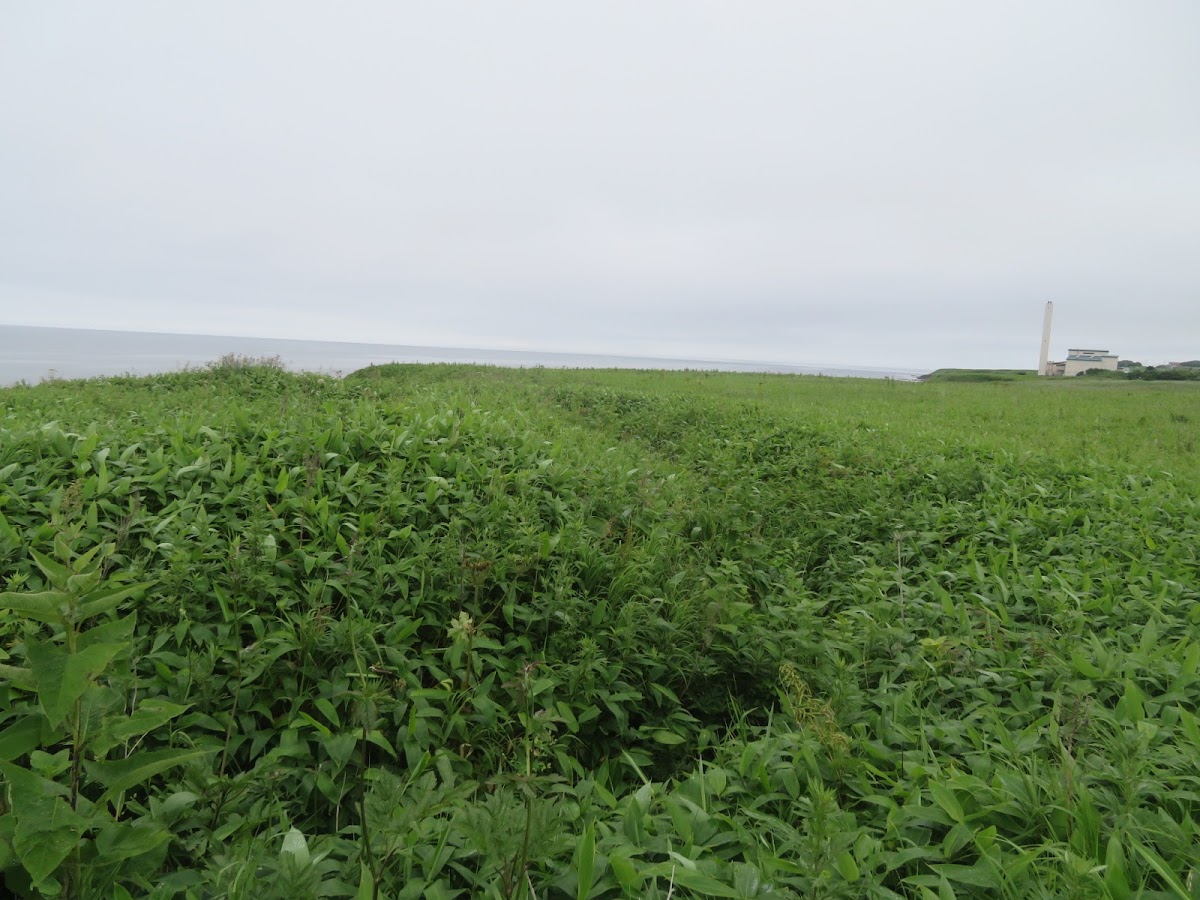
Charukorofina Chashi is a chashi with a structure known as a “cliff-facing chashi.” A cliff-facing chashi utilizes cliffs along the coast or river as a natural defensive wall, with moats or earthen ramparts surrounding it on the inland side. Many of the Chashi (fortified settlements) on the Nemuro Peninsula employ this cliff-face construction method, showcasing the ingenuity of the Ainu in skillfully utilizing the terrain.
Charukorofina Chashi consists of two Chashi, No. 1 and No. 2, located on a plateau-like area on a coastal cliff approximately 5 to 50 meters above sea level. Semicircular or rectangular trenches surround the plateau, clearly defining its boundaries.
The Largest Remains on the Nemuro Peninsula
Charukorofina Chashi is considered the “largest” due to its large site area and the excellent state of preservation of its remains. It boasts a particularly large flat area among the Nemuro Peninsula Chashi sites, and is characterized by the adjacent placement of multiple Chashi.
Even today, the trenches and flat areas can be clearly observed from the ground. The fact that they remain largely intact despite the passage of time is thought to be due to the climatic conditions and soil characteristics of the Nemuro region. In recent years, laser surveying using drones has been conducted, and detailed topographic data has been released through CS stereoscopic maps, leading to a more accurate understanding of the structure.
Strategic Aspects from a Location Perspective
The location of Chalkorofina Chashi strongly suggests military and economic strategic importance. Situated on a coastal plateau overlooking Nemuro Bay, it allowed for monitoring of approaches from the sea while simultaneously securing access to abundant marine resources.
The surrounding lakes and marshes, such as Daitenko and Nezumiko, were important not only as freshwater resources but also as fishing grounds. Furthermore, its location on a high vantage point likely provided the advantage of quickly detecting visitors and vessels from afar.
Highlights of Chalkorofina Chashi
Information Boards and Markers
Currently, information boards are installed at the Chalkorofina Chashi site, allowing visitors to understand the site’s overview. The boards describe the structure of the chashi, its historical background, and its position within the overall group of chashi sites on the Nemuro Peninsula.
Markers have also been erected, allowing visitors to confirm the boundaries of the chashi site. However, due to the protection of the remains, there may be restricted areas, so it is important to follow the signs during your visit. ### Harmony with the Natural Landscape
The charm of Charukorofina Chashi lies not only in the ruins themselves, but also in their harmony with the surrounding natural landscape. Depending on the time of year you visit, you can enjoy different scenery, including the magnificent coastline of the Nemuro Peninsula, the vegetation that changes with the seasons, and the sight of wild animals.
Especially in summer, various wildflowers bloom in the coastal grasslands, creating a unique landscape where historical heritage and natural beauty merge. Furthermore, Nemuro is known as “the town closest to the rising sun,” and if you visit early in the morning, you can witness a beautiful sunrise.
As Part of the Nemuro Peninsula Chashi Sites
Charukorofina Chashi is designated as a national historic site as part of the Nemuro Peninsula Chashi Sites. This designation was made in 2006, and it has also been selected as one of Japan’s 100 Famous Castles (No. 1).
The Nemuro Peninsula Chashi Sites include other important chashi sites such as Onnemoto Chashi, Notsukamafu Chashi, and Ponmoi Chashi. If you have time, we recommend enjoying a “chashi tour” of these chashi (fortified settlements). Each chashi has its own unique characteristics, allowing you to experience the diversity of Ainu culture.
Access Information and Visiting Guide
Location and Basic Information
Location: 10 Onnenuma, Nemuro City, Hokkaido (Hanazono-cho area)
Designation: National Historic Site (part of the Nemuro Peninsula Chashi Site Group)
Visiting: Free (however, please follow the instructions to protect the remains)
Admission Fee: Free
Estimated Visiting Time: Approximately 30 minutes to 1 hour
Access by Car
The most convenient way to access Charukorofina Chashi is by car. It takes approximately 15-20 minutes from Nemuro city center via National Route 44.
From Nemuro Station: Approximately 12km, about 20 minutes by car
From Nakashibetsu Airport: Approximately 80km, about 1 hour 30 minutes by car
From Kushiro City: Approximately 130km, about 2 hours 30 minutes by car
Parking space is limited, so please be considerate of other visitors. Avoid street parking and park in designated areas.
Access by Public Transportation
If using public transportation, you will need to take a bus or taxi from Nemuro Station. However, bus services are limited, so it is recommended to check the timetable in advance.
If taking a taxi from Nemuro Station, the estimated fare is approximately 3,000 yen one way. If you plan to visit multiple Chashi (ancient Chashi sites), you may want to consider chartering a taxi.
Access on Foot
If walking from Nemuro Station, the distance is approximately 12km, so you should allow about 2.5 to 3 hours. This is a good option for those confident in their physical fitness or who want to combine a visit with a hike, but it’s crucial to prepare by considering the weather and season.
Especially in winter, access on foot is dangerous due to snow and ice, so adequate equipment and experience are necessary.
Points to Note and Preparations for Visiting
Clothing and Equipment
Charkolofina Chasi is located on a plateau along the coast, so it is windy and the weather is unpredictable. We recommend the following preparations:
- Warm clothing: Even in summer, the wind can be cold, so bring a jacket.
- Comfortable walking shoes: Trekking shoes or sneakers are appropriate as you will be walking on uneven terrain.
- Hat and sunglasses: For sunny days.
- Insect repellent: Essential in summer due to the abundance of insects.
- Rain gear: To prepare for sudden weather changes.
Best Time to Visit
Charkolofina Chasi is accessible year-round, but the best time to visit is from May to October. Spring (May-June): Beautiful fresh greenery, ideal for birdwatching. However, mornings and evenings can be chilly.
Summer (July-August): The busiest time of year. Wildflowers bloom in abundance, creating a beautiful landscape. However, insects are numerous, so precautions are necessary.
Autumn (September-October): Attractive autumn foliage and stable weather. Fewer tourists than in summer, allowing for a more relaxed visit.
Winter (November-April): Snow and ice can make visits difficult. Thorough preparation and checking local information are essential for winter visits.
Etiquette for Archaeological Site Protection
Charkolofinachasi is a valuable cultural heritage site. Please observe the following manners when visiting:
- Do not damage the remains (do not climb on trenches or earthworks)
- Always take your trash with you
- Do not take plants or stones
- Treat information boards and markers with care
- Do not enter restricted areas
- No open flames
Nearby Tourist Spots and Highlights
Other Chashi Sites in the Nemuro Peninsula Chashi Group
If you visit Charukorofina Chashi, we recommend visiting the other Chashi sites that make up the Nemuro Peninsula Chashi Group.
Onnemoto Chashi: Located near Cape Nosappu, this is the easternmost Chashi. It is known as “Japan’s easternmost Chashi.”
Notsukamafu Chashi: Well-preserved, with trenches and flat areas clearly visible.
Ponmoi Chashi: Relatively easy to access, suitable for first-time Chashi visitors.
A “chashi tour” visiting these chashi (fortified settlements) offers a valuable experience for deepening your understanding of Ainu culture. Each chashi can be found on a map, allowing you to plan an efficient route.
Cape Nosappu
Famous as the easternmost point of mainland Japan, Cape Nosappu is about a 30-minute drive from Charukorofina Chashi. It offers views of the Northern Territories, and monuments such as the “Bridge to the Four Islands” are located here. In the early morning, you can witness the earliest sunrise in Japan (excluding the outlying islands).
Onnenuma Lake
Located near Charukorofina Chashi, Onnenuma Lake is known as a wintering ground for swans. From autumn to spring, numerous swans visit to overwinter, making it a popular birdwatching spot.
Nemuro City Museum of History and Nature
Located in Nemuro city center, this museum offers insights into Ainu culture, Nemuro’s history, and its natural environment. There are also exhibits on the chashi, and visiting before or after your visit will provide a deeper understanding.
Location: 209 Hanasaki Port, Nemuro City
Opening Hours: 9:30 AM – 4:30 PM (9:30 AM – 4:00 PM from November to March)
Closed: Mondays, the day after national holidays, and during the New Year holidays
Admission Fee: Free
Hanasaki Port and Hanasaki Crab
Nemuro is famous as a production area for Hanasaki crab. There are many restaurants around Hanasaki Port that serve fresh seafood, so be sure to try them when you visit. Especially during the peak season from September to October, you can enjoy the rich flavor of Hanasaki crab.
Cultural Value of the Nemuro Peninsula Chashi Ruins
Selection as one of Japan’s Top 100 Castles
The Nemuro Peninsula Chashi Ruins were selected as the first of “Japan’s Top 100 Castles” by the Japan Castle Association in 2006. This signifies that, despite possessing a structure entirely different from the stone-walled castles of Honshu and further south, it has been recognized as occupying an important position in the history of Japanese castles.
The 100 Famous Castles stamp can be obtained at the Nemuro City Tourist Information Center (inside Nemuro Station) and the Nemuro City Museum of History and Nature. For castle enthusiasts and collectors of the 100 Famous Castles stamp, Nemuro is a must-visit destination.
Importance as Ainu Cultural Heritage
Chashi are essential heritage sites for understanding the lives, beliefs, and social structure of the Ainu people. In Ainu culture, which lacked written records, material heritage like Chashi provides valuable clues to understanding the society of that time.
The high-density distribution of Chashi sites on the Nemuro Peninsula indicates that this region was an important center in Ainu society. Located on trade routes with the Kuril Islands and Sakhalin, and blessed with abundant marine resources, Nemuro was one of the economic and cultural centers.
Efforts Towards World Heritage Registration
In Hokkaido, there are efforts to register Ainu cultural heritage sites as a World Heritage site, and the Nemuro Peninsula Chashi Sites are attracting attention as one of the candidates. If the uniqueness and universal value of Ainu culture are internationally recognized, it is expected that the preservation and utilization of the Chashi sites, including Charukorofina Chashi, will further progress.
Current Status of Research and Preservation Activities
Utilization of the Latest Survey Technology
In recent years, the latest survey technology has been introduced at the Chashi sites on the Nemuro Peninsula, including Charukorofina Chashi. Laser surveying (LiDAR) using drones is being conducted to obtain detailed topographic data. By visualizing this data as a CS 3D map, the fine topographic reliefs and the extent of the remains, which could not be fully grasped with conventional surveying, have become clear.
This data is publicly available on the Nemuro City Board of Education website and can be viewed not only by researchers but also by the general public. The use of digital technology, which has made detailed surveys possible without damaging the ruins, represents a significant advance from the perspective of cultural property protection.
Preservation Status and Challenges
While the Chalkorofina Chashi remains in relatively good condition, it faces various challenges, including weathering due to the natural environment, changes in vegetation, and the effects of climate change.
The harsh climatic conditions of the Nemuro region (strong winds, snowfall, and repeated freeze-thaw cycles) have significantly impacted the remains. Furthermore, the risk of human-induced destruction exists, requiring continuous monitoring and conservation activities.
Collaboration with the Local Community
In Nemuro City, cultural property protection activities are carried out in collaboration with local residents and schools. Chashi visits are incorporated into local history learning programs for elementary and junior high school students, aiming to pass on culture to future generations.
In addition, training of volunteer tourist guides is underway, creating a system capable of providing visitors with more in-depth explanations. Understanding and proudly conveying the region’s history and culture is believed to contribute to long-term preservation.
The Significance of Visiting Charukorofina Chashi
Understanding Japan’s Diverse Cultures
Visiting Charukorofina Chashi is a valuable opportunity to experience the diversity of Japanese culture. Chashi, with its structure and background completely different from castles south of Honshu, teaches us that multiple cultural spheres exist within the Japanese archipelago, each having developed uniquely.
Ainu culture possessed values, a view of nature, and a social structure distinct from that of the Japanese. Through the material heritage of the Chashi, we can glimpse a part of this.
Experiencing the Layers of History
The Nemuro Peninsula is a region where various layers of history overlap, from the Ainu culture era to contact with the Japanese, modernization, and the present day. Standing at Charukorofina Chashi, one can imagine the people who lived here hundreds of years ago, gazing at the sea, engaging in trade, and perhaps even fighting battles.
The Chashi quietly reminds us that history is not only found in textbooks, but is etched into the very land we stand upon.
Learning about the Coexistence of Nature and Culture
The Ainu people have built a culture that coexists with nature. Even in the selection of the location of their Chashi (fortified settlements), we can see their wisdom in skillfully utilizing the natural terrain and living in harmony with the environment.
As modern society faces environmental problems and sustainability, the Ainu culture’s philosophy of coexisting with nature offers us many insights. Visiting Charukorofina Chashi is an opportunity to learn from the past and consider the future.
Summary: The Charm of Charukorofina Chashi
Charukorofina Chashi is the largest of the Chashi ruins on the Nemuro Peninsula and is designated as a national historic site, representing an important heritage of Ainu culture. Built between the 16th and 18th centuries, this Chashi has a typical cliff-face structure and is situated in a superb location overlooking Nemuro Bay from a coastal plateau.
Visitors can explore the ruins guided by signposts and markers, experiencing a unique atmosphere where history and nature harmonize, especially in combination with the surrounding natural landscape. It’s relatively easy to access, about a 20-minute drive from Nemuro Station, and as one of Japan’s 100 Famous Castles, it attracts not only castle enthusiasts but also many people interested in history and culture.
Visiting Charukorofina Chashi is a valuable opportunity to learn about Japan’s diverse cultures and experience the wisdom and history of the Ainu people. Combining it with visits to other Chashi on the Nemuro Peninsula and surrounding tourist spots will lead to a deeper understanding and a more fulfilling travel experience.
In Nemuro, the city closest to the sunrise at the easternmost tip of Hokkaido, Charukorofina Chashi, standing for hundreds of years, quietly awaits your visit.

