Hanazawa Castle (Hokkaido) Complete Guide | The History of the Twelve Castles of Southern Hokkaido and the Defense Strategy of Kakizaki Suehige
What is Hanazawa Castle?
Hanazawa Castle is a medieval castle site located in Katsuyama, Kaminokuni-cho, Hiyama-gun, Hokkaido. It is preserved as one of the nationally designated historical sites, “Historic Site of Kaminokuni Castle Ruins.” Also known as Hanamidai Castle, Hanami Castle, and Kaminokuni Hanazawa Castle, it occupies a particularly important position among the twelve castles of southern Hokkaido, built in the mid-15th century by people called the Watari-to, who migrated from Honshu, as a base for their advance into southern Ezo (present-day Hokkaido).
Built on a hill 58 meters above sea level with a relative height of 40 meters, this castle is located in a strategically important location near the mouth of the Amanogawa River and boasts a size of approximately 200 meters north-south and 80 meters east-west. In the Battle of Koshamain in 1457, Hanazawa Castle, along with Mobetsu Castle, was one of only two castles that did not fall, playing an extremely important role in the history of Hokkaido.
The Position of Hanazawa Castle in the Twelve Castles of Southern Hokkaido
What are the Twelve Castles of Southern Hokkaido?
The Twelve Castles of Southern Hokkaido are a collective term for 12 forts built by the Japanese in the 15th century in the southern Hokkaido region as bases for their advance into Ezo (Hokkaido). These castles were facilities built by the Watari clan, immigrants from Honshu, for trade with the Ainu people and for defense. Major castles include Shinori Castle, Mobetsu Castle, Nakano Castle, Wakimoto Castle, Onnai Castle, Haraguchi Castle, Hishi Castle, Nebota Castle, Atsusabetsu Castle, Odachi Castle, Kobayashi Castle, and Hanazawa Castle.
The Strategic Importance of Hanazawa Castle
Hanazawa Castle is located in the northernmost part of the Twelve Castles of Southern Hokkaido and was a central base for the Japanese forces in the Kaminokuni region. The location at the mouth of the Amanogawa River was ideal for controlling a key point for maritime traffic and securing routes to inland areas. This geographical advantage was a crucial factor in the defense of the fort during the later Koshamain War.
History of Hanazawa Castle
Construction History and Period
The construction of Hanazawa Castle is estimated to have taken place in the mid-15th century. Around 1454 (Kyōtoku 3), a family of the Kakizaki clan, vassals of Andō Masasue, is believed to have established a fort in this area. The “Shinra no Kiroku,” the oldest historical record of Hokkaido, contains descriptions of Hanazawa Castle, making it a valuable historical document for understanding the conditions of the time.
Kakizaki Sueshige and Hanazawa Castle
The most famous lord of Hanazawa Castle is Kakizaki Sueshige. Kakizaki Sueshige served as the governor of Kami-no-kuni and played an important role as a ruler of the Japanese forces in this region. Kihisa crossed over to Ezo (present-day Hokkaido) as a vassal of the Ando clan and expanded his power from Hanazawa Castle.
The Kakizaki clan was the ancestor of the later Matsumae clan, and Hanazawa Castle can be considered the starting point of Japanese rule in Hokkaido. Kihisa’s rule included not only military control but also the creation of an economic foundation through trade with the Ainu people.
The Battle of Koshamain in 1457
The most important event in the history of Hanazawa Castle is the Battle of Koshamain, which broke out in 1457. This battle was a large-scale uprising by Koshamain, an Ainu chieftain, against Japanese oppression.
The Ainu army led by Koshamain successively captured 10 of the twelve castles in southern Hokkaido, but Hanazawa Castle and Mobetsu Castle remained unconquered. According to the “Shinra no Kiroku” (Records of Shinra), Kakizaki Suehige, the lord of Hanazawa Castle, along with Takeda Nobuhiro, withstood Koshamain’s fierce attack and firmly defended the castle.
The Achievements of Takeda Nobuhiro
Takeda Nobuhiro was a samurai from Wakasa Province (present-day Fukui Prefecture) who crossed over to Ezo (Hokkaido) and became the son-in-law of Kakizaki Suehige’s daughter. In the Battle of Koshamain, Nobuhiro fought against Koshamain’s army with outstanding tactics and bravery, ultimately succeeding in killing Koshamain.
This achievement solidified Takeda Nobuhiro’s position as the successor to the Kakizaki clan, and he would later lay the foundation for the Matsumae clan. Hanazawa Castle became a crucial stage in this historical turning point.
From Hanazawa Castle to Katsuyama Castle
After the Battle of Koshamain, the power of the Kakizaki and Takeda clans expanded further. In the latter half of the 15th century, the more defensible Katsuyama Castle was newly built, and the political and military center shifted there. Katsuyama Castle later became the first residence of the Matsumae clan for 400 years, and Hanazawa Castle ceased to serve its purpose.
However, Hanazawa Castle continues to occupy an extremely important historical position as the origin of Japanese rule in southern Hokkaido.
Structure and Remains of Hanazawa Castle
Location and Topography
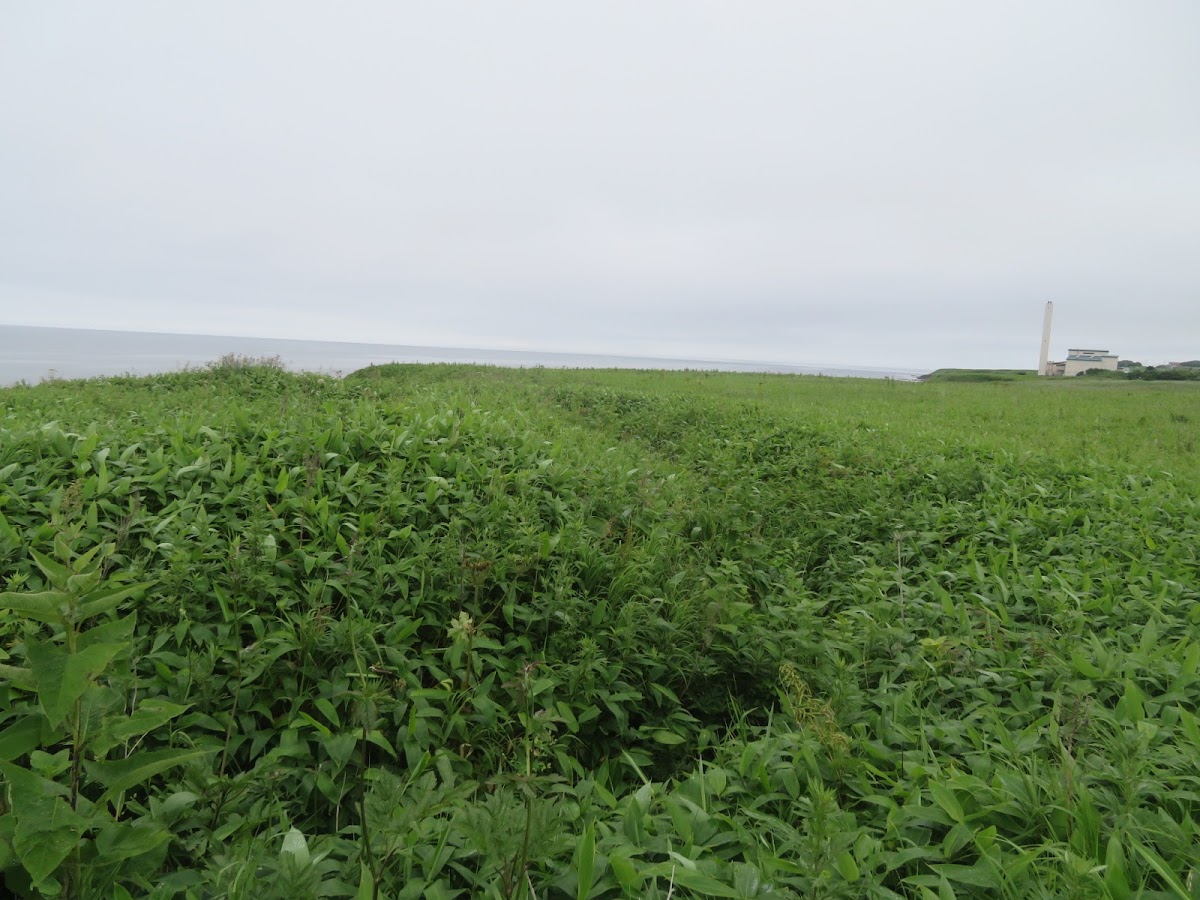
Hanazawa Castle is located on a ridge at an elevation of 58 meters near the mouth of the Amanogawa River. The elevation difference of 40 meters provided a significant defensive advantage. The layout, which skillfully utilizes the natural topography of the hills, exhibits typical characteristics of medieval castles.
The castle site is long and narrow from north to south, measuring approximately 200 meters in length and 80 meters in width. It is believed that residential areas, defensive facilities, and warehouses were located within this vast site.
Remains Revealed by Archaeological Excavations
Excavations conducted by the Kaminokuni Town Board of Education in 2004 and 2005 uncovered numerous important remains.
Dry Moats and Earthen Embankments: The fort was surrounded by a dry moat for defense, and its scale and structure indicate that it was designed to withstand fierce battles. Earthen embankments were also built in various places, creating a multi-layered defensive system.
Ditches and Fence Remains: The investigation revealed multiple ditch and fence remains. These are thought to have marked the divisions within the fort or functioned as defensive lines. The arrangement of the fences suggests a planned use of space.
Traces of Buildings: Remains such as post holes confirm the existence of multiple buildings. These are presumed to have been residential buildings, warehouses, and watchtowers.
Characteristics of Defensive Facilities
The defensive facilities of Hanazawa Fort, which survived the Battle of Koshamain, possess several distinctive elements.
The condition of the moats shows evidence of repeated renovations, indicating that the defensive capabilities were strengthened based on actual combat experience. In particular, it has been suggested that a unique design was implemented to counter the attack methods of the Ainu army.
The layout, which made maximum use of the natural terrain, enabled effective defense even with a small number of defending troops. The combination of steep slopes and artificial defensive structures created an impregnable fortress.
Hanazawa Castle and Surrounding Historical Sites
Relationship with Katsuyama Castle Ruins
The Katsuyama Castle ruins are located approximately 1 kilometer northeast of Hanazawa Castle. Katsuyama Castle was built in the late 15th century and functioned as the residence of the Matsumae clan. It is believed that the experience and techniques cultivated at Hanazawa Castle were utilized in the construction of the larger and more sophisticated Katsuyama Castle.
Both castle ruins are collectively designated as a national historic site, “Kaminokuni Castle Ruins,” and represent an important group of ruins that show the development process of medieval castles in the Kaminokuni region.
Iōzan Burial Mounds
Kaminokuni Town also contains the Iōzan burial mounds from the medieval period. These are Buddhist-style cremation burial mounds and are thought to be the burial sites of people related to Hanazawa Castle and Katsuyama Castle. These tombs offer clues to the culture and beliefs of the Japanese society at that time.
Jōkoku-ji Temple
Jōkoku-ji Temple, considered the oldest temple in Hokkaido, is believed to have been built in the 15th century. It overlapped with the period of Hanazawa-kan and Katsuyama-kan, and functioned as a center of Buddhist culture in the region. It is also thought to have served as the family temple of the Kakizaki and Takeda clans.
Access and Visiting Information for Hanazawa-kan
Location
Address: Katsuyama, Kaminokuni-cho, Hiyama-gun, Hokkaido
Transportation Access
By Public Transportation:
- Take the Hakodate Bus to “Ootome Bus Stop,” then alight at “Kaminokuni Hospital” (approximately 3 minutes by bus), followed by a 5-minute walk.
- Accessible by bus from Hakodate as an alternative to the JR Esashi Line (now defunct).
By Car:
- Approximately 1 hour and 30 minutes from Hakodate city via National Route 228.
- Parking is available around the historical site.
Points to Note During Your Visit
Estimated Visiting Time: Approximately 1 hour for a thorough visit; 2-3 hours are recommended if you also want to visit the surrounding Katsuyama-kan ruins.
Points to Note When Visiting:
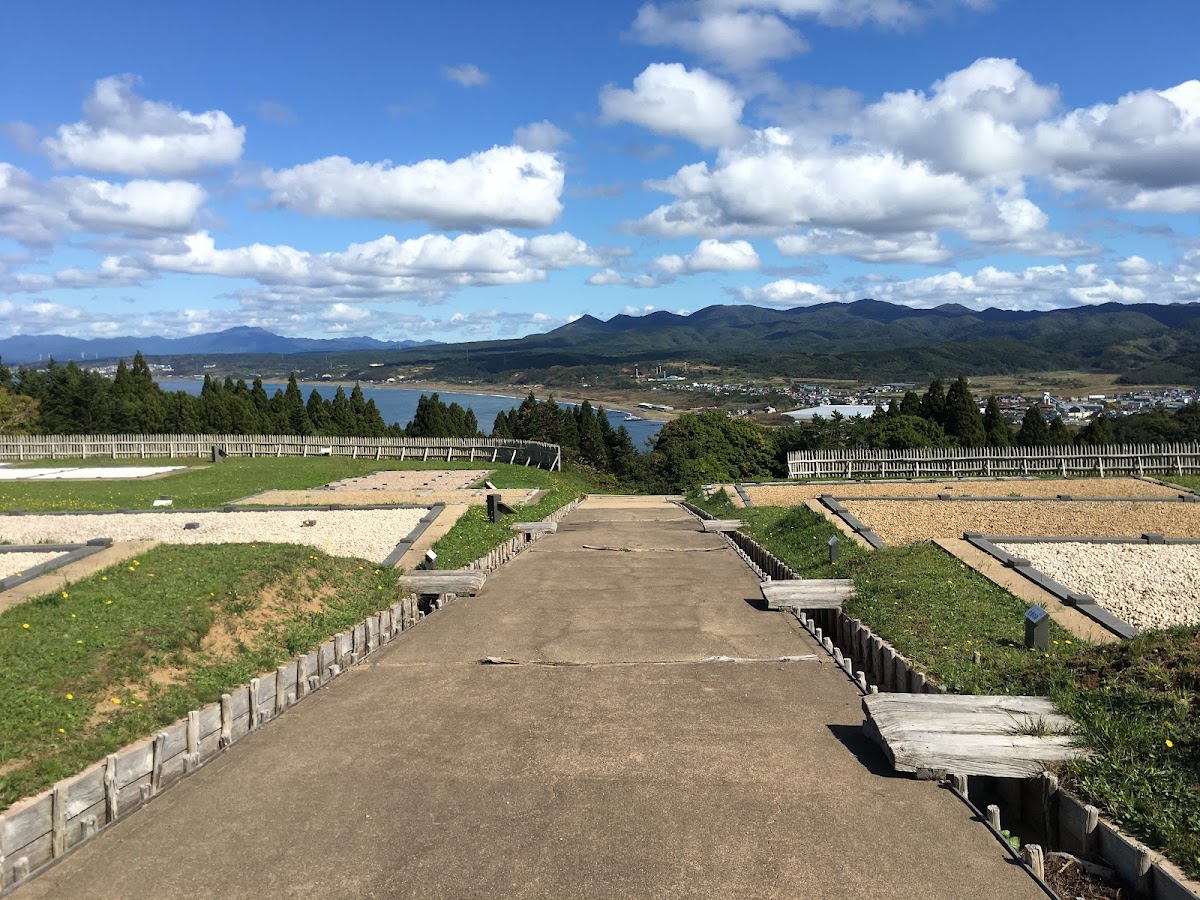
- As the historical site is located on a hillside, we recommend wearing comfortable walking shoes.
- The ground may be slippery depending on the weather, so please be careful.
- Information boards are installed at the site, allowing you to learn about the history while you visit.
Best Season: Spring to autumn is the best time to visit, but it is also possible to visit in winter. However, since Hokkaido winters bring snow, sufficient preparation is necessary for winter visits.
Surrounding Facilities
In addition to the Hanazawa-kan ruins, Kaminokuni Town has many facilities where you can learn about history, such as the Katsuyama-kan Ruins Guidance Facility and Kaminokuni-ji Temple. By visiting these in combination, you can gain a deeper understanding of the medieval history of southern Hokkaido.
Value of Hanazawa-kan as a Cultural Property
Importance as a National Historic Site
The Hanazawa-kan ruins are designated as a national historic site as part of the “Kaminokuni-kan Ruins Historic Site.” This designation indicates that Hanazawa-kan is an important site in Japanese history.
In particular, Hanazawa Castle is an indispensable historical site for understanding the history of relations between the Japanese and Ainu people in Hokkaido, the development process of medieval castles, and the pre-history of the establishment of the Matsumae Domain.
Significance in Hokkaido History
Hanazawa Castle holds several important significances in discussing the history of Hokkaido.
A Base for Japanese Expansion: It is a concrete archaeological site that shows the process of migration and settlement of people from Honshu to Hokkaido in the 15th century. Traces of the lives and activities of the people known as the Watari-to are etched into this land.
A Stage for Ethnic Exchange: It was a place where the Japanese and Ainu people interacted, traded, and sometimes clashed. The Battle of Koshamain was a crucial turning point in the relationship between the two groups, and Hanazawa Castle was on the front lines.
The Origin of the Matsumae Domain: The origin of the Matsumae Domain, which later ruled southern Hokkaido, lies at Hanazawa Castle. As the starting point of the lineage from the Kakizaki clan to the Takeda clan and then to the Matsumae clan, it is an indispensable historical site for understanding the early modern history of Hokkaido.
Archaeological Value
The remains and artifacts obtained through excavation are invaluable resources for understanding the lifestyle, architectural techniques, and military technology of Hokkaido in the 15th century. In particular, the remains showing the structure of a medieval castle provide clues to clarifying regional and historical characteristics through comparative studies with castles on Honshu.
Current Status and Challenges of Hanazawa Castle Research
Research Results to Date
Research on Hanazawa Castle has progressed from both documentary and archaeological perspectives. Analysis of documentary materials, including the “Silla no Kiroku,” has clarified the historical background of the castle and the lineage of its owners.
Archaeological investigations yielded significant results from the 2004 and 2005 excavations. This revealed the specific structure, scale, and details of the defensive facilities of the castle, which were not apparent from documents alone.
Future Research Issues
However, many aspects of Hanazawa Castle remain unclear.
Date of Construction: Currently, it is believed to have been built in the mid-15th century, but a more precise date is needed. Detailed Structure of the Manor: Excavations have been limited, and the overall structure and layout of the manor are not yet clear. Further investigation is needed.
Relationship with the Ainu People: Further research is needed regarding the actual state of interaction and trade between the Japanese and Ainu people at Hanazawa Manor. Analyzing artifacts and other evidence is crucial to clarifying the cultural exchange between the two groups.
Comparison with the Other Twelve Manors of Southern Hokkaido: Comparative research with other manor sites is important to clarify the position and characteristics of Hanazawa Manor within the context of the Twelve Manors of Southern Hokkaido.
Significance of Visiting Hanazawa Manor
Visiting the Hanazawa Manor site is more than simply viewing ancient ruins. Standing on this ground allows you to experience the turbulent 15th century and touch upon the origins of Hokkaido’s history.
Walking through the remains of the strong defensive structures that survived the Battle of Koshamain, you can imagine how Kakizaki Suehige and Takeda Nobuhiro defended the manor. The view from this 58-meter-high hill may not have changed much from the landscape seen by people of that time.
The fact that the foundation of modern Hokkaido began with this small mansion gives us a real sense of the weight and continuity of history. Hanazawa Mansion speaks to all visitors of Hokkaido about the deep history of this land.
Summary
Hanazawa Mansion is a historical site that holds an extremely important place in the history of Hokkaido, as one of the twelve mansions of southern Hokkaido built in the 15th century. Built on a hill 58 meters above sea level with a relative height of 40 meters, this castle was ruled by Kakizaki Suehige and is known as one of two mansions that escaped fall along with Takeda Nobuhiro during the Battle of Koshamain in 1457.
The remains such as dry moats, earthworks, and palisades revealed by archaeological excavations convey to the present day the appearance of the defensive facilities at that time. Hanazawa Castle was a base for the Japanese expansion into Ezo (Hokkaido), a stage for interaction and conflict with the Ainu people, and a historical site that later became the origin of the Matsumae Domain.
Protected as a nationally designated historical site, the Hanazawa Castle ruins are a must-see historical spot when visiting Kaminokuni Town in Hokkaido. Along with surrounding historical sites such as the Katsuyama Castle ruins and Kamikuni-ji Temple, it is a valuable place to experience the medieval history of southern Hokkaido and is popular with many history enthusiasts and tourists.