Complete Guide to Hiseki-date (Hokkaido): The Complete History and Site of the Fortress of the Matsumae Domain’s Chief Retainer, the Atsuya Clan
What is Hiseki-date?: An Important Medieval Fortress Site in Hokkaido
Hiseki-date is a medieval fortress site located in Hiyama District, Hokkaido. It is a historically significant site built by the Atsuya clan, who later became chief retainers of the Matsumae Domain. Currently, a shrine stands on the site, along with a monument and explanatory plaque.
The place name “Hiseki” originates from the Ainu word “Pitsushi” (place with many stones), reflecting the geological characteristics of the region. This fortress is an essential historical site for understanding the history of relations between the Japanese and Ainu in Hokkaido, and furthermore, the formation process of the Matsumae Domain.
History of Hiseki-date: From Ainu Chashi to Samurai Fortress
Land Use from the Jomon Period
Remains and artifacts from the late Jomon period have been discovered within the grounds of Hiseki-date. This discovery provides crucial evidence that this area has been inhabited by people since ancient times. Archaeological evidence confirms that human activity, dating back to the Jomon period, continued uninterruptedly through the later Ainu culture and the expansion of the Japanese.
Origin as an Ainu Chashi
Based on the investigation of archaeological remains and artifacts discovered within the fort, it is believed that the Hishiishi Castle was originally an Ainu chashi (fort) that was later renovated into a castle by the Atsuya clan. Chashi were defensive structures and ceremonial sites built by the Ainu people, and many existed throughout Hokkaido.
While examples of the Japanese reusing Ainu chashi as castles can be found in other parts of Hokkaido, the Hishiishi Castle is a typical example that has attracted the attention of researchers. This renovation process provides important information about the expansion of Japanese influence in Hokkaido from the 15th to 16th centuries and the changing relationship with Ainu society.
Relationship to the Battle of Koshamain: New Research Findings
Traditionally, Hishikan Castle was thought to be one of the castles that fell to Ainu forces during the “Battle of Koshamain” in 1457. The Battle of Koshamain was a large-scale battle in which Ainu chieftain Koshamain rose up against the tyranny of the Japanese, capturing many Japanese castles in the southern Hokkaido region.
However, recent research suggests that this castle may not have existed at that time. This new finding suggests that Hishikan Castle was built after the Battle of Koshamain, probably sometime between the late 15th and early 16th centuries.
This discovery has significant implications for the study of medieval Hokkaido history. Reconsidering the construction period of Hishikan Castle provides a new perspective for understanding the reorganization and expansion of Japanese forces after the Battle of Koshamain, and the path to the establishment of the Matsumae Domain.
Relationship between the Atsuya Clan and the Matsumae Domain
The Atsuya clan, who built Hishikan Castle, later held the important position of chief retainer of the Matsumae Domain. The Matsumae Domain, as the only domain in Hokkaido, monopolized the governance and trade of Ezo (Hokkaido) throughout the Edo period.
The fact that the Atsuya clan held the position of chief retainer indicates that Hishikan was not merely a small, local fortified residence, but a crucial base within the Matsumae Domain’s governing system. The Atsuya family played a central role in the establishment and development of the Matsumae Domain and was deeply involved in its administration.
Hishikan is thought to have functioned as an important base for the Atsuya clan to establish their power base in the Hiyama region. From this fortified residence, governance of the surrounding area, trade with the Ainu, and coordination of relations with other Japanese forces were likely conducted.
Structure and Characteristics of Hishikan
Location and Topographical Characteristics of the Fort
Hishikan was built skillfully utilizing the topography of Hiyama County. Medieval fortified residences generally made maximum use of natural terrain from a defensive standpoint. The Hishishi Castle is no exception; its surrounding terrain functions as a natural defensive structure.
As the place name, meaning “place with many stones,” suggests, this region is rich in stone, which may have been used as building material for the castle. Furthermore, the stone-heavy terrain made advances difficult for attackers, providing advantageous conditions for the defenders.
Conversion from Ainu Chashi to Japanese Castle
When converting an Ainu Chashi into a Japanese castle, several significant changes are thought to have been made. While Chashi primarily utilized earthworks and moats for defense, Japanese castles featured more complex building layouts and defensive structures.
During the conversion process, living spaces, warehouses, and facilities for ceremonies and government affairs were likely added while preserving the existing defensive structure of the Chashi. This conversion process is a valuable example of the fusion of Japanese and Ainu architectural techniques and defensive philosophies.
Current Status of the Remains
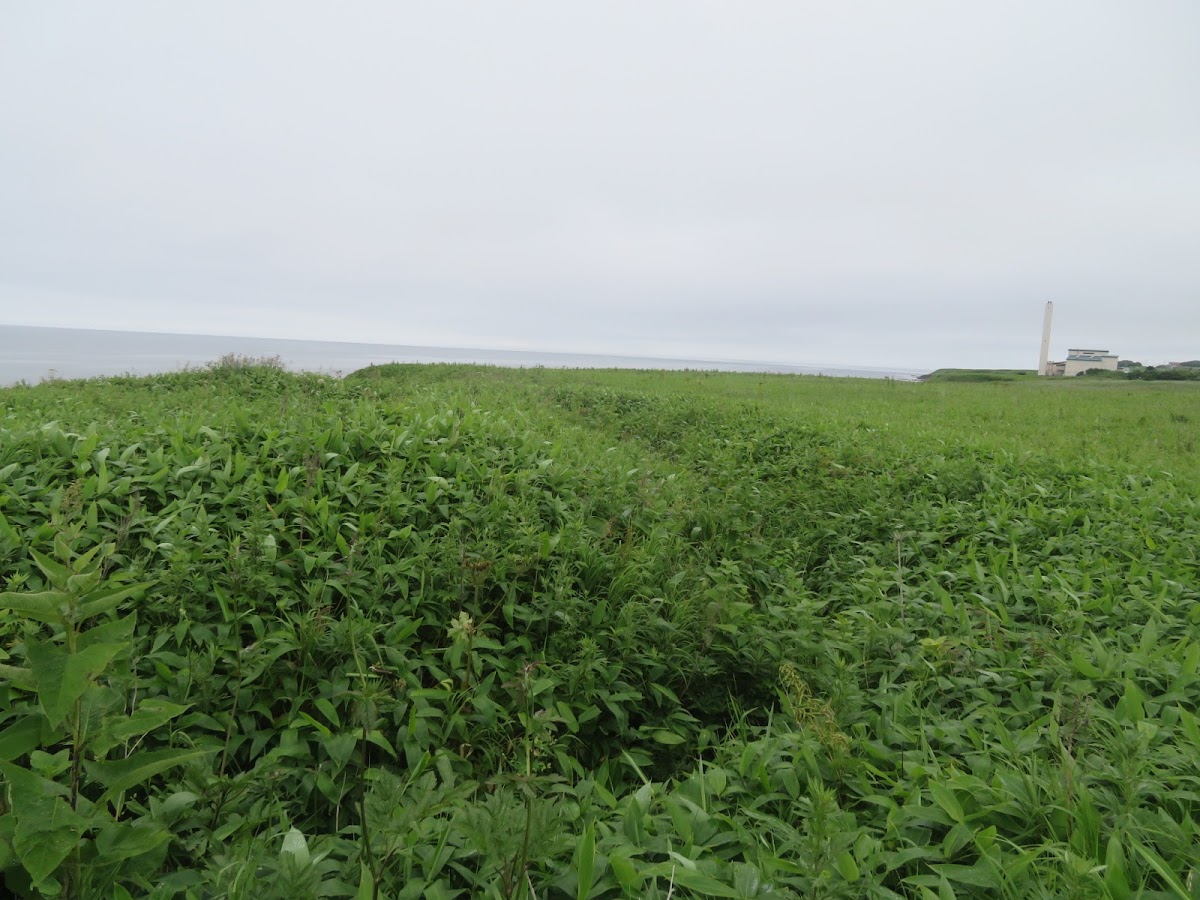
Currently, a shrine called the Hishishi Shrine stands on the site of the castle, making it difficult to directly confirm the original structure of the castle. However, the surrounding topography and remaining traces of earthworks allow us to infer the size and layout of the former residence.
A castle site monument and explanatory plaque have been installed, allowing visitors to learn about the historical importance and basic information of Hishishi Residence. This information is a valuable learning resource for understanding the medieval history of Hokkaido and the formation process of the Matsumae Domain.
Tate Shrine: A sacred site dedicated to the military deity Futsunushi-no-kami
About Futsunushi-no-kami
Tate Shrine, built on the site of Hishishi Residence, enshrines the military deity “Futsunushi-no-kami.” Futsunushi-no-kami is a warrior god appearing in Japanese mythology, and was particularly revered in samurai society.
According to the Kojiki and Nihon Shoki, Futsunushi-no-kami is known as the god who pacified Ashihara-no-Nakatsukuni prior to the descent of the heavenly grandchild. Due to his bravery and governing ability, samurai worshipped Futsunushi-no-kami as their guardian deity, and many samurai families built shrines dedicated to Futsunushi-no-kami at their residences and castles. ### Why was Futsunushi-no-Kami enshrined at Hishikan?
The Atsuya clan’s enshrinement of Futsunushi-no-Kami at Hishikan holds several important meanings. Firstly, it demonstrated their legitimacy and authority as a samurai family. By enshrining Futsunushi-no-Kami, the Atsuya clan showed both domestically and internationally that they were a legitimate samurai family and qualified to govern this land.
Secondly, it sought practical military protection. Relations between the Japanese and Ainu in Hokkaido were always fraught with tension, and the possibility of armed conflict existed. By enshrining a war god, they prayed for victory in battle and the safety of their residence.
Thirdly, it served as a spiritual center for the local community. Shrines were not merely religious institutions; they also possessed a social function of strengthening community bonds. It is believed that the Hishikan Shrine functioned as a spiritual anchor for the people under the Atsuya clan’s rule.
The Current State of Hishikan Shrine
Even today, Hishikan Shrine is carefully preserved by the local people. Regular festivals are held, serving as a place to pass on the region’s history and traditions. The shrine grounds are enveloped in a tranquil atmosphere, allowing visitors to quietly reflect on this historical site.
Around the shrine, information boards explaining the history of Hishikan are installed, indicating that this is not merely a shrine, but an important historical site.
Highlights and Tourist Information of Hishikan
Castle Site Monument and Information Board
The main highlights when visiting the Hishikan site are the castle site monument and information board. The castle site monument commemorates the fact that this site was once an important castle, conveying its historical significance to visitors.
The information board contains important information such as the history of Hishikan, its relationship with the Atsuya clan, its connection to the Battle of Koshamain, and its renovation from an Ainu Chashi (Ainu fortified site). By reading this information, visitors can gain a deeper understanding of the historical background of Hishikan.
Surrounding Historical Landscape
The area around Hishikan boasts a unique landscape where Hokkaido’s nature and history are fused together. While observing the unique topography and vegetation of the Hiyama region, you can imagine how people in the Middle Ages lived here and what kind of scenery they saw.
The rocky terrain, which gave rise to the place name “Ishiyaki Tokoro” (meaning “place with many stones”), can still be observed in the surrounding area today. These stones may have been used in the construction of the castle, providing an element that allows you to feel the connection between history and nature.
Attractiveness as a Photography Spot
The castle shrine and the surrounding scenery are attractive subjects for photography. In particular, the landscape where the shrine buildings and the surrounding nature harmonize shows different expressions in each of the four seasons. It’s worth visiting in every season: the fresh green of spring, the deep green of summer, the autumn leaves, and the snowy landscape of winter.
Taking photos with the castle ruins monument in the background will also be a memorable experience for history enthusiasts. Taking photos of the information boards as a record is also useful for later reference.
Access and Visiting Guide
Location and Basic Information
Hiseki Castle is located in Hiyama District, Hokkaido. For specific addresses and detailed location information, it is recommended to check with the Hiyama County Tourist Information Center or local tourism information websites before your visit.
Since it is still functioning as a shrine, it is a good idea to check the visiting hours and local event schedules in advance. Especially during festival seasons, it offers a valuable opportunity to witness local traditional events.
Access by Car
Like many historical sites in Hokkaido, access to Hishikan is most convenient by car. From Hakodate, the most common route is via national highway towards the Hiyama region. When using a car navigation system, it is recommended to set “Tate Shrine” or major nearby facilities as your destination.
Parking space may vary depending on the size of the shrine and the surrounding area. It is recommended to check local tourism information before your visit to understand where parking is available.
Access by Public Transportation
When using public transportation, you need to check the distance from the nearest train station or bus stop and the means of transportation in advance. Since public transportation in the Hiyama region can be limited, consider renting a car or arranging a taxi.
By planning a relaxed itinerary, you can leisurely explore the historical sites and enjoy the surrounding historical landscape.
Points to Note When Visiting
The Hishikan Castle Ruins are still a place of worship as the Hishikan Shrine, so it is important to observe proper etiquette as a visitor. Please observe quietly and treat the shrine facilities and surrounding environment with care.
Hokkaido’s climate is unpredictable, so it is recommended to prepare appropriate clothing and equipment for the weather when visiting. Especially in winter, there is a possibility of snow and ice, so a visit plan that prioritizes safety is necessary.
Nearby Historical Spots and Tourist Facilities
Other Castle Ruins in the Hiyama Region
In addition to Hishikan Castle, there are several other medieval castle ruins in the Hiyama region. These castles are important historical sites that show the process of expansion of Japanese power before the establishment of the Matsumae Domain. Visiting them together with Hishikan Castle will allow for a more comprehensive understanding of the medieval history of this region.
Each castle ruin has its own unique history and characteristics, each telling a part of Hokkaido’s history. If time permits, why not plan a historical exploration trip visiting multiple historical sites?
Historical Sites Related to the Matsumae Domain
Matsumae Town, the center of the Matsumae Domain where the Atsuya clan served as chief retainers, preserves important historical sites from the feudal period, such as Matsumae Castle and the Matsumae Domain Residence. While the distance from Hishikan to Matsumae Town is considerable, it’s well worth the visit for understanding the overall picture of the Matsumae Domain.
Matsumae Castle is known as the only Japanese-style castle in Hokkaido and is also famous for its cherry blossoms. The Matsumae Domain Residence recreates samurai residences and merchant houses from the Edo period, allowing visitors to experience and learn about the lifestyle of that time.
Nature and Culture of the Hiyama Region
In addition to historical exploration, you can also enjoy the rich nature and local culture of the Hiyama region. Facing the Sea of Japan, this region is rich in fresh seafood, and there are restaurants and markets where you can experience the local food culture.
Furthermore, visiting exhibition facilities and museums related to Ainu culture will allow for a deeper understanding of the historical background of Hishikan, which was converted from an Ainu chashi (fortified site).
Learning about Hokkaido’s history from Hishikan
The history of relations between the Japanese and the Ainu
The history of Hishikan symbolizes the complex relationship between the Japanese and the Ainu in Hokkaido. The fact that the Japanese converted an Ainu chashi into a castle demonstrates the multifaceted relationship of contact, conflict, and sometimes cooperation between the two groups.
From the 15th to the 16th centuries, the Japanese expansion into Hokkaido intensified, and friction with Ainu society increased. The Battle of Koshamain is a symbolic event of this period, and research surrounding the construction period of Hishikan provides important clues to understanding the movements of Japanese forces during this time.
The path to the establishment of the Matsumae Domain
The fact that the Atsuya clan, who built Hishikan, became chief retainers of the Matsumae Domain indicates a path of advancement from a local castle lord to a high-ranking official of the domain. This reflects the historical process by which the Matsumae Domain was formed by integrating powerful Japanese forces in the region.
The Matsumae Domain, as the only domain in Ezo (Hokkaido), was granted a special status by the Edo Shogunate. It held a monopoly on trade with the Ainu and played a crucial role in the defense of the north. The history of Hishikan can be positioned as a prehistory of the establishment of the Matsumae Domain.
Archaeological and Historical Value
The late Jomon period ruins and artifacts discovered at Hishikan indicate that this area was inhabited by people from ancient times. The ability to confirm the continuity of a long history—the Jomon period, the Ainu culture period, and the expansion of the Japanese—in one location is extremely valuable from an archaeological perspective.
Recent research re-evaluating its relationship to the Battle of Koshamain highlights the importance of historical research based not only on documentary sources but also on archaeological evidence. Further excavations and research may reveal even more about Hishikan.
Current Status and Future Prospects of Hishikan Research
Latest Research Findings
Research on Hishikan is progressing from multiple perspectives, including archaeology, documentary history, and architectural history. Of particular note is the reassessment of the castle’s construction period. The shift from the conventional understanding of “a castle that fell in the Battle of Koshamain” to a new interpretation of “a castle built after the battle” represents a significant advance in the study of Hokkaido’s medieval history.
This research provides an opportunity to reconsider the movements of Japanese forces from the late 15th to the early 16th century, the process of the establishment of the Matsumae Domain, and the history of relations between the Japanese and Ainu. Active discussions continue among experts through academic papers and research reports.
Challenges of Preservation and Utilization
Since the Hishikan site is still used as a shrine, balancing the preservation of the ruins with maintaining its function as a religious facility is crucial. It is necessary to continue its role as a place of worship for the region without compromising its historical value.
Utilization as a tourist resource is also one of the challenges. In addition to the currently installed castle ruins monument and explanatory plaque, providing more detailed information and improving the viewing environment would make it an attractive spot not only for history enthusiasts and researchers, but also for general tourists.
Information Dissemination Utilizing Digital Technology
In recent years, digital technology has been increasingly used to disseminate information about historical heritage. Regarding Hishikan, various possibilities exist, such as information dissemination through websites and social media, creation of 3DCG reconstruction images of the castle, and virtual tours using VR technology.
These efforts would allow us to convey the history and value of Hishikan to people who find it difficult to visit the site in person. Furthermore, preserving the information as a digital archive would contribute to future research and education.
Summary: The History of Hokkaido as Told by Hishikan
Hishikan is a small but historically important castle site located in Hiyama County, Hokkaido. It contains many historical elements, including the history of its conversion from an Ainu chashi (fortified site) to a Japanese castle, its relationship with the Atsuya clan who became chief retainers of the Matsumae Domain, and the progress of research surrounding the Battle of Koshamain.
Currently, the site is protected by the local community as the Tate Shrine, and a castle ruins monument and explanatory plaque have been erected. Visitors can reflect on Hokkaido’s medieval history in this tranquil place, learning about the complex relationship between the Japanese and Ainu people, and the path to the establishment of the Matsumae Domain.
The history of Hishikan is being revealed not only through historical documents but also through archaeological evidence. Further research is expected to uncover even more. For anyone interested in Hokkaido’s history, Hishikan is an important historical site well worth visiting.