Gushikawa Gusuku (Itoman City, Okinawa Prefecture): A Thorough Explanation of the Stunning Cliffside Castle Ruins, History, and Highlights
Gushikawa Gusuku, standing on a coastal cliff in Kiyan, Itoman City, Okinawa Prefecture, is a gusuku (castle) with breathtaking views, surrounded by the sea on three sides. Designated a national historic site on May 15, 1972, this castle ruin is located at the southernmost tip of Okinawa Island and is known as a valuable historical site that conveys the history and culture of the Ryukyu Kingdom era. This article will provide a detailed explanation of Gushikawa Gusuku’s historical background, architectural features, highlights, and access methods.
Overview of Gushikawa Gusuku
Gushikawa Gusuku is a castle ruin located in Kanekuhara (Gushikawahara), Kiyan, Itoman City, Okinawa Prefecture. Built on a coastal cliff of Cape Kiyan, at an altitude of 30-40 meters, it boasts a superb location overlooking the East China Sea.
Basic Information
- Location: Kanekuhara, Kiyan, Itoman City, Okinawa Prefecture
- Designation Classification: National Historic Site (Designated May 15, 1972)
- Elevation: Approximately 30-40 meters
- Construction Period: Estimated to be around the 13th-14th century
- Castle Structure: Consists of two enclosures (Ichino-kuruwa and Nino-kuruwa)
- Alternate Name: Kiyan Gushikawa Castle
Geographical Features
The most distinctive feature of Gushikawa Gusuku lies in its location. Situated on a cliff surrounded by the sea on three sides, it boasts a defensive structure that skillfully utilizes the natural terrain. The eastern side faces a sheer cliff overlooking the Pacific Ocean, and steep slopes continue from the north to the west, with only the southern side accessible. This geographical condition allowed it to function as a fortress easily defended even with a small force.
History and Legends of Gushikawa Gusuku
Background of Construction
While there are few documents detailing the exact construction date and history of Gushikawa Gusuku, several legends remain. According to the most plausible legend, this gusuku was built by Makanikui (or Makanekui), the lord of Gushikawa Castle on Kumejima Island.
Legend of Makanikui Anji
According to legend, Makanikui Anji, the lord of Gushikawa Castle on Kumejima Island, was attacked and defeated by Manikutaru, the second son of Ishikinawa Castle’s lord. As a result, Makanikui Anji fled to the southern part of Okinawa Island and is said to have built a castle in this Kiyan area bearing the same name, “Gushikawa,” as his former residence.
This legend is interesting as it explains why there are multiple castles named “Gushikawa Gusuku” within Okinawa Prefecture. At least three castles with the same name have been identified: Gushikawa Castle on Kumejima Island, Gushikawa Gusuku in Itoman City, and Gushikawa Gusuku in Uruma City (formerly Gushikawa City).
Role as a Trading Hub
Archaeological investigations have revealed that Gushikawa Gusuku likely functioned as a trading hub from the 13th to 14th centuries. Numerous Chinese ceramics have been unearthed within the castle grounds, providing important evidence that Ryukyu played a part in the East Asian maritime trade network at that time.
Its location on a cliff overlooking the sea offers not only defensive advantages but also suitability for monitoring maritime traffic and guiding ships. The area around Cape Kyan is part of the Kuroshio Current, making it an important navigational point.
Castle Structure and Architectural Features
Structure Composed of Two Enclosures
Gushikawa Gusuku is composed of two enclosures (kuruwa). The area inside the castle gate is the second enclosure (Ninokuruwa), and the tip of the cliff beyond that is the first enclosure (Ichinokuruwa). Interestingly, it has a unique structure where the height decreases as you proceed from the castle gate.
Second Enclosure: This is the space immediately inside the castle gate, a relatively large, flat area. It is presumed to have been used as a living space and a place for rituals.
First Enclosure: This is the enclosure closest to the sea, located at the tip of the cliff beyond the second enclosure. It is a point with a spectacular view surrounded by the sea on three sides, and it may have functioned as a lookout post or a place for religious ceremonies.
Castle Walls Built Using the Nozura-zumi Method
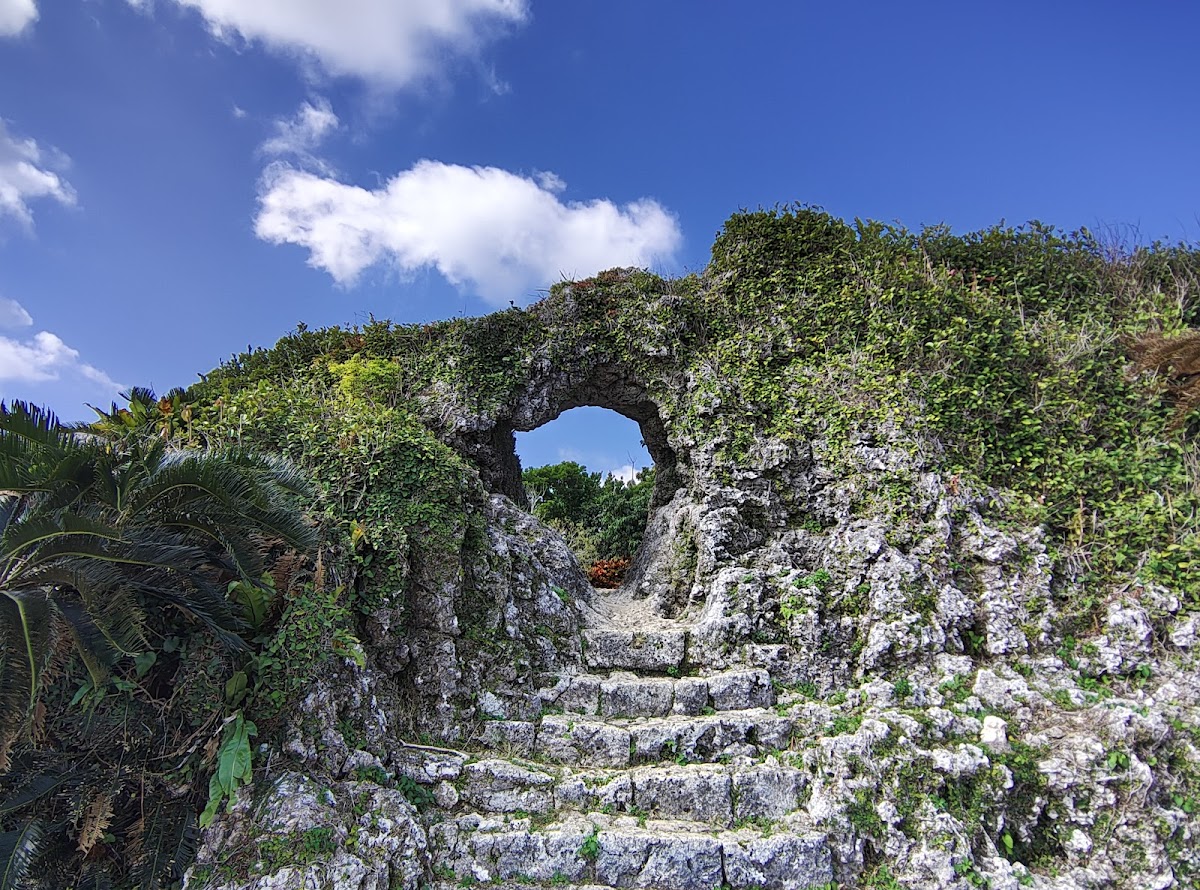
The castle walls of Gushikawa Gusuku are built using the Nozura-zumi method. Nozura-zumi is a stone masonry technique where natural stones are stacked with little to no processing, and is a characteristic often seen in the early stages of Ryukyu Gusuku architecture.
The castle walls are built along the cliffs, forming a defensive line integrated with the natural terrain. The stone used is Ryukyu limestone, which can be quarried locally, demonstrating a selection of building materials suited to Okinawa’s climate and environment.
Castle Gate Placement
The castle gate opens to the east, serving as the only access route from the land side. This placement is rational from a defensive standpoint and is a design that makes maximum use of the terrain surrounded by the sea on three sides.
The stonework around the castle gate is particularly carefully constructed, showing ingenuity in maintaining the dignity of the castle’s main entrance.
Highlights of Gushikawa Gusuku
Fire-Blowing Hole (Suufuchimi)
One of the biggest highlights of Gushikawa Gusuku is the natural hole known as the “fire-blowing hole” or “Suufuchimi.” This is a vertical shaft in the cliff face overlooking the sea. When waves crash in from the ocean, a phenomenon can be observed where water sprays up from the hole.
During stormy weather, the water sprays up so violently, like a volcanic eruption, that it was given the name “Fire-Blowing Hole.” This natural phenomenon further enhances the mystical atmosphere of the gusuku (castle) and is thought to have been an object of worship since ancient times.
While the Fire-Blowing Hole is a natural geological formation, it may have been consciously considered as part of the gusuku’s defensive system. It likely functioned as a natural barrier to make approach from the sea difficult.
Spectacular Panoramic View
From Ichinokuruwa (First Enclosure), you can enjoy a panoramic view of the East China Sea. On clear days, you can see all the way to the horizon and appreciate the beautiful colors of Okinawa’s sea. The view at sunset is particularly exceptional; the sight of the sun setting over the sea captivates visitors.
The unique scenery, situated on a cliff surrounded by the sea on three sides, is a charm of Gushikawa Gusuku that cannot be experienced at other gusuku.
Castle Walls and Stone Masonry Remains
The castle walls, constructed using the “nozurazumi” (rough-stone masonry) method, still stand today after more than 600 years. The skillful use of natural stones demonstrates the advanced techniques of the Ryukyu stonemasons.
Up close observation of the castle walls reveals the ingenuity in the arrangement and stacking of the stones. The technique of placing large stones as a foundation and then filling them with smaller stones ensures both durability and stability.
History of Trade as Seen from Excavated Artifacts
Ceramics such as celadon and white porcelain of Chinese origin have been excavated from Gushikawa Gusuku. These artifacts are valuable evidence that Ryukyu was integrated into a trade network with China and Southeast Asia from the 13th to 14th centuries.
Among the excavated ceramics are high-quality items from that period, suggesting that the castle lord possessed a certain level of economic power and trade routes.
Nearby Attractions
Kyan Cape
Kyan Cape, located near Gushikawa Gusuku, is known as the southernmost cape on Okinawa Island. The rugged coastline with its towering cliffs and the cobalt blue sea create a breathtaking landscape.
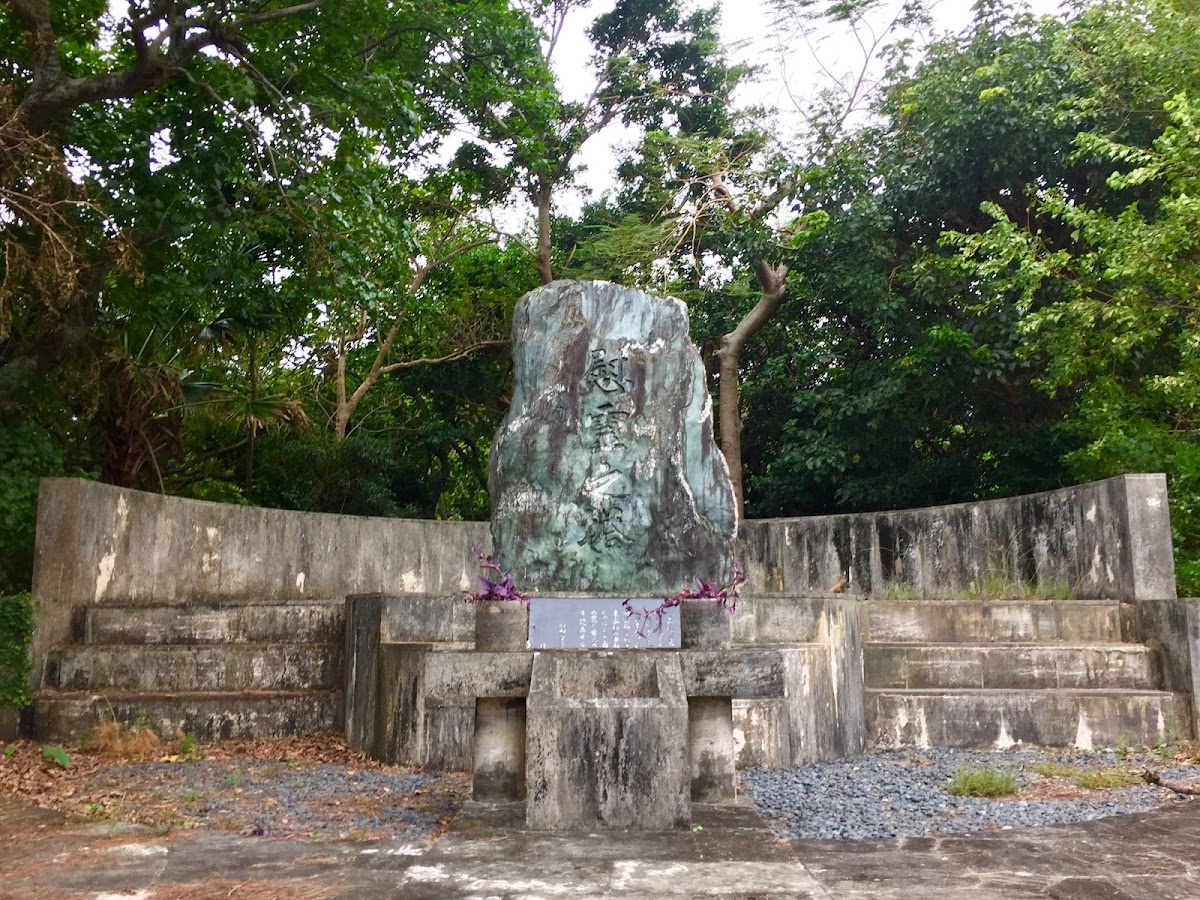
Kyan Cape is also a tragic site where many residents were cornered during the Battle of Okinawa at the end of World War II. A peace tower has been erected there, making it an important place to convey the memory of the war.
Katahara Gusuku
Other gusuku ruins, such as Katahara Gusuku, are scattered around Gushikawa Gusuku. Visiting these together will allow you to understand the spread of gusuku culture in this region.
Access Information
Access by Car
The most convenient way to access Gushikawa Gusuku is by car.
- From Naha Airport: Approximately 40-50 minutes (via National Route 331)
- From Itoman City: Approximately 20-30 minutes
- Parking: Parking is available at Cape Kyan (free).
While it’s possible to walk from the Cape Kyan parking lot to Gushikawa Gusuku, some areas have uneven terrain, so comfortable walking shoes are recommended.
Access by Public Transportation
If using public transportation, you will need to take a local bus from Itoman Bus Terminal. However, the number of buses is limited, so it’s recommended to check the timetable in advance. Walking is required from the bus stop to the Gusuku.
Precautions for Visiting
- Safety Precautions: Because it is located on a cliff, extra caution is needed during strong winds and rain. There are areas without railings, so do not approach the edge of the cliff.
- Clothing: Please prepare appropriate outdoor equipment such as comfortable walking shoes, a hat, and sunscreen. – Drinking Water: There are no vending machines or shops nearby, so please bring your own drinking water.
- Visiting Hours: It gets dark after sunset, so we recommend visiting during daylight hours.
Cultural Value of Gushikawa Gusuku
Importance as a National Historic Site
Designated as a national historic site in 1972, Gushikawa Gusuku is an important historical site indispensable for understanding Okinawa’s history and culture. It is highly valued academically as a valuable remains that conveys the appearance of the Gusuku period before the establishment of the Ryukyu Kingdom.
Efforts for Preservation and Utilization
The Itoman City Board of Education is leading efforts to preserve and utilize Gushikawa Gusuku. Regular grass cutting and stone wall preservation work are carried out, and efforts continue to pass on the heritage to future generations.
At the same time, efforts are being made to utilize it as a resource for local history education and tourism, and it is also used as a place for local elementary and junior high school students to study local history.
Gushikawa Gusuku and Ryukyu History
Ryukyu Society in the Gusuku Period
The 13th and 14th centuries, when Gushikawa Gusuku was built, fall under the period known as the “Gusuku Period” or “Three Kingdoms Period” in Ryukyu history. During this time, numerous gusuku (castles) were built on Okinawa Island, and local Anji (powerful clans) competed for power.
Gushikawa Gusuku was one of these Anji strongholds and is thought to have functioned as a regional political, economic, and military center.
Maritime Trade and Ryukyu
Geographically located between Japan, China, and Southeast Asia, Ryukyu prospered through entrepôt trade connecting these regions. The Chinese ceramics unearthed at Gushikawa Gusuku indicate that Ryukyu participated in international trade networks from an early stage.
Gushikawa Gusuku, situated on the coast, may have played an important role in this maritime trade.
Relationship with Gusuku of the Same Name
There are several gusuku (castles) in Okinawa Prefecture that bear the name “Gushikawa.”
Gushikawa Gusuku on Kumejima Island
According to tradition, Gushikawa Gusuku on Kumejima Island is the former residence of Makaneko Anji, the lord of Gushikawa Gusuku in Itoman City. The Kumejima gusuku is also located near the sea, suggesting a connection between the two.
Gushikawa Gusuku in Uruma City
There is also a Gushikawa Gusuku in Uruma City (formerly Gushikawa City). According to tradition, this one was built by Akena Okawa Anji, the lord of Akena Castle, who sent his second son, Tengan Anji, to construct it. It appears to be a different lineage from the gusuku in Itoman City and Kumejima Island.
The existence of these gusuku with the same name indicates that the place name “Gushikawa” and the name of the Anji spread throughout the Ryukyu Islands, making it an interesting topic in the study of Ryukyu history.
Gushikawa Gusuku as a Photography Spot
Recommended Photography Spots
Gushikawa Gusuku is a popular spot for photography enthusiasts due to its spectacular scenery.
- View of the Sea from the First Enclosure: The panoramic view surrounded by the sea on three sides is a must-see.
- Contrast between the Castle Walls and the Sea: The contrast between the rough-stone castle walls and the blue sea creates a beautiful composition.
- Around the Fire-Blowing Hole: In stormy weather, you can capture the powerful moment of the spouting water.
- Sunset: The sight of the sun setting over the sea is particularly moving.
Precautions When Photographing
Since photography takes place on a cliff, please be extremely careful of your safety. In particular, be careful not to neglect your footing while concentrating on the composition.
The Four Seasons of Gushikawa Gusuku
Spring (March-May)
Spring is a warm and pleasant season. The fresh greenery is beautiful, and the color of the sea is vividly reflected. However, late May, before the rainy season begins, is the best time to visit.
Summer (June-August)
Summer requires caution due to strong sunlight and high temperatures and humidity. Take thorough precautions against heatstroke, and early morning or evening visits are recommended. It’s also typhoon season, so pay close attention to the weather.
Autumn (September-November)
Autumn is relatively pleasant and a suitable season for visiting. October onwards, when typhoon influences are less frequent, is especially recommended.
Winter (December-February)
While Okinawa’s winters are milder than those on the mainland, strong sea breezes make the perceived temperature lower. Take precautions against the cold when visiting. The views in the crisp winter air are exceptional.
Summary
Gushikawa Gusuku (Itoman City, Okinawa Prefecture) is a nationally designated historical site standing on the southernmost coastal cliff of Okinawa Island, a valuable heritage site that conveys the history and culture of the Ryukyu Gusuku period. Located in a breathtaking location surrounded by the sea on three sides, the castle boasts numerous attractions including its rough-hewn stone walls and fire-breathing holes. Furthermore, it offers many historically interesting elements, such as the legend of the Anji (local lord) from Kumejima Island and the discovery of Chinese ceramics.
When visiting, please take ample precautions for safety, reflect on the history of the Ryukyu Kingdom, and enjoy the magnificent ocean views. Gushikawa Gusuku is a place that offers a unique experience, where Okinawa’s nature and history blend seamlessly.
When visiting southern Itoman City, be sure to visit Gushikawa Gusuku along with Cape Kyan to experience the history of the Ryukyu Kingdom and the beautiful nature of Okinawa.