Katsuren Gusuku (Okinawa Prefecture) Complete Guide | A Thorough Explanation of the History, Structure, and Highlights of this World Heritage Site
Katsuren Gusuku (Katsuren Castle Ruins), located on the Katsuren Peninsula in Uruma City, Okinawa Prefecture, is a World Heritage Site that conveys the splendor of the Ryukyu Kingdom era. Registered as a UNESCO World Heritage Site in December 2000 as part of the “Gusuku Sites and Related Properties of the Ryukyu Kingdom,” this castle ruin is considered to have the oldest history among the World Heritage Gusuku sites on Okinawa Island.
This article provides detailed information you should know before visiting Katsuren Gusuku, from its historical background and unique structure to its highlights and access methods.
What is Katsuren Gusuku?
Katsuren Gusuku is a gusuku (castle) from the Ryukyu Kingdom era, located on the east coast of central Okinawa Island, in Katsuren Haebaru, Uruma City. It is built on a hill at the base of the Katsuren Peninsula, at an altitude of 60 to 100 meters, reaching a maximum elevation of 97.9 meters.
While primarily stone masonry remains today, the magnificent scale and intricate stonework demonstrate the high level of architectural skill of the Ryukyu Kingdom at that time. From the castle ruins, one can enjoy a panoramic view of the Pacific Ocean, and on clear days, it’s known as a spectacular viewpoint where you can see the Yokatsu Five Islands beyond the Kaichu Road and even the mountains of Yanbaru to the north.
Significance of World Heritage Registration
Katsuren Gusuku, registered as a World Heritage Site in November 2000 along with Shuri Castle, Nakijin Castle, Zakimi Castle, Nakagusuku Castle, Sonohiyan Utaki Stone Gate, Tamaudun Mausoleum, Shikinaen Garden, and Seifa Utaki, is internationally recognized as an important heritage site showcasing the history and culture of the Ryukyu Kingdom.
Among the five registered gusuku (castles), it is considered to be the oldest, making it an indispensable site for understanding the history from the Three Kingdoms period before the establishment of the Ryukyu Kingdom to the unification period.
History of Katsuren Gusuku
Origins of Construction and Early History
The exact construction date of Katsuren Gusuku is unclear, but archaeological excavations suggest it was built around the 12th or 13th century. Evidence indicates that ancient people lived in this area from the late prehistoric period. It is presumed that a wooden fort was built around the 13th century, gradually developing into a fortress.
According to oral tradition, the first lord of Katsuren Gusuku was the fifth son of King Taisei, the second king of the Eiso dynasty. After several lords succeeded him, the 10th lord was Amawari, who later left his mark on Ryukyuan history.
The Era of Amawari
The greatest period of prosperity for Katsuren Gusuku was during the reign of the 10th lord, Amawari. Despite being from a peasant background, Amawari’s exceptional political skills and military prowess transformed Katsuren into one of Ryukyu’s leading powerful clans.
He actively promoted overseas trade, bringing immense wealth to Katsuren through trade with China, Japan, and Southeast Asian countries. Archaeological excavations have unearthed numerous Chinese ceramics and trade goods from Southeast Asia, indicating that Katsuren was an international trading hub at the time.
Conflict with the Ryukyu Kingdom and its Downfall
Katsuren’s prosperity and Amawari’s growing power became a threat to the Ryukyu Kingdom. Amawari attempted to maintain relations with the kingdom, including marrying Momotofumiagari, the daughter of the Ryukyu king, but ultimately he is believed to have plotted a coup against the kingdom.
In 1458, the Ryukyu Kingdom defeated Amawari in the Gosamaru-Amawari Rebellion. This battle resulted in the fall of Katsuren Castle, marking the end of Amawari’s era. However, whether Amawari truly plotted a rebellion or whether it was a conspiracy by the royal government remains a subject of ongoing debate among historians.
History After the Castle’s Abandonment
After Amawari’s downfall, Katsuren Gusuku was abandoned, but its remains were carefully preserved by the local people. Designated a national historic site in 1972 and registered as a World Heritage Site in 2000, it is now one of Okinawa’s leading tourist destinations, enjoyed by many.
Structure of Katsuren Gusuku
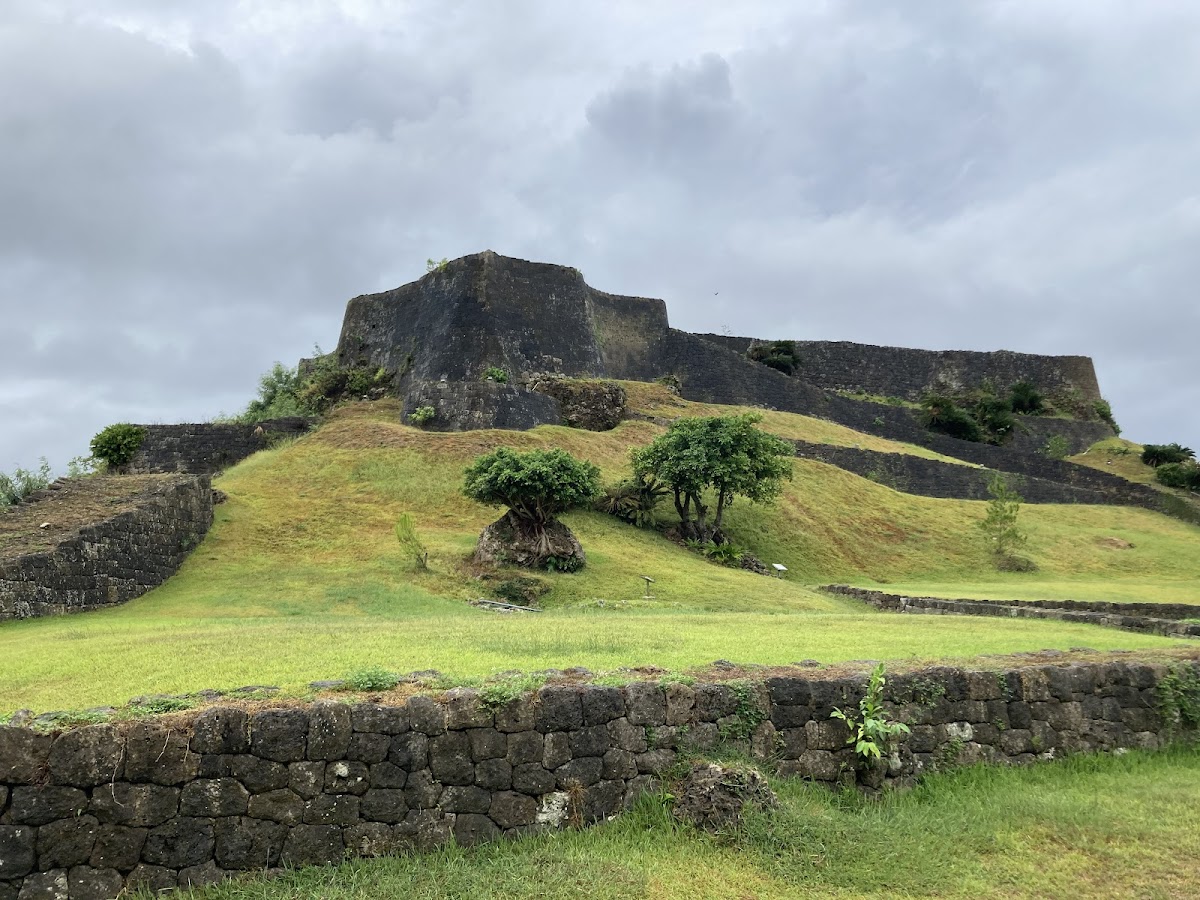
The most distinctive feature of Katsuren Gusuku is its layout, which skillfully utilizes the natural terrain with varying elevations. Multiple baileys (kuruwa) at different elevations are arranged in a stepped pattern, creating a design that balances defense and functionality.
Composition of Four Baileys
Katsuren Gusuku is broadly composed of four baileys. The castle’s layout is such that the highest point is the first enclosure (North Castle/Nishigushiku), and the second, third, and fourth enclosures (South Castle/Heegushiku) are arranged in a line extending southeastward.
The first enclosure (North Castle) is located at the highest point, approximately 98m above sea level, and is believed to have been the residence of the castle lord. From here, a 360-degree panoramic view unfolds, overlooking the entire Katsuren Peninsula.
The second enclosure is located southeast of the first enclosure and is presumed to have been used as a political and ceremonial space. The stonework is well-preserved, allowing for close observation of the uniquely curved castle walls characteristic of Ryukyuan architecture.
The third enclosure is located between the second and fourth enclosures and is also called the intermediate area. It is a relatively flat space and is thought to have contained facilities such as warehouses and barracks.
The fourth enclosure (South Castle) is the largest enclosure and is located close to the castle entrance. It is presumed that many people lived here, and archaeological excavations have unearthed numerous daily life tools and trade goods.
Characteristics of the Stone Masonry Technique
The stone masonry of Katsuren Gusuku is mainly constructed using Ryukyu limestone (rock formed from uplifted coral reefs). This stone masonry technique is called “Nozura-zumi,” a method of stacking natural stones with minimal processing.
A notable feature is the extensive use of curves rather than straight lines in the stonework. This is a unique characteristic of Ryukyu, enhancing defensibility while creating a beautiful landscape. The height of the castle walls varies depending on the location, but some sections exceed 5 meters in height.
The angles of the stonework are also carefully calculated, with a slight outward slope to make enemy intrusion difficult. Furthermore, drainage measures are incorporated throughout, and the fact that the stonework remains in such good condition even after more than 600 years is a testament to the high level of these techniques.
Layout of Castle Gates and Passageways
Katsuren Gusuku had multiple castle gates. The main entrance was on the south side of the fourth enclosure, and from there, a winding passageway led to the upper enclosures.
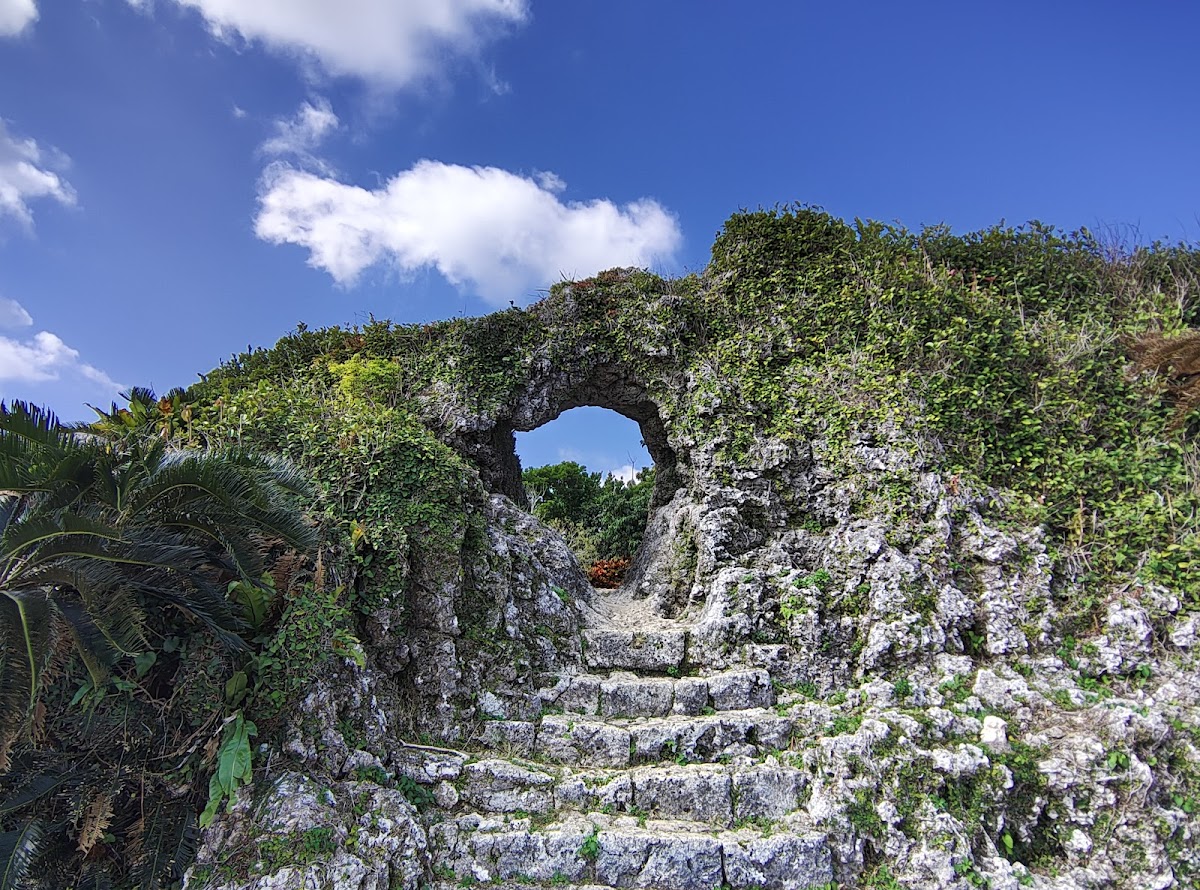
This complex passageway layout was designed to delay enemy advances and give the defenders an advantage. Stone steps were built between each enclosure, and even today, visitors can climb these steps to reach the top.
Wells and Water Facilities
Several well remains have been confirmed within the castle grounds, indicating that water supply was considered during sieges. In particular, a well that was an object of worship is believed to have been located in a sacred area called “Utaki” near the first enclosure.
Highlights of Katsuren Gusuku
Spectacular View from the First Enclosure
The greatest highlight of Katsuren Gusuku is undoubtedly the view from the first enclosure. From the highest point, approximately 98 meters above sea level, you can see the vast Pacific Ocean, the Kaichu Road, the Yokatsu Five Islands, the Chinen Peninsula, and even the Kerama Islands on a clear day.
The view at sunset is particularly spectacular; the sight of the setting sun over the East China Sea illuminating the stone walls captivates visitors. At night, you can enjoy a sky full of stars, offering beautiful scenery day and night.
Observing the Exquisite Stone Walls
The stone walls around the second enclosure are particularly well-preserved, allowing you to observe the unique curved beauty of Ryukyu up close. The technique of stacking the stones without gaps is so precise that it would amaze even modern stonemasons.
At the corners of the castle walls, you can see the use of larger stones to increase strength, demonstrating the high level of architectural skill of the time. Furthermore, the surface of the stone walls has developed a unique texture due to years of weathering, conveying a sense of history.
Artifacts Unearthed During Archaeological Excavations
At Katsuren Castle, numerous valuable artifacts have been unearthed during previous excavations. These include Chinese celadon and white porcelain, pottery from Southeast Asia, and trade goods from mainland Japan, providing evidence of international trade.
Of particular note are artifacts from regions not initially thought to have any connection to Ryukyu, such as Roman Empire coins and Ottoman Empire copper coins. These suggest that Katsuren possessed a far more extensive trade network than previously imagined.
Some of these unearthed artifacts are on display at the Uruma City Katsuren Castle Ruins Rest Area and the Okinawa Prefectural Museum & Art Museum, and can be viewed during your visit.
Katsuren Castle Ruins Rest Area (Amawari Park)
Opened in 2017, the Katsuren Castle Ruins Rest Area is affectionately known as “Amawari Park.” This facility offers exhibits on the history of Katsuren Castle and Amawari, making it ideal for pre-visit preparation or post-visit review.
The facility features a video theater where you can watch a CG-recreated image of Katsuren Gusuku in its heyday, as well as a video depicting the life of Amawari. The souvenir shop offers Katsuren Gusuku-related goods and Okinawan specialties.
Seasonal Natural Scenery
Katsuren Gusuku displays different expressions throughout the four seasons. In spring, the surrounding greenery becomes vibrant, and in summer, the strong sunlight casts shadows on the stone walls. In autumn, the clear air allows for panoramic views, and even in winter, Okinawa’s mild climate makes for a comfortable stroll.
After typhoons, the air is especially clear, sometimes allowing you to see distant islands that are normally invisible. Discovering the different charms depending on the season and time of day is one of the joys of visiting Katsuren Gusuku.
Visiting Guide
Access
Access by Car
From Naha Airport to Katsuren Gusuku, it takes approximately 1 hour via the Okinawa Expressway. Exit at Okinawa Kita Interchange and head towards the Katsuren Peninsula via Prefectural Road 16. Entering “Katsuren Castle Ruins” or “Katsuren Minamihara, Uruma City” into your car navigation system is recommended.
Parking is free and has space for approximately 100 regular cars. It can get crowded during peak tourist season and on weekends, so visiting earlier in the day is recommended.
Access by Bus
From Naha Bus Terminal, take Ryukyu Bus No. 52 or the Yakeina Line and get off at the “Katsuren Castle Ruins” bus stop. The journey takes approximately 1 hour and 30 minutes. It’s about a 5-minute walk from the bus stop to the castle ruins entrance.
However, since bus service is limited, it’s recommended to check the timetable in advance.
Access by Taxi
If taking a taxi from Naha Airport, the journey takes approximately 1 hour and the fare is around 8,000 to 10,000 yen. For groups, a taxi may be more convenient than renting a car.
Opening Hours and Admission Fee
Katsuren Gusuku is open year-round, and admission is free. While the castle grounds are open for viewing from 9:00 AM to 6:00 PM, the castle ruins themselves are accessible 24 hours a day. However, due to the lack of nighttime lighting, daytime visits are recommended for safety reasons.
The Katsuren Castle Ruins Rest Area (Amawari Park) is open from 9:00 AM to 6:00 PM (last entry at 5:30 PM) and is closed on Tuesdays.
Estimated Visit Time
A visit to Katsuren Gusuku usually requires about 1 to 1.5 hours. While simply climbing the stone steps to the first enclosure and back takes about 30 minutes, exploring each enclosure and enjoying the scenery will take at least an hour.
Including visits to the exhibits at Amawari Park, it is recommended to allocate a total of about 2 hours for your stay.
Clothing and Items to Bring
Please note the following points when visiting Katsuren Gusuku:
Attire
- Wear comfortable walking shoes (sneakers or trekking shoes). Avoid heels and sandals.
- Wear comfortable clothing as there are many stone steps.
- Bring a hat and sunscreen as the sun is strong.
- Bring a light jacket as it can be windy.
Items to Bring
- Drinking water (essential, especially in summer)
- Towel (for wiping sweat)
- Camera (there are many scenic spots)
- Parasol or hat (for sun protection)
Accessibility Information
Unfortunately, Katsuren Gusuku is an ancient ruin with many stone steps, making it difficult to reach the first enclosure in a wheelchair. However, there is a relatively flat path from the parking lot to part of the fourth enclosure, which is accessible by wheelchair.
Amawari Park is barrier-free and accessible for wheelchair users. Multipurpose restrooms are also available.
Nearby Tourist Attractions
When visiting Katsuren Gusuku, we recommend also visiting the following nearby spots:
Kaichu Road
This road, approximately 5km long, stretches from the Katsuren Peninsula to Henza Island, offering a spectacular drive with beautiful ocean views on both sides. It’s about a 10-minute drive from Katsuren Gusuku.
Hamahiga Island
This island, located across the Kaichu Road, features mystical spots such as the tomb of Amamichu, the ancestral deity of the Ryukyu Kingdom’s founding.
Nakagusuku Castle Ruins
Also a World Heritage Site, this castle is about a 30-minute drive from Katsuren Gusuku. Visiting both together allows you to understand the diversity of castles from the Ryukyu Kingdom era.
Bios Hill
Located in Ishikawa, Uruma City, this botanical garden offers a subtropical forest experience, including canoeing and water buffalo cart tours. It’s about a 20-minute drive from Katsuren Gusuku.
Cultural Value of Katsuren Castle
Position in the History of the Ryukyu Kingdom
Katsuren Castle is an indispensable site for understanding the history of the Ryukyu Kingdom. It provides important evidence of the power of local powerful families from the Three Kingdoms period to the unification of the Ryukyu Kingdom, and tells the story of resistance by local forces during the process of centralization.
The story of Amawari is also the subject of the Ryukyuan traditional performing art, Kumiodori (“Two Boys’ Revenge”), and occupies an important position in the cultural history of Okinawa.
Importance as a Hub of International Trade
Archaeological discoveries indicate that Katsuren was not merely a local castle, but an international trading hub. It suggests the possibility of indirect exchange with China, Japan, Southeast Asia, and even the Middle East and Europe, making it a site that symbolizes the international nature of the Ryukyu Kingdom.
15th-century Ryukyu flourished as a “bridge to the world,” and Katsuren Gusuku was one of the pioneering sites for this.
Significance in the History of Architectural Technology
The stonework techniques of Katsuren Gusuku are valuable resources demonstrating the development of unique Ryukyuan architectural technology. The beautiful stonework, which makes extensive use of curves, differs from that of mainland Japanese castles, representing a unique architectural style born from Okinawa’s natural environment and culture.
Furthermore, the layout, which skillfully utilizes the terrain, is a testament to ingenuity in achieving maximum defensive effectiveness with limited resources, and is highly regarded as a military structure.
Efforts for Preservation and Utilization
Current Status of Cultural Property Protection
Since Katsuren Gusuku was designated a national historic site in 1972, Uruma City and Okinawa Prefecture have been leading preservation efforts. Regular inspections and repair work on the stonework are carried out, and efforts continue to pass on its value as a World Heritage site to future generations.
In recent years, detailed documentation using 3D scanning technology has been carried out, and efforts are underway to preserve it as a digital archive, which will be useful for future restoration work and research.
Utilization as a Tourism Resource
Katsuren Gusuku is positioned as an important tourism resource in the central region of Okinawa Prefecture. It attracts over 200,000 tourists annually, significantly contributing to the local economy.
The development of Amawari Park has enhanced information provision for tourists, creating an environment where they can gain a deeper understanding of the history and culture of Katsuren Gusuku. Guided tours by local guides are also available, allowing visitors to tour the site while receiving expert explanations.
Educational Activities and Community Collaboration
Local elementary and junior high schools use Katsuren Gusuku as teaching material for local history lessons. By learning about the history and culture of the region, efforts are being made to cultivate local pride and nurture future leaders in cultural property preservation.
Furthermore, the “Katsuren Castle Ruins Festival” is held every autumn, featuring performances of traditional arts related to Amawari, sales of local specialty products, and contributing to the revitalization of the local community.
Summary
Katsuren Gusuku is a valuable World Heritage Site that conveys the history of the Ryukyu Kingdom to the present day, and is a must-see spot when visiting Okinawa. This ruin, with its multifaceted appeal—including the story of the hero Amawari, its prosperity as a center of international trade, and its unique Ryukyuan architectural techniques—provides a profound impression on visitors.
The 360-degree panoramic view from the first enclosure, approximately 98 meters above sea level, is one of the most spectacular views on Okinawa Island, and its beauty is unforgettable. Whether you’re interested in history, want to enjoy beautiful scenery, or want to experience Okinawan culture, Katsuren Gusuku is a must-see tourist destination.
Its easy accessibility, approximately one hour by car from Naha, is also one of its attractions. When you travel to Okinawa, be sure to visit Katsuren Castle and experience the splendor of the Ryukyu Kingdom era, the beautiful stonework that has stood the test of time for over 600 years, and the breathtaking views overlooking the Pacific Ocean. It will be a valuable experience that will allow you to truly feel the value of a World Heritage Site.