Mitsuoka Castle (Usa City, Oita Prefecture) Complete Guide: A Thorough Explanation of a Castle Ruins on the Border of the Sengoku Period
Located in Usa City, Oita Prefecture, Mitsuoka Castle is an important mountain castle that tells the story of the turbulent Sengoku period. Built on a hill 130m above sea level, the castle ruins are now maintained as “Mitsuoka Castle Ruins Park,” and the well-preserved earthworks and dry moats convey the appearance of the past. This article comprehensively explains everything you need to know before visiting Mitsuoka Castle, from its history and structure to its highlights and access methods.
History of Mitsuoka Castle: The Residence of the Akaō Clan, Who Protected the Border Between Buzen and Bungo
Construction History and About the Akaō Clan
Mitsuoka Castle is said to have been built in 1350 by Akaō Jirōzaemon Tanetsuna. The Akaō clan was a branch of the Harada clan of Chikuzen, and a samurai family descended from a collateral branch of the Ōkura clan’s Harada clan. The Akao clan was related to the Akizuki and Takahashi clans and, as a family located on the edge of the Harada clan’s sphere of influence, established itself in the Buzen region.
The Akao clan had served the Ouchi clan for generations, supporting the Ouchi clan’s influence in Buzen Province. Mitsuoka Castle was built on a mountain rising south of the Akao settlement, and its strategic location near the border of Buzen and Bungo provinces made it a strategically important base.
The Turmoil of the Sengoku Period: Caught Between the Otomo and Ouchi Clans
The most important turning point in the history of Mitsuoka Castle came in 1556. That year, when Otomo Yoshishige (later Sorin) of Bungo Province invaded Buzen, the then-lord of the castle, Akao Kenshu, assessed the situation and changed his allegiance from the Ouchi clan to the Otomo clan. This decision reflected the changing times—the decline of the Ouchi clan and the expansion of the Otomo clan—but simultaneously placed the Akao clan in a difficult position.
Since most of the clans in Buzen Province were under the control of the Ouchi clan, the Akaō clan’s defection to the Ōtomo clan created conflict with surrounding forces. In particular, tension arose with neighboring clans, including the Tokieda clan, who belonged to the Ōuchi (later Mōri) side.
The Siege of Mitsuoka Castle in 1578: The Greatest Crisis
In 1578, when the Ōtomo clan suffered a crushing defeat against the Shimazu clan at the Battle of Mimikawa during their Hyūga campaign, Mitsuoka Castle faced its greatest crisis. Seeing the weakening of the Ōtomo clan as an opportunity, anti-Ōtomo forces rose up en masse, and the forces of Jōi Shizufusa, Nagano Munehide, and Tokieda Shizutsugu attacked Mitsuoka Castle.
In this siege, the Akaō clan, with reinforcements from the Sada clan, succeeded in repelling the anti-Ōtomo forces. This successful defense demonstrated the strong fortifications of Mitsuoka Castle and the tactical capabilities of the Akaō clan, but it is believed that the Akaō clan gradually declined after this battle. The position of a border castle constantly forced difficult political decisions. The situation of being attacked by surrounding clans immediately after siding with the Otomo clan illustrates a typical difficulty faced by border region warlords during the Sengoku period.
Structure of Mitsuoka Castle: Characteristics of a Single-Enclosure Mountain Castle
Overview of the Castle Layout
Mitsuoka Castle is a single-enclosure mountain castle built on a mountaintop at an altitude of 130.3m. The main enclosure measures approximately 140m north-south and 80m east-west, while the central flat area is estimated to be 80m north-south and 35m east-west. Despite its relatively compact size, it boasts a robust defensive structure surrounded by a dry moat and double earthen ramparts.
The castle’s location offers excellent views, particularly from the north, where a wide expanse of the surrounding area can be seen. Archaeological excavations have revealed that the mountain slope was cleared to create a flat area, and six buildings, including a watchtower, were constructed on the north side, which offers a good view. ### Earthworks and Dry Moats: The Defensive System of Mitsuoka Castle
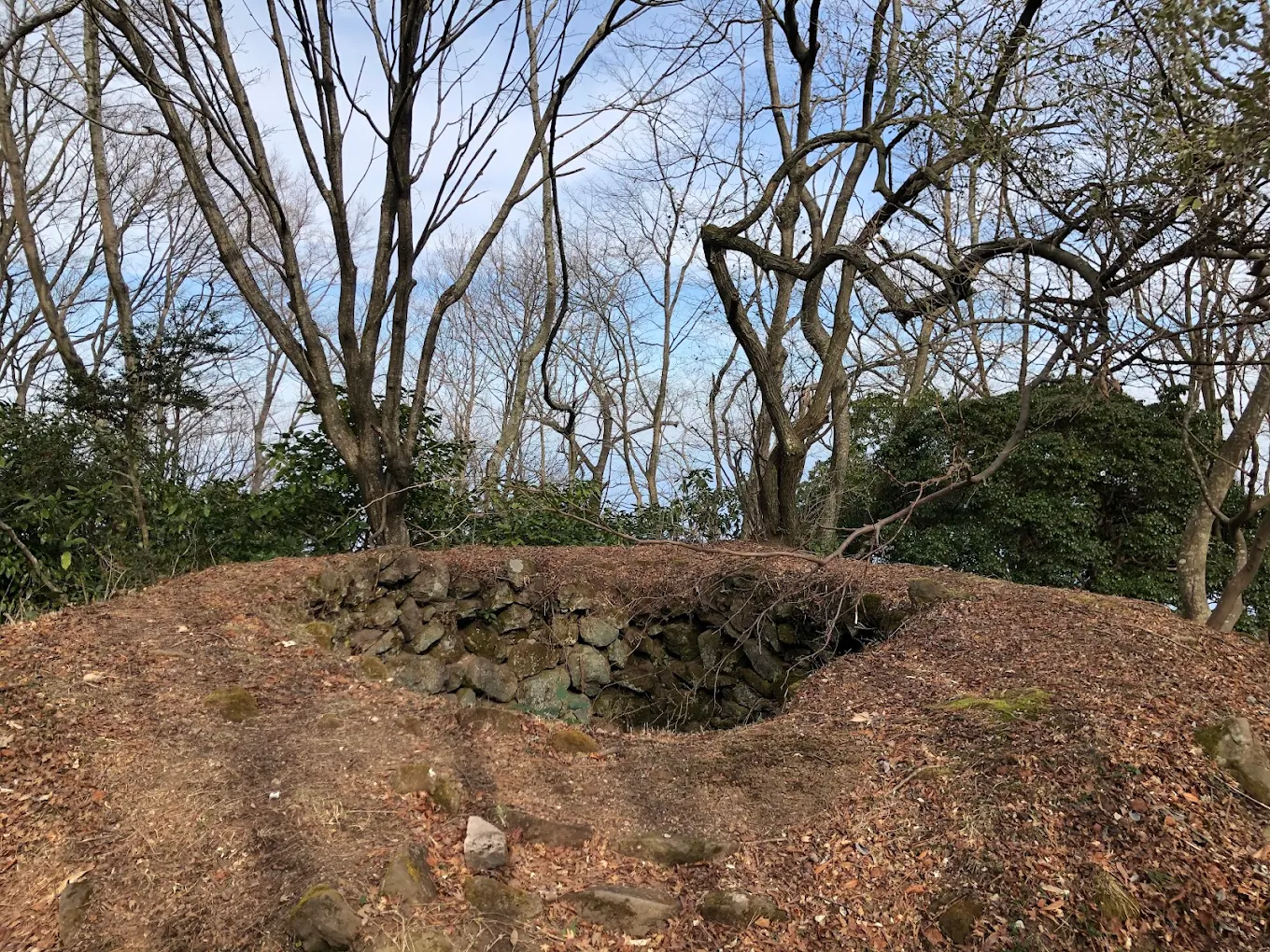
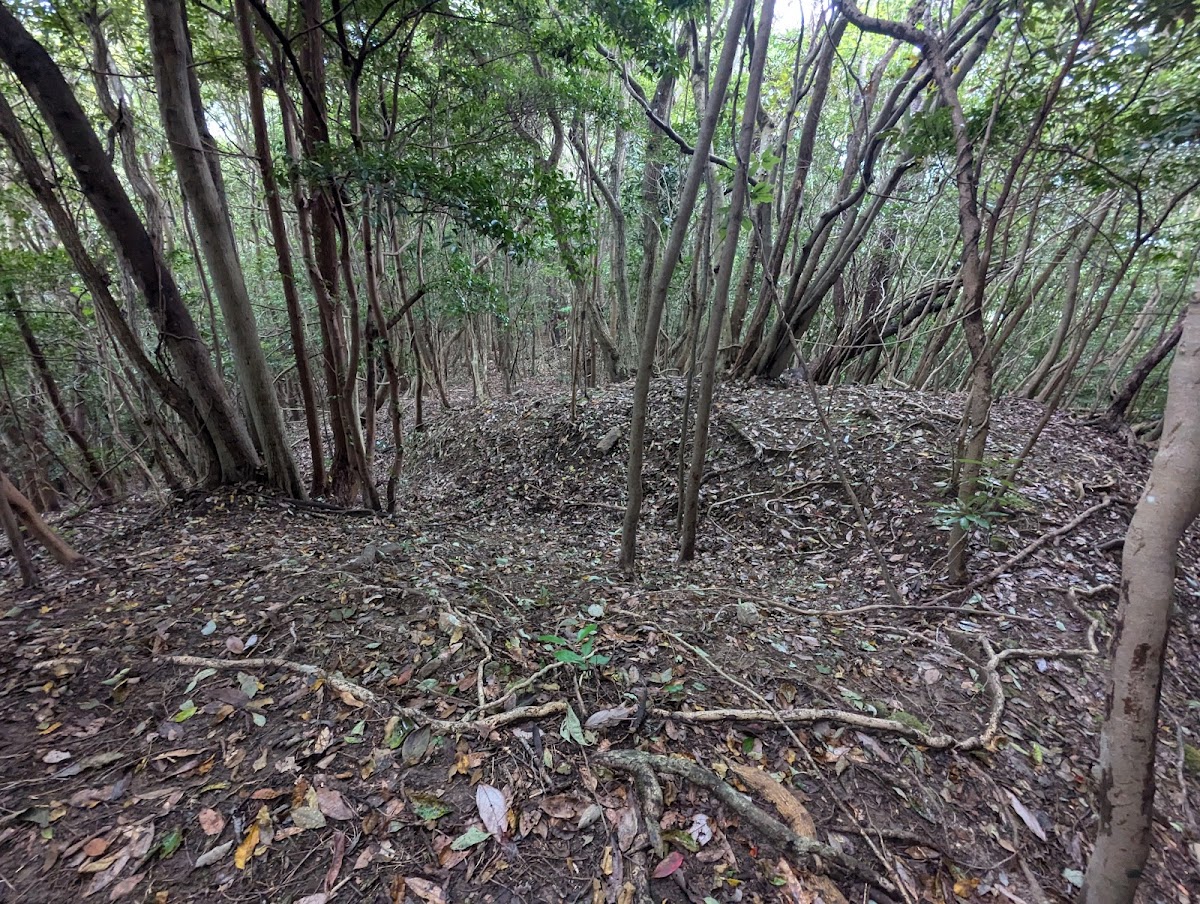
The most distinctive feature of Mitsuoka Castle is its well-preserved earthworks and dry moats. The double earthworks surrounding the main enclosure can still be clearly seen today. The height and thickness of the earthworks represent a typical structure for a medieval mountain castle, making them valuable resources for understanding the castle construction techniques of the time.
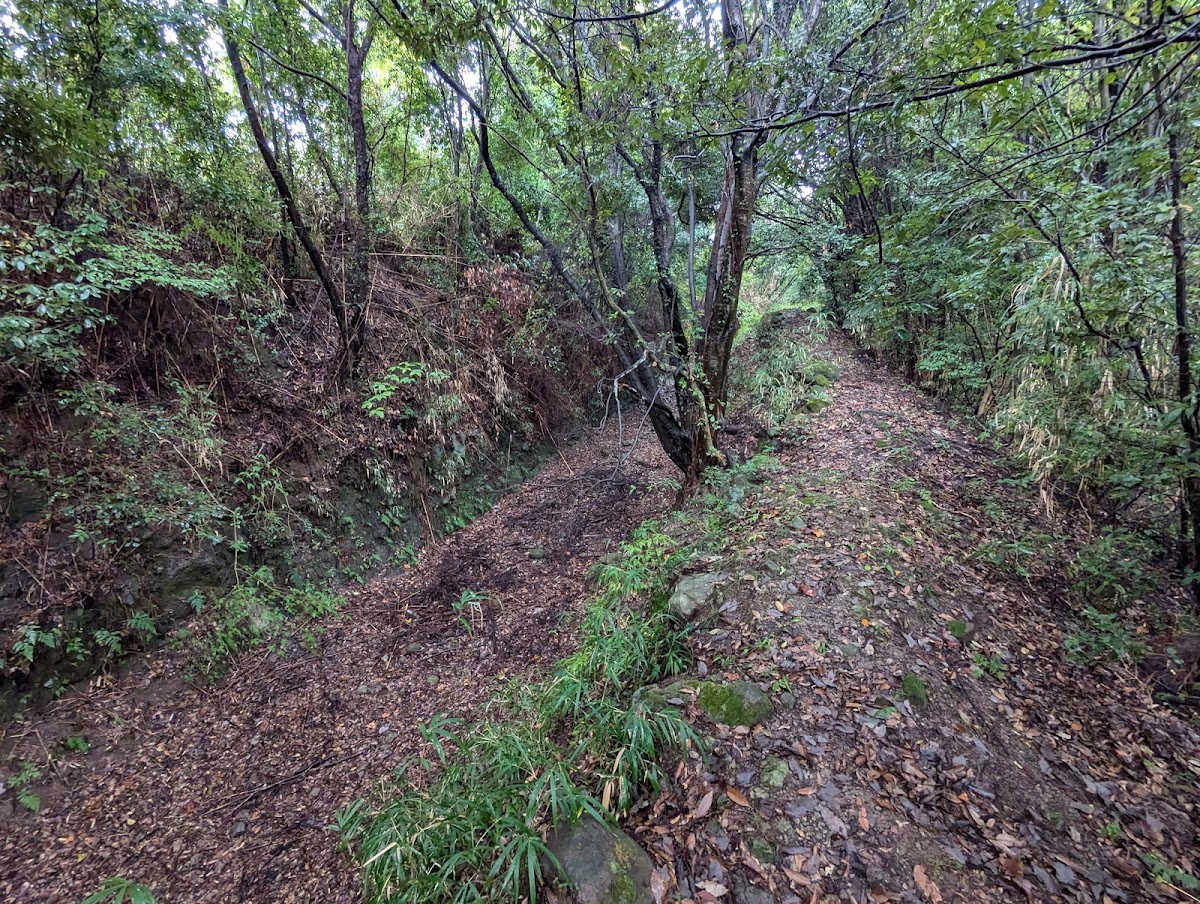
The dry moats were positioned to surround the main enclosure and functioned as horizontal moats. These dry moats are thought to have not only prevented enemy intrusion but also served as a source of soil for constructing the earthworks. Currently, these earthworks and dry moats have been restored and maintained, creating a landscape that evokes the castle’s former appearance.
Structure of the Entrance Gate
Mitsuoka Castle also retains its entrance gate (koguchi). The entrance gate was the most important part of a castle’s defense, the front line for preventing enemy intrusion. Mitsuoka Castle’s entrance gate features a defensive structure combining earthworks and dry moats, designed to be difficult to breach.
Due to its clearly established construction date of 1350 (Jōwa 6) and its excellent state of preservation, allowing for thorough examination of the castle’s remains, the Mitsuoka Castle Ruins are designated as an important cultural property and a historical site of Oita Prefecture.
Highlights of Mitsuoka Castle Ruins Park
Remains of the Main Enclosure and Earthworks
Currently, the Mitsuoka Castle Ruins are maintained as “Mitsuoka Castle Ruins Park,” allowing visitors to observe the castle’s structure up close. Standing in the main enclosure, the arrangement of the surrounding earthworks is immediately apparent, allowing visitors to experience the defensive philosophy of a medieval mountain castle.
It is also possible to walk along the top of the earthworks, from which you can observe the depth and layout of the dry moats. The double earthwork structure, in particular, is impressive even when compared to other medieval mountain castles, making it a must-see for castle enthusiasts.
Views and Surrounding Landscape
Located on a hill 130m above sea level, Mitsuoka Castle offers panoramic views of the Usa Plain and the surrounding mountains. The view to the north is particularly magnificent, making it easy to understand why watchtowers were positioned there. This view is not only important for military surveillance but also a major attraction for modern visitors.
With its seasonal scenery—fresh greenery in spring and vibrant autumn foliage—it’s a popular local recreation spot.
Information Boards and Signage
Within the park, there are information boards explaining the history and structure of Mitsuoka Castle, allowing even first-time visitors to understand the castle’s overview. Signs mark the main remains, clearly indicating which parts are earthworks and which are dry moats.
Maps are also available, helpful for confirming your current location and understanding the relative positions of the remains. These information displays play a crucial role in utilizing Mitsuoka Castle Ruins as a historical park.
Access and Visiting Information
Access by Car
Access to Mitsuoka Castle Ruins is convenient by car. You can drive almost all the way to the base of the main enclosure, where a large parking lot is located. Parking is free and ample space is available, so there is little need to worry about congestion.
It is located about 15 minutes from Usa city center and is easily accessible from national and prefectural roads. Searching for “Mitsuoka Castle Ruins Park” or “Mitsuoka Castle” on your car navigation system will easily lead you there.
Access by Public Transportation
If using public transportation, JR Usa Station is the nearest station. From the station, taking a taxi or renting a car is the most practical option. Bus routes are limited, so it is recommended to check the timetable in advance.
Facility Information
Mitsuoka Castle Ruins Park has the following facilities:
- Parking: Free, large vehicles can also be parked
- Restrooms: Located within the park, kept clean
- Admission Fee: Free
- Opening Hours: Always open (however, nighttime visits are not recommended)
As a note of caution for visitors, as it is a mountain castle, comfortable walking shoes are recommended. Also, during the summer months, we recommend bringing insect repellent and drinking water.
Nearby Tourist Attractions
Usa Shrine
Located about 20 minutes by car from Mitsuoka Castle, Usa Shrine is the head shrine of over 40,000 Hachiman shrines nationwide. It is one of Japan’s leading ancient shrines, boasting numerous cultural assets, including the National Treasure main hall, and is well worth visiting in conjunction with Mitsuoka Castle.
Higashi-Shiiya Falls
Selected as one of Japan’s Top 100 Waterfalls, Higashi-Shiiya Falls is a representative natural landscape of Usa City. Located about 30 minutes by car from Mitsuoka Castle, it attracts many tourists, especially during the seasons of fresh greenery and autumn leaves.
Other Historical Sites in Usa City
Besides Mitsuoka Castle, Usa City has several other castle ruins, including Myoken-dake Castle (Gokurakuji Castle). Visiting these castle ruins will allow you to gain a deeper understanding of the medieval history of the border region between Buzen and Bungo provinces.
Points to Note When Visiting Mitsuoka Castle
Photo Spots
Mitsuoka Castle Ruins offer numerous photo opportunities. The following points are particularly recommended:
- Panoramic View of the Earthworks: The double earthwork structure viewed from the main enclosure is a valuable subject for castle photography.
- Depth of the Dry Moat: The height of the earthworks viewed from the bottom of the moat conveys the impressive defensive structure.
- View: The view of the Usa Plain from the north side offers particularly beautiful photographs on clear days.
- Gate Entrance: The remaining gate structure provides excellent material for documenting the details of castle architecture.
Best Season for Visiting
Mitsuoka Castle Ruins can be visited year-round, but the following seasons are particularly recommended:
- Spring (March-May): Beautiful fresh greenery, mild weather, and ideal for strolling.
- Autumn (October-November): The autumn leaves are at their peak, and the views are clear and beautiful.
- Winter (December-February): The air is clear, offering excellent views, and there are fewer tourists, allowing for a peaceful visit.
Summer (June-September) is hotter and has more insects, so early morning or evening visits are recommended.
Estimated Time Required
The following is a guideline for the time allocation when visiting Mitsuoka Castle Ruins:
- From Parking Lot to Main Enclosure: Approximately 5 minutes on foot
- Viewing the Main Enclosure and Remains: 30 minutes to 1 hour
- Photography and Detailed Observation: 1 hour to 1 hour 30 minutes
- Total: Approximately 1 hour to 2 hours
For those who want to carefully observe the castle structure or enjoy photography, it is recommended to allow approximately 2 hours for your visit.
Historical Significance of Mitsuoka Castle
Importance as a Border Castle
Mitsuoka Castle, located on the border between the two provinces of Buzen and Bungo, played an important role in the regional history of the Sengoku period as a “border castle.” Caught between the two major powers, the Ouchi and Otomo clans, the Akaoka clan faced crucial political choices and their responses offer a valuable example of the lives of local samurai during the Sengoku period.
Border castles served as vital trading and exchange hubs in peacetime, while simultaneously becoming frontline military strongholds during wartime. The history of Mitsuoka Castle reflects the complex political situation in such border regions, holding significance beyond mere military facilities.
Value in Medieval Mountain Castle Research
The Mitsuoka Castle ruins are valuable resources for the study of medieval mountain castles due to their clearly defined construction period and well-preserved remains. In particular, the structure of the earthworks and dry moats provides crucial information for understanding the castle-building techniques of the mid-14th century.
Despite its relatively simple single-enclosure layout, the effective placement of defensive structures such as double earthworks and horizontal moats offers valuable insights into medieval castle-building philosophy. Furthermore, archaeological excavations have revealed the building layout, contributing to the reconstruction of the living spaces within the castle at that time.
Position in Local History
Mitsuoka Castle is an indispensable historical site when discussing the medieval history of the Usa region. As a symbol of the political changes in northern Kyushu—the expansion of the Otomo clan into Buzen, the decline of the Ouchi clan’s influence, and the regional conflicts of the Sengoku period—it is considered important from the perspective of local history education and cultural property preservation.
Its designation as an Oita Prefecture designated historical site is a result of the recognition of these historical and academic values, and appropriate preservation and utilization are expected in the future.
Summary: The Appeal of Visiting Mitsuoka Castle
Mitsuoka Castle (Usa City, Oita Prefecture) is not only historically important as a castle marking the boundary of the Sengoku period, but also a valuable historical site where well-preserved remains can be observed up close. Built on a hill 130m above sea level, this single-enclosure mountain castle boasts a robust defensive structure with double earthworks and dry moats, conveying medieval castle-building techniques to the present day.
Currently, it is maintained as Mitsuoka Castle Ruins Park, complete with facilities such as parking and restrooms, making it easily accessible for visitors. Admission is free, and you can access the area near the main keep by car, making it an easy place to visit.
Walking along the well-preserved earthworks and dry moats, while reflecting on the history of how the local samurai, the Akao clan, tried to survive amidst the powerful Ouchi and Otomo clans, will be a fascinating experience for both castle enthusiasts and history buffs.
Visiting the site along with other nearby tourist attractions such as Usa Shrine will allow you to gain a deeper understanding of Usa City’s history and culture. When you visit Oita Prefecture, be sure to visit the Mitsuoka Castle ruins and experience the spirit of the Sengoku period.