Complete Guide to Onabuchi Castle (Gunma Prefecture) – History, Highlights, and Access Explained in Detail
What is Onabuchi Castle? – A Strategic Sengoku Period Fortress Built on the Southern Foot of Mt. Akagi
Onabuchi Castle (女淵城) is a flatland castle located in Onabuchi, Kasukawa-cho, Maebashi City, Gunma Prefecture. Also known as Onabuchi Castle, it was built at an altitude of approximately 178m on the southern foot of Mt. Akagi. During the Sengoku period, it was a frontline battleground in the power struggle between the Uesugi and Hojo clans, and is a historically important castle where numerous battles took place.
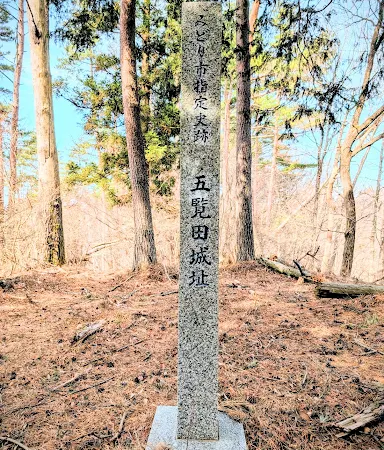
Currently, it is maintained as “Onabuchi Castle Ruins Park” and designated as a Maebashi City Historic Site. The remains of a vast moat and a clear layout of baileys remain, making it a valuable historical site that conveys the appearance of a flatland castle from the Sengoku period.
Basic Information on Onnabuchi Castle
- Location: 1221-1 Onnabuchi, Kasukawa-machi, Maebashi City, Gunma Prefecture
- Castle Structure: Flatland Castle
- Construction Period: Muromachi period to early Sengoku period
- Year of Abandonment: Tensho 18 (1590)
- Designated Cultural Property: Maebashi City Designated Historic Site
- Current Status: Developed as a castle ruins park
History of Onnabuchi Castle – Struggle for Control between Uesugi, Hojo, and Takeda
From Construction to the Early Sengoku Period
There are various theories regarding the construction period of Onnabuchi Castle, but it is believed to have been built between the Muromachi period and the early Sengoku period. Taking advantage of its geographical location at the southern foot of Mt. Akagi, it developed as a strong flatland castle utilizing the Tone River system’s rivers as natural moats.
The castle grounds boasted a vast scale, approximately 200 meters east-west and 450 meters north-south, and featured a complex layout with the North Enclosure, Outer Enclosure, Main Enclosure, Second Enclosure, Goryo Enclosure (Third Enclosure), and Ryukoji Enclosure arranged from north to south. A distinctive feature was the presence of a high-banked river surrounding the entire area, which functioned as a natural moat.
Uesugi Kenshin’s Conquest and the Nagao Clan’s Rule
In 1559, Nagao Kagetora (later Uesugi Kenshin), seeking to expand his power as the Kanto Kanrei (governor of the Kanto region), recaptured Maebashi Castle and continued his southward advance with the support of surrounding generals. During this time, Onnabuchi Castle also became a target of his conquest and came under Uesugi control.
It is said that Uesugi Kenshin gave Onnabuchi Castle to the Akai clan of Tatebayashi, and there are records indicating that Nagao Akinaga subsequently became the castle lord. Onnabuchi Castle was positioned as one of the important bases in the Uesugi clan’s administration of Kozuke Province.
The Struggle Between the Uesugi and Hojo Clans
From the Eiroku era to the Tensho era, Onnabuchi Castle became the stage for fierce battles between the Uesugi and Hojo clans. As the front line of the struggle for supremacy in the Kanto region, the castle’s ownership changed hands many times.
When the Hojo clan expanded its power, Onnabuchi Castle fell into their hands, and when the Uesugi clan counterattacked, it returned to their side. During this period, Onnabuchi Castle was truly a symbolic representation of the struggle between the two forces.
The Tragedy of Numata Kageyoshi and the Scheme of Sanada Masayuki
The most dramatic episode in the history of Onnabuchi Castle is the tragedy of its lord, Numata Kageyoshi. Numata Kageyoshi was a member of the Numata clan and resided at Onnabuchi Castle.
It is said that Sanada Masayuki used a clever stratagem to lure out Numata Kageyoshi and assassinated him. This incident marked a crucial turning point in the Sanada clan’s expansion into Kozuke Province and is known as an event that illustrates the harshness of political maneuvering during the Sengoku period. After Numata Kageyoshi’s death, control of Onnabuchi Castle became fluid again, and it was tossed about by the turbulent waves of the Sengoku period.
Toyotomi Hideyoshi’s Siege of Odawara and the Castle’s Demolition
In 1590, during Toyotomi Hideyoshi’s siege of Odawara, Onnabuchi Castle became a target of Hideyoshi’s army as a Hojo-aligned castle. Onnabuchi Castle fell almost simultaneously with the fall of Odawara Castle, and was subsequently abandoned.
The history of Onnabuchi Castle, spanning approximately 400 years, came to an end with the end of the Sengoku period. After its abandonment, the castle’s fortifications gradually disappeared, but remnants such as moats and earthworks remained relatively well preserved.
Structure and Layout of Onnabuchi Castle – Characteristics of a Flatland Castle Utilizing a Moat
Overall Castle Layout
Onnabuchi Castle is a flatland castle built on the plains at the southern foot of Mount Akagi. Its defensive system, which extensively utilizes a moat, is a distinctive feature. The castle grounds are long and narrow, measuring approximately 200 meters east-west and 450 meters north-south, with multiple baileys arranged in a continuous pattern.
From north to south, the layout consists of the North Bailey, Belt Bailey, Main Bailey, Second Bailey, Goryo Bailey (Third Bailey), and Ryukoji Bailey. Each bailey was demarcated by moats and earthworks. The presence of a river with high banks surrounding the entire area, functioning as a natural moat, is the castle’s greatest defensive feature.
Structure of the Main Bailey
The Main Bailey is the core bailey of Onnabuchi Castle, and its clear boundaries can still be seen today. The moat surrounding the Main Bailey remains well-preserved, allowing us to imagine its appearance at the time. A monument marking the site of the main keep stands here, making it an important point of interest for visitors.
The main keep is estimated to have measured approximately 60 meters east-west and 80 meters north-south, and is thought to have housed the lord’s residence and other important facilities. The height of the earthworks and the depth of the moat suggest considerable defensive capabilities.
North Enclosure and Belt Enclosure
The North Enclosure is located at the northernmost point of the castle, offering an excellent view of Mount Akagi. Currently, it is a park area, allowing visitors to admire the majestic figure of Mount Akagi from the north. This view is one of the major attractions of visiting Onnabuchi Castle.
The Belt Enclosure is a long, narrow enclosure located between the North Enclosure and the main keep, functioning as a key defensive point. Its topographical features remain, allowing us to discern the ingenuity of its layout.
Second and Third Enclosures (Goryo Enclosure)
The Second Enclosure is located south of the main keep and is currently used as a parking lot. It is presumed that this area once housed the residences of high-ranking retainers and barracks. While the terrain has been altered due to its use as a parking lot, the remnants of the surrounding moats allow us to imagine its original scale.
The Goryo Kuruwa (Third Bailey) is located further south and was an important bailey protecting the southern end of the castle grounds. The name “Goryo” suggests the possibility that some kind of religious facility or ritual was performed here.
Ryukoji Kuruwa and West Kuruwa
The Ryukoji Kuruwa is a bailey located in the southwest of the castle, and its name suggests a connection to a temple. In castles of the Sengoku period, temples were often incorporated into the castle grounds, and it is possible that religious facilities functioned as part of the defensive system at Onnabuchi Castle.
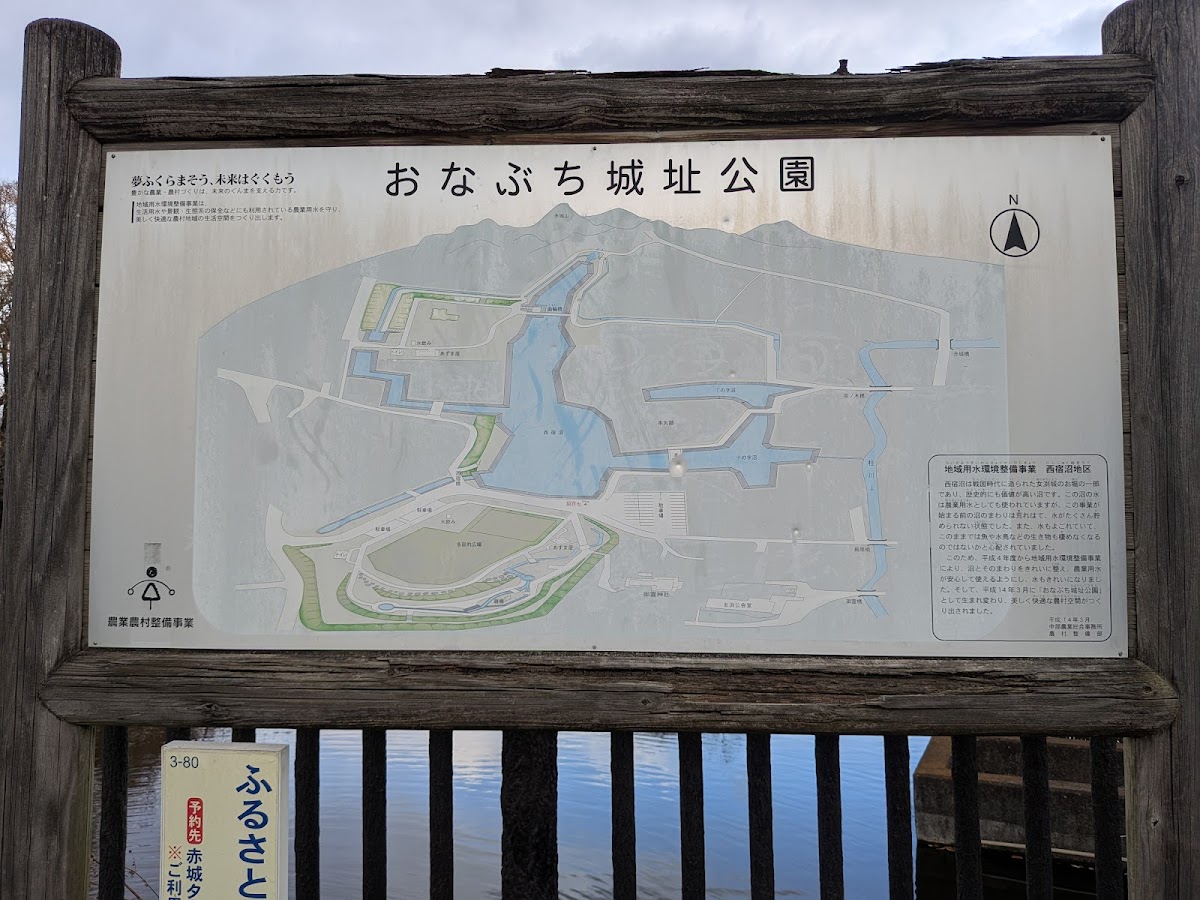
The West Kuruwa protected the western side of the castle and formed a defensive line in conjunction with the other baileys. Although parts of it are now lost, its layout can be confirmed from the castle’s layout map.
Features of the Moat System
The most distinctive feature of Onnabuchi Castle is its extensive moat system. Taking advantage of the abundant water sources at the southern foot of Mount Akagi, each enclosure was surrounded by a moat. The moat surrounding the main enclosure remains well-preserved today, measuring over 10 meters wide and approximately 3 meters deep.
The moat is thought to have served not only as a defensive structure but also as a source of water for the castle and for daily life. Parts of the moat still hold water, allowing us to imagine its former appearance.
Highlights of Onnabuchi Castle – Remains Visible on-site
Main Enclosure Ruins and Castle Site Monument
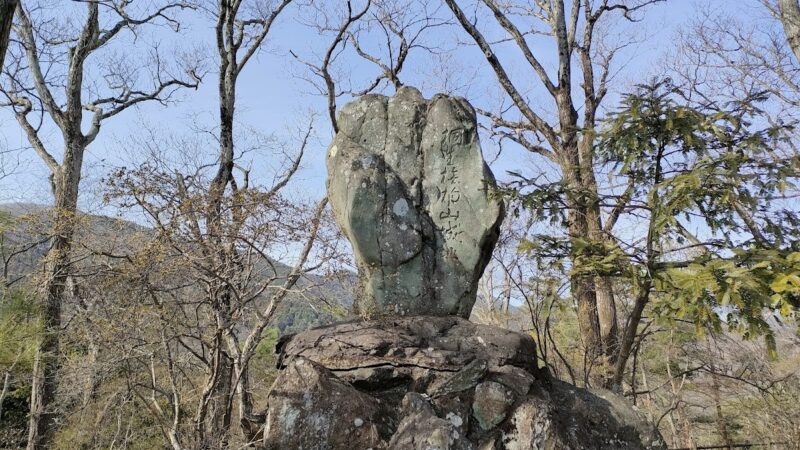
The first thing you should see when visiting Onnabuchi Castle is the main enclosure ruins. A magnificent stone monument inscribed with “Onnabuchi Castle Ruins” stands in the main enclosure, making it a popular spot for commemorative photos. The topography of the main enclosure is relatively well-preserved, allowing us to imagine its appearance at the time from the raised earthworks and flat areas.
From the main enclosure ruins, you can overlook the surrounding enclosures and moats, making it an ideal place to understand the overall structure of the castle. The moat surrounding the main keep is particularly well-preserved, offering a concrete example of the defensive system of a flatland castle from the Sengoku period.
Remains of the Moat
The moat of Onnabuchi Castle is the most impressive of the existing remains. The moat surrounding the main keep, in particular, is clearly visible as a wide and deep moat, retaining much of its original appearance. Parts of the moat still hold water, creating a beautiful landscape in harmony with the changing seasons.
In spring, cherry blossoms bloom around the moat; in summer, the greenery is reflected on the water’s surface; in autumn, the autumn leaves add vibrant colors; and in winter, a tranquil atmosphere prevails. Many people visit to take photographs, making it an attractive spot not only as a castle ruin but also for enjoying the natural scenery.
Earthworks and Enclosure Divisions
The earthworks dividing each enclosure are also an important highlight of Onnabuchi Castle. The height of the earthworks varies depending on the location, but in some places they reach over 2 meters in height, allowing visitors to truly appreciate their function as defensive structures.
Walking along the earthen ramparts allows you to experience the overall layout of the castle and the undulations of the terrain, helping you understand the ingenuity of castle design during the Sengoku period. The earthen ramparts separating the main keep and the second bailey are particularly well-preserved and well worth observing closely.
View of Mount Akagi from the North Enclosure
The North Enclosure is now a park plaza, and the view of Mount Akagi from here is spectacular. On a clear day, you can see the majestic figure of Mount Akagi, truly appreciating the strategic location of Onnabuchi Castle at the southern foot of Mount Akagi.
This view is a landscape that the castle lord and soldiers would have seen daily, and it’s a place that stimulates historical imagination. Mount Akagi is especially beautiful when illuminated by the rising or setting sun, and many visitors enjoy this view.
Information Boards and Explanation Panels
Information boards explaining the history and structure of Onnabuchi Castle are installed within the castle park. The information boards provide detailed explanations of the castle as a designated historical site of Maebashi City, including a layout map and historical background, allowing visitors to deepen their understanding of the castle even without prior knowledge.
The information boards clearly explain the history of the castle’s battles during the Sengoku period, the changes in its lords, and the circumstances leading to its abandonment. Reading this information while exploring the castle ruins will enhance your visit.
Park Development
Onabuchi Castle Ruins Park, developed as Onabuchi Castle Ruins Park, successfully balances the preservation of historical remains with park functions. Walking paths are provided, allowing for safe exploration of each enclosure. Benches and gazebos are also installed, allowing visitors to enjoy the castle ruins at their leisure while taking breaks.
Toilets and parking are also available, demonstrating consideration for visitor convenience. However, unlike typical tourist spots with flashy development, the park maintains a calm atmosphere that respects the historical remains, making it a very attractive space for history buffs.
Access Information – How to Get to Onabuchi Castle
Access by Car
The most convenient way to access Onabuchi Castle is by car. From the Kan-Etsu Expressway:
- Approximately 30 minutes from Maebashi IC
- Approximately 25 minutes from Isesaki IC
From the Kita-Kanto Expressway:
- Approximately 25 minutes from Isesaki IC
- Approximately 20 minutes from Komagata IC
Take National Route 353 towards Kasukawa-cho, Maebashi City. Follow the signs and you will arrive at the Onabuchi Castle Ruins Park parking lot.
Parking Information
There is a free parking lot at the Onabuchi Castle Ruins. The Ninomaru (second bailey) site is used as a parking lot and can accommodate approximately 20 regular cars. It is very convenient as you can start exploring the castle ruins immediately from the parking lot.
There are also toilets in the parking lot, making it suitable for longer visits. However, if you are planning to visit by large bus, it is recommended to check with Maebashi City in advance.
Access by Public Transportation
While somewhat inconvenient, the following routes are available when using public transportation.
From JR Maebashi Station
- Take the Japan Chuo Bus bound for “Kasukawa Branch Office”
- Get off at the “Onnabuchi” bus stop and walk for about 10 minutes.
Since the number of buses is limited, it is recommended to check the timetable in advance. Alternatively, if you take a taxi, it will take about 30 minutes from Maebashi Station and cost approximately 4,000 yen.
Estimated Visiting Time
A thorough visit to Onnabuchi Castle takes about 30 minutes to 1 hour. While it’s possible to see the main remains around the main keep in about 20 minutes, it’s best to allow about 1 hour to carefully explore each enclosure and learn about the history while reading the information boards.
If you plan to enjoy taking photos or leisurely enjoying the view of Mt. Akagi, it is recommended to allow even more time.
Nearby Tourist Spots – Historical Sites to Visit Together
Zen Castle Ruins
Located about 3km from Onnabuchi Castle, Zen Castle Ruins is another important castle ruin at the southern foot of Mt. Akagi. Similar to Onnabuchi Castle, this castle was the stage for a struggle between the Uesugi and Hojo clans during the Sengoku period. Visiting both castles together provides a deeper understanding of the regional governance at the time.
Ogo Castle Ruins
Located in Horikoshi-cho, Maebashi City, the Ogo Castle Ruins are a mountain castle known as the residence of the Ogo clan. It’s about a 15-minute drive from Onnabuchi Castle and can be included in a route exploring the castle complex at the southern foot of Mt. Akagi. Comparing the differences between mountain castles and flatland castles during your visit is a fascinating experience.
Maebashi Castle (Umayabashi Castle) Ruins
Located in the heart of Maebashi City, the Maebashi Castle Ruins were an important castle used by Uesugi Kenshin as a base for his administration of the Kanto region. While currently used as the Gunma Prefectural Government building and Maebashi Park, some remains of earthworks and moats still exist. Understanding Umayabashi Castle is essential to understanding the history of Onnabuchi Castle.
Akagi Shrine
Several Akagi Shrines are located at the foot of Mount Akagi, and it is recommended to visit them when you visit Onnabuchi Castle. In particular, Miyazawa Akagi Shrine is known as a central shrine in Akagi Mountain worship and is historically important.
Kasukawa Historical and Folk Museum
The historical and folk museum in Kasukawa-cho, Maebashi City, exhibits on the history and culture of the region. Materials related to Onnabuchi Castle are also on display, allowing you to obtain more detailed information. It is recommended to check the opening days and hours in advance before visiting.
The Charm of Onnabuchi Castle – Why You Should Visit
An Important Stage in Sengoku History
Onnabuchi Castle is associated with prominent warlords of the Sengoku period, such as Uesugi Kenshin, the Hojo clan, and Sanada Masayuki. In particular, the tragedy of Numata Kageyoshi, caused by Sanada Masayuki’s machinations, is historically important as an event symbolizing the political intrigue and stratagems of the Sengoku period. For history buffs, this castle ruin is a must-see spot. ### Well-Preserved Remains
The moat surrounding the main keep, as well as the earthworks and enclosure divisions, are relatively well-preserved, allowing visitors to concretely learn about the structure of a flatland castle from the Sengoku period. While many castle ruins are being lost due to urbanization, Onabuchi Castle is preserved as a valuable historical heritage site.
Quiet and Peaceful Atmosphere
Unlike flashy, touristy castle ruins, Onabuchi Castle Park maintains a quiet and peaceful atmosphere. Its greatest appeal lies in the ability to explore at one’s own pace while deeply experiencing history. As a niche castle ruin park, it is beloved by true history enthusiasts.
Beautiful View of Mount Akagi
The view of Mount Akagi from the northern enclosure is a unique charm of Onabuchi Castle. The beautiful scenery, where the castle remains and natural landscape harmonize, leaves a deep impression on visitors. The combination of Mount Akagi, which shows different expressions in each season, and the castle ruins is something you will never tire of, no matter how many times you visit.
Easy Access
Megumi Castle is easily accessible from Maebashi city, and has well-equipped facilities such as parking and restrooms, making it an attractive and convenient visit. It can also be combined with other castle ruins on the southern slopes of Mt. Akagi for a full day’s visit.
Points to Note and Advice for Visiting Onnabuchi Castle
Best Season for Visiting
Onnabuchi Castle can be visited throughout the year, but spring and autumn are particularly recommended. In spring, cherry blossoms bloom and the fresh greenery is beautiful, while in autumn, the autumn leaves color the castle ruins. Summer offers lush greenery, and winter boasts beautiful snowscapes, but caution is advised as the ground can be slippery in winter.
Clothing and Items to Bring
Comfortable walking shoes are essential for visiting the castle ruins. Sneakers or trekking shoes are recommended as you will be walking around the earthworks and moats. In summer, bringing a hat, sunscreen, and insect repellent will make your visit more comfortable.
A camera is a must. There are numerous photo opportunities, including the moats, earthworks, and views of Mt. Akagi. Please use your camera or smartphone to record the information on the signboards.
Visitor Etiquette
The Onnabuchi Castle ruins are a valuable cultural asset and a place of relaxation for local residents. Please observe proper etiquette when visiting, such as not damaging the remains or littering. It is important to be quiet within the park and be considerate of other visitors and local residents.
Pre-Visit Information Check
Checking the history and layout map of Onnabuchi Castle online before your visit will deepen your understanding at the site. Castle information websites such as Kojodan (Castle Enthusiasts’ Association) feature reviews and photos from actual visitors, which can be helpful.
Summary – Historical Value of Onnabuchi Castle
Onnabuchi Castle is an important castle symbolizing the power struggle between the Uesugi and Hojo clans in the Kanto region during the Sengoku period. This castle, with its dramatic history including the tragedy of Numata Kageyoshi caused by Sanada Masayuki’s machinations, survived a turbulent era until its abandonment during Toyotomi Hideyoshi’s siege of Odawara in 1590.
Currently, it is protected as a Maebashi City designated historical site and maintained as Onabuchi Castle Ruins Park. Valuable remains such as the moat surrounding the main keep, earthworks, and the layout of the baileys remain, allowing visitors to concretely learn about the structure of a flatland castle from the Sengoku period, making it a highly worthwhile spot for history enthusiasts.
Nestled in the beautiful natural environment at the southern foot of Mount Akagi, Onabuchi Castle Ruins is a fascinating place where history and nature harmonize. It is definitely one of the historical sites you should visit when you come to Gunma Prefecture. Spending time reflecting on the history of the Sengoku period in this quiet park will surely be a memorable experience.