Negoya Castle (Takasaki City, Gunma Prefecture) Complete Guide | A Thorough Explanation of the History and Highlights of the Mountain Castle Built by Takeda Shingen
What is Negoya Castle?
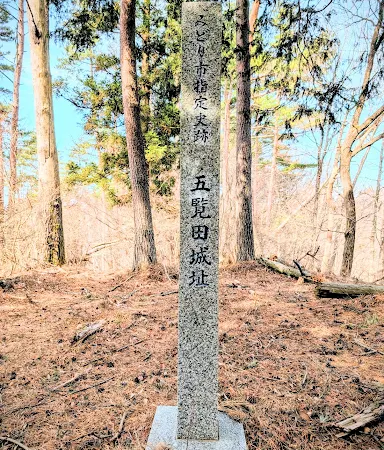
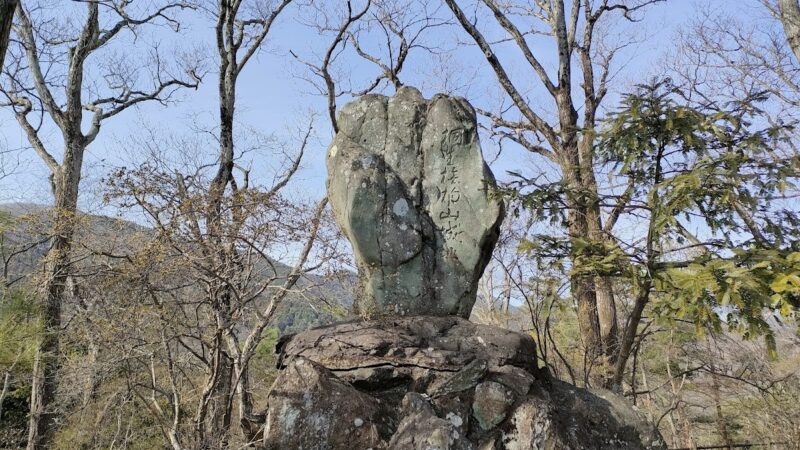
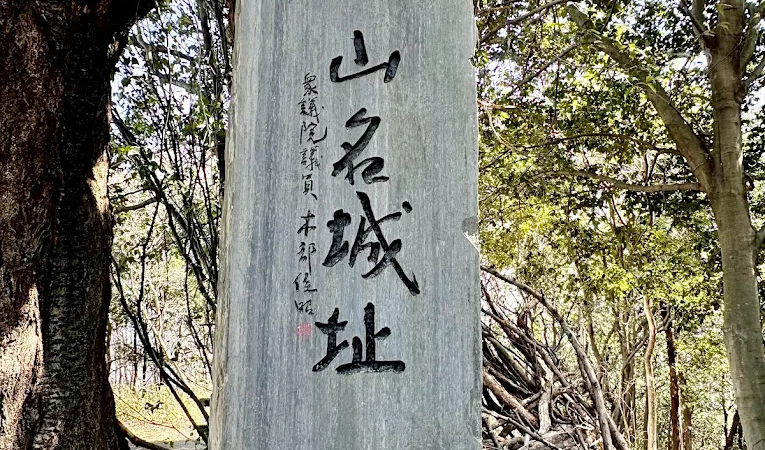
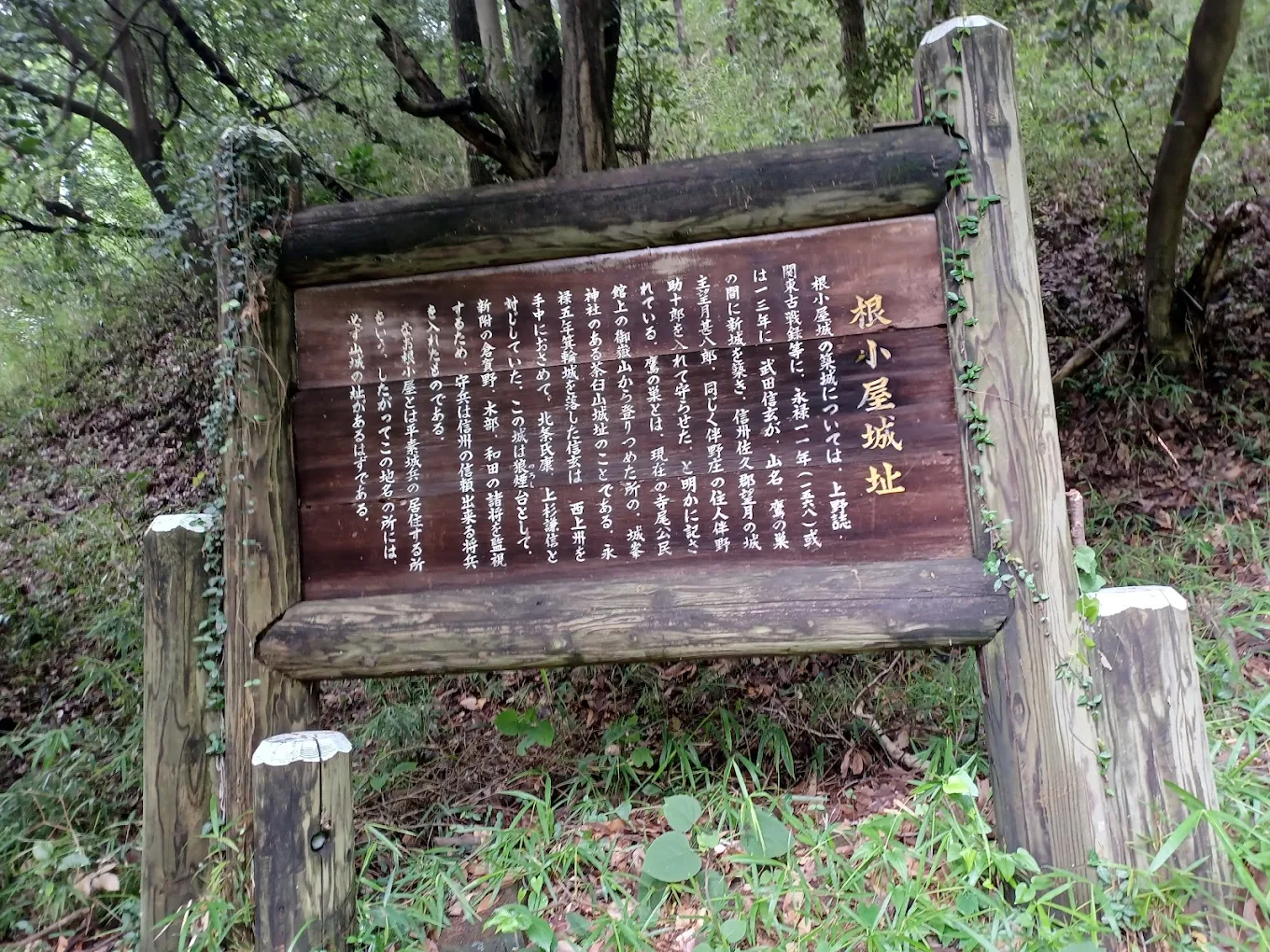
Negoya Castle is a Sengoku period mountain castle located on Shiroyama, Yamana-cho, Takasaki City, Gunma Prefecture. Also known as “Shinjo,” it was built near the eastern edge of a hilly area between the Karasu River and the Kaburagawa River. The castle ruins, spread across approximately 280 meters north-south and 250 meters east-west on a mountaintop approximately 180 meters above sea level and 100 meters relative height, are known as a valuable historical site that conveys the castle-building techniques of the Takeda clan.
This castle, believed to have been built in 1570 by Takeda Shingen as a defense against the Later Hojo clan during his expansion of power into Kozuke Province (present-day Gunma Prefecture), was strategically located midway between Yamana Castle and Chausuyama Castle (Takanosu Castle), offering views of Wada Castle and Kuragano Castle. After the fall of the Takeda clan, it came under the control of the Hojo clan, playing a crucial role in the struggle for control of Kozuke Province.
Even today, the remains of the castle, including the main keep, baileys, dry moats, earthworks, masugata gate, and well remains, are well-preserved, making it a valuable historical site where one can experience the appearance of a Sengoku period mountain castle.
History of Negoya Castle
Background of Construction and Takeda Shingen’s Invasion of Kozuke
The construction of Negoya Castle is rooted in Takeda Shingen’s invasion of Kozuke Province. During the Eiroku era (1558-1570), the Takeda clan, based in Kai Province, aimed to expand their power into northern Kanto after conquering Shinano Province. Kōzuke Province, in particular, was the front line bordering the Hōjō clan’s sphere of influence, and was the stage for fierce battles between the two forces.
In 1570, Takeda Shingen decided to build a new castle midway between the existing Yamana Castle and Chausuyama Castle to strengthen his base in Kōzuke Province. This was Negoya Castle. Its alternative name, “Shinjō” (New Castle), indicates that it was a newly constructed castle at this time.
Castle Lords and Commanders
Regarding the first lords of Negoya Castle, records indicate that Tomono Sukujūrō and Nishina Kaga-no-kami Nobumori were appointed as commanders. Nishina Nobumori was the fifth son of Takeda Shingen and a warrior who inherited the Nishina clan, a prominent family in Shinano Province. The Takeda clan’s strategic positioning of Negoya Castle as an important base in Kōzuke Province is evident from the fact that they stationed powerful family members there.
Elite members of the Takeda clan’s retainers were stationed there, and it functioned as a defensive base to prepare for invasions by the Hōjō clan, coordinating with surrounding castles such as Kuragano Castle and Wada Castle.
Changes after the fall of the Takeda clan
In 1582, when the Takeda clan was destroyed by the Oda-Tokugawa allied forces in the Kōshū campaign, the situation in Kōzuke Province changed dramatically. The western part of Kōzuke Province, including Negoya Castle, temporarily came under the control of the Oda clan. However, after the Honnō-ji Incident, the Hōjō clan regained power and brought the region under their control.
It is believed that Negoya Castle continued to be used during the Hōjō era, and temples associated with the Hōjō clan, such as Kanfuku-ji Temple, still exist in the surrounding area. It is presumed that when the Hojo clan was destroyed in Toyotomi Hideyoshi’s siege of Odawara in 1590, Negoya Castle ceased to serve its purpose and was abandoned.
Structure and Layout of Negoya Castle
Overall Composition and Location
Negoya Castle is located on the eastern edge of a hilly area sandwiched between two rivers, the Karasugawa and Kaburagawa. This location not only allows the rivers to be used as natural moats, but also provides excellent views overlooking the surrounding plains. In fact, from the castle ruins, it is possible to see Kuragano Castle and Wada Castle in the distance, indicating that it also functioned as a base for a communication network.
The castle’s layout consists of the central Honmaru (main enclosure) as the core, with the Ninomaru, Sannomaru, Yonnomaru, and Gonomaru (second, third, fourth, and fifth enclosures) arranged radially. This radial arrangement clearly demonstrates its character as a “defensive castle,” prioritizing the defense of the central area, and is a characteristic of the Takeda-style castle construction.
Structure of the Honmaru (Main Enclosure)
The Honmaru, the core of Negoya Castle, is built at the highest point within the castle grounds. The Honmaru is surrounded by a deep dry moat and high cliffs, resulting in a considerable difference in elevation. The cliff between the Honmaru and the Ninomaru (Second Enclosure) is particularly steep, posing a significant obstacle for attackers.
A masugata koguchi (square-shaped gate) is provided at the entrance to the Honmaru. A masugata koguchi is a defensive structure that creates a square space in front of the castle gate, allowing for attacks on invading enemies from three sides. The masugata koguchi at Negoya Castle is noteworthy as an important surviving structure demonstrating the advanced castle-building techniques of the time. Another entrance called a saka koguchi (slope gate) has also been identified, indicating that multiple routes of movement were provided.
A moat-bottomed path encircles the Honmaru, allowing movement to each enclosure via this path. This moat-bottomed path was not merely a passageway, but also functioned as a military facility for monitoring and intercepting enemy incursions.
Layout of the Enclosures from the Second to the Fifth Enclosure
The Second, Third, Fourth, and Fifth Enclosures, arranged to surround the main enclosure, each functioned as an independent defensive stronghold. These enclosures constitute a multi-layered defensive system designed to progressively thwart attacks on the main enclosure.
Around the Second Enclosure, remains of living and military facilities such as wells and earthen bridges have been confirmed. Wells were essential water sources during sieges, and their presence indicates that Negoya Castle was designed to withstand prolonged sieges. Earthen bridges were bridge-like earthen mounds used to cross dry moats; they could be destroyed in times of emergency to prevent enemy intrusion.
Each enclosure is demarcated by dry moats or trenches, ensuring that even if one enclosure is breached, defense can continue in the next. Compared to the remains of Yamana Castle, this layout is characterized by clearly defined divisions with sharply defined corners, revealing a more refined design philosophy.
Characteristics of Defensive Structures
The defensive structures of Negoya Castle strongly reflect the characteristics of the Takeda-style castle construction techniques. The main defensive structures include the following:
Dry Moats and Trenches: Dry moats are placed throughout the castle, separating the baileys. These dry moats hindered enemy advances and also served as movement routes for defending troops. Trenches were constructed to cut across ridges, preventing enemy flanking attacks.
Vertical Moats: Vertical moats dug along slopes effectively hindered enemy ascents. Multiple vertical moats have been identified at Negoya Castle, indicating a design prepared for attacks from all directions.
Lower Enclosures and Belt Enclosures: Small, belt-shaped enclosures (lower enclosures and belt enclosures) are positioned around the main baileys. These were used as lookout posts and firing positions, and also served as buffer zones to make direct attacks on the main bailey difficult.
Earthworks: Earthworks were built along the edges of the enclosures, functioning as a defensive wall against arrows and firearms. The height and thickness of the earthworks indicate that considerable effort was required to construct them.
Horse Outpost: The horse outpost, located in front of the main gate, was important as a gathering point during sorties and as a facility to disperse enemy attacks.
These defensive structures, organically combined, gave Negoya Castle the characteristics of an impregnable fortress.
Water Moats and Water Supply Facilities
Unusually for a mountain castle, traces of a water moat have been confirmed at Negoya Castle. While dry moats are common in mountain castles, water moats were sometimes constructed where a water source could be secured. Water moats are more difficult to breach than dry moats, providing a stronger defense.
Along with the aforementioned well remains, the water supply system of Negoya Castle appears to have been meticulously planned and developed with siege warfare in mind. The castle showcases ingenious methods for efficiently utilizing spring water and rainwater, demonstrating the advanced civil engineering techniques of the Sengoku period.
Highlights of Negoya Castle
Remains around the Main Enclosure
When visiting Negoya Castle, the first thing to note is the group of remains around the main enclosure. While the stonework of the masugata koguchi (square-shaped entrance to the main enclosure) is gone, the square space formed by the earthworks and dry moat is clearly visible. Walking through this masugata structure allows you to experience firsthand the disadvantageous position enemy soldiers would have faced.
The moat-bottom path surrounding the main enclosure is still walkable today. Walking along the deeply excavated moat and looking up at the towering cliffs on either side, you can truly appreciate the castle’s formidable strength. The cliff between the main enclosure and the second enclosure, in particular, has a significant difference in elevation and is quite impressive.
The interior of the main enclosure is relatively flat, allowing you to imagine the traces of buildings that once stood there. The surrounding earthworks are also well-preserved in some areas, allowing us to imagine their former appearance.
Dry Moats and Earthen Bridges
While some sections of the dry moats at Negoya Castle have become shallower due to weathering, they remain clearly visible overall. The central dry moat, in particular, clearly demarcates the baileys on either side, making it a valuable historical site for learning about Sengoku period castle construction techniques.
The earthen bridge near the second bailey was an important structure for crossing the dry moat. The bridge’s shape remains today, and it is still possible to cross it. The deep moats on both sides of the bridge indicate that it would have been difficult to cross if the bridge had been destroyed.
Another earthen bridge exists beside the well site, suggesting that an access route to a water source was provided. These earthen bridges are important clues for understanding the flow of movement within the castle.
Views and Relationship to Surrounding Castles
The views from Negoya Castle are also a major highlight. From the main bailey, at an altitude of approximately 180 meters, one can enjoy a panoramic view of Takasaki city and the surrounding plains. If the weather is good, it’s possible to see Kuragano Castle and Wada Castle in the distance, allowing you to imagine how communication systems were established between these castles.
You can also see the flow of the Karasugawa and Kaburagawa rivers, giving you a real sense of how these rivers functioned as natural defensive lines. Furthermore, you can confirm the relative positions of the nearby Yamana Castle and Chausuyama Castle, helping to understand the defensive network the Takeda clan built in this region.
Preservation of the Remains and the Cornering
The remains of Negoya Castle are generally in good condition. Particularly noteworthy is the clearly defined corners of the baileys and moats. Compared to other mountain castles such as Yamana Castle, the remains of Negoya Castle are more linear with clearly defined corners, giving the impression of a more planned design.
These corners are not merely for aesthetic purposes, but serve a defensive purpose. Clearly defining the corners reduces blind spots and improves the efficiency of firing. It also limits the direction of enemy advances, making them easier to predict. This characteristic found in the remains of Negoya Castle can be considered evidence of the highly developed castle-building techniques of the Takeda clan.
Access and Visiting Information
Access by Train
The most convenient way to access Negoya Castle is by using the Joshin Electric Railway. The nearest station is “Takasaki University of Commerce Station,” and the castle ruins are about a 15-minute walk from the station. The castle hill is located about 600 meters west of the station; you can follow the signs.
Other access points include “Negoya Station” (about 900 meters) and “Yamana Station” (about 1.6 kilometers), but Takasaki University of Commerce Station is the closest and most convenient.
Access by Car and Parking
If accessing by car, it’s about a 20-minute drive from the Kan-Etsu Expressway “Takasaki Interchange.” There is no dedicated parking lot around the castle ruins, but you can use the parking spaces at Yamana Castle or the Takasaki Nature Trail. However, since the number of spaces is limited, early arrival is recommended, especially on holidays.
Ascent Route and Estimated Time
There are several routes to Negoya Castle. The most common is the route using the Takasaki Nature Trail (Takasaki Nature Walking Trail). The course from Yamana Castle to Negoya Castle via the Takasaki Nature Trail is enjoyable like a hike, and takes about 30 minutes from Yamana Castle.
While the ascent route is well-maintained, as it is a mountain castle, a certain level of physical fitness and comfortable walking shoes are necessary. Particular caution is needed after rain, as the ground can become slippery.
For a thorough visit to the castle ruins, allow 1 to 1.5 hours. If you only want to see the main remains around the main keep, you can see them in about 30 minutes.
Precautions During Your Visit
Negoya Castle ruins are protected as a historical site, so care must be taken not to damage the remains. Please refrain from climbing on or digging up the earthworks or moats. Also, please take all your trash with you and cooperate in preserving the natural environment.
During the summer, vegetation can make it difficult to see the ruins. Also, be aware of dangerous creatures such as bees and venomous snakes. Winter and early spring are the best times to visit, as the ruins are easier to see.
While there are information boards within the castle grounds, obtaining a map of the castle layout beforehand will deepen your understanding.
Castle Stamp and Related Information
How to Obtain a Castle Stamp
The castle stamp for Negoya Castle can be obtained at designated locations within Takasaki City. Castle stamps are popular souvenirs among castle enthusiasts, and many people collect them as mementos of their visit. The Negoya Castle stamp features a design that reflects the castle’s history and characteristics, making it valuable as a collector’s item.
For information on where to obtain the stamp and the cost, we recommend checking with the Takasaki City Tourist Information Center or related facilities.
Combining with Nearby Castles
When visiting Negoya Castle, combining it with visits to nearby castles will allow you to enjoy a more fulfilling castle tour.
Yamana Castle: Connected to Negoya Castle via the Takasaki Nature Trail, it can be visited as a set. Yamana Castle predates Negoya Castle, and comparing them allows you to learn about the evolution of castle construction techniques.
Chausuyama Castle (Takanosu Castle): Located between Negoya Castle and Yamana Castle, it formed part of the Takeda clan’s defensive line.
Kuragano Castle: Visible from Negoya Castle, it was an important strategic point along the Karasu River.
Wada Castle: Also an important strategic point in the surrounding area, it is worth visiting to understand the coordination system with Negoya Castle.
Visiting these castles allows you to grasp the overall picture of the Takeda clan’s administration of Kozuke Province.
Related Facilities and Materials
If you would like to learn more about Negoya Castle, you can view related materials at the Takasaki City Local History Museum and Library. Excavation reports, research papers, and castle layout maps are stored there, allowing you to gain specialized knowledge.
Furthermore, Negoya Castle is sometimes featured in books and magazines about castles, so studying it beforehand will deepen your understanding at the site.
Historical Significance of Negoya Castle
Position in the Takeda Clan’s Administration of Kōzuke Province
Negoya Castle played a crucial role in Takeda Shingen’s administration of Kōzuke Province. During the Eiroku era, after conquering Shinano Province, the Takeda clan sought to further expand their power into northern Kanto, a region that was also the front line against the Hojo clan.
Negoya Castle, newly built between the existing Yamana Castle and Chausuyama Castle, formed a defensive line with these three castles. This arrangement allowed for effective control of the area between the Karasugawa and Kaburagawa rivers, enabling preparation for Hojo invasions.
As its alternative name, “Shinjō” (New Castle), suggests, Negoya Castle was constructed using the latest castle-building techniques, symbolizing the Takeda clan’s military and technological prowess.
Value in the History of Castle Construction Technology
Negoya Castle is a valuable historical resource for studying castle construction technology during the Sengoku period. In particular, it clearly exhibits the characteristics of the Takeda-style castle construction technique, and its academic value is recognized for the following reasons:
Radial Layout: The radial arrangement of baileys centered around the main keep demonstrates a design philosophy that maximized defensive efficiency.
Masugata Gate: The adoption of the masugata gate, a highly advanced defensive technique, indicates that the most advanced castle construction technology of the time was employed.
Multi-Layered Defense System: The multi-layered defense system, combining multiple baileys, dry moats, vertical moats, and earthworks, was designed to withstand prolonged sieges.
Utilization of Terrain: By skillfully utilizing the natural terrain while also making artificial modifications, an impregnable fortress was achieved.
These features serve as evidence that the Takeda clan possessed not only military strength but also advanced technological capabilities.
Importance in Local History
Negoya Castle holds a significant position in the local history of western Kōzuke Province. This region flourished as a transportation hub from ancient times, but during the Sengoku period (Warring States period), it became a fierce battleground where powerful daimyo such as the Takeda, Hojo, and Uesugi clans vied for supremacy.
The existence of Negoya Castle speaks to the strategic importance of this region. Furthermore, the construction and maintenance of the castle required a large number of personnel and materials, and it is thought to have had a significant impact on the local economy.
The fact that the Hojo clan continued to use the castle after the fall of the Takeda clan also demonstrates the high strategic value of Negoya Castle.
Summary
Negoya Castle is a Sengoku period mountain castle built by Takeda Shingen as a base for governing Kōzuke Province. Its well-preserved remains offer valuable insights into the castle-building techniques and strategies of the time, making it a precious historical site.
With its radial layout centered around the main keep, masugata koguchi (square-shaped gate), dry moats, earthen bridges, and well remains, Negoya Castle offers plenty to see and enjoy, even for those who aren’t castle enthusiasts. Using the Takasaki Nature Trail, you can combine a visit to Negoya Castle with a visit to Yamana Castle for a more fulfilling castle tour.
When you visit Takasaki City in Gunma Prefecture, be sure to stop by Negoya Castle and experience the spirit of the Sengoku period. The castle-building techniques of Takeda Shingen and the history of the battles fought by the warring daimyo who controlled this land await you.