Takatome Castle (Gunma Prefecture) Complete Guide: The Residence of Four Generations of the Nagano Clan and the Impressive Moat
What is Takatome Castle?
Takatome Castle is a medium-sized mountain castle located in Shimomuroda-cho, Takasaki City, Gunma Prefecture. Also known as “Kamejo” (Turtle Castle), it functioned as an important subsidiary castle located approximately 5 kilometers west of Minowa Castle. Built by Nagano Narihisa during the Meio era (1492-1500), it served as the residence of four generations of the Nagano clan for approximately 70 years until its fall in 1566 during a battle with Takeda Shingen.
Known as one of the finest mountain castles in Gunma Prefecture, it is a rare castle site in the Kanto region due to the excellent condition in which various remains are preserved, close to their original form. The particularly impressive moat is a must-see and highly regarded by castle enthusiasts.
History of Takatome Castle
Construction and the Nagano Clan Era
Takatome Castle was built during the Meio era (1492-1500) by Nagano Narihisa. The Nagano clan was a powerful local lord with influence in Kozuke Province (present-day Gunma Prefecture), and their base was Minowa Castle. Takatome Castle, as an “annex castle and enclosure” of Minowa Castle, was an important base protecting a strategic point in the western part of the Nagano clan’s sphere of influence.
For four generations, starting with Nagano Narihisa, the Nagano clan used this castle as their residence. The castle measured approximately 430 meters from north to south and 300 meters from east to west, and the main enclosure had a strong structure, rising about 70 meters from the valley on the east side. It adopted a parallel enclosure layout, with three large enclosures arranged south of the main enclosure, surrounded by belt enclosures and moats, resulting in a highly defensible design.
Takeda Shingen’s Invasion and the Fall of Takatome Castle
In September 1566 (Eiroku 9), Takeda Shingen of Kai Province invaded Kōzuke Province. The Takeda army employed a strategy to cut off communication between Minowa Castle and its subsidiary castle, Takatome Castle, isolating it. The castle lord at the time was Nagano Narimichi, but under a fierce attack from the Takeda forces in this isolated and unsupported situation, Takatome Castle fell.
This fall marked the end of the Nagano clan’s history of Takatome Castle, spanning over 70 years across four generations. Subsequently, Minowa Castle also fell into the hands of the Takeda clan, and the Nagano clan’s power in Kōzuke Province declined.
Structure and Layout of Takatome Castle
Overall Structure
Takatome Castle is a mountain castle built on a mountaintop at an altitude of 344 meters, with a relative height difference of approximately 80 meters. The castle’s structure is based on a parallel enclosure design, with the main enclosure at the center and the surrounding enclosures arranged to the north and south. It cleverly utilizes the slightly elevated terrain, with a multi-layered defensive design featuring outer enclosures and moats surrounding it.
The main entrance is located on the western slope of the southernmost enclosure, and from there, a vertical moat-like passage leads up to the outer enclosure. This approach to the castle is intentionally designed with a complex layout to enhance defensibility, and various measures are evident to make enemy intrusion difficult.
Main Remains
Main Enclosure (Honmaru)
Located at the highest point of the castle, the main enclosure is thought to have functioned as the living quarters and command post of the Nagano clan. Traces of the earthworks remain well-preserved, allowing us to imagine its scale at the time.
Great Moat
The great moat, the most impressive feature of Takatome Castle, boasts an astonishing scale. Both in depth and width, this moat is one of the largest among mountain castles in Gunma Prefecture, and is a symbolic remains of the castle’s defensive function. This large moat separated the main enclosure from the second enclosure, playing a crucial role in preventing enemy incursions. The height of the cliff face viewed from the bottom of the moat is overwhelming, demonstrating the advanced castle-building techniques of the time.
Vertical Moats
Several vertical moats remain on the castle’s slopes. These served to restrict the enemy’s lateral movement and limit their attack routes. The well-preserved vertical moats are valuable resources for understanding the defensive philosophy of the time.
Earthworks and Cliff Faces
Earthworks were built around each enclosure, forming steep cliff faces. The slopes of the cliff faces are particularly steep, designed at an angle that makes climbing difficult, demonstrating their high level of defense.
Belt Enclosures and Horizontal Moats
The belt enclosures and horizontal moats surrounding the main enclosures functioned as part of a multi-layered defensive system. These remains are also well-preserved and provide clues to understanding the overall defensive structure of the castle.
Highlights of Takatome Castle (Castle Notes)
The Overwhelming Moat
The greatest highlight of Takatome Castle is undoubtedly its overwhelmingly large moat. The deep, sharply excavated moat is breathtaking when standing at its bottom. The steep cliffs on both sides make it a truly magnificent structure. It is one of the most impressive moats among mountain castles in the Kanto region, attracting many castle enthusiasts.
Well-Preserved Remains
A notable feature of Takatome Castle is that various remains are well-preserved in a state close to their original form. The minimal later alterations make it easy to imagine the castle’s appearance at the time of its construction, a rare occurrence even within Gunma Prefecture. It is a valuable castle site where you can observe typical defensive structures of a Sengoku period mountain castle, such as earthworks, moats, vertical moats, and cliffs, all at once.
Castle Site Monument and Information Board
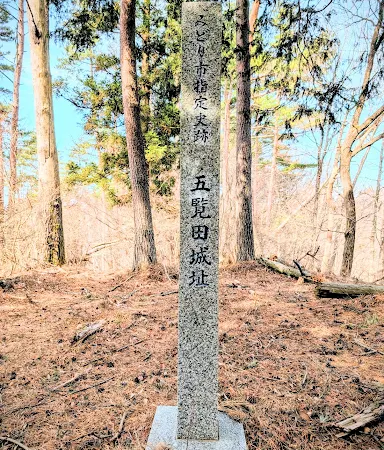
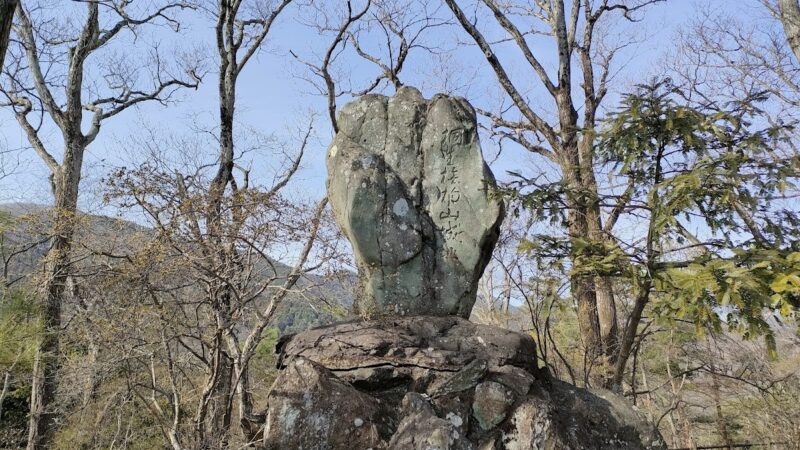
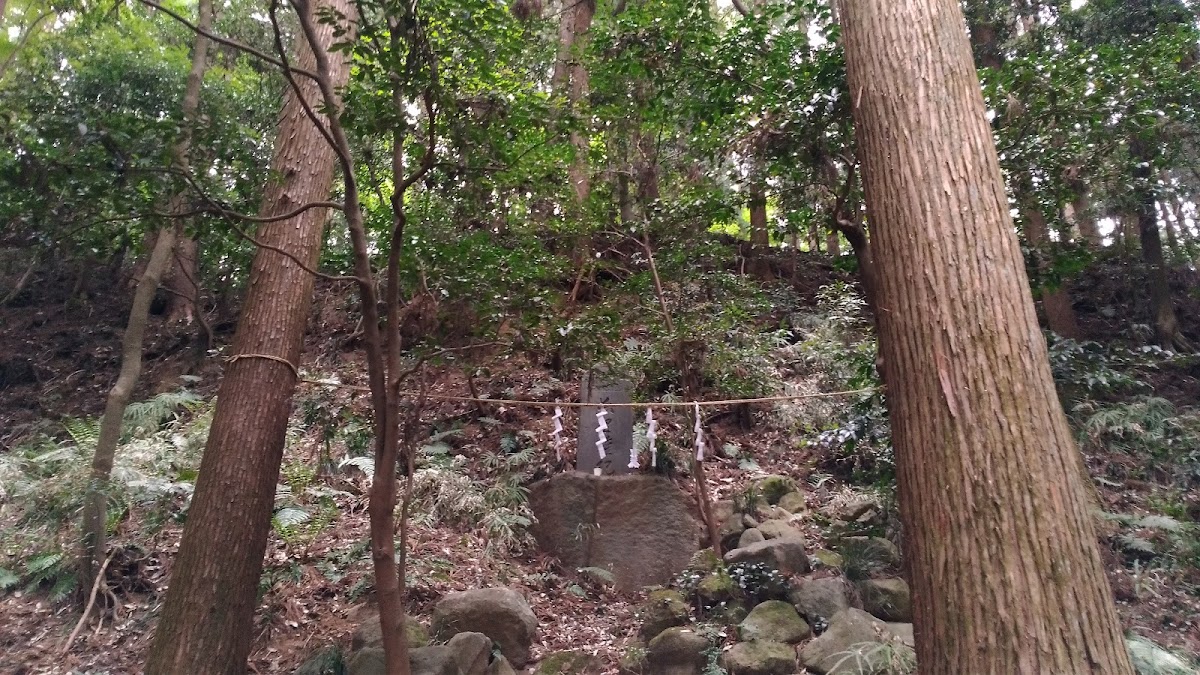
A castle site monument is installed along the path to the castle and near the main enclosure, allowing visitors to learn about the history of Takatome Castle. Information boards are also provided, making it easy for first-time visitors to understand the castle’s overview while exploring.
Chōnenji Temple (Family Temple)
At the foot of Takatome Castle lies Chōnenji Temple, the family temple of the Nagano clan. As a temple associated with the castle lord, it is worth visiting along with the castle ruins. Chōnenji Temple contains documents and graves related to the Nagano clan, providing clues to a deeper understanding of the castle’s history.
Map and Access Information
Location
Address: Shiroyama, Shimomuroda-machi, Takasaki City, Gunma Prefecture
Access Method
Access by Car
Approximately 30 minutes from the Kan-Etsu Expressway “Maebashi IC” or “Takasaki IC”. Take National Route 406 towards Shimomuroda-machi. There are a few parking spaces near the entrance to the castle ruins, but they are narrow, so please be careful.
Access by Public Transportation
Take a bus from JR Takasaki Station towards “Murota.” However, the number of buses is limited, so it is necessary to check the timetable in advance. From the bus stop to the castle entrance is a short walk.
Time Required for Climbing
Climbing from the entrance to the main enclosure takes about 30-40 minutes one way, if you take your time to look around. If you want to carefully observe the remains, it is recommended to allow 2-3 hours for the round trip.
Points to Note When Visiting
- Attire: As it is a mountain castle, comfortable walking shoes and clothing are essential.
- Season: In summer, the vegetation becomes overgrown and the remains are difficult to see, so visiting from autumn to spring is recommended.
- Equipment: Bring drinks, a towel, insect repellent, etc.
- Weather: In rainy weather, the ground can become slippery, so visiting on a sunny day is safer.
Nearby Sightseeing Information
Minowa Castle Ruins
Located approximately 5 kilometers east of Takatome Castle, Minowa Castle was the base of the Nagano clan and is an important castle ruin selected as one of Japan’s Top 100 Castles. Visiting both Takatome Castle and Minowa Castle will help you understand the Nagano clan’s castle network. Minowa Castle is large in scale, and impressive remains such as stone walls and large dry moats remain.
Castle Ruins in Takasaki City
There are many other castle ruins scattered throughout Takasaki City. You can visit castle ruins that tell the story of the Sengoku period in the Kanto region, such as Wada Castle, Kuragano Castle, and Negoya Castle. It’s a good idea to visit multiple times to fully appreciate Gunma Prefecture’s castle culture.
Chōnenji Temple
As mentioned earlier, Chōnenji Temple, the family temple of the Nagano clan, is located at the foot of Takatome Castle. You can stop by before or after visiting the castle ruins and reflect on the history of the Nagano clan.
Cultural Property Designation of Takatome Castle
The Takatome Castle ruins are designated as a historical site by Takasaki City, and efforts are being made to preserve and utilize them. It is highly regarded as a mountain castle with well-preserved remains within Gunma Prefecture, and further research and investigation are expected.
Points to Note When Visiting Takatome Castle
Time Allocation
To fully enjoy Takatome Castle, it is recommended to allocate at least 2-3 hours. A generous time allocation is important to carefully observe the main remains, including the large moat, and to enjoy taking photographs.
Photo Spots
The large moat can be photographed from various angles. By changing your angle—from a low vantage point at the bottom of the moat, a bird’s-eye view from above, or a panoramic view from the side—you can capture different perspectives. The vertical moats and steep slopes are also excellent spots for taking impressive photographs.
Guide to Visiting
While there are information boards at the castle ruins, learning about the history and structure of Takatome Castle beforehand will allow you to enjoy the site more deeply. We recommend studying Takasaki City’s cultural property information, castle-related books, and websites before your visit.
Relationship between Takatome Castle and Minowa Castle
Understanding Takatome Castle is crucial to understanding its relationship with Minowa Castle. Minowa Castle was the base of the Nagano clan, and Takatome Castle functioned as a “separate castle complex.” This “separate castle complex” refers to an important branch castle that, together with the main castle, constitutes a defensive system.
As a strategic point protecting the west of Minowa Castle, Takatome Castle played a vital role within the Nagano clan’s sphere of influence. The strategic importance of this castle can be understood from the fact that Takeda Shingen first severed communication between Minowa Castle and Takatome Castle during his invasion of Kozuke Province. Visiting while considering the relative locations and defensive network of the two castles allows you to glimpse a part of the military strategy of the Sengoku period.
The Position of Takatome Castle in Gunma Prefecture’s Mountain Castle Culture
Gunma Prefecture is known as a region in the Kanto area with many surviving mountain castles. Among them, Takatome Castle is highly regarded as one of the prefecture’s finest mountain castles due to the excellent state of preservation of its remains and the comprehensiveness of its defensive facilities.
Mountain castles in the Kanto region are characterized by construction techniques primarily using earth, and Takatome Castle is a typical example. The fact that it constructed a robust defensive system using only earthworks, moats, and steep slopes, without using stone walls, demonstrates the pinnacle of castle construction technology in Kanto during the Sengoku period.
Best Season to Visit Takatome Castle
The best season to visit Takatome Castle is from late autumn to early spring. During this time of year, the vegetation withers, making the ruins easier to see, and the shapes of the earthworks and moats can be clearly observed. Especially from November to March, the fallen leaves open up the view, making it easier to grasp the overall structure of the castle.
While the fresh greenery of spring is also beautiful, it’s best to avoid visiting in summer, as the vegetation is dense, making the ruins difficult to see, and there are also many insects. Furthermore, the ground becomes slippery after rain, so it’s recommended to visit on a day with several days of sunshine.
Summary
Takatome Castle, a mountain castle from the Sengoku period located in Takasaki City, Gunma Prefecture, is highly valued for both its historical significance and the state of preservation of its ruins. Built during the Meio era by Nagano Narihisa, it served as the residence of the Nagano clan for over 70 years across four generations. Until its fall during Takeda Shingen’s invasion of Kozuke in 1566, it played an important role as a subsidiary castle of Minowa Castle, functioning as a “separate castle enclosure.”
Featuring an overwhelmingly large moat, along with well-preserved defensive structures from the Sengoku period, such as vertical moats, earthworks, and steep slopes, this mountain castle is highly regarded by castle enthusiasts as one of the finest mountain castles in Gunma Prefecture. It is a valuable historical site for understanding the mountain castle culture of the Kanto region, and a fascinating castle ruin where new discoveries can be made with each visit.
While access is convenient by car, comfortable walking attire and ample time are necessary for the climb. Visiting the nearby Minowa Castle and Chonenji Temple in conjunction with this site will provide a deeper understanding of the history of the Nagano clan and the Sengoku period in Kozuke Province.