Yamakami Castle (Kiryu City, Gunma Prefecture) Complete Guide: A Thorough Explanation of History, Remains, and Highlights
What is Yamakami Castle?
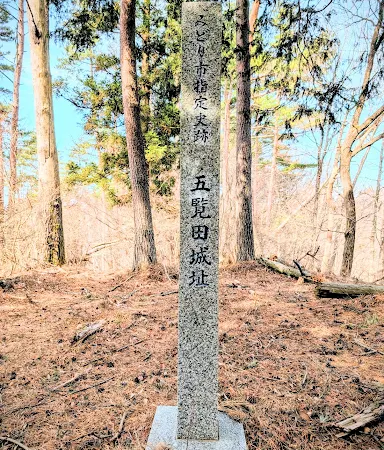
Yamakami Castle is a hilltop castle from the Sengoku period located in Yamakami, Niisato-cho, Kiryu City, Gunma Prefecture. It is currently maintained as Yamakami Castle Ruins Park and is registered as a Gunma Prefecture designated historical site.
In the Middle Ages, this area was called “Yamakami-ho” and was ruled for generations by the Yamakami clan, who are said to be descendants of Fujiwara no Hidesato. During the Sengoku period, it was an important base where famous daimyo such as Hojo Ujiyasu, Uesugi Kenshin, and Takeda Katsuyori fought for control, and it functioned as a strategic stronghold in eastern Joshu (present-day Gunma Prefecture).
Basic Information on Yamagami Castle
Location: Yamagami, Niisato-cho, Kiryu City, Gunma Prefecture
Former Province: Kōzuke Province (Kōzuke)
Classification/Structure: Hilltop Castle
Keep Structure: None (As it is a medieval castle, there is no keep)
Builder: Yamagami Gorō Takatsuna (Legend)
Year of Construction: Late Kamakura period to Muromachi period (Various theories exist)
Main Lords: Yamagami clan, Hōjō clan, subordinates of the Uesugi clan
Year of Abandonment: Tenshō 18 (1590) or around Tenshō 10
Elevation: Approximately 180m
Relative Height: Approximately 30m
Remains: Earthworks, dry moats, trenches, baileys, well remains
Designated Cultural Property: Gunma Prefecture Designated Historic Site
Other Names: None in particular
History of Yamagami Castle
The Establishment and Construction of the Yamagami Clan
There are several theories regarding the construction of Yamagami Castle. The most widely known is the tradition that Yamagami Goro Takatsuna, a member of the Fujiwara-Ashikaga clan (descendants of Fujiwara no Hidesato), built a residence there during the Kamakura period. It is said that Takatsuna, the younger brother of Ashikaga Toshitsuna, ruled this area and adopted the name Yamagami.
However, there is also a theory that the actual construction of Yamagami Castle took place during the Daiei era (1521-1528), and that it was fully developed as a castle in the late Muromachi period. Regarding the genealogical relationship between the Yamagami clan of the Kamakura period and the Yamagami clan of the Sengoku period, historical records are scarce, and many points remain unclear.
The Battles of the Sengoku Period
Yamagami Castle comes to the forefront of history during the Sengoku period. As a strategic point in eastern Joshu, Yamagami Castle became the target of fierce competition among multiple Sengoku daimyo.
The Hojo Clan’s Invasion
During the Tenbun era (1532-1555), as Hojo Ujiyasu of Sagami Province expanded his power, Yamagami Castle also came under attack by the Hojo clan. The castle lord, Yamagami Ujihide, could not withstand the Hojo offensive and was driven to Shimotsuke Province (present-day Tochigi Prefecture). As a result, Yamagami Castle became a Hojo stronghold.
The Struggle with Uesugi Kenshin
After the Hojo clan gained control of Yamagami Castle, Uesugi Kenshin (originally Nagao Kagetora), who claimed the title of Kanto Kanrei (Governor of the Kanto region), advanced into the Kanto region. Centered around the Eiroku era (1558-1570), Yamagami Castle was the site of fierce battles between the Hojo and Uesugi clans. Uesugi Kenshin made multiple campaigns in the Kanto region, and Yamagami Castle was one of his targets.
The Takeda Clan’s Conquest
In the Tensho era, Takeda Katsuyori of Kai Province invaded eastern Joshu Province. It is believed that Yamagami Castle was captured by the forces of Takeda Katsuyori around 1582. However, since the Takeda clan was destroyed by the Oda-Tokugawa allied forces in March of the same year, the Takeda clan’s rule was short-lived.
Towards Abandonment
After Toyotomi Hideyoshi’s siege of Odawara in 1590, the Hojo clan was destroyed, and the Kanto region came under the control of Tokugawa Ieyasu. During this period, many medieval castles were abandoned, and Yamagami Castle is believed to have been no exception. One theory suggests that it was already abandoned after the Takeda clan’s conquest.
Layout and Structure of Yamagami Castle
Overall Composition
Yamagami Castle is a flatland castle built on a hill approximately 30 meters high. The area currently maintained as Yamagami Castle Ruins Park includes the main keep (Honmaru), the second bailey (Ninmaru), the third bailey (Sanmaru), and the northern bailey (Hokumaru). The castle grounds measure approximately 300m east-west and 200m north-south, making it a medium-sized castle for the medieval period. It is characterized by its cleverly utilized terrain, with each enclosure separated by earthworks and dry moats.
Honmaru (Main Enclosure)
The Honmaru is located in the center of the castle and built on the highest point. Currently, it is a plaza surrounded by earthworks. The Honmaru measures approximately 60m east-west and 40m north-south, and is presumed to have housed the lord’s residence and important facilities.
A clear earthwork remains on the west side of the Honmaru, giving a tangible sense of the medieval castle’s defensive structures. A depression believed to be the remains of a well can also be found within the Honmaru.
Ninmaru and Sanmaru (Second and Third Enclosures)
The Ninmaru is located south of the Honmaru, and the Sanmaru is further south. These enclosures functioned as a defensive line protecting the Honmaru. A dry moat separates the second and third baileys, a defensive measure designed to deter enemy incursions.
Currently, a replica turret stands near the third bailey, serving as a symbolic landmark of Yamagami Castle. While not historically accurate, this replica is a popular landmark in the castle park.
North Bailey and Dry Moat
North of the main bailey lies the North Bailey, a crucial defensive stronghold protecting the main bailey from the north. A dry moat separates the main bailey from the North Bailey, and this moat remains one of the most clearly identifiable historical structures.
A dry moat is a defensive structure designed to cut off a ridge and hinder enemy advances. The dry moat at Yamagami Castle is approximately 3-4 meters deep and 5-6 meters wide.
Earthworks and Dry Moat
A distinctive feature of Yamagami Castle is the earthworks and dry moat surrounding each bailey. The earthen ramparts are about 1-2 meters high, and many sections remain in good condition today. The ramparts on the west side of the main enclosure are particularly well-preserved and are valuable remains for understanding the defensive structure of the time.
The dry moats served to demarcate the enclosures, and the dry moats on the west side are particularly large, reaching depths of approximately 4-5 meters in some places. These dry moats served to prevent enemy intrusion and also restricted movement between enclosures.
Well Sites
Several well sites have been identified within the castle grounds. In addition to the well site within the main enclosure, there is a depression near the second enclosure that is presumed to be a well. Securing a water source was extremely important for medieval castles designed for sieges, and these wells were the castle’s lifeline.
Highlights of Yamagami Castle
Observation Points for Remains
Earthen Ramparts
The earthen ramparts on the west side of the main enclosure are the best-preserved, with a continuous section of ramparts approximately 2 meters high. You can walk on top of the ramparts and experience the defensive structure of a medieval castle.
Moat
The moat between the main keep and the northern enclosure is one of the most impressive remains of Yamagami Castle. The deeply excavated moat speaks to the advanced civil engineering techniques of the time.
Dry Moat
The dry moat on the west side is large in scale, and you can walk along its bottom. You can observe the depth of the moat and the steep cliffs up close, and truly appreciate its function as a defensive structure.
Replica Turret and Observation Point
The replica turret built near the third enclosure is a symbol of the castle park. While you cannot enter the turret, the view from the surrounding area is excellent, offering panoramic views of Kiryu city and the surrounding mountains. On clear days, you can even see the vast Kanto Plain.
Development of Yamagami Castle Park
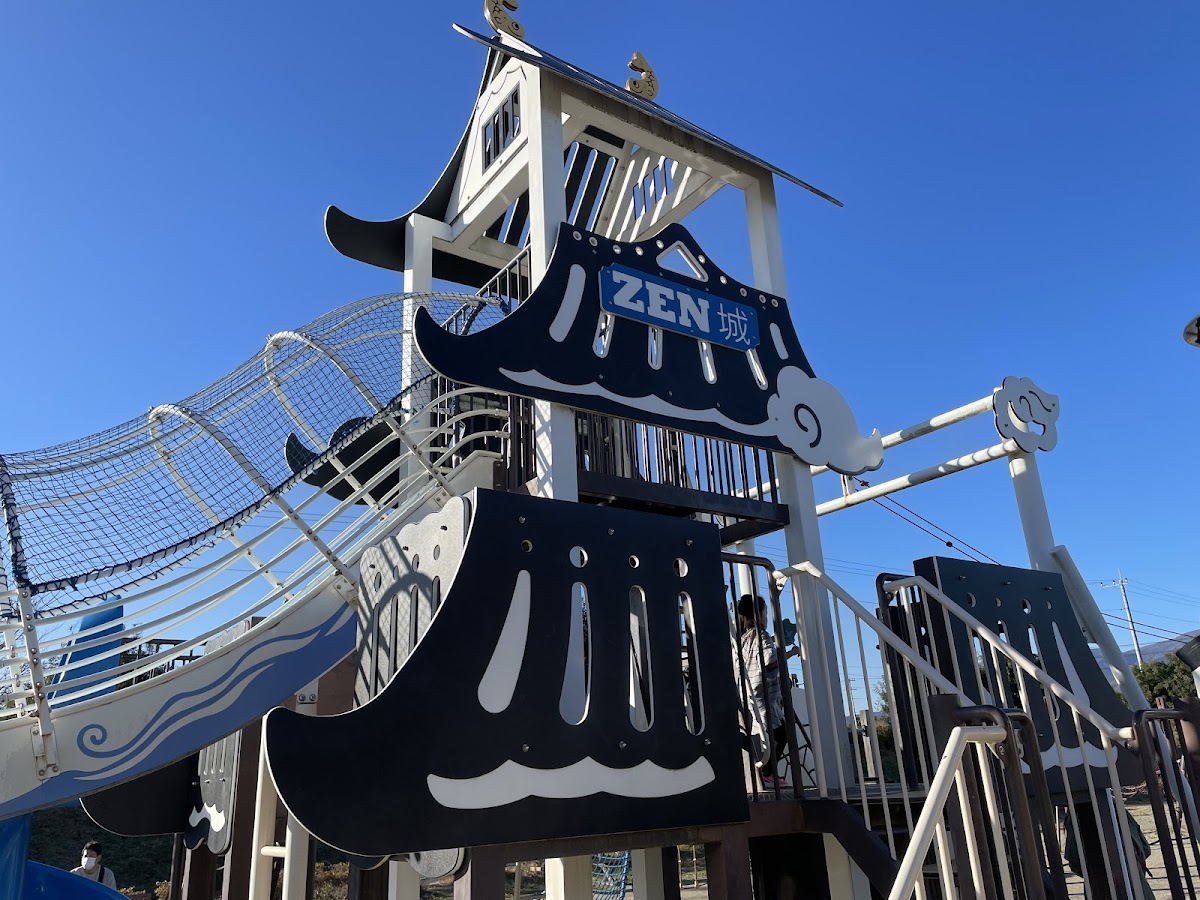
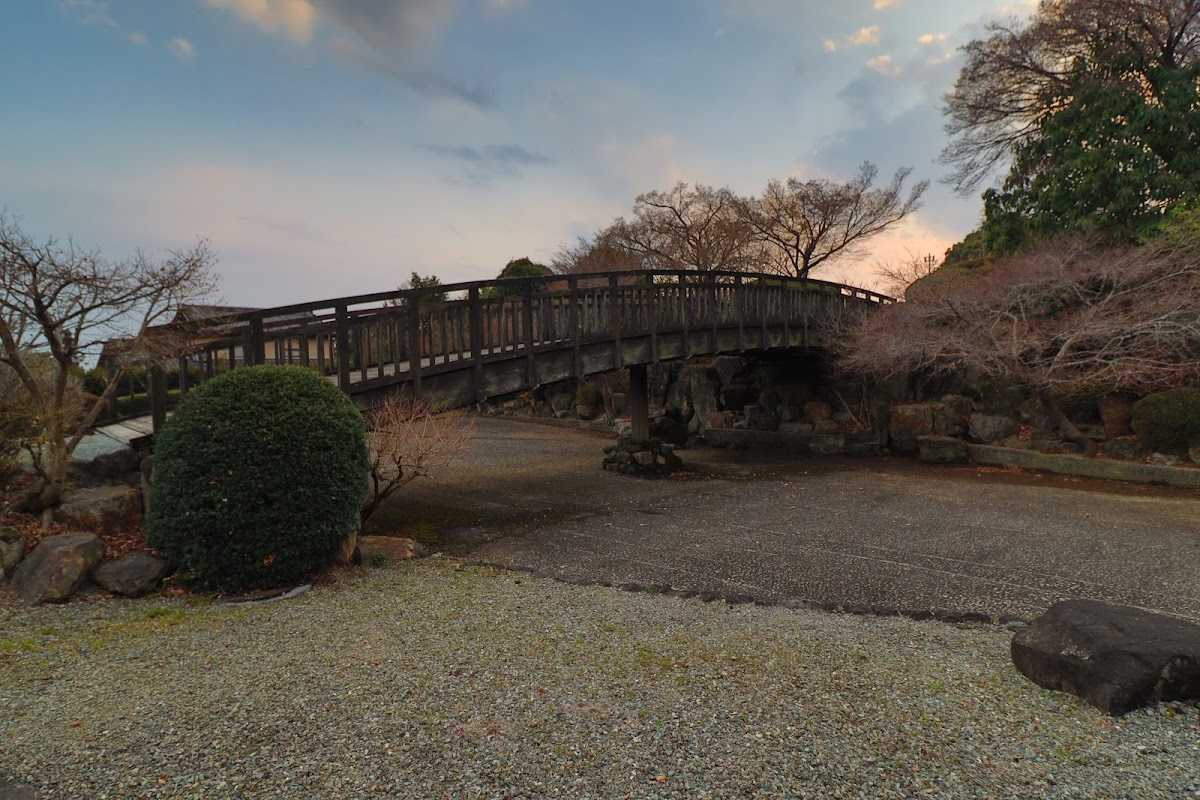
Currently, the Yamagami Castle ruins have been developed into Yamagami Castle Park. The park includes playground equipment and a lawn area, making it a space that families can enjoy. In spring, cherry blossoms bloom, making it a popular spot for cherry blossom viewing.
With the development of the castle ruins park, walking paths have been created, making it easy to explore each enclosure. Information boards are also installed, creating an environment where even first-time visitors can easily understand the history and structure of the castle.
Parking and Access
Yamagami Castle Ruins Park has a free parking lot, making it convenient to access by car. The parking lot is located near the replica turret, and from there you can explore the various ruins on foot.
If using public transportation, the nearest station is Shinri Station on the Jomo Electric Railway. The castle ruins are approximately a 20-25 minute walk from Shinri Station. There is a gentle uphill slope from the station, but the distance is about 1.5 km.
Information boards for “Yamagami Castle Ruins Park” are installed along Prefectural Road 336, so even first-time visitors can easily find their way.
Nearby Castles and Historical Sites
Zen Castle
Located approximately 5km southwest of Yamagami Castle, Zen Castle is also a medieval castle from Kōzuke Province. During the Sengoku period, Zen Castle was a target of conflict between the Hōjō and Uesugi clans, and together with Yamagami Castle, it formed a defensive line for eastern Kōzuke. Zen Castle is close to Zen Station on the Jōmō Electric Railway, and visiting both Yamagami Castle and Zen Castle together will provide a deeper understanding of the medieval history of this region.
Ōgo Castle
Located in Maebashi City, Ōgo Castle was the residence of the Ōgo clan, a powerful local lord of Kōzuke Province. Located approximately 15km northwest of Yamagami Castle, it, like the Yamagami clan, was caught in the crossfire between the Hōjō, Uesugi, and Takeda clans during the Sengoku period. Ōgo Castle also has well-preserved remains, allowing visitors to observe earthworks and dry moats.
History and Culture of Kiryu City
Kiryu City has long been known as a center for silk weaving, and “Kiryu-ori” is a representative traditional craft of Japan. Many historical buildings related to weaving remain in the city, and the “Kiryu Shinmachi Important Traditional Buildings Preservation District” has been designated a nationally important traditional building preservation district.
When visiting Yamagami Castle, visiting the historic townscape of Kiryu city center and the Textile Reference Museum “Murasaki” will allow you to experience the multifaceted history and culture of the region.
Points to Note When Visiting Yamagami Castle
Estimated Visiting Time
For a visit to Yamagami Castle Ruins Park, approximately 1 to 1.5 hours is a good guideline if you want to carefully observe the remains. A light stroll through the park can be done in about 30 minutes, but to carefully observe the main remains such as earthworks, dry moats, and trenches and understand the castle’s structure, it is recommended to allow at least 1 hour.
Clothing and Equipment
Since the castle ruins are maintained as a park, no special equipment is necessary, but the following preparations are recommended for observing the remains.
- Comfortable walking shoes (sneakers or light hiking boots)
- Seasonal clothing (sun protection in summer, warm clothing in winter)
- Drinks (especially in summer)
- Camera (for documenting the ruins)
When observing the moats and dry ditches, you may need to descend slopes, so non-slip shoes are recommended.
Best Seasons for Visiting
Yamagami Castle Ruins Park can be visited throughout the year, but each season has its own charm.
Spring (late March to April): Cherry blossoms bloom, making it a great time for flower viewing. This is the perfect season to enjoy both observing the ruins and appreciating nature.
Summer (May to August): The greenery is lush, and the earthworks and dry ditches are clearly visible. However, heat and insect repellent are necessary.
Autumn (September to November): The autumn foliage is beautiful, and the weather is mild, making it ideal for visiting.
Winter (December-February): The shape of the ruins becomes easier to observe due to the fallen leaves. The air is clear and the view is excellent, but warm clothing is necessary.
Photography Tips
The following are tips for photographing the ruins of Yamagami Castle:
- Earthworks: Photographing from the side conveys their height and length.
- Moat: Photographing from an angle looking up from the bottom of the moat emphasizes its depth.
- Dry Moat: Photographing from a diagonal angle above makes the overall shape easier to understand.
- Replica Turret: Photographing it together with the surrounding trees makes for a striking landscape photograph.
The oblique light in the early morning or evening emphasizes the contours of the earthworks and dry moats, allowing for three-dimensional photographs.
Historical Significance of Yamagami Castle
Strategic Strategic Point in Eastern Joshu
Yamagami Castle played an important role as a strategically important point in eastern Kozuke Province (Eastern Joshu). This region, situated on a transportation route connecting northern and southern Kanto, and near the border of Kōzuke and Shimotsuke provinces, was a strategically important location.
For the Hōjō clan, it was a base for expanding into northern Kanto; for the Uesugi clan, it was a defensive line to hinder the Hōjō’s northward advance; and for the Takeda clan, it was a foothold for their eastward expansion. Each clan held a crucial strategic position.
Center of Regional Control
The Yamagami clan ruled this region throughout the medieval period, holding significant influence in eastern Kōzuke as subordinates of the Kantō Kanrei (Governor of Kanto), the Uesugi clan. Yamagami Castle was not merely a military facility, but also a center of regional control, administration, and economy.
The castle town likely housed the residences of the vassals and functioned as a regional center, with a town developed around it.
Value for Medieval Castle Research
Yamagami Castle, as a typical medieval flatland castle in the Kanto region, holds significant value for castle research. Basic defensive structures such as earthworks, dry moats, and trenches remain well-preserved, making it an excellent resource for understanding the structure of medieval castles.
In particular, remains believed to be traces of renovations during the Sengoku period have been confirmed, making it a valuable example for studying the development process of castles.
Summary
Yamagami Castle (Kiryu City, Gunma Prefecture) is a medieval castle built by the Yamagami clan, descendants of Fujiwara no Hidesato. During the Sengoku period, it was a historical stage where famous generals such as Hojo Ujiyasu, Uesugi Kenshin, and Takeda Katsuyori fought for control.
Currently, it is maintained as Yamagami Castle Ruins Park, with well-preserved remains such as earthworks, dry moats, and trenches. It is characterized by its historical value as a castle site while also being a popular park that families can enjoy.
It is easily accessible from Kiryu city center, and the surrounding area offers many attractions, including other medieval castles such as Zen Castle and Ogo Castle, and historical townscapes that convey Kiryu’s textile culture.
For those interested in the history of eastern Gunma during the Sengoku period, those who want to see the remains of a medieval castle firsthand, or those who simply want to enjoy a historical stroll amidst nature, Yamagami Castle is definitely worth a visit. When you visit Gunma Prefecture, be sure to stop by.