Complete Guide to Takigawa Castle (Shiga Prefecture): A Thorough Explanation of the Koga Mountain Castle Associated with Takigawa Kazumasu
What is Takigawa Castle?: A Castle in Omi Associated with Takigawa Kazumasu, One of the Four Heavenly Kings of Oda
Takigawa Castle is a Sengoku period castle site located in Ichino, Koga-cho, Koga City, Shiga Prefecture. Also known as “Gotanda Castle,” it is known as a flatland castle (hill castle) built on the hilly area on the south bank of the Ichino River.
The most distinctive feature of this castle is its deep connection to Takigawa Kazumasu, who served as a retainer of Oda Nobunaga and is counted as one of the “Four Heavenly Kings of Oda.” It is said that Takigawa Kazumasu once resided here, or that this was his birthplace, and it played an important role as the base of the Takigawa clan in the Koga region.
Currently, it is a designated historical site of Koga City, and remains such as earthworks and moats are well preserved. Located south of Ichino-dera Temple, a representative ancient temple of the Koga region, and built across the Ichino River, Takigawa Castle’s location showcases the skillful use of natural terrain and the castle-building techniques of the Sengoku period.
History of Takigawa Castle: The Footsteps of the Takigawa Clan and Takigawa Kazumasu
The Origins of the Takigawa Clan and the Castle
Takigawa Castle was built by the Takigawa clan, who ruled the Ichino area of Koga County in Omi Province. The Takigawa clan was one of the 53 families of Koga and was a local powerful family deeply rooted in the region since ancient times. While there are no clear records of the castle’s construction date, it is believed to have been built sometime between the early and mid-Sengoku period.
The castle’s highly defensible layout, utilizing the natural moat of the Ichino River and the hilly terrain to the south, demonstrates the unique castle-building techniques of the local samurai of the Koga region. The Takigawa clan, as members of the Koga clan, survived the turbulent Sengoku period, sometimes as an independent force and sometimes as subordinates to powerful daimyo.
The Relationship Between Takigawa Kazumasu and Takigawa Castle
Takigawa Kazumasu (1525-1586) was a Sengoku period warlord who served Oda Nobunaga and achieved numerous military successes. He was particularly known as a master of firearms, and played a crucial role in Nobunaga’s unification of Japan, including the conquest of Ise Province, the suppression of the Nagashima Ikko-ikki rebellion, and his appointment as Kanto Kanrei (governor of the Kanto region), where he was entrusted with Kozuke Province (present-day Gunma Prefecture).
There are mainly two theories regarding the relationship between Takigawa Kazumasu and Takigawa Castle.
Birthplace Theory: This theory suggests that Takigawa Kazumasu was born at Takigawa Castle in Ichino. There is a tradition that he was born at this castle, the base of the Takigawa clan, and later served the Oda family.
Temporary Residence Theory: This theory suggests that after Takigawa Kazumasu served Oda Nobunaga, he temporarily used this castle as his residence for the purpose of conquering Omi Province and governing the Koga region. It has been suggested that as Nobunaga’s power expanded, he may have utilized his hometown castle as a base.
While both theories lack definitive historical evidence, it is undeniable that this was the Takigawa clan’s base, and its connection to Kazumasu is deeply rooted in local traditions.
From the Azuchi-Toyotomi Period to the Edo Period
After Oda Nobunaga’s pacification of Omi Province, the Koga region came under his direct control. Takigawa Kazumasu himself became the lord of Ise Nagashima Castle, and later, as the Kanto Kanrei (governor of the Kanto region), the lord of Kozuke Maebashi Castle (Maebashi Castle). It is believed that he did not permanently reside at Takigawa Castle.
After the Honnoji Incident (1582), Kazumasu was defeated by the Hojo clan in the Battle of Kannagawa and forced to withdraw from the Kanto region. Afterward, he served Toyotomi Hideyoshi, but was unable to regain his former power.
In the Edo period, Takigawa Castle was abandoned and remained only as a castle ruin in the local memory. However, the remains such as earthworks and moats were preserved without destruction, and it remains a valuable historical site that conveys the structure of a Sengoku period castle.
Structure and Layout of Takigawa Castle: A Defensive System Utilizing the Topography
Location and Utilization of Topography
Takigawa Castle was built on the tip of a ridge that branches off from the north on the south bank of the Ichinogawa River. Although the elevation is not particularly high, the Ichinogawa River served as a natural moat to strengthen the northern defense, while the east, west, and south sides were protected by earthworks and moats.
The Ichinogawa River flows to the north of the castle, and this river functioned as a natural moat. Ichino-dera Temple was located on the opposite bank of the river, and it is said that a Takigawa branch castle was also situated there. This layout suggests that the Takigawa clan controlled both banks of the Ichinogawa River, establishing control over a crucial point for water transport and transportation.
Major Remains
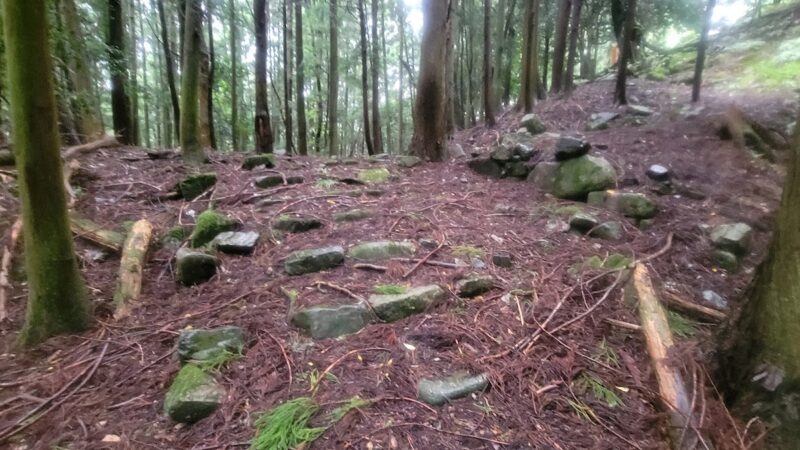
Main Enclosure: A rampart extending east-west runs through the center of the castle. Ramparts are visible on both the north and south sides, with the southern rampart being particularly important for defense. The main enclosure area has been leveled, providing a flat area for building structures.
Moat: A large moat is located on the south side, serving as an important defensive structure to prevent intrusion from the ridge. This moat is still clearly visible today, and its depth and width indicate considerable defensive capability.
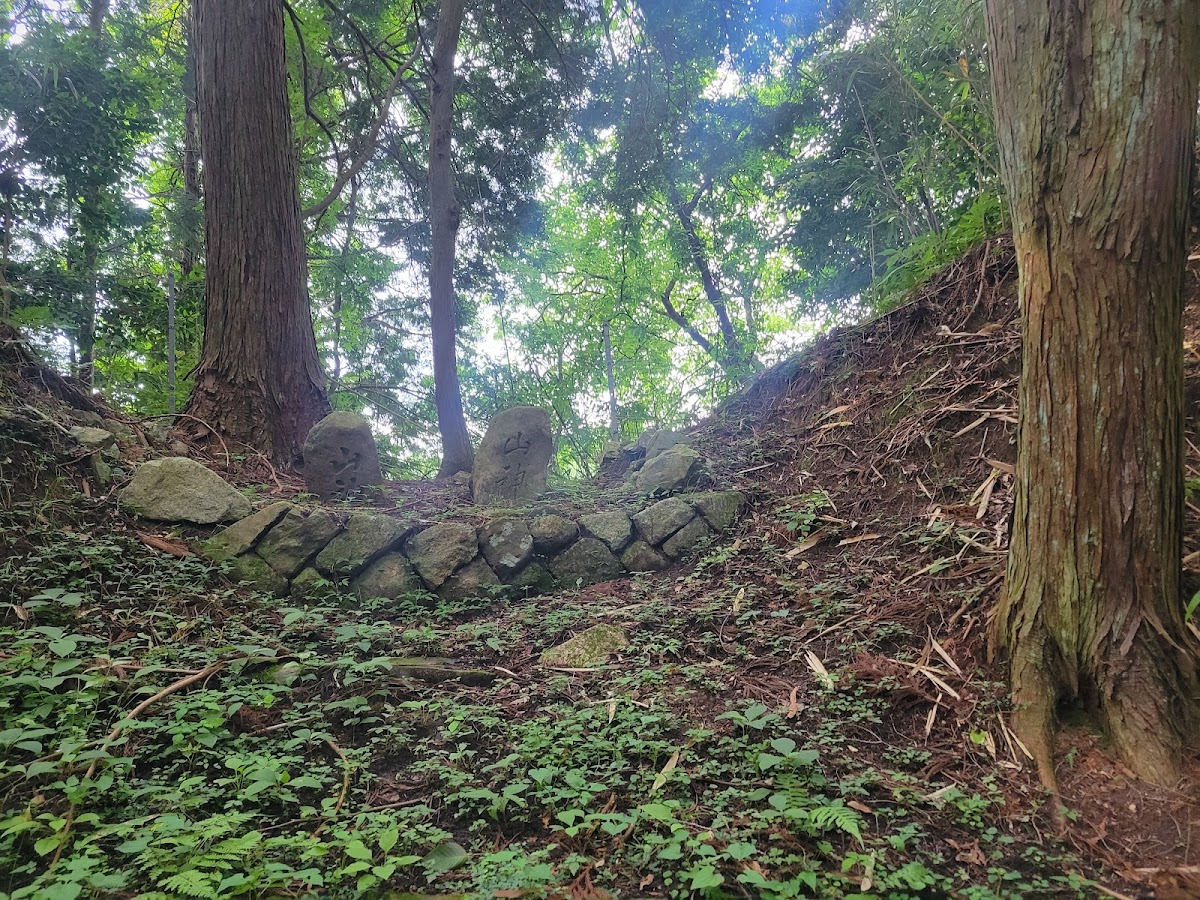
Earthwork: Earthworks remain in various locations within the castle. The ramparts surrounding the main enclosure are particularly high, suggesting they served to prevent enemy intrusion and also obscure the view of the interior from the outside.
Leveled Area: Multiple leveled areas can be seen on the lower west side. These structures functioned as outer baileys, forming a multi-layered defensive line. It is also presumed they were used as residences for retainers and garrisons for soldiers.
Related Castles
Several related castles exist around Takigawa Castle, indicating the sphere of influence of the Takigawa clan.
Takigawa West Castle: A subsidiary castle located on the ridge west of Takigawa Castle. It was responsible for the western defense of Takigawa Castle and served as one of the key bases for controlling the Ichino region in coordination with the main castle.
Takigawa Branch Castle: A castle believed to have been located north of the Ichino River. While detailed remains are unknown, it is thought to have been intended for defense and surveillance from the opposite bank of the river.
These castles, together, formed a network of castles protecting the Takigawa clan’s territory.
Highlights of Takigawa Castle: Points to Note When Visiting the Castle Ruins
Well-Preserved Earthworks
The greatest highlight of Takigawa Castle is its well-preserved earthworks. The earthen ramparts surrounding the main enclosure are quite high, allowing you to directly experience the castle-building techniques of the Sengoku period. Walking along the ramparts allows you to imagine how the castle’s defenders defended the castle at that time.
Deciphering the castle’s layout from the shape and arrangement of the ramparts is also enjoyable. Paying particular attention to the differences in height and thickness between the north and south sides reveals defensive priorities and anticipated attack directions.
Clear Moat
The large moat on the south side is particularly impressive among the remains of Takigawa Castle. The moat, which deeply cuts through the ridge, still retains its depth and width, clearly demonstrating its crucial role in the castle’s defense system.
Standing on both sides of the moat and comparing them, you can appreciate the difference in elevation and the steepness of the cliffs, realizing how difficult it would have been to cross and attack. It is a highly educational example of Sengoku period castle defense techniques.
View of the Ichinogawa River
Looking north from the castle ruins, you can see the flow of the Ichinogawa River. This is an excellent spot to visually understand how the river functioned as a natural moat. The temple buildings of Ichinoji Temple are visible on the opposite bank, and the relative positions of the castle and temple allow you to imagine the landscape of the Ichinogawa area in the Middle Ages.
Strolling through the castle ruins while listening to the sound of the flowing river will allow you to feel the atmosphere of the Sengoku period more deeply.
Information Boards and Explanation Boards
Information boards and explanation boards are installed at the castle ruins, allowing you to learn about the history and structure of Takigawa Castle. The relationship with Takigawa Kazumasu and the castle’s features are explained in an easy-to-understand manner, making it easy for first-time visitors to grasp the castle’s overview.
Carefully reading the information boards before viewing the remains will lead to a deeper understanding and appreciation.
Access Information: How to Get to Takigawa Castle
Using Public Transportation
Using the JR Kusatsu Line:
- Get off at JR Kusatsu Line “Koka Station”
- Approximately 15 minutes by community bus or taxi from Koka Station
- Get off at “Ichino” bus stop, approximately 10 minutes on foot
Access by public transportation is somewhat inconvenient, so it is necessary to plan with ample time. Since the number of buses is limited, it is recommended to check the timetable in advance.
Using a Car
From the Meishin Expressway:
- Approximately 30 minutes from Meishin Expressway “Ritto IC” via National Route 1 and prefectural roads
- Or approximately 20 minutes from Shin-Meishin Expressway “Koka Tsuchiyama IC”
Parking:
There is no dedicated parking lot for the castle ruins, but it may be possible to use the visitor parking lot of Ichino-dera Temple. However, it may not be available due to temple events, etc., so please check in advance or park in an appropriate location nearby. Please avoid street parking and be considerate of local residents. ### Car Navigation Settings
When using car navigation, it is convenient to set “Ichino-dera Temple” (Ichino, Koka-cho, Koka City, Shiga Prefecture) as your destination. The Takigawa Castle ruins are located on a small hill south of Ichino-dera Temple, across the Ichino River.
Address: Gotanda, Ichino, Koka-cho, Koka City, Shiga Prefecture
Points and Precautions for Visiting
Visiting Hours and Equipment
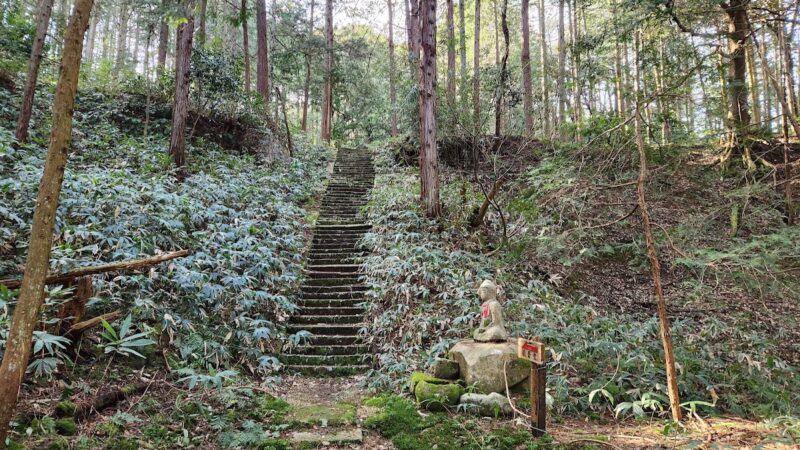
Takigawa Castle ruins are located in a mountainous forest and are not a developed tourist area. The following preparations are recommended for visiting.
Attire:
- Comfortable clothing (long sleeves and long pants recommended)
- Comfortable walking shoes (trekking shoes or sneakers)
- Insect repellent in summer, warm clothing in winter
Items to Bring:
- Drinking water
- Towel
- Insect repellent spray (spring to autumn)
- Camera (for photographing the ruins)
- Map or guidebook
Estimated Time Required:
Allow 30 minutes to 1 hour to visit the castle ruins. If you plan to carefully observe the ruins or enjoy taking photographs, it’s a good idea to allocate more time.
Safety Precautions
- The castle ruins are preserved in their natural state, so please watch your step.
- The ground becomes slippery during and after rain, so extra caution is needed.
- Be careful not to fall in areas with elevation changes, such as moats and cliffs.
- Visiting in groups is safer than visiting alone.
- Cell phone signals may be weak in some areas, so please inform those around you of your destination beforehand.
Manners and Consideration
- The castle ruins are a valuable cultural asset. Please do not damage or remove any remains.
- Please take all your trash with you.
- The surrounding area is a residential area. Please be considerate of the neighbors regarding noise, etc.
- Please be careful not to trespass on private property.
- The use of fire is strictly prohibited.
Nearby Tourist Spots: Places to visit in conjunction with Takigawa Castle
Rakuyaji Temple
Located just north of Takigawa Castle, across the Rakuya River, is an ancient Tendai sect temple. It is said to have been founded in 792 by Saichō, and houses many important cultural properties, including the principal image, a standing statue of the Eleven-Headed Kannon.
In particular, the “Ichino-dera Special Opening” held every autumn offers a rare opportunity to view Buddhist statues that are normally not open to the public. Visiting Ichino-dera in conjunction with a visit to Takigawa Castle allows you to understand both the religious and military aspects of the Ichino region in the Middle Ages.
Other Castles in Kōka City
Besides Takigawa Castle, many other castle ruins remain in Kōka City.
Minakuchi Castle Ruins: An Edo period castle with remaining stone walls and moats. Located in the center of Kōka City, it is easily accessible.
Kōka Mountain Castles: Mountain castles related to the Kōka Fifty-Three Families, such as Aburahi Castle and Wada Castle, are scattered throughout the area. For those who enjoy visiting castles, a route visiting these castles is also recommended.
Koga Ninja Village
This tourist facility is themed around Koga ninjas, offering attractions such as a ninja house and shuriken throwing experiences. It’s a popular spot for families, offering experiential learning about the history and culture of the Koga region.
Understanding that Takigawa Castle was the castle of the Takigawa clan, one of the Koga ninja groups, in conjunction with the history of Koga ninjas, provides a deeper understanding.
Tamura Shrine
This ancient shrine, known as the main shrine of Koga City, is revered as a deity that wards off evil. Ancient cedar trees line the grounds, creating a tranquil atmosphere.
The Charm of Takigawa Castle: Why You Should Visit This Castle
Experience Historical Romance
As a castle associated with Takigawa Kazumasu, a key retainer of Oda Nobunaga, it offers a glimpse into the historical romance of the Sengoku period. Kazumasu was known as a master of firearms and played a crucial role in Nobunaga’s unification of Japan, including the conquest of Ise and governing Kozuke Province as the Kanto Kanrei (governor of the Kanto region).
The fact that a warlord who made a name for himself throughout Japan originated (or used as his base) from this small Koga castle evokes deep emotion in those who stand at the castle ruins.
Well-Preserved Remains
The remains, such as earthworks and moats, are well-preserved, making it a valuable historical site where one can directly observe the castle structure of the Sengoku period. Because it hasn’t been heavily commercialized for tourism, one can quietly stroll through the castle ruins and imagine the atmosphere of that time.
For castle enthusiasts, it is a castle site of high academic value as a textbook example of a medieval mountain castle with a classic layout.
Understanding the History of the Koga Region
Visiting Takigawa Castle allows you to learn about the history of the Takigawa clan, one of the 53 families of Koga. While the Koga clan is often associated with ninjas, they were actually a group of samurai who survived the Sengoku period as powerful local lords.
Takigawa Castle provides important clues to understanding the true nature of the Koga clan.
A Quiet Stroll Through the Castle Ruins
As it’s not a famous tourist spot, there are relatively few visitors, allowing you to stroll through the castle ruins in a peaceful environment. The ability to escape the hustle and bustle, observe the remains at your own pace, and reflect on history is a unique charm of Takigawa Castle.
Reference Information for Deeper Understanding of Takigawa Castle
Learn More About Takigawa Kazumasu
Takigawa Kazumasu was a Sengoku period samurai born in 1525 (Daiei 5) and died in 1586 (Tensho 14). He served Oda Nobunaga and was counted as one of the “Four Heavenly Kings of Oda” (the others are often said to be Shibata Katsuie, Niwa Nagahide, and Akechi Mitsuhide).
Main Achievements:
- Contributed to the suppression of the Ise-Nagashima Ikko-ikki rebellion.
- Governed Ise as lord of Nagashima Castle.
- Appointed as Kanto Kanrei (Governor of the Kanto region) and governed Kozuke Province.
- Excelled in many battles as a master of firearms.
After the Honnoji Incident:
After Nobunaga’s death, he was forced to withdraw from Kanto and suffered a defeat against the Hojo clan at the Battle of Kannagawa. He subsequently served Toyotomi Hideyoshi, but was unable to regain his former power.
The Fifty-Three Families of Koga and the Takigawa Clan
The Fifty-Three Families of Koga is a collective term for local powerful families that held sway in Koga County. While it is believed that there were actually more families than fifty-three, the most representative families were referred to as the “Fifty-Three Families.”
The Takigawa clan was one of them, based in the Ichino region. The Koga clan was highly independent and tended to make decisions through a council system, not necessarily following a single powerful leader.
However, amidst the turmoil of the Sengoku period, many clans were subservient to powerful daimyo such as the Rokkaku and Oda clans, and some, like Takigawa Kazumasu, even served individual powerful daimyo.
The Position of Omi Province in Sengoku History
Omi Province (present-day Shiga Prefecture), being close to Kyoto, played a crucial role in the Sengoku period as a key point for east-west transportation. The Koga region, in particular, was strategically important as it lay on the route connecting Ise and Kyoto.
Takigawa Castle, though not large in scale, functioned as a base for regional control and supported the Takigawa clan’s power base. After Oda Nobunaga’s conquest of Omi, it is believed to have been incorporated as part of Nobunaga’s system of rule.
Best Season to Visit Takigawa Castle
Spring (March-May)
The weather is mild, and the fresh greenery is beautiful. The cherry blossoms at Ichinodera Temple are also in full bloom, and can be enjoyed along with the castle ruins. However, insects begin to increase around Golden Week, so insect repellent is necessary.
Autumn (October-November)
With its beautiful autumn foliage and stable weather, this is the perfect season for exploring castle ruins. Special openings of Ichino-dera Temple are often held in autumn, making it an ideal time to visit in conjunction with a castle tour. There are also fewer insects, making for a comfortable visit.
Summer (June-August)
While the lush greenery and rich natural atmosphere are enjoyable, heat and insect repellent are essential. Visiting during the cooler hours of early morning or evening is recommended. Don’t forget to stay hydrated.
Winter (December-February)
The fallen leaves make the ruins easier to see, making this a suitable season for castle research. However, cold weather precautions are necessary, and it’s best to avoid visiting during snowy periods due to the dangerous footing.
Summary: Takigawa Castle is a Valuable Historical Site Where You Can Experience the History of Koka
Takigawa Castle (Koka City, Shiga Prefecture) is a valuable historical site where you can feel the romance of the Sengoku period, as it is associated with Takigawa Kazumasu, a senior retainer of Oda Nobunaga. Its location, with the Ichinogawa River serving as a natural moat, and the well-preserved remains such as earthworks and trenches, convey the castle-building techniques of the Sengoku period.
While not a large-scale tourist destination, it is a place where you can quietly reflect on history. As the base of the Takigawa clan, one of the 53 families of Koka, and as the birthplace of Takigawa Kazumasu, a warlord who made a name for himself throughout Japan, this castle is indispensable for understanding the history of the Koka region.
Visiting it in conjunction with nearby tourist spots such as Ichinoji Temple will allow you to gain a deeper understanding of the history and culture of Koka from the medieval period to the Sengoku period. For castle enthusiasts, those interested in the Sengoku period or Takigawa Kazumasu, and those who want to enjoy a quiet historical stroll, Takigawa Castle is a historical site worth visiting.
Why not visit Takigawa Castle on your next day off and experience the atmosphere of the Sengoku period?