Complete Guide to Kozuki Castle (Hyogo Prefecture): A Thorough Explanation of the Site of Yamanaka Shikanosuke’s Final Moments and a Fierce Battlefield of the Sengoku Period
Located in Sayo-cho, Sayo-gun, Hyogo Prefecture, Kozuki Castle is a mountain castle that symbolizes the turbulent Sengoku period. The power struggle between Oda Nobunaga and the Mori clan, the dream of the Amago clan’s restoration, and the tragic end of Yamanaka Shikanosuke—this castle is etched with numerous dramas that colored the history of Japan’s Sengoku period. This article provides a thorough explanation of this important historical site, from its history and highlights to access information.
What is Kozuki Castle?: Basic Information and the Importance of its Location
Kozuki Castle is a mountain castle located in Kozuki, Sayo-cho, Sayo-gun, Hyogo Prefecture, built on the summit of Mt. Kojin (approximately 194 meters above sea level) on the west bank of the Sayo River. This area was a crucial transportation hub connecting the San’in and Sanyo regions, and strategically located at the junction of the Inaba and Izumo roads.
Geographical Importance
Sayo, where Kozuki Castle was built, was located near the crossroads of three provinces: Mimasaka (Okayama Prefecture), Bizen, and Harima. It was a center of land transportation, leading north to Tottori and Matsue, and south to Himeji. Furthermore, water transport using the Sayo River was well-developed, and it prospered as a distribution hub for goods. These geographical conditions are the reason why Kozuki Castle was an important strategic base during the Sengoku period.
Castle Structure
According to common belief, it was initially built on the summit of Mt. Taihei (approximately 280 meters above sea level) on the north side of the valley, and later moved to Mt. Kojin. Therefore, it is sometimes distinguished as “Mt. Taihei Kozuki Castle” and “Mt. Kojin Kozuki Castle,” but many details remain under research.
History of Kozuki Castle: From Construction to Abandonment
1336 (Engen 1): Construction by the Akamatsu Clan
The history of Kozuki Castle begins in 1336 (Engen 1), when Kozuki Jiro Kagemori, a member of the Akamatsu clan, built a fort on Mount Ohira. The Akamatsu clan was a powerful samurai family based in Harima Province, wielding significant influence from the Nanboku-cho period to the Sengoku period.
It is believed that during the time of the second head of the clan, Kozuki Moritada, the base was moved to the present-day Mount Kojin. The Kozuki clan, as a branch of the Akamatsu clan, was responsible for governing this region.
1441 (Kakitsu 1): The Kakitsu Rebellion and the Decline of the Kozuki Clan
In 1441 (Kakitsu 1), the Kakitsu Rebellion occurred, in which Ashikaga Yoshinori, the 6th Shogun of the Muromachi Shogunate, was assassinated by Akamatsu Mitsusuke. In this incident, Kōzuki Kagenori and his nephew, Kōzuki Kageie, who sided with Akamatsu Mitsusuke, were pursued by the shogunate army, and the main line of the Kōzuki clan was wiped out. This incident led to the decline of the entire Akamatsu clan and became a turning point that significantly altered the balance of power in Harima Province.
Sengoku Period: Between Oda and Mōri
With the arrival of the Sengoku period, Kōzuki Castle was situated on the border between the power of Oda Nobunaga’s invasion of the Chūgoku region and that of the Mōri clan, the dominant power in the region. This area became the stage for fierce battles between the Oda forces, aiming for national unification, and the Mōri forces, seeking to maintain control of the Chūgoku region.
Battle of Kōzuki Castle: The Dream of the Amago Clan’s Restoration and the End of Yamanaka Shikanosuke
The most important event when discussing Kōzuki Castle is the “Battle of Kōzuki Castle,” which took place from 1577 to 1578. This battle is deeply etched in Japanese history as the final battle of Yamanaka Shikanosuke (Yamanaka Yukimori), who aimed to restore the Amago clan.
Background of the Amago Clan Restoration Movement
The Amago clan was once a powerful daimyo family that ruled the San’in region during the Sengoku period, but they were destroyed by Mori Motonari in 1566. However, Yamanaka Shikanosuke, a loyal retainer of the Amago clan, supported his lord, Amago Katsuhisa, and aimed to restore the Amago clan, seeking the support of Oda Nobunaga to oppose the Mori clan.
1577: Capture of Kozuki Castle
In November of 1577, with the support of Hashiba Hideyoshi (later Toyotomi Hideyoshi), acting on orders from Oda Nobunaga, Yamanaka Shikanosuke and Amago Katsuhisa captured Kozuki Castle. At this point, the Oda forces were strong, and the capture of the castle proceeded relatively smoothly.
Kuroda Kanbei (Kuroda Yoshitaka) also participated in this battle, and Kozuki Castle is known as a place associated with “Gunshi Kanbei” (the military strategist). This scene was also depicted in the NHK Taiga drama “Gunshi Kanbei” (2014), attracting attention.
Tensho 6 (1578): Siege and Fall of the Castle by the Mori Army
However, in the following year, Tensho 6, the Mori army led a large force to besiege Kozuki Castle. Mori Terumoto himself led the army, and elite Mori troops such as Kikkawa Motoharu and Kobayakawa Takakage surrounded the castle. Their forces numbered between 30,000 and 40,000, an overwhelming difference in strength compared to the Amago army of only a few hundred inside the castle.
Yamanaka Shikanosuke requested reinforcements from the Oda side, but at this time, Oda Nobunaga was preoccupied with battles against Ishiyama Honganji and dealing with Uesugi Kenshin, and was unable to send sufficient reinforcements. Due to the unstable situation in Harima, Hashiba Hideyoshi was unable to provide relief to Kōzuki Castle.
The Suicide of Amago Katsuhisa and the End of Yamanaka Shikanosuke
Isolated and without support, Kōzuki Castle finally fell in July of Tenshō 6 (1578). The castle lord, Amago Katsuhisa, committed suicide, marking the complete end of the Amago clan. Yamanaka Shikanosuke was captured and is said to have been killed while being escorted by the Mōri forces.
Yamanaka Shikanosuke, known for the anecdote of praying to the crescent moon, “Grant me seven trials and eight tribulations,” ended his dramatic life here at Kōzuki Castle. Shikanosuke’s unwavering loyalty to his lord continues to deeply move people in later generations.
The Aftermath of Kōzuki Castle
Kōzuki Castle subsequently came under the control of the Mōri forces, but when Hashiba Hideyoshi pacified Harima again in Tenshō 8 (1580), it became an Oda castle. However, after Toyotomi Hideyoshi’s unification of Japan, it is believed that Kōzuki Castle was abandoned due to its diminished strategic importance.
Highlights of Kōzuki Castle Ruins: Experiencing the Spirit of the Sengoku Period
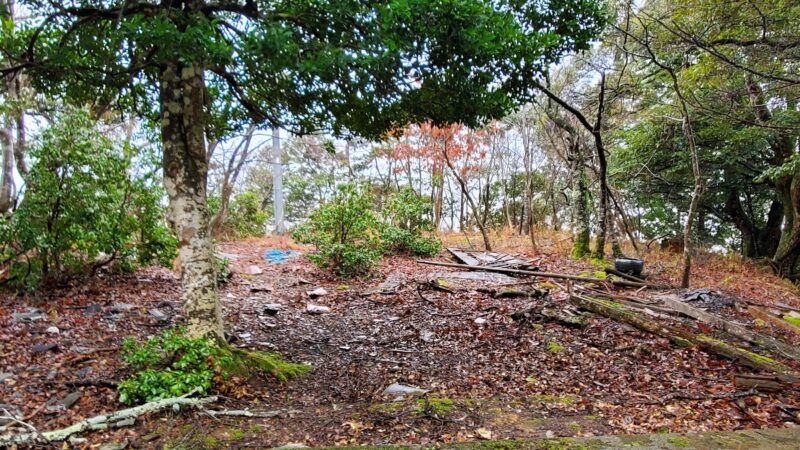
The current Kōzuki Castle ruins are maintained as a valuable historical site that retains the atmosphere of the Sengoku period. It is an excellent spot to observe the unique remains of a mountain castle.
Main Enclosure and Enclosures
Several enclosures (kuruwa) are arranged around the main enclosure at the mountaintop. These enclosures were constructed in tiers for defense, allowing observation of a typical mountain castle structure. From the main enclosure, you can enjoy a panoramic view of the town of Sayō and the surrounding mountains, giving you a real sense of the area’s importance as a transportation hub.
Moats and Earthworks
Within the castle grounds, remnants of moats (horikiri), built to prevent enemy intrusion, and earthworks, defensive structures, remain. These are important remains demonstrating the castle-building techniques of the Sengoku period, and are a must-see for castle enthusiasts.
Hiking Trails and Walking Paths
To reach the ruins of Kozuki Castle, you can take a well-maintained walking path from the Kozuki Historical Museum at the northern foot of the mountain. The hiking trail is relatively gentle, and even those without much physical stamina can reach the summit in about 30 minutes. Information boards are installed along the way, allowing you to learn about the castle’s history and structure as you ascend.
Stone Monuments and Information Boards
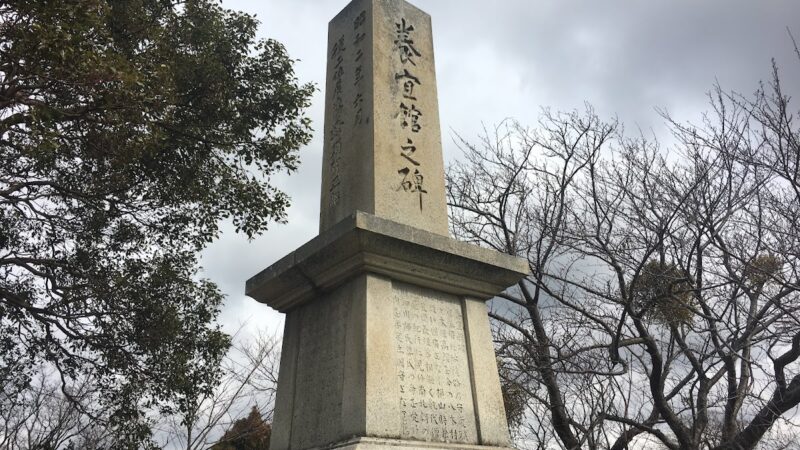
Stone monuments commemorating Yamanaka Shikanosuke and Amago Katsuhisa have been erected at the castle ruins. Detailed information boards are also placed throughout the site, allowing you to imagine the fierce battles of the Sengoku period as you stroll through.
Kozuki Historical Museum: Deeply Understanding the History of Kozuki Castle
When visiting the ruins of Kozuki Castle, a visit to the Kozuki Historical Museum at the foot of the mountain is essential. This museum is located at the trailhead of Kozuki Castle and has ample parking.
Exhibits
The museum features exhibits showcasing the history of the fierce battles between the Oda and Mori armies, allowing you to learn in detail about the Battle of Kozuki Castle. Of particular note is the large number of explanatory panels displaying layout maps of nearby castles, including Kōzuki Castle. These materials are extremely valuable to castle researchers and history enthusiasts.
Hayase Clay Figurines
There is also an exhibit of “Hayase clay figurines,” which were produced for approximately 30 years starting in the mid-Meiji era. These are traditional local crafts, and, separate from the history of Kōzuki Castle, offer insight into the cultural aspects of the region.
Panel Exhibition of Castle Ruins in the Town
Besides Kōzuki Castle, numerous other castle ruins exist within Sayō Town. The museum also features panel exhibitions on these castle ruins, providing a comprehensive understanding of the castle culture of the Harima region.
Access Information and Practical Tourist Information
Location
679-5301 Kamizuki, Sayo-cho, Sayo-gun, Hyogo Prefecture
Transportation Access
Public Transportation
- Approximately 15 minutes on foot from JR Kishin Line “Kamizuki Station” to Kamizuki Historical Museum
- Approximately 30 minutes on foot from the museum to the castle ruins mountaintop
By Car
- Approximately 15 minutes from Chugoku Expressway “Sayo IC”
- Free parking available at Kamizuki Historical Museum (approximately 10 regular cars)
Visiting Hours and Fees
- Castle Ruins: Open 24 hours
- Kamizuki Historical Museum: Please check opening hours (usually 9:00 AM to 5:00 PM, may be closed on Mondays)
- Admission Fee: Free
Estimated Visiting Time
- Museum Visit: 30 minutes to 1 hour
- Castle Ruins Climb: 1 hour to 1 hour 30 minutes round trip
- Total: Approximately 2 to 2.5 hours
Clothing and Items to Bring
As this is a mountain castle, we recommend the following:
- Comfortable walking shoes (trekking shoes are ideal)
- Comfortable clothing
- Drinks
- Insect repellent (spring to autumn)
- Hat (for sun protection)
Recommended Tourist Spots Around Kozuki Castle Ruins
When visiting Kozuki Castle Ruins, we recommend also visiting other tourist spots in Sayo Town.
Rikan Castle Ruins
Another important mountain castle in Sayo Town, it has recently attracted attention as a “castle in the sky.” Its appearance floating above the sea of clouds is fantastical, making it a popular spot for photography enthusiasts. Visiting it together with Kozuki Castle will allow you to gain a deeper understanding of Harima’s mountain castle culture.
Tourist Attractions in Sayo Town
- Sasagaoka Park: Beautiful cherry blossoms in spring and sunflowers in summer
- Sunflower Field: Approximately 1.2 million sunflowers bloom in summer
- Nanko Nature Observation Village: Enjoy nature experiences and camping
Local Gourmet Information
Sayo Town is also known for its unique local cuisine, such as “Sayo Mochi Soybeans” and “Sayo Hormone Udon.” After visiting Kozuki Castle, we recommend enjoying dishes made with local ingredients.
Kozuki Castle and Kuroda Kanbei: A Place Associated with the Strategist Kanbei
With the broadcast of the 2014 NHK Taiga drama “Gunshi Kanbei” (Strategist Kanbei), Kozuki Castle has gained renewed attention as a place associated with Kuroda Kanbei.
The Connection Between Kanbei and Kozuki Castle
Kuroda Kanbei (Takataka) was a military strategist who played an important role in Hashiba Hideyoshi’s conquest of Harima. He participated in the siege of Kōzuki Castle in 1577 (Tenshō 5), contributing to its capture alongside Yamanaka Shikanosuke and others. However, during the siege by the Mōri army the following year, the unstable situation in Harima prevented reinforcements from being sent, resulting in the fall of Kōzuki Castle.
This experience is considered to have been an important lesson for Kanbei, teaching him the difficulty of strategic decision-making.
Effect of the Taiga Drama and Tourism Promotion
After the broadcast of “Gunshi Kanbei” (Strategist Kanbei), the number of tourists visiting the Kōzuki Castle ruins increased. Sayō Town is promoting the development of the castle ruins and installing information boards, utilizing it as a base for historical tourism, given its connection to Kanbei.
Preservation of Kōzuki Castle Ruins and Future Prospects
Preservation efforts are underway for the Kōzuki Castle ruins as a valuable historical site from the Sengoku period.
Value as a Cultural Property
The Kōzuki Castle ruins were the stage for important events in Japanese Sengoku history, including the battles between the Oda and Mōri clans, the fall of the Amago clan, and the final moments of Yamanaka Shikanosuke. This site possesses extremely high historical value, and proper preservation and utilization are essential.
Western Harima Tourism and Regional Development
The Western Harima Tourism Promotion Council positions the Kozuki Castle ruins as an important regional tourist resource and is conducting promotional activities. Efforts are ongoing to convey its appeal not only to history and castle enthusiasts but also to general tourists.
Future Challenges and Prospects
Challenges remain, including balancing the preservation of the remains with tourism utilization, further improvement of information facilities, and improvement of access. However, with the cooperation of local residents, government, and researchers, the Kozuki Castle ruins will continue to be passed down to future generations as an important historical heritage site.
Summary: The Sengoku Period Story Told by Kozuki Castle
Kozuki Castle is a place of significance far beyond mere castle ruins. It holds the legacy of Oda Nobunaga’s ambition to unify Japan, the determination of the Mori clan to protect their hegemony in the Chugoku region, and the life of Yamanaka Shikanosuke, who remained loyal to his lord.
When you visit Sayo Town in Hyogo Prefecture, be sure to stop by the ruins of Kozuki Castle. The view of Harima from the mountaintop may be the same as what the warlords of the Sengoku period saw. And by reflecting on the history of the fierce battles that took place here, you will surely gain a deeper understanding of Japan’s Sengoku period.
If you gain some background knowledge at the Kozuki Historical Museum before climbing to the castle, each of the castle’s remains will feel even more meaningful. Kozuki Castle ruins, where you can feel the spirit of the people who lived in the Sengoku period, is a must-see tourist spot for history buffs.