Amagasaki Castle (Hyogo Prefecture) Complete Guide | History, Highlights, Access, and Tourist Information
What is Amagasaki Castle?
Amagasaki Castle is a flatland castle located in Amagasaki City, Hyogo Prefecture, built in the early Edo period. In 1617, Toda Ujikane, a hereditary daimyo, was granted a 50,000 koku domain, and the castle was built by order of the Edo shogunate as a western defense for Osaka Castle.
It was a magnificent castle with three moats, a complex four-story keep, and three three-story turrets in the main enclosure. Boasting a vast area equivalent to approximately 3.5 times the size of Koshien Stadium, it was also affectionately known as “Kotoura Castle” because, when viewed from the sea, the entire castle appeared to float on the water.
Although it was demolished in 1873 due to the castle demolition order, the castle tower was rebuilt in 2018, and it was opened to the public in March 2019. This was constructed by Akira Anbo, the founder of the electronics retailer Midori Denka (now Edion), who invested approximately 1.2 billion yen of his personal fortune and donated it to Amagasaki City. It attracted considerable attention as “the last castle built in the Heisei era.”
History of Amagasaki Castle
Background and Purpose of Construction
The construction of Amagasaki Castle was planned as part of the Tokugawa Shogunate’s strategy for controlling western Japan. After the fall of the Toyotomi clan in the Summer Siege of Osaka (1615), the Edo Shogunate needed to make Osaka a directly controlled territory and a base for controlling western Japan.
In 1617 (Genna 3), Toda Ujitsune, a daimyo who enjoyed the deep trust of Tokugawa Ieyasu, was appointed to Amagasaki with a 50,000 koku domain. Construction of the castle began the following year, 1618 (Genna 4). This was an exceptional measure, as it was built after the issuance of the “One Castle Per Province” decree (1615, Genna 1).
The reason such a large castle, disproportionate to that of a 50,000 koku daimyo, was constructed was because the shogunate assigned Amagasaki Castle the crucial role of defending Osaka to the west. Amagasaki, a political and economic hub centered around Kyoto and Osaka, was also a logistics center and a strategic location for monitoring the daimyo of western Japan.
Castle Structure and Scale
Amagasaki Castle was built on an area of approximately 300 meters square, encompassing the present-day North and South Castle Grounds. It was a vast castle complex surrounded by three moats, and a four-story, four-tiered (four stories on the exterior, four stories on the interior) complex keep was built in the main enclosure. The main keep had two two-story turrets attached, and the inner citadel had three three-story turrets.
The castle’s design incorporated strategic features, incorporating the Chugoku Road (present-day National Route 43), which connected Osaka and Nishinomiya, into its grounds. This allowed for control of a key transportation hub and management of the distribution of goods.
Successive Lords and Domain Administration
From its construction to its abandonment, Amagasaki Castle was ruled by three clans and twelve generations.
Toda Clan Era (1617-1635)
The castle’s builder, Toda Ujitsune, was transferred to Ogaki Castle (Mino Province) in 1635. Ujitsune was known as a master castle builder and also oversaw the renovation of other castles besides Amagasaki Castle, such as Zeze Castle (Omi Province).
The Aoyama Clan Era (1635-1711)
Aoyama Yoshinari, who succeeded the Toda clan as lord of Amagasaki, undertook renovations to the castle. The Aoyama clan ruled Amagasaki Domain for four generations.
The Sakurai Matsudaira Clan Era (1711-1871)
In 1711 (Shōtoku 1), Matsudaira Tadataka of the Sakurai Matsudaira family was appointed as lord of Amagasaki Domain with a stipend of 46,000 koku, and the Sakurai Matsudaira family ruled for seven generations thereafter. The last lord was Matsudaira Tadaoki, who ruled Amagasaki Domain until the Meiji Restoration.
Abolition and Reconstruction
In 1873 (Meiji 6), Amagasaki Castle was demolished due to the Castle Abolition Order. The keep and other structures were dismantled, the moats were filled in, and the castle site was developed into an urban area.
Approximately 140 years later, in 2018 (Heisei 30), Mr. Akira Anbo, the founder of the former Midori Denka (now Edion), invested approximately 1.2 billion yen of his personal fortune to rebuild the castle keep and donated it to Amagasaki City. Based on Edo period blueprints, the exterior was faithfully reproduced, while the interior was renovated into a modern exhibition facility. It opened to the public on March 29, 2019 (Heisei 31), attracting attention as “the last castle built in the Heisei era.”
Highlights of Amagasaki Castle
Exterior of the Reconstructed Keep
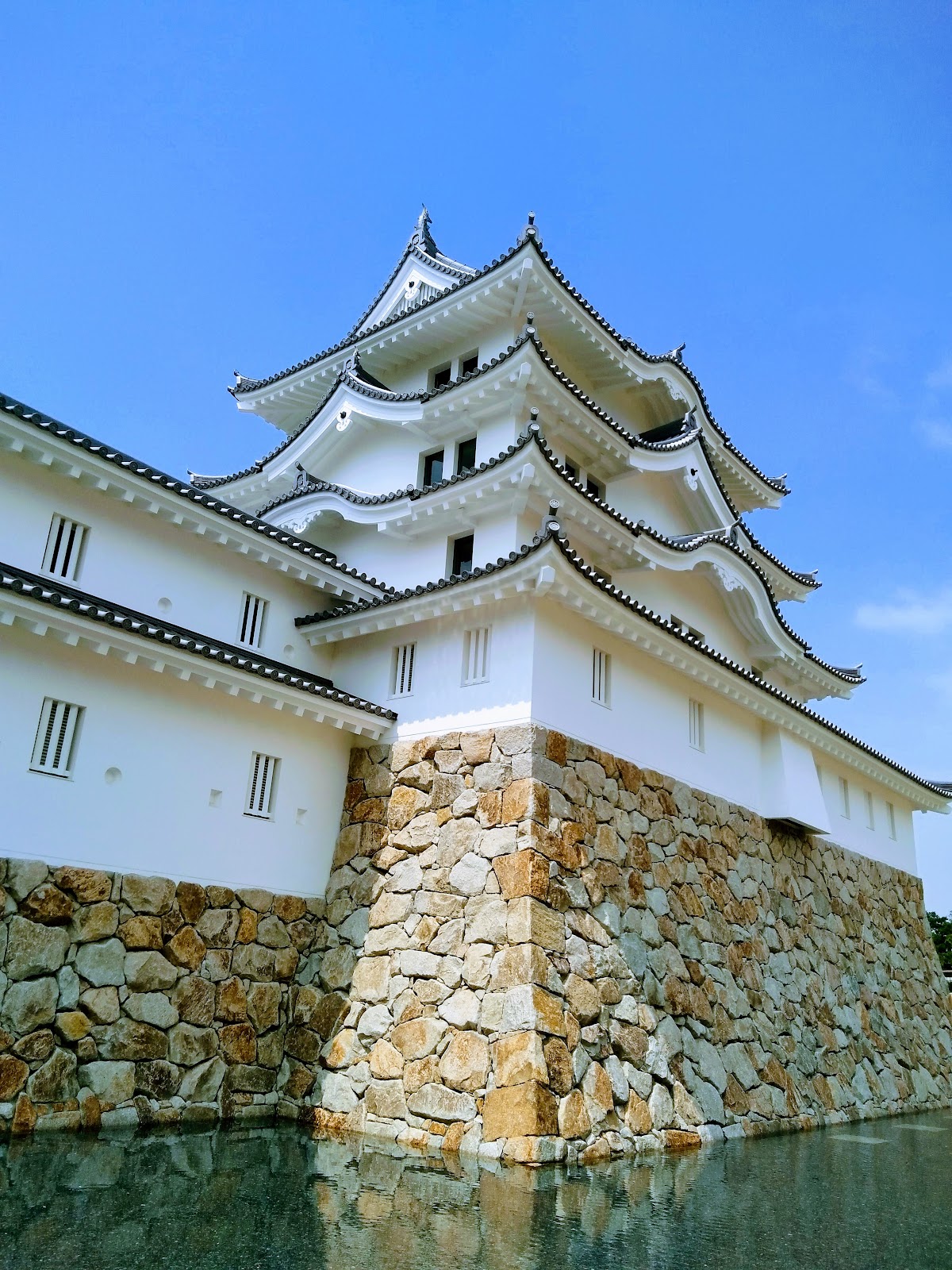
The reconstructed keep is a four-story, four-tiered complex keep, showcasing a beautiful contrast between white walls and black tiles. Based on Edo period blueprints, the exterior was faithfully reproduced, allowing visitors to imagine its former grandeur.
The keep stands approximately 23 meters tall and has become a new landmark in Amagasaki city. Its appearance, especially at dusk and when illuminated at night, is fantastical and a popular spot for photography.
Exhibits Inside the Castle Tower
The castle tower has a five-story structure, with cleverly designed exhibits on each floor.
1st Floor: Amagasaki Castle Zone
This zone introduces the history and structure of Amagasaki Castle. The history from its construction to its abandonment and reconstruction is explained clearly using panels and models. A diorama recreating the castle town is also on display.
2nd Floor: Amagasaki Zone
This floor introduces the history and culture of Amagasaki. You can learn about the industries, culture, and lives of the people of Amagasaki, which developed as a castle town.
3rd Floor: Experience Zone
This is the most popular floor, featuring a wealth of interactive exhibits utilizing CG and VR.
- Swordsmanship Experience Corner: Experience the feeling of being a samurai with a swordsmanship game using motion sensors.
- Matchlock Gun Experience: A simulation game where you aim and shoot at targets on the screen.
- Role-Playing Experience: Take commemorative photos dressed in lord or princess costumes (free).
- VR Experience: Wear VR goggles and virtually experience Amagasaki Castle in its heyday.
4th Floor: Observation Zone
The top floor is an observation room offering panoramic views of Amagasaki city. On clear days, you can even see Osaka Castle and the Rokko Mountains.
Amagasaki Castle Ruins Park
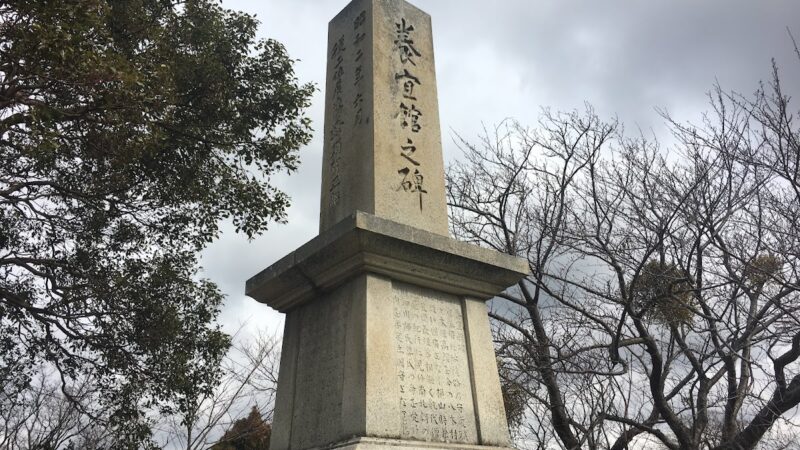
Amagasaki Castle Ruins Park, where the castle tower stands, is a park developed on part of the former castle site. It is also known as a famous cherry blossom viewing spot, and is bustling with many visitors in spring. Stone monuments and information boards are installed throughout the park, allowing you to enjoy a stroll while learning about the castle’s history.
Castle Events
Amagasaki Castle hosts various events throughout the year.
- Samurai Troupe Performances: Samurai troupes regularly appear to showcase sword fighting and martial arts performances.
- History Lectures: Lectures by experts on Amagasaki Castle and the Sengoku period.
- Seasonal Events: Cherry Blossom Festival, Summer Festival, Moon Viewing Party, etc.
- Workshops: Hands-on classes such as armor making and family crest creation.
Tourist Information
Admission Fees
- General (High School Students and above): 500 yen
- Elementary and Junior High School Students: 250 yen
- Preschool Children: Free
- Group Discount: 10% discount for groups of 20 or more.
All exhibits and hands-on corners can be enjoyed with just the admission fee, making it a cost-effective facility.
Opening Hours and Closing Days
- Opening Hours: 9:00 AM to 5:00 PM (Last entry at 4:30 PM)
- Closing Days: Mondays (or the following weekday if Monday is a public holiday), New Year’s holidays (December 29th to January 2nd)
*Please note that there may be special opening days or temporary closing days. It is recommended to check the official website before visiting.
Estimated Time Required
Allow approximately 60-90 minutes for a tour of the castle keep. If you plan to thoroughly enjoy the interactive exhibits or take many photos, it is recommended to allow about 2 hours.
Access
Access by Train
Hanshin Railway
- Get off at Hanshin “Amagasaki Station,” then walk south for approximately 5 minutes.
JR
- Get off at JR Kobe Line “Amagasaki Station,” then take a Hanshin bus for approximately 10 minutes to “Hanshin Amagasaki,” then walk for approximately 5 minutes.
- Alternatively, walk for approximately 20 minutes from JR Amagasaki Station.
Hanshin Amagasaki Station is the nearest station, and there are signs from the station, so you won’t get lost.
Access by Car
Hanshin Expressway
- Approximately 5 minutes from the “Amagasaki East Exit” of the Hanshin Expressway Route 3 Kobe Line.
- Approximately 10 minutes from the “Amagasaki Suehiro Exit” of the Hanshin Expressway Route 5 Wangan Line.
Parking
There is no dedicated parking lot for Amagasaki Castle, but there are several coin-operated parking lots in the surrounding area.
- Amagasaki Q’s Mall Parking Lot (approx. 5-minute walk)
- Several nearby coin-operated parking lots
Due to potential congestion on weekends, using public transportation is recommended.
Address & Map
Address: 27 Kitajonai, Amagasaki City, Hyogo Prefecture 660-0826
Located within Amagasaki Castle Ruins Park, it can be reached by simply walking straight south from Hanshin Amagasaki Station.
Nearby Tourist Attractions
Amagasaki Q’s Mall
A large shopping mall located approximately a 5-minute walk from Amagasaki Castle. It houses approximately 130 stores, offering opportunities for dining and shopping. Convenient for a visit before or after visiting Amagasaki Castle.
Teramachi District
The Teramachi district, located north of Amagasaki Castle, is home to 11 temples. This area retains the atmosphere of an Edo-period castle town, making it ideal for historical walks.
Amashin Kaikan (Amashin Museum)
This museum, operated by Amagasaki Shinkin Bank, exhibits materials related to the history and culture of Amagasaki. It is located about a 10-minute walk from Amagasaki Castle.
World Piggy Bank Museum
This unique museum, also operated by Amagasaki Shinkin Bank, exhibits approximately 13,000 piggy banks from 62 countries around the world. Admission is free, and it can be enjoyed by children and adults alike.
Omononushi Shrine
One of the oldest shrines in Amagasaki, it is about a 15-minute walk from Amagasaki Castle. It is also known as a site associated with the Genpei War.
Tips for Enjoying Amagasaki Castle
Recommended Time to Visit
Spring (Late March to Early April)
The cherry blossoms at Amagasaki Castle Park are in full bloom, creating a beautiful collaboration between the castle tower and the cherry blossoms. A cherry blossom festival is also held, attracting many tourists.
Autumn (October-November)
The weather is mild, making it the perfect season for sightseeing. While the autumn foliage may be less vibrant, the pleasant weather allows for a leisurely visit.
Winter (December-February)
With fewer tourists, you can enjoy a relaxed visit. The clear air makes the view from the top floor of the castle tower particularly beautiful.
Photo Spots
- South side of Amagasaki Castle Ruins Park: The best angle to capture the entire castle tower.
- 4th Floor Observation Room of the Castle Tower: A panoramic view overlooking Amagasaki city.
- Castle Tower at Dusk: The castle tower illuminated by the setting sun is beautiful.
- Nighttime Illumination: The castle tower has a fantastical atmosphere (illumination is irregular).
Model Courses by Time Required
1-Hour Course
Only a tour of the castle tower’s interior. Enjoy the view from the top floor while viewing the exhibits on each floor.
2-Hour Course
Castle tower tour (90 minutes) + Stroll through Amagasaki Castle Ruins Park (30 minutes). You can also enjoy the hands-on experience corners.
Half-Day Course
Amagasaki Castle tour (2 hours) + Stroll through Teramachi (1 hour) + Lunch and shopping at Amagasaki Q’s Mall (1.5 hours). This course allows you to enjoy both the history and modernity of Amagasaki.
The Charm of Amagasaki Castle
The greatest charm of Amagasaki Castle is the opportunity to easily experience a magnificent Edo-period castle revived in modern times. For an affordable entrance fee of 500 yen, you can enjoy a wealth of exhibits and hands-on experience corners.
The exhibits, utilizing the latest technology such as CG and VR, are designed to be enjoyable even for those unfamiliar with history. The “role-playing experience” is particularly popular with both children and adults, and is known for providing photogenic opportunities for social media.
The castle tower, rebuilt more than 400 years after its construction, is beloved by the citizens of Amagasaki as a new symbol of the city. This tourist spot attracts a wide range of visitors, including history buffs, families, couples, and foreign tourists.
Its excellent accessibility, just a 5-minute walk from Hanshin Amagasaki Station, is another major draw. It’s easily accessible from Osaka and Kobe, making it ideal for a day trip.
Summary
Amagasaki Castle is an important fortress built in the early Edo period as a western defense for Osaka. Although demolished during the Meiji era, it was beautifully rebuilt in the Heisei era thanks to donations from private benefactors, transforming it into a modern tourist attraction.
Since its construction in 1617 by Toda Ujitsune, it played a crucial role in the history of the region as the center of the Amagasaki Domain, ruled by 12 generations of three clans. The reconstructed castle tower features exhibits and interactive corners utilizing the latest technology, making it a facility where everyone can learn about history while having fun.
When visiting Hyogo Prefecture, be sure to stop by Amagasaki Castle. This castle, which garnered attention as “the last castle built in the Heisei era,” is a fascinating tourist spot where history and modernity blend, offering visitors both inspiration and learning opportunities.