Azaka Castle (Mie Prefecture) Complete Guide: A Thorough Explanation of the Hakumai Legend and the Kitabatake Clan’s Mountain Castle
What is Azaka Castle?: A Historic Mountain Castle in Matsusaka City, Mie Prefecture
Azaka Castle, located in Oasaka-cho, Matsusaka City, Mie Prefecture, is a mountain castle that played an important role from the Nanboku-cho period to the Sengoku period. Built on the summit of Masugata-yama Mountain at an altitude of 312.6 meters, this castle is also known by the alternative names “Hakumai Castle” and “Shiinoki Castle,” each referring to a different enclosure within the castle grounds.
In 1982 (Showa 57), it was designated a national historic site under the name “Azaka Castle Ruins, with Takajo Castle Ruins and Kijo Castle Ruins,” and holds high historical value as a representative example of a medieval castle in Ise Province.
Basic Information on Asaka Castle
- Location: Oasaka-cho, Matsusaka City, Mie Prefecture
- Other Names: Shirayone Castle, Shiinoki Castle
- Castle Structure: Mountain Castle
- Elevation: 312.6 meters (Relative height approximately 250 meters)
- Construction Period: Nanboku-cho period (early 14th century)
- Builder: Kitabatake Chikafusa or Kitabatake Mitsumasa
- Main Lords: Kitabatake clan, Omiya clan
- Year of Abandonment: 1569 (Eiroku 12)
- Designated Cultural Property: National Historic Site (designated in 1982)
History of Asaka Castle: From the Nanboku-cho period to the Sengoku period
The Construction of Asaka Castle During the Nanboku-cho Period and the Kitabatake Clan
There are various theories regarding the construction date of Asaka Castle, but the most widely accepted theory is that it was built around 1335 when Kitabatake Chikafusa, a court noble known to support the Southern Court, entered Ise Province with his three sons (Akinobu, Akinori, and Akio). There are also records indicating that Kitabatake Mitsumasa built it in 1428 (Shocho 1).
The first recorded mention dates back to 1352, and from this time, Asaka Castle functioned as an important base for the Kitabatake clan, the provincial governors of Ise Province. Its location on the summit of Masugatayama Mountain offered a panoramic view of the Ise Plain to the north and south, making it a strategically crucial position.
The Shōchō Incident and the Birth of the White Rice Legend
In 1428 (Shōchō 1), Prince Ogura Seishō (Prince Ogura), dissatisfied with the succession to the throne, fled from Saga to Ise, seeking refuge with Kitabatake Mitsumasa. Mitsumasa, along with Ashikaga Mochiuji, the Kamakura Shogun, raised an army and confronted the Ashikaga Shogunate forces at Asaka Castle.
The Shogunate forces besieged the castle and employed tactics to cut off its water supply. As the prolonged siege nearly depleted the castle’s water supply, Mitsumasa, with quick thinking, is said to have poured white rice onto the backs of horses to create the illusion of abundant water. This ingenious tactic temporarily confused the enemy, making them believe there was sufficient water within the castle—giving rise to the “White Rice Castle Legend.”
From this episode, the southern enclosure of Asaka Castle came to be known as “White Rice Castle,” and this name remains synonymous with the castle to this day.
The Sengoku Period and the Omiya Clan
After Kitabatake Mitsumasa, Asaka Castle became the ancestral home of the Omiya clan, vassals of the Kitabatake clan. During the Sengoku period, Asaka Castle continued to function as an important base protecting the Kitabatake clan’s sphere of influence.
The Omiya clan, who became the castle lords, played a crucial role in monitoring and defending the Ise Plain, maintaining coordination with Taki (present-day Taki District), the Kitabatake clan’s base, while diligently managing and maintaining the castle.
Oda Nobunaga’s Invasion of Ise and the Fall of Asaka Castle
The history of Asaka Castle came to an end on August 26, 1569 (Eiroku 12), with Oda Nobunaga’s invasion of Ise. Nobunaga led over 70,000 cavalry from Gifu to Ise, conquering the Kitabatake clan’s territory one after another.
At this time, Omiya Nyudo Ganshinsai resided at Asaka Castle. The vanguard of Nobunaga’s army was led by Kinoshita Tokichiro (then known as Kinoshita Hideyoshi), who would later become Toyotomi Hideyoshi, the unifier of Japan. Tokichiro’s troops besieged Asaka Castle, and after a fierce battle, they captured it.
With this fall, Asaka Castle was abandoned, ending its approximately 240-year history as a mountain castle.
Structure and Layout of Asaka Castle
Overall Castle Layout
Asaka Castle is a typical mountain castle built near the summit of Masugata Mountain, with a castle area extending approximately 300 meters north-south and 150 meters east-west. The castle is mainly composed of two enclosures, north and south, each with independent defensive functions, creating a multi-enclosure structure.
Shirayone Castle (South Enclosure)
The main enclosure located on the south side is called “Shirayone Castle” and is built at the highest point on the summit of Masugata Mountain. This enclosure played a central role in the castle, and it is believed to have housed the lord’s residence and command post.
A flat, plateau-like area remains today, allowing visitors to imagine the former appearance of the enclosure. A stone monument marking the existence of Asaka Castle stands in the southern enclosure, conveying the castle’s history to visitors.
Shiinoki Castle (Northern Enclosure)
The group of enclosures located on the northern ridge is called “Shiinoki Castle.” This name is thought to originate from the fact that many chinquapin trees (shiitake) once grew in this area.
The northern enclosure served as a forward position protecting Shirayone Castle and was an important defensive stronghold to prevent enemy incursions. Multiple enclosures are arranged in stages, creating a structure designed to gradually halt enemy advances.
Defensive Structures: Moats and Earthworks
Notable defensive structures of Asaka Castle are the existing moats and earthworks.
Horikiri are defensive structures created by artificially cutting off ridges to prevent enemy intrusion. At Asaka Castle, multiple horikiri were constructed along the main ridgelines. These horikiri are still clearly visible today and are valuable historical remains for understanding the defensive techniques of medieval mountain castles.
Dorui are defensive walls built by piling up earth around the perimeter of a fortified enclosure, serving to protect castle soldiers from enemy arrows and firearms. Some of Asaka Castle’s earthui remain in good condition, conveying the castle-building techniques of the time.
Layout Utilizing the Topography
Asaka Castle’s layout skillfully utilizes the natural topography of Masugata-yama. Its location, at an elevation of 312.6 meters and a relative height of approximately 250 meters, inherently provides strong defensive capabilities.
From the mountaintop, a wide view of the Ise Plain was available, providing a surveillance function that allowed for early detection of enemy movements. Furthermore, the steep slopes made it difficult for the enemy to climb, allowing for effective defense even with a small number of defenders.
Highlights and Sights of Asaka Castle
Value as a National Historic Site
Asaka Castle ruins were designated a National Historic Site in 1982 (Showa 57), and hold significant value in the study of medieval castles. The designated name is “Asaka Castle Ruins, with Takajo Castle Ruins and Kijo Castle Ruins,” and the surrounding related castles are also protected.
Existing Remains
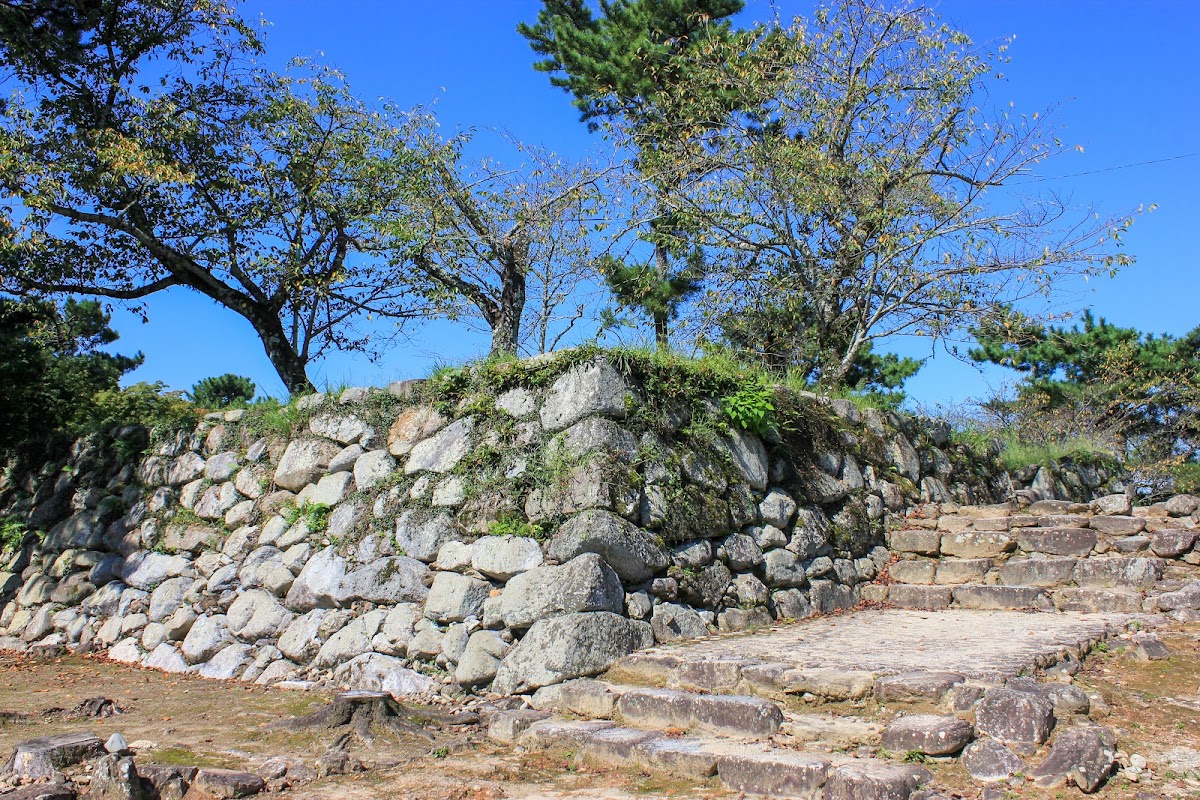
Although no original structures remain at the castle site, the following remains are well-preserved:
- Enclosure Remains: Clearly preserved as a flat, plateau-like area
- Moat: Identifiable in multiple locations
- Earthwork: Partially existing
- Stone Monument: A memorial monument located in the southern enclosure
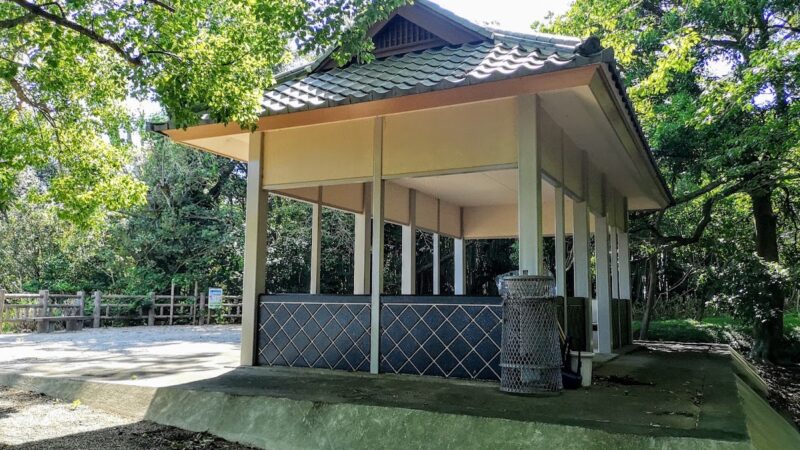
- Information Board: An explanatory board describing the castle’s history
Stunning Views
The view from the mountaintop at an altitude of 312.6 meters is one of Asaka Castle’s greatest attractions. On clear days, you can see not only Matsusaka city but also the entire Ise Plain. The former castle lords likely monitored enemy movements from this vantage point.
Local Maintenance Activities
Since 1981, the year before the site was designated a National Historic Site, local residents of Oasaka Town have continuously carried out grass cutting and maintenance activities. This steady effort keeps the castle site easily accessible and is highly regarded as an initiative to protect the region’s historical heritage. ## Access and Visiting Information for Asaka Castle
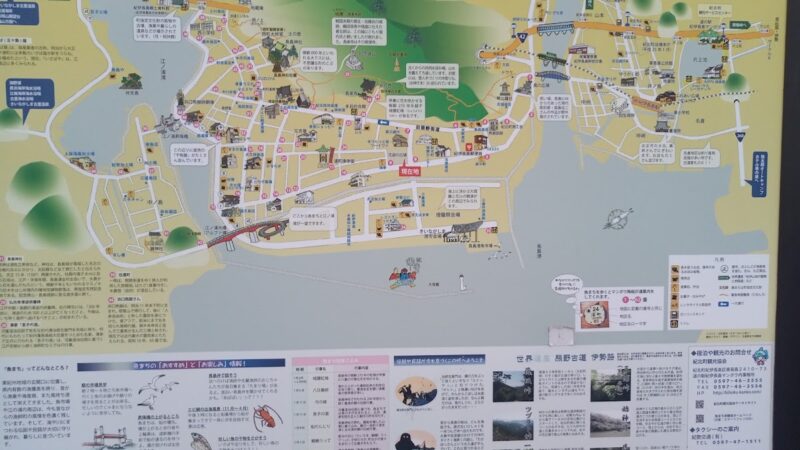
Access by Public Transportation
By Train:
- Get off at Matsusaka Station on the JR Kisei Main Line or Kintetsu Yamada Line
- Take the Mie Kotsu bus bound for “Oasaka” from Matsusaka Station (approx. 20 minutes)
- Get off at the “Oasaka” bus stop and walk for approximately 40 minutes to the castle entrance
Access by Car
From Major Roads:
- Approximately 15 minutes from Matsusaka IC on the Ise Expressway
- Take National Route 166 towards Oasaka Town
- There are several parking spaces near the castle entrance
Precautions When Visiting the Castle
- Estimated Time: Approximately 30-40 minutes on foot from the castle entrance to the summit
- Difficulty: Intermediate (Appropriate equipment is necessary as it is a mountain trail)
- Clothing: Comfortable clothing and trekking shoes are recommended
- What to Bring: Drinking water, towel, insect repellent (summer)
- Best Season: Spring (March-May), Autumn (October-November)
- Caution: Be careful as the ground can be slippery in rainy weather.
Estimated Visiting Time
- Ascending the Castle: 30-40 minutes
- Visiting the Castle Ruins: 30-60 minutes
- Descending the Castle: 25-35 minutes
- Total: Approximately 1 hour 30 minutes to 2 hours 30 minutes
Nearby Tourist Attractions and Related Historical Sites
Matsusaka Castle
Matsusaka Castle, located about 20 minutes by car from Asaka Castle, is a modern castle built by Gamo Ujisato. While Asaka Castle is a medieval mountain castle, Matsusaka Castle is a modern castle that makes extensive use of stone walls. Comparing the two allows for an understanding of the development of castle architecture.
Kitabatake Clan Residence Ruins Garden
Located in Misugi-cho, Taki-gun, the Kitabatake Clan Residence Ruins were the base of the Kitabatake clan, lords of Asaka Castle. A garden designated as a National Place of Scenic Beauty remains, offering insights into the cultural aspects of the Kitabatake clan.
Takajo Castle Ruins and Kijo Castle Ruins
Like Asaka Castle, Takajo Castle Ruins and Kijo Castle Ruins are designated as National Historic Sites. These castles functioned as subsidiary castles of Asaka Castle. Visiting these together will help you understand the Kitabatake clan’s castle network.
Matsusaka City Historical and Folk Museum
This facility allows you to learn about the history of Matsusaka City and also exhibits materials related to Asaka Castle. A visit before Asaka Castle will deepen your understanding of the castle’s history.
Cultural Significance and Modern Value of Asaka Castle
Importance in Medieval Castle Research
Asaka Castle holds a significant position in castle research as a typical example of a mountain castle from the Nanboku-cho period to the Sengoku period. It retains many characteristics of medieval mountain castles, including its multi-enclosure structure, defensive facilities such as moats and earthworks, and layout that utilizes the terrain, making it highly valued academically.
As a Regional Historical Heritage Site
Asaka Castle is an important historical heritage site of Matsusaka City and a key element in forming the region’s identity. The continuous preservation efforts by local residents are noteworthy as a model example of cultural property protection.
Potential as a Tourism Resource
In recent years, with the growing interest in castle tourism, Asaka Castle has attracted attention as a “hidden gem.” With its intriguing legend of white rice, well-preserved remains, and magnificent views, it possesses ample appeal as a tourist resource.
How to Enjoy Your Visit to Asaka Castle
Feel the Romance of History
Stand at the castle ruins, the setting of the legend of white rice, and reflect on the siege battle fought by Kitabatake Mitsumasa against the shogunate army. Also, as this castle was captured by Kinoshita Tokichiro (later Toyotomi Hideyoshi), imagining the exploits of the young Hideyoshi is another way to enjoy the visit.
Observe the Remains
Observe defensive structures such as moats and earthworks to learn about medieval castle construction techniques. By analyzing the layout of the enclosures and the use of the terrain, you can understand the design philosophy of castles at that time.
Connect with Nature
The path to the castle, walking through the rich natural surroundings of Masugatayama, reveals different expressions in each season. Enjoy the different charms of each season: the fresh green of spring, the deep green of summer, the autumn foliage, and the tranquility of winter.
Photography
There are numerous photo opportunities, including the view from the mountaintop, the remains, and the information boards and monuments. The view, especially on a clear day, offers excellent photo opportunities.
Summary: Rediscovering the Charm of Asaka Castle
Asaka Castle is a valuable medieval mountain castle remaining in Matsusaka City, Mie Prefecture. From the Nanboku-cho period to the Sengoku period, it played a significant role in the history of Ise Province as an important base for the Kitabatake clan.
Asaka Castle is full of charm, including the intriguing legend of the white rice, well-preserved remains such as moats and earthworks, magnificent views, and dedicated preservation efforts by local residents.
This castle site, designated as a national historical site, is not merely a tourist attraction but also a valuable learning tool for studying Japanese medieval history. When visiting Matsusaka City, be sure to visit Asaka Castle and experience both its history and nature.
Standing on the summit of Masugatayama Mountain, at an altitude of 312.6 meters, and gazing at the view seen by the former castle lords, you will feel closer to history from over 600 years ago. Asaka Castle, a precious historical heritage site that connects the past and the present, is sure to continue inspiring many people for years to come.