Complete Guide to Oozuku Castle (Saitama Prefecture): A Thorough Explanation of the Highlights and History of this 466m High-Elevation Mountain Castle
What is Oozuku Castle?
Oozuku Castle is a medieval mountain castle built on a 466m-high mountain located on the border between Tokigawa Town (Hiki District) and Ogose Town (Iruma District), Saitama Prefecture. It is also known as Otsuku Castle, sometimes written as “Oozuku” on the Tokigawa Town side and “Otsuku” on the Ogose Town side.
As a typical mountain castle of Musashi Province, the remains of the castle, including baileys, earthworks, moats, and vertical trenches, remain in excellent condition. It is known as one of the largest and best-preserved castle ruins in Saitama Prefecture. The defensive structures, skillfully utilizing the steep terrain with a relative elevation of approximately 210m, are a valuable legacy for learning about medieval mountain castle construction techniques.
Currently, the area is a well-maintained hiking trail, popular not only with history enthusiasts but also with hikers.
History and Background of Otsuki Castle
Construction Process and Purpose
While there are few clear historical records regarding the construction date and builder of Otsuki Castle, several theories exist. The most plausible theory is that the castle was built to attack Jikoji Temple.
Jikoji Temple is an ancient temple located in the Tokigawa River basin, and in the Middle Ages, it wielded significant religious and military influence. Otsuki Castle is thought to have functioned as a base for monitoring or attacking Jikoji Temple. The castle’s location overlooking Jikoji Temple also supports this theory.
Lord and Related Clans
There are various theories regarding the lord of Otsuki Castle, but the names of the Ueda clan and Agana Norimitsu are sometimes mentioned. There is also a theory that it was the residence of the Okabe clan.
During the Sengoku period (Warring States period), this region was the stage for the power struggle between the Hojo and Uesugi clans, and it is presumed that Otsuki Castle was also under their influence. Like many mountain castles in Musashi Province, Otsuki Castle likely changed rulers over time and was modified according to the strategic demands of each era.
Abandonment and Aftermath
While there are no clear records of when Otsuki Castle was abandoned, it is believed that, like many mountain castles that ceased to serve their purpose from the late Sengoku period to the early Edo period, Otsuki Castle was also abandoned. Over the long years that followed, the remains were naturally buried, but fortunately, it avoided large-scale development, resulting in its current well-preserved state.
Layout and Structure of Otsuki Castle
Overall Arrangement and Scale
Otsuki Castle is a multi-enclosure mountain castle with multiple baileys arranged around the summit of Shiroyama Mountain, which is 466m above sea level. The main bailey (honmaru) is located at the highest point, and multiple baileys are arranged in stages surrounding it.
The castle grounds extend approximately 200m east-west and 150m north-south, with a steep terrain of approximately 210m in elevation. A defensive system was constructed that made maximum use of this terrain. This scale is among the largest of mountain castles in Saitama Prefecture, indicating its importance as a military base at the time.
Features of the Main Enclosure (Honmaru)
The main enclosure is located at the highest point of the castle mountain, at an elevation of 466m, and measures approximately 40m east-west and 30m north-south. Clear earthen ramparts surround the enclosure, and the ramparts on the north and west sides, in particular, remain today at a height of 1-2m.
From the main enclosure, one can see the surrounding mountains and the Tokigawa River basin, demonstrating its military surveillance function. On clear days, the mountains of Chichibu can be seen, making the strategic selection of this location clear.
Arrangement of the Enclosures
Several enclosures are arranged in a stepped pattern around the main enclosure. To the east of the main enclosure lie the second and third enclosures in succession, and several smaller enclosures can be seen on the west side. These enclosures are thought to have functioned as defensive belts for the main enclosure, as well as serving as garrison spaces for soldiers.
Each enclosure is relatively flat and level, demonstrating the high level of civil engineering technology of the medieval period. The enclosures are separated by steep slopes, showcasing various features designed to hinder enemy intrusion.
Moats and Vertical Moats
Of particular note among the defensive features of this large castle are the moats and vertical moats. Large moats were constructed on the north and south sides of the main enclosure, serving to block enemy intrusion along the ridge.
The moat on the north side is approximately 3-4 meters deep and 5-6 meters wide, and is still clearly visible today. Vertical moats extend from this moat along the slope, preventing enemy soldiers from climbing the incline.
Multiple vertical trenches can be found on the eastern and western slopes of the castle. These trenches effectively hindered lateral movement, thus obstructing the deployment of attacking troops.
Earthworks
Earthworks were constructed throughout the castle. In addition to the trenches surrounding the main enclosure, trenches were also built along the edges of each enclosure, enhancing defensive capabilities and clearly defining the boundaries of each enclosure.
The height of the trenches varies depending on the location, but in well-preserved sections, a height of 1-2 meters remains. It is presumed that fences or walls were built on top of the trenches, forming an even higher defensive wall at the time.
Entrances (Koguchi)
Entrances to the castle, known as koguchi, can be found on the eastern and western sides of the main enclosure. The entrances were not straight but curved, a design intended to make enemy intrusion difficult. The eastern entrance, in particular, had a complex structure combining earthworks and trenches, making it a crucial defensive feature.
Highlights of Ootsuki Castle
Preservation of the Remains
The greatest appeal of Ootsuki Castle is the remarkably well-preserved remains of this medieval mountain castle. Major structures such as earthworks, moats, vertical trenches, and baileys are clearly visible, making it a fascinating site for castle enthusiasts.
The scale and preservation of the moats are particularly impressive; standing at the bottom of the deeply cut moats, one can truly appreciate the advanced castle-building techniques of the medieval period. Furthermore, observing the vertical trenches descending the slopes provides a valuable opportunity to experience and understand the defensive system of a mountain castle.
View from the Main Enclosure
The view from the main enclosure, at an altitude of 466m, is one of the major highlights of visiting Ootsuki Castle. The scenery of the mountains along the Tokigawa River basin is beautiful, and on a clear day, you can even see the distant Chichibu Mountains.
This view is not only enjoyable for its scenery, but also provides clues to understanding why the castle was built in this location and what its strategic intentions were. Understanding the location of Jikoji Temple and the surrounding transportation routes will clarify the role of Otsuki Castle.
Information Boards and Explanations
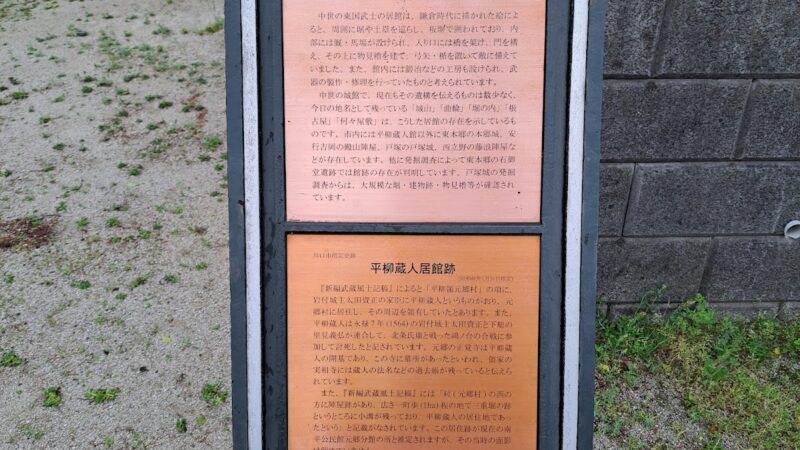
Information boards are placed at key points along the hiking trail, providing explanations about the castle’s history and remains. Using these boards as a guide will allow for a deeper understanding of Otsuki Castle.
In particular, the information boards near the main enclosure provide detailed explanations of the castle’s layout and historical background, making it easy for first-time visitors to grasp the overall picture of the castle.
Nature Through the Seasons
As Otsuki Castle is a mountain castle, you can enjoy the changing seasons. It offers different scenery in each season: fresh greenery in spring, deep green in summer, vibrant autumn leaves, and clear views after the leaves have fallen in winter.
The autumn foliage season is especially ideal for a visit combining a castle ruins walk with hiking. Winter is also a favorite season for castle researchers because the fallen leaves make it easier to observe the remains.
Access and Visiting Guide
Location
Address: Otsuki, Nishihira, Tokigawa-machi, Hiki-gun, Saitama Prefecture
Otsuki Castle is located on the border between Tokigawa-machi and Ogose-machi, so it is accessible from both sides, but the route from Tokigawa-machi is generally used.
Access by Public Transportation
Nearest Station: JR Hachiko Line/Tobu Ogose Line “Myokaku Station”
It takes approximately 40-50 minutes on foot from Myokaku Station to the trailhead. From the station, head towards Nishihira and follow the signs to the trailhead. If using public transportation, it is recommended to plan your trip considering the travel time from the station to the trailhead.
Bus services are limited, so it is a good idea to check the timetable in advance.
Access by Car
Approximately 30-40 minutes from the Kan-Etsu Expressway “Ranzan-Ogawa IC” or “Tsurugashima IC”.
There is a small parking area near the trailhead, but spaces are limited, so we recommend arriving early, especially on weekends. Please park only in the designated areas, as roadside parking is a nuisance to locals.
Hiking Route and Estimated Time
To reach Otsuki Castle, you will use a well-maintained hiking trail. The elevation difference from the trailhead to the main enclosure is approximately 210m, and the estimated time is about 40-50 minutes for the ascent and 30-40 minutes for the descent.
While the trail is relatively well-maintained, it is still a mountain path, so appropriate equipment is necessary. Particular caution is needed after rain, as the trail can become slippery.
Important Notes for Visitors
Clothing and Equipment:
- Hiking boots or trekking shoes (sneakers are acceptable, but non-slip shoes are recommended)
- Comfortable clothing
- Drinking water (especially plenty in summer)
- Hat and sunscreen (summer)
- Warm clothing (winter)
- Insect repellent (spring to autumn)
Safety Considerations:
- Avoid solo visits; visit with multiple people if possible.
- Turn back if weather deteriorates.
- Check cell phone signal strength beforehand (there may be areas with no signal in the mountains)
- Allow ample time to descend before sunset
Manners:
- Do not damage the ruins (do not climb on earthworks or moats)
- Always take your trash with you
- No open flames allowed
- Do not trespass on private property
Estimated Visit Time
The standard time required, including the round trip from the trailhead to the main enclosure and visiting the castle ruins, is approximately 2-3 hours. If you want to carefully observe the ruins or enjoy taking photographs, it’s a good idea to allow 3-4 hours.
Nearby Tourist Attractions
Jikoji Temple
Jikoji Temple, which is said to have a deep connection with Otsuki Castle, is an ancient Tendai sect temple and houses many national treasures and important cultural properties. Visiting it in conjunction with Otsuki Castle will give you a deeper understanding of the medieval history of this region.
Ogura Castle
Another medieval mountain castle located in Tokigawa Town, it retains ruins such as earthworks and moats, similar to Otsuki Castle. Visiting it in conjunction with Otsuki Castle will allow you to experience the castle network of this region.
Sanba Valley
A valley along the Tokigawa River that flows through Tokigawa Town, where you can enjoy beautiful natural scenery. The scenery is especially magnificent during the autumn foliage season.
Ogose Plum Grove
If you are accessing from the Ogose Town side, Ogose Plum Grove, one of the three major plum groves in the Kanto region, is also worth visiting. From late February to early March, approximately 1,000 plum trees bloom in profusion.
The Value and Appeal of Otsuki Castle
Historical Value
Otsuki Castle occupies an important position in the study of castle history as a typical example of a medieval mountain castle in Musashi Province. Its location, suggesting a connection to the religious power of Jikoji Temple, is an interesting case study for considering the relationship between temple/shrine powers and samurai powers in the medieval period.
Educational Value
The well-preserved remains serve as excellent teaching materials for learning about medieval castle construction techniques and defensive systems. Basic elements of mountain castles such as moats, trenches, earthworks, and baileys can all be observed, making it suitable as an introduction to castle architecture.
Recreational Value
With well-maintained hiking trails, it is popular not only with history enthusiasts but also with general hiking lovers. It offers a well-balanced mountain walk, combining moderate exercise, beautiful views, and historical romance.
Points to Note When Visiting Ootsuki Castle
Preparation
Before your visit, it’s important to check the weather forecast, prepare a map, and have appropriate equipment. Also, studying basic knowledge about Ootsuki Castle beforehand will deepen your understanding on site. Gather information from top-ranking search results websites and books about castles.
Photography Tips
When photographing the ruins, the way the light hits them can make the contours of the ground more or less visible. Especially for moats and earthworks, the morning and evening hours with oblique light are ideal for photography. Also, winter, after the leaves have fallen, makes it easier to grasp the overall structure of the ruins and is suitable for photography.
Recommended Time to Visit
Spring (March-May): Beautiful fresh greenery and pleasant weather. However, this is also the time when insects begin to appear.
Autumn (October-November): Beautiful autumn foliage and moderate temperatures, making it the most recommended time.
Winter (December-February): The fallen leaves make it easier to observe the ruins. Ideal for castle researchers, but warm clothing is essential.
Summer (June-August): The scenery is beautiful with lush greenery, but heat and insect repellent are necessary. Early morning visits are recommended.
Future Preservation and Utilization of Otsuki Castle
The remains of Otsuki Castle are currently preserved quietly in nature, but appropriate management and preservation activities are necessary going forward. Regular maintenance activities are carried out by local governments and historical preservation organizations, and visitors can also contribute to preservation by observing proper etiquette.
In recent years, due to the castle boom and the popularity of historical tourism, attention has been drawn to regional mountain castles like Otsuki Castle. A balance between utilizing them as tourist resources and preserving the remains is required to pass on this valuable cultural heritage to future generations.
Summary
Otsuki Castle is a full-fledged medieval mountain castle located at an altitude of 466m on the border of Tokigawa Town and Ogose Town in Saitama Prefecture. The remains, including earthworks, moats, and vertical trenches, are well-preserved, making it one of the largest castles in the prefecture.
This castle, believed to have been built to conquer Jikoji Temple, is a valuable historical site that tells the story of the relationship between religious and samurai forces in the Middle Ages. Currently, it is maintained as a hiking trail and is popular not only with history buffs but also with nature lovers.
While appropriate equipment and preparation are necessary for a visit, the views from the main enclosure and the clearly visible remains will more than reward the effort. If you are planning a mountain castle exploration in Saitama Prefecture, be sure to visit Ootsuki Castle and experience the charm of a medieval mountain castle.
Ootsuki Castle displays different expressions throughout the seasons—the fresh greenery of spring, the vibrant autumn foliage, and the clear views in winter. Why not step into the world of historically romantic mountain castles?