Imabari Castle (Ehime Prefecture) Complete Guide: History, Highlights, and Access Information for One of Japan’s Three Great Water Castles
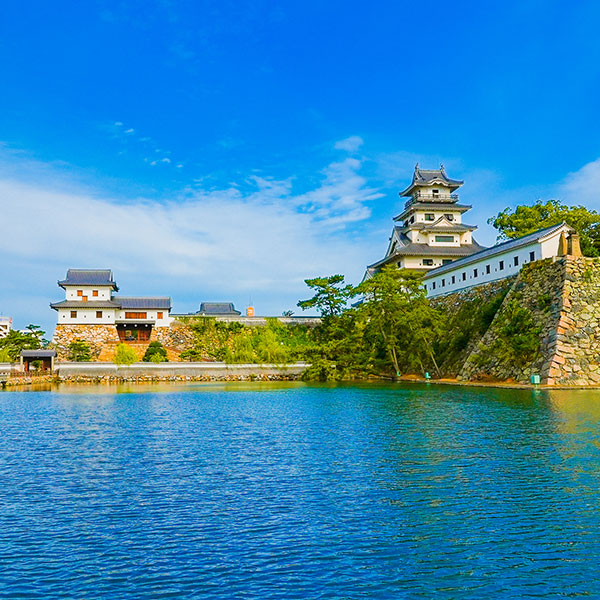
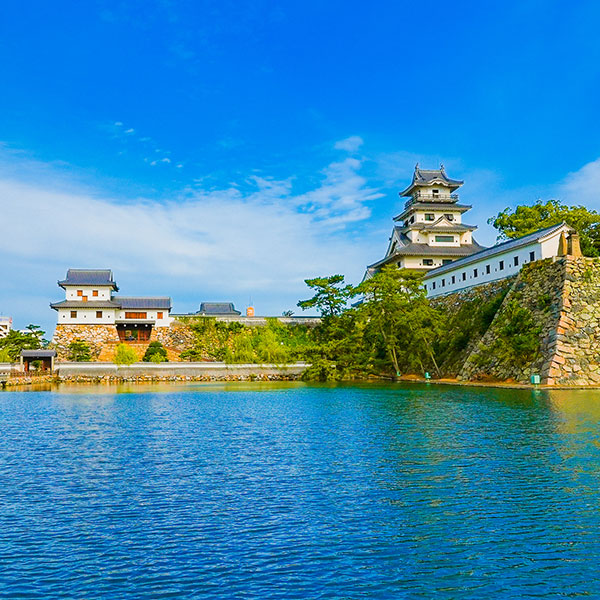
Located in Imabari City, Ehime Prefecture, Imabari Castle, a flatland castle facing the Seto Inland Sea, holds a significant place in the history of Japanese castles. Built by Todo Takatora, a renowned castle builder, this castle, with its unique structure that draws in seawater, is counted as one of Japan’s “Three Great Water Castles” and continues to fascinate many history buffs and tourists.
History of Imabari Castle: From Construction to the Present
Construction by Todo Takatora
Construction of Imabari Castle began in 1602 (Keicho 7) by Todo Takatora, a renowned castle builder. At the time, Takatora was the lord of Imabari, Iyo Province (200,000 koku), and designed a castle that made maximum use of the sea in Imabari, a key point for maritime traffic in the Seto Inland Sea.
Construction of the castle is believed to have been completed around 1604, and Takatora completed a flatland castle that incorporated the best techniques of early modern castle construction. This castle had an innovative structure that drew seawater into the moat, making it easy to transport goods by sea and providing excellent defense.
Changes in the Domain Lords
In 1608, Todo Takatora was transferred to the Tsu Domain in Ise Province, and his adopted son, Todo Takayoshi, took up residence in Imabari Castle. Later, in 1635, Matsudaira (Hisamatsu) Sadafusa took up residence, and from then until the Meiji Restoration, the Hisamatsu Matsudaira family ruled the Imabari Domain and used Imabari Castle as their residence.
The Hisamatsu Matsudaira family, as a shogunate-affiliated domain, had close ties with the Tokugawa family, and the Imabari Domain played an important role in monitoring maritime traffic in the Seto Inland Sea. During the turbulent Bakumatsu period, the Imabari Domain was caught up in the upheaval of the times, but the castle escaped major warfare.
History after the Meiji Restoration
After the Meiji Restoration, Imabari Castle was abandoned due to the abolition of the feudal domains and the establishment of prefectures. In 1874 (Meiji 7), many structures, including the keep, were demolished. The castle site was developed into a park, and remnants such as the moat and stone walls were preserved.
In 1980 (Showa 55), as part of the 60th anniversary of Imabari City’s incorporation, the keep was reconstructed using reinforced concrete. This reconstructed keep was designed based on historical documents and drawings, and the interior is used as a local history museum. Since then, the restoration of turrets and gates has progressed, resulting in its current appearance.
Features of Imabari Castle: Structure of one of Japan’s three great water castles
Moat with seawater
The most distinctive feature of Imabari Castle is its structure, which draws seawater from the Seto Inland Sea into the moat. This moat, known as a “seawater moat,” had a unique system influenced by the tides, with seawater flowing in at high tide and the water level dropping at low tide.
The seawater moat was home to marine fish such as black sea bream, mullet, and sea bass, and even today, fish can be seen swimming in it. The moat was also wide, approximately 50 to 70 meters, effectively preventing enemy intrusion.
Due to this seawater-based moat structure, Imabari Castle is counted as one of the “Three Great Water Castles of Japan,” along with Takamatsu Castle (Kagawa Prefecture) and Nakatsu Castle (Oita Prefecture).
Layout and Stone Walls
Imabari Castle’s layout is a concentric flatland castle with the main keep at the center, surrounded by the second and third baileys. The main keep measured approximately 120 meters east-west and 100 meters north-south, with turrets positioned at the four corners.
The stone walls utilize the techniques of “nozurazumi” (rough stone masonry) and “uchikomi-tsugi” (fitted stone masonry), demonstrating the high level of castle-building skills of Todo Takatora. In particular, the stone walls of the main keep are approximately 8 to 10 meters high, forming a strong defense in combination with the seawater moat. The corners of the stone walls employ a technique called “sangi-zumi” (a type of masonry stacking), further enhancing their durability.
Keep and Turrets
It is believed that Imabari Castle had a five-story, layered keep during the Edo period, but detailed records do not exist. The current keep was rebuilt in 1980 and has a five-story, six-level structure.
The keep is approximately 30 meters tall, and the top floor offers a spectacular panoramic view of Imabari city, the Seto Inland Sea, and the Shimanami Kaido. Turrets such as the Kurogane-gomon (Iron Gate), Yamasato-yagura (Mountain Village Turret), and Bugu-yagura (Armor Turret) have also been restored, allowing visitors to imagine the castle’s former appearance.
Highlights of Imabari Castle
Castle Tower (Local History Museum)
The reconstructed castle tower houses the Imabari City Local History Museum. The exhibits focus on the history of Imabari Castle, the life of Todo Takatora, the history of the Imabari Domain, and cultural artifacts of the Imabari region.
In particular, the museum boasts a rich collection of historical materials, including armor, swords, ancient documents, and maps, allowing visitors to deeply learn about the history of Imabari Castle and the Imabari Domain. Furthermore, the observation room on the top floor offers a 360-degree panoramic view, and on clear days, you can see as far as Mount Ishizuchi and the islands of the Seto Inland Sea.
Iron Gate and Armor Tower
The Iron Gate, restored in 2007, played an important role as the main gate of the castle keep. Its name, “Iron Gate,” comes from the fact that iron plates were used on the gate doors. The current restored gate was constructed using techniques that replicated those of the time.
The armory tower adjacent to the Iron Gate was also restored at the same time, and armor and weapons are displayed inside. These restored structures allow visitors to experience the atmosphere of an Edo-period castle more vividly.
Yamasato Tower (Todo Takatora Museum)
Restored in 1997, the Yamasato Tower is open to the public as a museum dedicated to Todo Takatora. It features detailed exhibits on Takatora’s life, castle-building techniques, and the history of Imabari Castle’s construction, allowing visitors to learn about the achievements of Takatora, a renowned castle builder.
Takatora is known for changing his lord seven times in his life, which reflects his lifestyle as a warrior during the transition period from the Sengoku period to the Edo period. The museum also offers insights into Takatora’s character.
Fukiage Shrine
Fukiage Shrine is located within the main enclosure of Imabari Castle. This shrine was founded in the Meiji era to enshrine the successive lords of the Imabari domain. The shrine grounds feature a large camphor tree hundreds of years old, making it a popular power spot.
Fukiage Shrine holds the “Hatsu-Ebisu Festival” in January and the “Autumn Grand Festival” in October every year, attracting many visitors. The unusual structure of having a shrine within the castle grounds is one of Imabari Castle’s highlights.
Strolling the Stone Walls and Moat
When visiting Imabari Castle, be sure to stroll around the moat. A promenade is maintained along the moat, allowing you to view the stone walls and keep from various angles.
In particular, the northern moat offers a beautiful view of the keep and stone walls reflected in the water. Observing the marine fish swimming in the moat is also an interesting experience. Cherry blossoms in spring and autumn leaves adorn the castle, allowing you to enjoy the scenery of each season.
Illumination
Imabari Castle is illuminated year-round (from sunset until 11 PM). The illuminated castle tower and stone walls reflected in the moat’s water create a fantastical scene, offering a different charm than during the daytime.
Especially during cherry blossom season, the cherry blossoms are also illuminated, allowing visitors to enjoy the collaboration of nighttime cherry blossoms and the castle. It’s a popular spot for photography, attracting many photographers.
Access to Imabari Castle
Access by Train
Imabari Castle is approximately a 25-minute walk from JR Yosan Line’s Imabari Station. You can also take a Setouchi Bus from the station. Get off at the “Imabari Castle” bus stop, and you’ll arrive at the castle entrance immediately. The bus ride takes approximately 9 minutes.
Many tourists also visit by bicycle using the Shimanami Kaido, and there are plenty of rental bicycle facilities around Imabari Station.
Access by Car
If traveling by car, it’s approximately 15 minutes from Imabari IC and approximately 10 minutes from Imabari Kita IC. Imabari Castle has its own parking lot that can accommodate approximately 50 regular cars. Parking is free. If you are coming from Hiroshima via the Shimanami Kaido, Imabari Kita IC is convenient. From Matsuyama, the route using Imabari IC is more common.
Nearby Tourist Attractions
Around Imabari Castle, there are unique Imabari tourist attractions such as the Towel Museum ICHIHIRO and the Imabari City Murakami Pirate Museum. Also, as it is the starting point of the Shimanami Kaido, sightseeing plans combining cycling and island hopping are popular.
Tourist Information
Opening Hours and Fees
Opening Hours: 9:00 AM – 5:00 PM (Last entry at 4:30 PM)
Closed: December 29th – December 31st (Only during the year-end period; open during the New Year)
Admission Fee:
- General: 520 yen
- Students: 260 yen
- High school students and younger or under 18: Free
- 65 years and older: 420 yen
Group discounts (20 or more people) are available. Additionally, a combined ticket for Imabari Castle and other cultural facilities in Imabari City is available.
Estimated Time Required
A visit to Imabari Castle, including the interior of the keep and turrets, should take approximately 1 to 1.5 hours. If you plan to thoroughly view the exhibits and stroll around the moat, allow about 2 hours.
Recommended Time to Visit
Imabari Castle can be enjoyed throughout the year, but the following times are particularly recommended:
Spring (Late March to Early April): Approximately 100 cherry trees bloom, making it a famous cherry blossom viewing spot. Nighttime illuminations are also held, allowing visitors to enjoy the cherry blossoms after dark.
Autumn (Mid-to-Late November): The autumn foliage is beautiful, and the contrast between the keep and the autumn leaves is magnificent. The weather is mild, making it an ideal season for a stroll.
Winter (December to February): There are relatively few tourists, allowing for a leisurely visit. The air is clear, making the view from the keep particularly beautiful. ## Gourmet Food Around Imabari Castle
Imabari Yakibuta Tamago Meshi (Roasted Pork and Egg Rice)
Yakibuta Tamago Meshi, a famous local dish of Imabari, is a simple yet exquisite dish consisting of rice topped with roasted pork and a fried egg, drizzled with a special sauce. Several restaurants serving Yakibuta Tamago Meshi can be found around Imabari Castle.
Seafood Cuisine
Imabari, facing the Seto Inland Sea, boasts an abundance of fresh seafood. Sea bream rice, octopus rice, and seafood bowls are particularly popular. Restaurants serving seafood are scattered throughout Imabari Castle, within walking distance.
Imabari Ramen
Imabari ramen is a local ramen beloved by residents, characterized by its light chicken broth. Why not stop by after visiting Imabari Castle?
The Charms of Imabari Castle: Summary
Imabari Castle is a magnificent castle that embodies the techniques of Todo Takatora, a master castle builder. It is one of Japan’s “Three Great Water Castles,” featuring a unique structure with a moat utilizing seawater. With its reconstructed keep, restored turrets, and stone walls and moats that retain their original appearance, it offers plenty to see and enjoy, making it a spot that can be appreciated not only by history buffs but also by general tourists.
Located in the heart of Imabari city, it boasts excellent accessibility, making it ideal for combining with sightseeing along the Shimanami Kaido or shopping for Imabari towels. Be sure to visit Imabari Castle and enjoy its beauty throughout the seasons, from cherry blossoms in spring and autumn leaves to nighttime illuminations.
Feeling the sea breeze of the Seto Inland Sea, Imabari Castle allows you to experience the pinnacle of castle construction techniques from approximately 400 years ago. As a representative historical tourist spot in Ehime Prefecture, it continues to provide visitors with inspiration and learning opportunities.