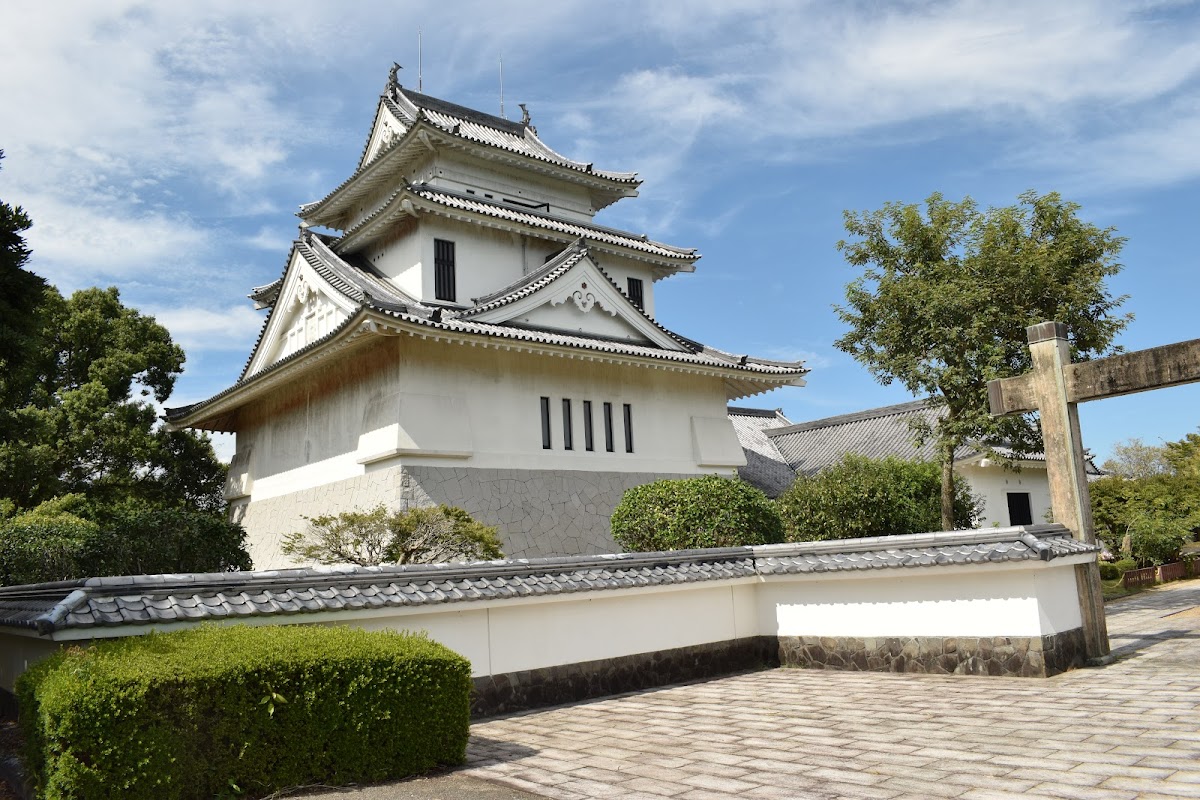
Mukasa Castle (Miyazaki Prefecture) Complete Guide: A Thorough Explanation of the History and Highlights of the Three Great Castles of Hyuga
What is Mukasa Castle?
Mukasa Castle is a medieval flatland castle located in Oyamada, Takaoka-cho, Miyazaki City, Miyazaki Prefecture. Also known as Mukasain Takajo, it is an important mountain castle, counted among the “Three Great Castles of Hyuga” alongside Niinain Takajo (Kijo-cho, Koyu-gun, Miyazaki Prefecture) and Mimatain Takajo (Takajo-cho, Miyakonojo City, Miyazaki Prefecture).
Built on a low hill approximately 60 meters above sea level, this castle is situated on the right bank of the eastward-flowing Oyodo River, occupying a strategic point on the Satsuma Road, which led from Sadowara through Miyakonojo to Satsuma. It boasts a vast castle area spanning approximately 600 meters in length, and is characterized by its structure divided into four baileys by large dry moats.
In March 2002, it was designated a National Historic Site in recognition of its well-preserved large-scale baileys, moats, and earthworks, typical of mountain castles in southern Kyushu. As the oldest existing medieval mountain castle in Miyazaki Prefecture, it is highly valued for its historical significance.
Basic Information on Musa Castle
Location and Setting
Location: Oyamada, Takaoka-cho, Miyazaki City, Miyazaki Prefecture
Former Province: Hyuga Province
Elevation: Approximately 60 meters
Relative Height: Approximately 40 meters
Classification/Structure: Hilltop Castle
Construction Period: Early 14th Century (Nanboku-cho period)
Musa Castle is located on the right bank of the Oyodo River, surrounded by hilly areas with mandarin orange groves. The former site of Musa Elementary School is located at the eastern foot of the hill, where the Musa Castle Ruins Guidance Facility is now situated.
Common Names/Alternate Names
- Mukasain Takajo
- Mukasajo
- Takajo
“Mukasain” refers to an administrative district in the manorial system from ancient to medieval times, and referred to this region. The name “Takajo” derives from its location on high ground as a mountain castle.
Builder and Historical Positioning
Builder: Hatakeyama Naoaki
Main Lords: Hatakeyama clan, Tsuchimochi clan, Ito clan, Shimazu clan
Year of Abandonment: Early Edo period (due to the One Castle Per Province Decree)
Mukasajo Castle was counted as one of the 48 castles of the Ito clan and functioned as a strategic stronghold in Hyuga Province. In particular, from the Nanboku-cho period to the Sengoku period, it played an important role as one of the political and military centers in Kyushu.
History of Musa Castle
Nanboku-cho Period: Construction by the Hatakeyama Clan
The history of Musa Castle dates back to 1336 (Kenmu 3). Ashikaga Takauji dispatched his relative, Hatakeyama Naoaki, to Hyuga Province, ordering him to suppress the Southern Court forces. According to the “Hyuga-ki” (Chronicle of Hyuga Province), Hatakeyama Naoaki is said to have used Musa Castle as his base and engaged in battles against the Southern Court.
During this period, Japan was in the midst of the Nanboku-cho period (Northern and Southern Courts period), and fierce fighting between the Southern and Northern Courts continued in Kyushu. The Hatakeyama clan, acting on Ashikaga Takauji’s orders, were appointed as the governors of Hyuga Province and worked to suppress the Southern Court forces from Musa Castle. Musa Castle functioned as an important military base for the Northern Court during this Nanboku-cho conflict.
The rule of the Hatakeyama clan played a crucial role in establishing the influence of the Ashikaga shogunate in Hyuga Province. The location of Musa Castle was a strategic point controlling both the water transport of the Oyodo River and the land route of the Satsuma Highway, and it functioned as a military and political center in southern Kyushu.
Muromachi Period: The Era of the Tsuchimochi Clan
After the Hatakeyama clan, Musa Castle came under the control of the Tsuchimochi clan. The Tsuchimochi clan were powerful local lords in Hyuga Province and exerted significant influence throughout the Middle Ages. During the Tsuchimochi era, Musa Castle was maintained as an important base in Hyuga Province and functioned as a center for controlling the surrounding region.
The Tsuchimochi clan maintained their power amidst the complex political situation in Hyuga Province, sometimes allied with the Shimazu clan and sometimes in conflict with them. Musa Castle was the stage for these political maneuvers and an important fortress supporting the Tsuchimochi clan’s power base in Hyuga Province.
Sengoku Period: The Rule and Peak of the Ito Clan
With the start of the Sengoku period, Musa Castle came under the control of the Ito clan. The Ito clan expanded their power as a Sengoku daimyo in Hyuga Province, and at their peak, they controlled most of Hyuga Province. Musa Castle, one of the Ito’s 48 castles, became an important base for the Ito clan’s rule.
During the Ito era, Musa Castle is believed to have undergone extensive renovations. Archaeological excavations have revealed that the main enclosure had foundation stone buildings and post-and-beam buildings, indicating it was developed as the lord’s residence. Furthermore, large moats and earthworks were constructed, strengthening its defensive capabilities.
The Ito clan reached its peak from the mid-to-late 16th century, but after a crushing defeat against the Shimazu clan at the Battle of Kizakihara in 1577, they rapidly lost power. This defeat forced the Ito clan to flee from Hyuga Province to Bungo Province (present-day Oita Prefecture).
Shimazu Rule and Abandonment of the Castle
After the decline of the Ito clan, Musa Castle came under the control of the Shimazu clan. Shimazu Tadakuni, the 15th head of the Shimazu clan, controlled Musa Castle, which served as a base for the Shimazu clan’s expansion of power in Hyuga Province. During the Tensho era (1573-1592), it played a crucial role in the Shimazu clan’s unification of Kyushu.
However, after Toyotomi Hideyoshi’s conquest of Kyushu, the Shimazu clan’s territory was reduced to parts of Satsuma, Osumi, and Hyuga. Later, during the Keicho era (1596-1615) of the early Edo period, Musa Castle was abandoned due to the “One Castle Per Province” decree.
After its abandonment, Musa Castle was used for farmland and forest, but the castle’s remains were relatively well preserved. In particular, large-scale moats, earthworks, and baileys remain to this day, conveying the appearance of a medieval mountain castle.
Structure and Remains of Musa Castle
Overall Structure of the Castle
Musa Castle is a flatland castle built on a hill approximately 60 meters above sea level, boasting a vast castle area spanning approximately 600 meters in length. The castle is divided into four large areas (groups of enclosures) by large dry moats (horikiri), each functioning as an independent defensive unit.
This structure is a characteristic “group enclosure” layout found in mountain castles of southern Kyushu. By arranging multiple groups of enclosures, the design allows for continued defense even if one enclosure is captured. Each group of enclosures is demarcated by moats and earthworks, effectively preventing enemy intrusion.
Main Enclosure (Honmaru)
The main enclosure, the central part of Musa Castle, is located at the highest point of the castle and is believed to have housed the lord’s residence and command post. Excavations have revealed the remains of foundation stone buildings and post-and-beam buildings within the main enclosure, and artifacts such as roof tiles and ceramics have also been unearthed.
The main enclosure was surrounded by earthen ramparts, and the entrance (koguchi) was heavily fortified. Furthermore, the main enclosure offered a panoramic view of the surrounding area, indicating its function as a military surveillance base.
A reconstructed CG image, created based on the excavation results, recreates the appearance of the main enclosure during the time of the Ito clan’s rule and can be viewed at the Musa Castle Ruins Guidance Facility.
Moats and Earthen Ramparts
The most distinctive feature of Musa Castle is its large-scale moats. Moats are dry moats dug to cut across ridges, serving as important defensive structures to prevent enemy intrusion. Musa Castle has multiple moats, and their scale is remarkable even among mountain castles in southern Kyushu.
The moats reach depths of over 10 meters in some places, and combined with the steep slopes, they formed a strong defensive line. Furthermore, earthen ramparts were built on both sides of the moat, creating a structure that allowed for attacks from above against enemies attempting to cross the moat.
Earthen ramparts were also built around the enclosures, serving to protect the castle from enemy arrows and firearms. The earthen ramparts of Musa Castle remain remarkably well-preserved today, attesting to the advanced castle-building techniques of the time.
Arrangement of Enclosures
The four enclosures of Musa Castle are believed to have each had a different role. The main enclosure was at the center, surrounded by the second and third enclosures, each functioning as an independent defensive unit.
It is presumed that each enclosure contained facilities for garrisons, weapons, and food storage. Additionally, the communication routes between the enclosures were designed intricately, preventing enemies from easily reaching the central area.
Existing Remains
Currently, the following remains are well-preserved at the Musa Castle site:
- Moat: Multiple large dry moats remain.
- Earthwork: Earthen defensive walls built around the baileys.
- Bailey: Flat, leveled sections.
- Entrance: Remains of entrances to the baileys.
- Vertical Moat: Vertical moats dug into the slope.
These remains exhibit typical structures of medieval mountain castles and are valuable resources for understanding the castle construction techniques and tactics of the time.
Preservation and Development of Musa Castle Site
National Historic Site Designation and Preservation Activities
Musa Castle site was designated a National Historic Site in March 2002. This designation recognized Musa Castle’s high historical value as a medieval mountain castle in southern Kyushu and the excellent state of preservation of its remains.
Following its designation as a National Historic Site, Miyazaki City has been working on the preservation and development of the Musa Castle Ruins. This project prioritizes the preservation of the remains while also developing walking paths and installing informational signs to ensure the safety of visitors.
Musa Castle Ruins Guidance Facility
On October 17, 2015, the “Musa Castle Ruins Guidance Facility” opened at the eastern foot of the Musa Castle Ruins. Constructed on a corner of the former Musa Elementary School grounds, this facility serves as a base for publicly utilizing the Musa Castle Ruins as an educational and tourist resource.
The facility features the following exhibits:
- Explanatory Panels: Detailed explanations of the history of Musa Castle, chronologically.
- Excavated Artifacts: Artifacts such as ceramics, roof tiles, and weapons unearthed during archaeological excavations.
- Restoration Model: A model showing the overall structure of Musa Castle.
- Restoration Image CG: Video recreating the main enclosure during the Ito clan era.
- VR Video: Video content that clearly explains the structure and mechanisms of the mountain castle.
The guidance facility is an important place to visit before visiting the Musa Castle ruins, as it allows visitors to deepen their understanding of the castle’s history and structure.
Results of the Archaeological Excavation
The archaeological excavation conducted by the Miyazaki City Board of Education yielded significant results in unraveling the history of Musa Castle. The remains of foundation stone buildings and post-and-beam buildings were discovered in the main enclosure, confirming the presence of the lord’s residence.
Furthermore, analysis of the excavated ceramics revealed that Musa Castle was in use from the 15th to the 16th centuries. In particular, Chinese celadon and white porcelain, as well as domestically produced pottery, have been unearthed, indicating that Musa Castle prospered through trade at the time.
Furthermore, the discovery of roof tiles indicates the existence of tiled buildings at Musa Castle, a rare feature for a medieval mountain castle in Kyushu. This suggests that Musa Castle functioned not merely as a military base but also as the residence of the local lord.
Highlights of Musa Castle
Large-Scale Moats
The most impressive feature when visiting Musa Castle is the large-scale moats. These moats, over 10 meters deep and several meters wide, demonstrate the advanced castle-building techniques of the time. The height of the earthen ramparts viewed from the bottom of the moat is breathtaking, allowing you to truly appreciate the defensive capabilities of a medieval mountain castle.
Moats are located in multiple places, each with different characteristics. By observing these moats while walking along the promenade, you can understand Musa Castle’s defensive system.
View from the Main Enclosure
The main enclosure is located at the highest point of Musa Castle, offering a panoramic view of the surrounding area. On a clear day, you can see the flow of the Oyodo River, the Miyazaki Plain, and even the Hyuga Sea in the distance.
This view is crucial to understanding the importance of Musa Castle as a military observation post. From this location, the castle lord could monitor the surrounding movements and quickly detect approaching enemies.
Structure of Earthworks and Enclosures
The earthworks of Musa Castle remain in good condition today, allowing for close observation of the castle construction techniques of the time. By observing the height and thickness of the earthworks and their relationship to the enclosures, one can understand the characteristics of medieval castle architecture.
The enclosures are leveled, and their size indicates that many soldiers could be stationed there. The layout of the connecting routes between enclosures and the placement of the gates can also be observed, allowing one to appreciate the ingenuity of the castle’s defensive system.
VR Videos and CG Reconstruction
At the Musa Castle Ruins Guidance Facility, you can view VR videos and CG reconstruction footage. These video contents are extremely effective in visually understanding the overall structure of the castle and its now-lost buildings.
In particular, the CG footage recreating the main enclosure during the Ito clan’s era vividly conveys the appearance of the castle at that time, stimulating the imagination about history. The VR video clearly explains the structure and mechanisms of the mountain castle, making it easy to understand even for first-time visitors.
Access and Visiting Information
Transportation Access
Access by Car:
- Approximately 15 minutes from Miyazaki IC on the Miyazaki Expressway
- Approximately 30 minutes from JR Miyazaki Station
- Parking: Parking available at the Musa Castle Ruins Guidance Facility
Access by Public Transportation:
- Approximately 40 minutes by bus from JR Nippo Main Line Miyazaki Station, get off at “Takaoka” bus stop, then approximately 15 minutes on foot
Visiting Information
Musa Castle Ruins:
- Free admission
- Estimated visit time: 1 hour to 1 hour 30 minutes
- Walking paths are maintained, but since it is a mountain castle, comfortable shoes are recommended.
Musa Castle Ruins Guidance Facility:
- Opening hours: 9:00 AM to 5:00 PM
- Closed: Mondays (or the following day if Monday is a public holiday), New Year holidays
- Admission fee: Free
- Address: Oyamada, Takaoka-cho, Miyazaki City, Miyazaki Prefecture
- Inquiries: Miyazaki City Board of Education, Cultural Properties Division
Visitor Precautions
- As it is a mountain castle, please wear non-slip shoes and comfortable clothing.
- In summer, it is recommended to bring insect repellent and drinking water.
- Be careful as the ground can be slippery during and after rain.
- To protect the remains, please do not enter the earthworks or moats.
- Learning about the castle’s structure at the guidance facility beforehand will deepen your understanding.
Nearby Tourist Attractions
Historical Buildings in Takaoka Town
Takaoka Town, where the Musa Castle Ruins are located, has other historical sights. Visiting the townscape that retains the atmosphere of the Edo period highways and exploring old shrines and temples will allow you to gain a deeper understanding of the region’s history.
Tourist Attractions in Miyazaki City
Musa Castle Ruins is approximately a 30-minute drive from the center of Miyazaki City, allowing you to create a sightseeing plan that combines it with other attractions such as Miyazaki Shrine, Aoshima Island, and the Nichinan Coast.
Historical Significance of Musa Castle
Musa Castle is an important fortress that played a central role in the history of Hyuga Province for approximately 300 years, from the Nanboku-cho period to the early Edo period. Beginning with its construction by Hatakeyama Naoaki under the orders of Ashikaga Takauji, the castle’s history, which saw successive rule by powerful Kyushu warlords such as the Tsuchimochi, Ito, and Shimazu clans, directly reflects the medieval history of Hyuga Province.
In particular, the fact that Musa Castle is counted as one of the “Three Great Castles of Hyuga” indicates that it was not merely a local fortress, but played a central role in the politics and military affairs of Hyuga Province as a whole. Its strategic location at a key point on the Satsuma Road and its control of the Oyodo River’s water transport made it an important base connecting the northern and southern forces in Kyushu.
Currently, the Musa Castle ruins are protected as a national historical site and are recognized for their high academic value as a typical example of a medieval mountain castle. The remains of the castle, including large-scale moats, earthworks, and baileys, are remarkably well-preserved, making it a valuable historical heritage site that conveys the castle-building techniques and tactics of the time to the present day.
Thanks to the preservation and maintenance project by Miyazaki City and the establishment of a guidance facility, the Musa Castle ruins are being utilized as an important cultural asset of the region, as well as a tourist and educational resource. Exhibits utilizing the latest technologies, such as VR videos and CG reconstructions, vividly convey the appearance of the medieval castle to visitors, deepening their understanding of history.
Summary
Musa Castle is a valuable medieval mountain castle ruin remaining in Miyazaki City, Miyazaki Prefecture. Since its construction in the first half of the 14th century during the Nanboku-cho period, it has played an important role as a central stage in the history of Hyuga Province.
The history of Musa Castle, which was successively ruled by powerful warlords of Kyushu such as the Hatakeyama, Tsuchimochi, Ito, and Shimazu clans, reflects the complex political situation of Hyuga Province. In particular, during the Ito clan’s era, large-scale renovations were carried out, and it prospered as one of the 48 castles of the Ito clan.
Currently, the Musa Castle ruins are designated as a national historical site, and the remains, including large-scale moats, earthworks, and baileys, are well-preserved. At the Musa Castle Ruins Guidance Facility, you can learn in detail about the history and structure of Musa Castle through the results of archaeological excavations and reconstructed CG images.
When visiting Miyazaki Prefecture, be sure to visit the Musa Castle ruins. The remains, which convey the appearance of a medieval mountain castle, and the beautiful views from there, will surely evoke a sense of historical romance. By experiencing the history of Musa Castle, which flourished as one of the three great castles of Hyuga Province and as an important base among the 48 castles of Ito, your understanding of Kyushu’s medieval history will deepen.