.png)
Kiyosue Jinya (Yamaguchi Prefecture): A Thorough Explanation of the History and Current State of the Chōshū Domain’s Sub-Domain
What is Kiyosue Jinya?
Kiyosue Jinya was the administrative center of the Kiyosue Domain, located in Kiyosue Village, Toyoura District, Nagato Province (present-day Kiyosue Jinya, Shimonoseki City, Yamaguchi Prefecture). The Kiyosue Domain was established as a so-called “sub-domain,” further divided from the Chōfu Domain, a branch domain of the Chōshū Domain (Hagi Domain).
Throughout the Edo period, it was ruled by the Mōri clan and, despite being a small domain of 10,000 koku, developed its own unique administration. Currently, Shimonoseki Municipal Higashi Junior High School stands on the site of the former Jinya, and although only a few remains remain to evoke its former glory, it is known as an important historical site that tells the history of the region.
History of Kiyosue Jinya
Circumstances of Establishment
The establishment of Kiyosue Jinya originated from the will of Mōri Hidemoto, the lord of the Chōfu Domain. In 1653, on his deathbed, Mori Hidemoto left a will bequeathing 10,000 koku of land to his second son, Mori Mototomo. Respecting his father’s wishes, Mori Tsunamoto (Hidemoto’s eldest son), who was the lord of the Chofu Domain, granted the 10,000 koku to his younger brother, Mototomo.
In 1659, Mori Mototomo built a fortified residence on his newly acquired territory, formally establishing the Kiyosue Domain. This established a three-tiered structure: the Choshu Domain as the main domain, the Chofu Domain as a branch domain, and the Kiyosue Domain as a secondary domain.
Successive Lords and Domain Administration
The Kiyosue Domain was ruled by the Mori clan for approximately 200 years, from the first lord, Mori Mototomo, to Mori Motozumi at the end of the Edo period. The successive lords of the domain are as follows:
- 1st Lord: Mori Motonori
- 2nd Lord: Mori Motohira
- 3rd Lord: Mori Masatane
- 4th Lord: Mori Masakuni
- 5th Lord: Mori Masaaki
- 6th Lord: Mori Mototsugu
- 7th Lord: Mori Mototsugu
- 8th Lord: Mori Motoatsu
As a small domain with a 10,000 koku (unit of rice production) yield, it was always in a difficult financial situation. However, it maintained its own independent administration while maintaining relations with the main domain, Choshu Domain, and its branch domain, Chofu Domain. During the late Edo period, as the entire Choshu Domain became the center of the movement to overthrow the shogunate, the Kiyosue Domain also played a part in it.
Changes After the Abolition of the Han System
Following the Meiji Restoration, the Kiyosue Domain was abolished in 1871 (Meiji 4) with the abolition of the Han system. Subsequently, in 1873 (Meiji 6), the land and buildings of the domain’s headquarters were auctioned off and sold to private individuals.
During World War II, the site was requisitioned by the military. After the war, in 1946 (Showa 21), it was sold to Shimonoseki City as school grounds. The following year, in 1947 (Showa 22), Shimonoseki Municipal Eastern Junior High School opened on the site. This school is still in operation today and occupies most of the former headquarters site.
Structure and Scale of the Kiyosue Headquarters
Layout of the Headquarters
The Kiyosue Headquarters was constructed on a scale befitting the administrative office of a small domain of 10,000 koku (a unit of rice production). Unlike a castle, it was a fortified residence without a keep or stone walls, but it possessed defensive features through moats and earthworks.
The site of the jinya (fortified residence) corresponds to the current grounds of Shimonoseki Municipal Higashi Junior High School and its surrounding area. At the center was the lord’s residence, the Goten, surrounded by government offices, storehouses, and vassal quarters. A moat encircled the perimeter of the site, giving it the appearance of a proper jinya.
Architectural Characteristics
The buildings were of a scale commensurate with the domain’s 10,000 koku (a unit of rice production). The Goten consisted of several buildings, separating the lord’s living space from the administrative area. While the architectural style is thought to have exhibited characteristics of mid-Edo period samurai architecture, detailed records do not exist.
Within the jinya, there were storehouses for storing tax rice, government offices for the domain’s administration, and guardhouses for vassals. A garden was also provided, suggesting a certain degree of cultural consideration was given to the lord’s living space.
Existing Remains
Remains of the Moat
The most clearly preserved remains of the Kiyosue Jinya (fortified residence) are parts of the moat. The moat that surrounded the Jinya can still be partially seen today. However, due to urbanization, only a limited portion retains its original form.
The moat functioned as a water-filled moat, serving as a defensive structure for the Jinya. While not as large as a castle in terms of width and depth, it is thought to have been a standard size for a Jinya.
Stone Monuments and Signs
Stone monuments marking the existence of the Kiyosue Jinya are erected at and near the Jinya site. These monuments were erected to pass on the history of the region to future generations and are inscribed with concise explanations of the Jinya’s location and history.
These monuments can be seen by visiting the grounds and surrounding area of Shimonoseki Municipal Higashi Junior High School. However, access to the school grounds is restricted, so consideration is necessary when visiting.
Remnants of Topography
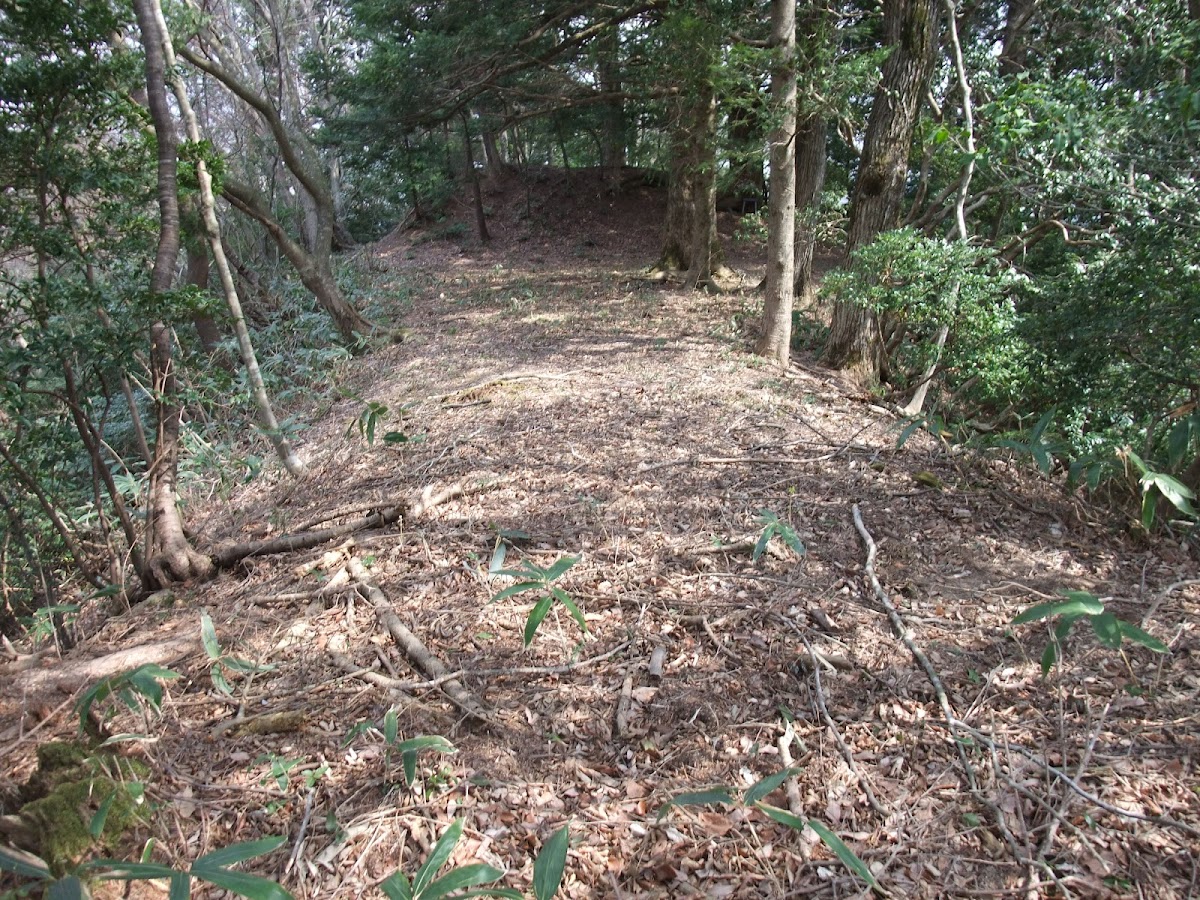
The topography of the area where the Jinya was built still retains some of its original characteristics. The Kiyosue area is relatively flat, but the location of the encampment is slightly higher than the surrounding area, suggesting that the encampment was built utilizing the natural terrain.
Relationship between the Kiyosue Domain and the Choshu Domain
Position as a Subordinate Domain
The Kiyosue Domain held a unique position as a “subordinate domain,” further divided from the Chofu Domain, which was a branch domain of the Choshu Domain (Hagi Domain). Such a three-tiered structure was rare nationwide and demonstrated the strong unity of the Mori clan.
While the Kiyosue Domain conducted its own independent administration, it needed to coordinate with the main domain, the Choshu Domain, and its branch domain, the Chofu Domain, in important political decisions. Especially during the turbulent Bakumatsu period, the Choshu Domain as a whole was required to act, and the Kiyosue Domain followed this policy.
Trends in the Bakumatsu Period
During the Bakumatsu period, the Choshu Domain became a central force in the movement to overthrow the shogunate. The Kiyosue Domain, as part of the Choshu Domain, was also involved in this historical turning point. Although it was a small domain with a 10,000 koku (unit of rice production) yield, it is believed to have played a certain role in the overall movements of the Choshu Domain.
In particular, its geographical location in Shimonoseki was politically and militarily important during the late Edo period. Because the Kiyosue Domain’s territory was located in this region, it directly experienced the turbulent times.
Surrounding Historical Facilities and Related Sites
Chofu Mori Residence
Located very close to the Kiyosue Jinya (fortified residence), the Chofu Mori Residence was built in 1903 (Meiji 36) by Mori Mototoshi, the 14th head of the Chofu Domain’s Mori family. It is an important facility that conveys the history of the Chofu Domain, the main branch of the Kiyosue Domain.
This historic residence, where Emperor Meiji is said to have stayed, is still preserved and open to the public. Visiting the residence in conjunction with the Kiyosue Jinya will allow for a deeper understanding of the history of the Mori family.
Historical Sites of the Late Edo Period in Shimonoseki
Besides the Kiyosue Jinya (fortified residence), Shimonoseki City is dotted with many historical sites related to the late Edo period. Numerous sites remain that convey the turbulent period of the late Edo period, including the site of the Kiheitai (a militia organized by Takasugi Shinsaku) and the site of the Ito Residence (main headquarters).
By visiting these historical sites, you can gain a deeper understanding of the historical context in which the Kiyosue Domain existed and the historical role played by the Choshu Domain as a whole.
Around Akama Shrine
Akama Shrine is indispensable when discussing the history of Shimonoseki. This shrine, dedicated to Emperor Antoku who drowned during the Battle of Dan-no-ura, symbolizes the depth of Shimonoseki’s history. This area, with a history far older than that of the Kiyosue Jinya, can be described as a place where layers of history have accumulated.
Access and Visiting Information
Location
Address: Kiyosue Jinya, Shimonoseki City, Yamaguchi Prefecture
The Kiyosue Jinya site is located on the grounds of the current Shimonoseki Municipal Higashi Junior High School and its surrounding area. Access to the school grounds is restricted, so visits will be limited to observation from the surrounding area and viewing of publicly accessible monuments.
Access
Public Transportation:
- Approximately 10 minutes by car from JR Sanyo Main Line “Ozuki Station”
- Within walking distance from JR Sanyo Main Line “Kiyosue Station”
- Take a bus from Shimonoseki Station and walk from the nearest bus stop
Car:
- Approximately 15 minutes from Chugoku Expressway “Shimonoseki IC”
- Parking is for school facilities and is not available for general use. Please use nearby public parking lots.
Notes for Visitors
Most of the Jinya (fortified residence) site is school grounds, so free entry is not permitted. Please note the following points when visiting:
- Avoid unauthorized entry onto school grounds.
- View from surrounding roads and publicly accessible monuments.
- Be considerate and avoid disrupting school classes or events.
- Photography is permitted only from public roads.
Historical Significance of Kiyosue Jinya
Example of the Sub-Domain System
The Kiyosue Domain is an important example for understanding the Edo period’s domain system, as it represents a “sub-domain” system where a daimyo family had branch domains, which in turn divided their territories. Despite its small size of 10,000 koku, its ability to maintain its own independent administration demonstrates the unity of the Mori clan and the flexibility of the Edo shogunate’s governing system.
Position in Local History
In the history of Shimonoseki, the Kiyosue Jinya played a crucial role as a base for regional governance during the Edo period. Remnants of the Jinya era can be seen in the current place names and town layouts of the Kiyosue district, forming part of the region’s identity.
Connection to the History of the Late Edo Period
While the Chōshū Domain played a central role in the political transformations of the late Edo period, the Kiyosue Domain also witnessed a turning point in history as part of this process. Although a small domain, its existence cannot be ignored within the context of the overall movements of the Chōshū Domain.
Current Status and Challenges of Kiyosue Jinya Research
Status of Historical Materials
Historical materials concerning the Kiyosue Jinya are not necessarily sufficient due to the chaos following the abolition of the feudal domains and the destruction of war. Many details regarding the domain’s administration and the architectural structure of the Jinya must be inferred from fragmentary records.
Some historical materials concerning the Kiyosue Domain are preserved in archives and museums within Yamaguchi Prefecture, as well as in the local history museum in Shimonoseki City, and research by researchers continues.
Challenges in Preserving the Remains
While the use of the Jinya site as school grounds has, in one respect, prevented the destruction of the ruins, it also makes full-scale excavation and the preservation and public display of the remains difficult. In the future, it is hoped that the investigation and preservation of the remains will progress during opportunities such as the renovation of school facilities.
Local History Education
The history of the Kiyosue Jinya is an important subject for local history education. Currently, at Higashi Junior High School, which stands on the site, students have the opportunity to learn about the Kiyosue Jinya as part of local history, giving them an opportunity to recognize that their school is a historical site.
Kiyosue Jinya and Historical Tourism in Shimonoseki
Potential as a Historical Tourism Resource
Shimonoseki City attracts many tourists as a stage for the history of the late Edo period. There are numerous nationally known historical sites, such as places associated with Takasugi Shinsaku and the site of the Shimonoseki War (Bakan War).
While the Kiyosue Jinya is not as well-known as these famous historical sites, it is an interesting subject for history enthusiasts and researchers as a historical site that shows the reality of regional governance during the Edo period. In the future, it is hoped that it will be utilized as a historical tourism resource through the installation of appropriate signage and information dissemination.
Collaboration with Other Historical Sites
Collaborating with other historical sites in Shimonoseki City can further enhance the value of the Kiyosue Jinya. In particular, combining it with historical sites in the Chofu area, such as the Chofu Mori Residence, Chofu Castle Town, and Kozanji Temple, makes it possible to create a tourist route that allows for a three-dimensional understanding of the relationship between the Mori clan’s rule and the local community.
Utilization of Digital Technology
Given the limited remaining structures of the Kiyosue Jinya, digital technology for restoration and information provision is effective. By utilizing new technologies such as CG-restored images of the Jinya and on-site information provision using AR applications, it is possible to convey its former appearance to visitors.
Summary
The Kiyosue Jinya served as the administrative center of the Kiyosue Domain in Shimonoseki City, Yamaguchi Prefecture, for approximately 200 years, from 1659 (Manji 2) until the Meiji Restoration. Despite its unique position as a sub-domain of the Choshu Domain, it maintained its own independent administration for eight generations, starting with Mori Mototomo.
Currently, most of the former jinya (fortified residence) site is occupied by Shimonoseki Municipal Higashi Junior High School, and no buildings remain. However, remnants of the moat and stone monuments allow us to imagine what it was like in the past. Despite being a small domain of 10,000 koku (a unit of rice production), it continues to hold historical significance as an important historical site illustrating the domain system and regional governance methods of the Edo period.
When visiting Shimonoseki, why not also visit the Kiyosue Jinya site, along with other more famous historical sites from the end of the Edo period, and reflect on the history of the local community and the Mori clan during the Edo period? You will surely realize that the accumulation of history rooted in the region has shaped the town of Shimonoseki as it is today.