Kiidani Castle (Fukuoka Prefecture): An Impregnable Natural Fortress and the Tragedy of the Buzen Utsunomiya Clan
Located in the mountainous region of Chikujo-cho, Chikujo-gun, Fukuoka Prefecture, west of Mt. Kubotei, Kiidani Castle is known as a unique presence in the history of Japanese castles. Built as a natural fortress surrounded by massive rock walls, this mountain castle served as the residence of the Buzen Utsunomiya clan (Kii clan) for approximately 400 years. During the Sengoku period, it etched its name in history as an impregnable fortress that even repelled the large army of Kuroda Nagamasa, a subordinate of Toyotomi Hideyoshi.
Basic Information on Shiroitani Castle
Alternate Names: Kiinokojo, Kayakirijo, Chigirijo, Shiroigojo
Location: Samuta, Chikujo-machi, Chikujo-gun, Fukuoka Prefecture
Year of Construction: Around 1195 (Kenkyu 6)
Builder: Utsunomiya Nobufusa
Castle Structure: Mountain Castle
Year of Abandonment: 1587 (Tensho 15)
Main Lords: Buzen Utsunomiya Clan (Shiroi Clan)
Shiroitani Castle was an important strategic point in Buzen Province (present-day eastern Fukuoka Prefecture to northern Oita Prefecture) from the medieval to the Sengoku period. Its defensive system, which made maximum use of the terrain, is considered a masterpiece of Japanese mountain castle architecture.
History of Shiroitani Castle
Founding and the Rise of the Buzen Utsunomiya Clan
The history of Shiroitani Castle dates back to the early Kamakura period, specifically to Kenkyu 6 (1195). Utsunomiya Nobufusa of Shimotsuke Province (present-day Tochigi Prefecture), who distinguished himself in the Genpei War under Minamoto no Yoritomo, was appointed governor of Buzen Province and granted the position of chief land steward of Buzen, and entered this region.
Nobufusa established his base in a rugged valley called Shiroitani and built a mountain castle utilizing the surrounding natural terrain. Because this was his base, the Utsunomiya clan also came to be known as the “Shiroi clan,” and they ruled this area for approximately 400 years.
The Buzen Utsunomiya clan, a branch of the prestigious Utsunomiya clan of Tochigi Prefecture, grew into a powerful Sengoku daimyo in northern Kyushu. The Shiroitani territory, centered around Shiroitani, developed as an important region in Buzen Province, and the Utsunomiya clan built their own unique culture and power in this area.
Shiroitani Castle in the Sengoku Period
During the Sengoku period (Warring States period), Shiroitani Castle became a battleground for conflicts with surrounding forces. Buzen Province was a region where major powers such as the Otomo, Ouchi, and Mori clans competed for influence, and the Shiroi clan maintained their independence while maintaining complex diplomatic relations with these forces.
The geographical advantages of Shiroitani Castle were maximized during this period. Surrounded by sheer cliffs, the castle did not easily fall even when attacked by large armies, greatly contributing to the Shiroi clan’s maintenance of power.
Toyotomi Hideyoshi’s Kyushu Campaign and the Shiroi Clan’s Resistance
In 1587 (Tensho 15), Toyotomi Hideyoshi launched his Kyushu campaign. At this time, the lord of Shiroitani Castle was Utsunomiya Shizufusa (Shiroi Shizufusa). While many daimyo in Kyushu surrendered to Hideyoshi, Shizufusa initially resisted.
Kuroda Yoshitaka (Kanbei), acting on Hideyoshi’s orders, attempted to capture Shiroitani Castle, but the castle, protected by natural fortifications, did not fall easily. Ultimately, Shizufusa surrendered and was granted an audience with Hideyoshi, but his territory was drastically reduced, and he was only granted a fief of 6,000 koku.
Conflict with Kuroda Nagamasa and the Fall of Shiroitani Castle
After Hideyoshi’s Kyushu campaign, Kuroda Yoshitaka took control of Buzen Province, establishing Nakatsu Castle as his base. However, Shizufusa was dissatisfied with the reduction in his territory, and his relationship with the Kuroda clan gradually deteriorated.
In 1587, Shizufusa once again holed up in Shiroitani Castle and rebelled against the Kuroda clan. Kuroda Nagamasa, the eldest son of Kuroda Yoshitaka, led a large army to attack Shiroitani Castle, but was thwarted by its natural fortifications and failed to capture the castle despite repeated attacks.
Shiroitani Castle’s defenses were formidable; the only way to reach it was a narrow path through a massive rock face known as “Sancho-yumi-no-iwa,” and the main gate was barely wide enough for one person to pass through. Even inside the gate, the castle was surrounded on both sides by sheer cliffs, constantly exposing the attackers to the danger of arrows and stones raining down from above.
The Assassination of Shiroi Shizufusa and the Downfall of the Shiroi Clan
Realizing that Shiroitani Castle could not be captured by force, Kuroda Nagamasa decided to resort to strategy. Nagamasa proposed a peace treaty to Shizufusa and suggested a meeting at Nakatsu Castle. Shizufusa was initially wary, but accepted the conditions, including the exchange of hostages, and in 1588, he visited Nakatsu Castle with a small retinue.
However, this was a trap set by the Kuroda clan. Shizufusa and his retainers, upon entering Nakatsu Castle, were assassinated through Nagamasa’s machinations. This incident, known as the “Shiroi Collapse” or “Shiroitani Incident,” is recounted as a prime example of the intrigues of the Sengoku period.
Without its lord, Shiroitani Castle was subsequently attacked and fell to the Kuroda army, leading to the downfall of the Buzen Utsunomiya clan. It marked the end of a prestigious family that had ruled Shiroitani for approximately 400 years.
Shiroitani Castle was abandoned and subsequently disappeared from the stage of history, but its remains survive to this day, conveying the image of its once impregnable fortress.
Structure and Defensive System of Shiroitani Castle
Location as a Natural Fortress
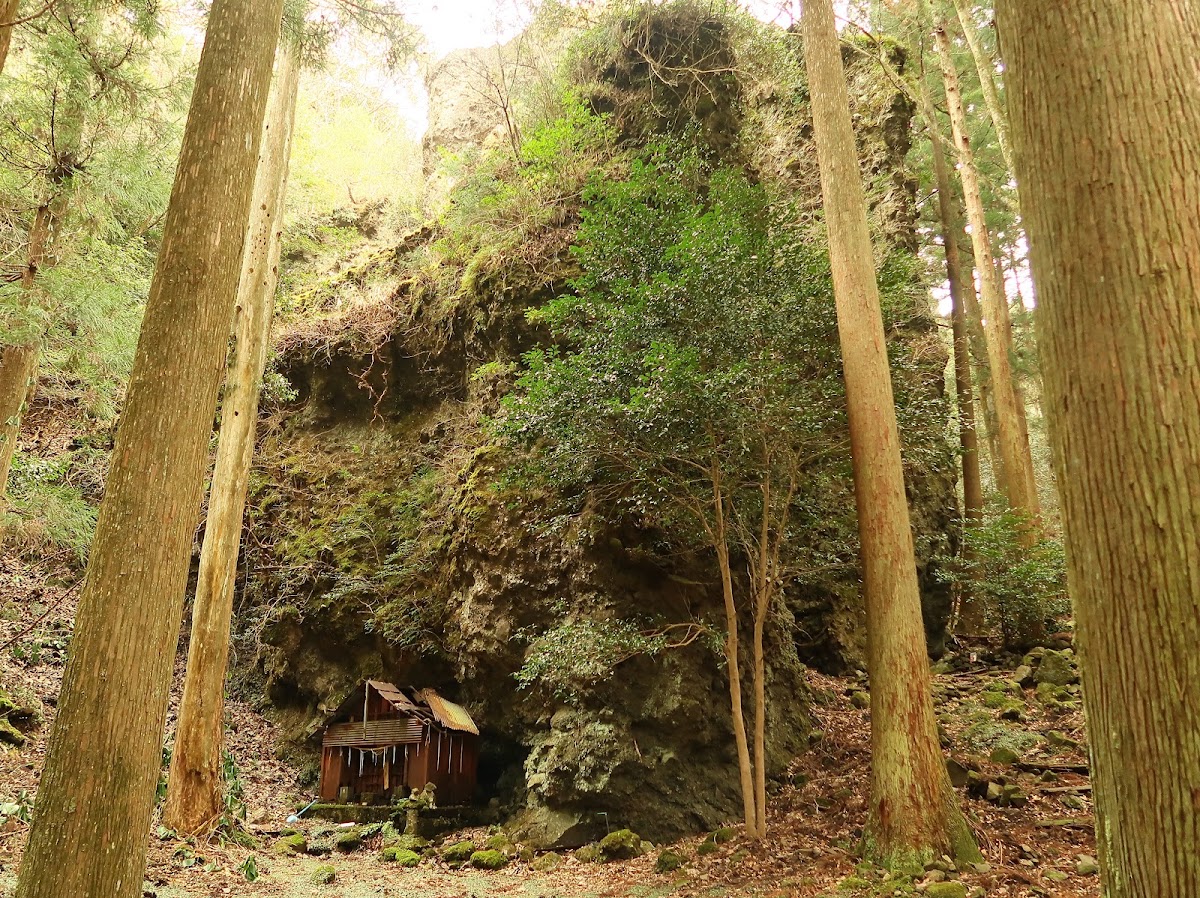
The most distinctive feature of Shiroitani Castle lies in its defensive system, which made maximum use of its terrain. The castle is located on the west side of Mount Kubotei, deep within a valley called Shiroitani, and is surrounded by massive rock walls reaching tens of meters in height.
This terrain truly deserves to be called a natural fortress, possessing such defensive capabilities that artificial stone walls and moats were hardly necessary. Attackers could only approach the castle through limited access routes, constantly under attack from the defenders.
Sanchoyumi-no-Iwa and Access Routes
The only path to Shiroitani Castle is a narrow passage through a massive rock face called “Sanchoyumi-no-Iwa.” This name is said to derive from the fact that arrows could reach three cho (approximately 327 meters) away from this point of clear visibility.
This path was so narrow that it was impossible for a large army to advance at once. Furthermore, defenders could throw arrows and stones from the rock faces on either side, making it an extremely dangerous location for attackers. This natural defensive line was one of the main reasons that even Kuroda Nagamasa’s large army was repelled.
Main Gate and Internal Structure
Even after breaching Sanchoyumi-no-Iwa, the castle’s main gate was only wide enough for one person to pass through. Passing through this narrow gate left the attackers completely defenseless, making them easy targets for the defenders.
Even after entering the gate, the passage continued, surrounded by sheer cliffs on both sides, making it difficult to avoid attacks from above. This multi-layered defensive system allowed Shiroitani Castle to repel large armies even with a small number of defenders.
It is believed that the castle’s interior contained the lord’s residence, the vassals’ houses, and warehouses, but many details of its structure remain unknown today.
Characteristics as a Mountain Castle
Shiroitani Castle is a typical mountain castle. It is believed that in peacetime, the lord and vassals resided in a residence at the foot of the mountain, and in wartime, they would take refuge in the castle on the mountaintop. The castle had wells and food storage facilities, making it capable of withstanding long sieges.
The castle’s layout skillfully utilized the natural terrain, achieving maximum defensive effectiveness while minimizing artificial construction. This design philosophy is characteristic of mountain castle architecture from the medieval to the Sengoku period.
Highlights of Shiroitani Castle
Sanchoyumi-no-Iwa Rock
The biggest highlight when visiting Shiroitani Castle is Sanchoyumi-no-Iwa Rock. The narrow path, flanked by massive rock walls, was a place where the Kuroda army attempted numerous attacks, and it still awestings visitors today as a symbol of its impregnable fortress.
The rock walls reach tens of meters in height, and their sheer power can only be truly appreciated by visiting the site in person. Standing here, you can intuitively understand why Shiroitani Castle never fell.
Remains of the Main Gate
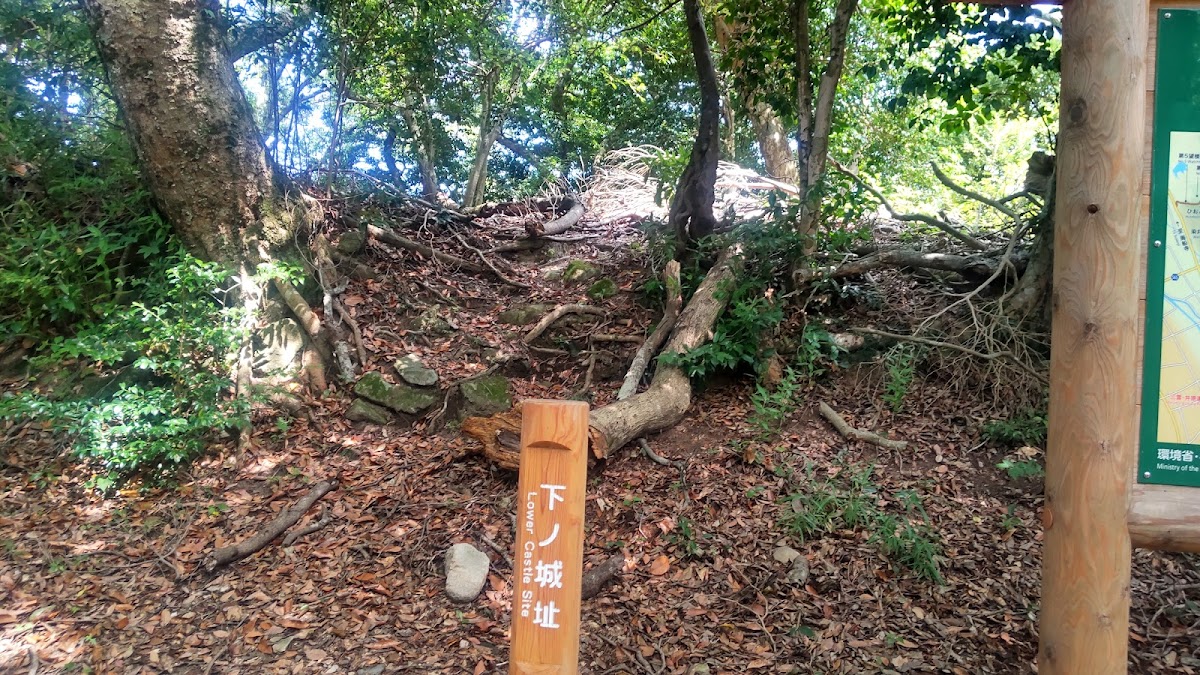
The remains of the main gate, located beyond Sanchoyumi-no-Iwa Rock, are also an important point of interest. While the gate structure itself no longer exists, the traces of a narrow passage barely wide enough for one person can be seen, revealing the ingenuity of the defensive system at the time.
View from the Castle Site
From the main keep of Shiroitani Castle, you can enjoy panoramic views of the surrounding mountains and valleys. This is a place where you can imagine the castle lords looking out over their territory in the past and reflect on the history of the Buzen Utsunomiya clan.
Stone Walls and Remains
Within the castle grounds, a small number of stone wall remains still exist. Within a defensive system primarily based on natural rock faces, these artificially constructed stone walls are valuable remains that demonstrate the ingenuity of castle architecture.
Surrounding Historical Sites
Several historical sites related to the Buzen Utsunomiya clan are scattered around Shiroitani Castle. The remains of the Shiroitani clan’s family temple and the residences of their retainers also remain, allowing for a comprehensive understanding of Shiroitani’s history.
Access and Visiting Information
Location and Map
Address: Kanda, Chikujo-machi, Chikujo-gun, Fukuoka Prefecture
Shiroitani Castle is located in the mountainous area of eastern Fukuoka Prefecture, near the border with Oita Prefecture. The nearest urban area is the center of Chikujo-machi, but it is necessary to travel along a mountain path to reach the castle ruins.
Access by Public Transportation
Visiting by public transportation is difficult. The nearest bus stop is “Kamisanda” (Taiyo Kotsu), but it requires a 40-50 minute walk along a mountain path from the bus stop to the castle ruins. Since bus services are limited, it’s important to check the timetable in advance.
Access by Car
Visiting by car is the most practical option. It takes approximately 30-40 minutes from the Shiida Minami IC or Buzen IC on the Higashi-Kyushu Expressway, via National Route 496, etc. However, the roads leading close to the castle ruins are narrow, and parking spaces are limited, so caution is advised.
Visiting Time and Estimated Duration
For visiting the castle ruins, allow 1-2 hours, including travel time to and from the site. If you plan to visit from Sanchoyumi-no-Iwa to the main gate ruins and the main keep ruins, it may take more than 2 hours if you explore thoroughly.
Since you will be walking on mountain paths, comfortable shoes and clothing are essential. Also, insect repellent is necessary in summer, and cold weather gear is necessary in winter.
Points to Note When Visiting
Shiroitani Castle is not a well-maintained tourist spot; it is a mountain castle with its remains intact. Please pay attention to the following points when visiting:
- The path is steep and the footing is poor in some places, so please wear non-slip shoes such as trekking shoes.
- Signposts are limited, so it is recommended to prepare maps and materials in advance.
- Cell phone reception is poor in some areas, so it is safer to avoid visiting alone.
- The path becomes slippery in bad weather, so it is recommended to refrain from visiting.
- In summer, be aware of dangerous creatures such as venomous snakes (mamushi).
Nearby Tourist Spots
Kubotei Mountain
Kubotei Mountain (elevation 782 meters), located east of Shiroitani Castle, was once a sacred site for Shugendo (mountain asceticism). The ruins of Kubotei-san Gokoku-ji Temple are located at the summit and are designated as a national historic site. Visiting Nakatsu Castle in conjunction with Shiroitani Castle will allow you to gain a deeper understanding of the region’s history.
Nakatsu Castle
Nakatsu Castle, located in Nakatsu City, Oita Prefecture, is known as the site of the assassination of Shiroi Shizufusa, and was built by Kuroda Yoshitaka (Kanbei). It’s about a 40-minute drive from Shiroitani Castle and is worth visiting as part of a set, as it’s the tragic site of the Buzen Utsunomiya clan.
The current Nakatsu Castle has a replica keep, and the interior houses a museum. It displays materials related to the Kuroda and Shiroi clans, which is beneficial for understanding the historical background of Shiroitani Castle.
Chikujo Town Historical and Folk Museum
This museum introduces the history and culture of Chikujo Town and also displays materials related to Shiroitani Castle and the Buzen Utsunomiya clan. Visiting before visiting the castle ruins will allow for a deeper understanding of the site.
Tsunashiki Tenmangu Shrine
This ancient shrine in Chikujo Town is a Tenmangu shrine dedicated to Sugawara no Michizane. As a shrine where you can feel the history and culture of the Buzen region, it is worth visiting when you come to Shiroitani Castle.
Historical Significance of Shiroitani Castle
A Masterpiece of Mountain Castle Architecture in Medieval Kyushu
Shiroitani Castle occupies an important position in the history of Japanese castles as a masterpiece of mountain castle architecture that makes maximum use of the natural terrain. Its design philosophy, which achieved maximum defensive effectiveness while minimizing artificial construction, represents the pinnacle of castle-building technology from the medieval to the Sengoku period.
Historical Role of the Buzen Utsunomiya Clan
The Buzen Utsunomiya clan ruled a part of Buzen Province for approximately 400 years, from the Kamakura period to the Sengoku period, and greatly contributed to the development of the region’s politics and culture. Their history of establishing roots in Kyushu as a branch family of the prestigious Utsunomiya clan of Tochigi Prefecture and building their own power is a valuable example of the regional expansion of medieval samurai groups.
A Symbol of Sengoku Period Intrigue
The assassination of Shiroi Shizufusa is recounted as a prime example of Sengoku period intrigue. Kuroda Nagamasa’s method of conquering a castle that could not be captured by force, through strategy, demonstrates the cold, pragmatic realism of Sengoku period warlords and is well representative of the characteristics of that era.
At the same time, this incident was also a tragedy, marking the downfall of the prestigious Buzen Utsunomiya clan, and is remembered as a historical event that conveys the ruthlessness of the Sengoku period.
Importance in Regional History
The history of Shiroitani Castle and the Buzen Utsunomiya clan is an indispensable element in understanding the history of the Buzen region, which spans from eastern Fukuoka Prefecture to northern Oita Prefecture. As a symbol of the transition period from the medieval to the early modern period in this region, it occupies an important position in regional history research.
Significance of Visiting Shiroitani Castle
Shiroitani Castle is not a castle ruin developed as a tourist attraction. However, precisely because of this, it is a valuable place where you can experience the appearance of a Sengoku period mountain castle in almost its original form.
Walking between the massive rock walls of Sanchoyumi-no-Iwa and passing through the narrow passage of the main gate provides a visceral understanding of why this castle was considered impregnable. Here, you’ll find a real historical experience that cannot be obtained from history books or documents alone.
Furthermore, by reflecting on the approximately 400-year history of the Buzen Utsunomiya clan and its tragic end, you can imagine the lives of the people who lived through the turbulent Sengoku period.
The view from the castle ruins is likely almost unchanged from the scenery the castle lords saw from this very spot. The greatest appeal of visiting Shiroitani Castle is the ability to feel the romance of history while gazing at that view.
Summary
Shiroitani Castle (Chikujo-machi, Fukuoka Prefecture) occupies a unique position in the history of Japanese castles as an impregnable mountain castle surrounded by natural rock walls. Built in 1195 by Utsunomiya Nobufusa, this castle served as the residence of the Buzen Utsunomiya clan (Shiroi clan) for approximately 400 years. During the Sengoku period, it even repelled the large army of Kuroda Nagamasa.
Its defensive system, which made maximum use of the natural terrain, including a narrow path between massive rock walls known as Sanchoyumi-no-iwa and a main gate barely wide enough for one person, is considered a masterpiece of medieval mountain castle architecture.
In 1588, when the castle lord, Shiroi Shizufusa, was assassinated at Nakatsu Castle through a plot by Kuroda Nagamasa, Shiroi Valley Castle fell, and the Buzen Utsunomiya clan perished. This tragic history conveys the ruthlessness of the Sengoku period.
Today, the castle ruins stand quietly in the mountains, largely preserving their original appearance. Visiting requires traversing steep mountain paths, but the historical experience gained is a unique and invaluable one. For anyone interested in the history of eastern Fukuoka Prefecture, or a fan of mountain castles, this is a historical site you should definitely visit.