Goshogatani Kogoishi (Fukuoka Prefecture) Complete Guide | A Thorough Explanation of the History, Remains, and Access to this Ancient Mountain Castle
Goshogatani Kogoishi is an ancient mountain castle site built on Mt. Hotogi (Goshogatake), which has an elevation of 246.9m and straddles Yukuhashi City and Miyako Town in Kyoto Prefecture. It is believed to be a defensive structure built in the late 7th century after the Battle of Baekgang to prepare for invasions by Tang China and Silla. It was designated a National Historic Site on November 14, 1953.
This large-scale mountain castle site, spanning approximately 3km in circumference and covering an area of about 350,000 square meters, is a valuable cultural asset that tells the story of ancient Japanese history and attracts attention from history enthusiasts and archaeology researchers. This article comprehensively explains everything you need to know before visiting Goshogatani Kogoishi, from its historical background and the characteristics of its remains to its highlights and access methods.
What is Goshogatani Kogoishi? Basic Information and Overview
Goshogatani Kogoishi is an ancient mountain castle located in the Magatake mountain range in eastern Fukuoka Prefecture, overlooking the Kyoto Plain. It stretches from the ridge west of Mt. Hotogi to the northern slope. “Kogoishi” is a general term for archaeological sites in the mountains where walls are constructed with rows of stones, earthworks, and stone ramparts, a unique group of ancient sites distributed mainly in the Kyushu region.
Location and Scale
Goshogatani Kogoishi is located in the southwestern part of Yukuhashi City, built in a mountainous area centered around Mt. Hotogi (Goshogatake), which has an elevation of 246.9m. The castle’s perimeter extends approximately 3km, with earthworks and stone ramparts covering more than 2km, except for the rugged terrain around the summit of Mt. Hotogi.
The total area of the ruins is vast, approximately 350,000 square meters, making it one of the largest ancient mountain castles in Kyushu. The skillful use of the natural mountain terrain in the placement of defensive structures conveys to the present day the advanced castle-building techniques and strategic thinking of the time.
Origin of the Name
The name “Kamikageishi” originates from the Edo period scholar Kaibara Ekiken, who referred to the rows of stones as “Kamikageishi” in his book “Chikuzen no Kuni Zoku Fudoki” (Continued Topography of Chikuzen Province). Initially thought to be boundary stones indicating a sacred place, archaeological excavations since the Showa era revealed it to be the site of an ancient mountain castle.
The “Gosho” in Goshogaya is believed to suggest that this area was the site of some important facility or the base of a ruler.
Historical Background of Goshogaya Kamikageishi
East Asian Situation and Background of Castle Construction in the 7th Century
The latter half of the 7th century, when Goshogaya Kamikageishi was built, was a turbulent period throughout East Asia. In the Battle of Baekgang in 663, Japan (Wa) dispatched troops to the Korean Peninsula to support the restoration of Baekje, but suffered a crushing defeat at the hands of the Tang-Silla allied forces. This defeat left the Japanese archipelago in danger of invasion from Tang China and Silla. The imperial court urgently needed to strengthen its defenses and began constructing large-scale defensive facilities, primarily in northern Kyushu. Goshogatani Jinjaishi is believed to be one of the ancient mountain castles built during this period.
Part of the Dazaifu Defense Line
Goshogatani Jinjaishi was a crucial stronghold located at the eastern end of the defense line centered on Dazaifu. Several other Jinjaishi-style mountain castles, such as Ono Castle and Kii Castle (Koryo-style), as well as Karaharayama Castle and Kagema Jinjaishi, were located in the surrounding area, and it is presumed that they worked in coordination to defend northern Kyushu.
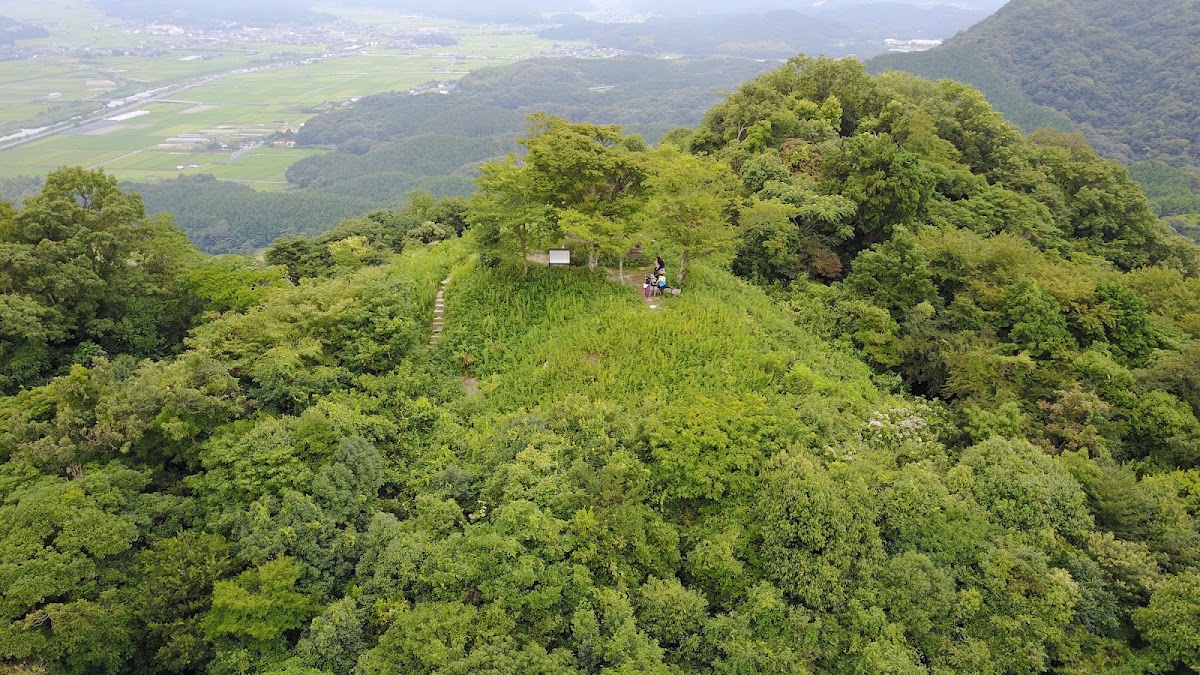
Located in a strategic position overlooking the Kyoto Plain, it is thought to have played a role in monitoring and defending against invasion routes from the Seto Inland Sea.
Construction Techniques and Methods
The earthworks of Goshogatani Jinjaishi were constructed using an ancient civil engineering technique called rammed earth construction. The rammed earth construction method is a technique that involves layering and compacting soil in thin layers, resulting in the creation of strong and durable structures.
The fact that earthen ramparts 3-5 meters high remain standing even after more than 1300 years is evidence of the superior civil engineering technology of the time. Furthermore, the construction of the stone walls also demonstrates skillful use of natural stones, suggesting the influence of technology transfer from the Korean Peninsula.
Main Remains and Highlights of Goshogatani Jinryoseki
Middle Gate Site (The Greatest Highlight)
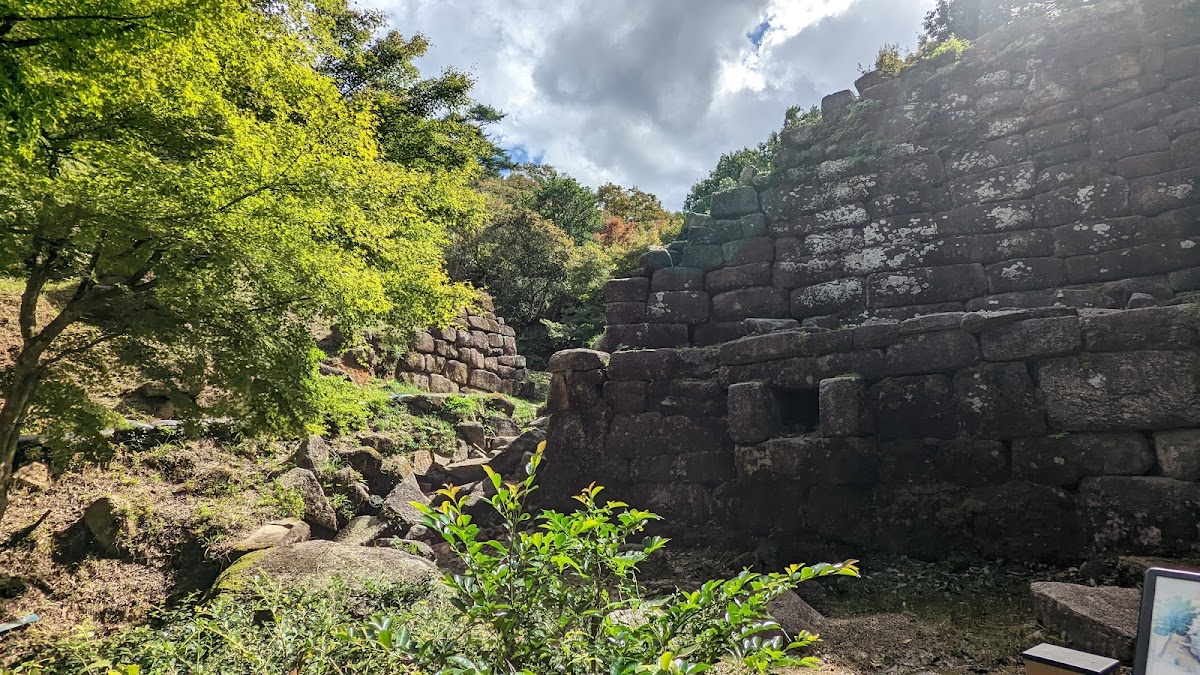
The most noteworthy remains of Goshogatani Jinryoseki are the Middle Gate sites. The stone walls of this gate boast a remarkable scale, approximately 7.5 meters high and 18 meters long, even among Jinryoseki-style mountain castles.
The Middle Gate is constructed with a two-tiered stone wall, employing different stonework techniques for the lower and upper tiers. It also features a water gate with a drainage channel, demonstrating a sophisticated design with drainage capabilities. The stonework, dating back over 1300 years, remains remarkably well-preserved, making it a valuable historical site that showcases the advanced stonework techniques of ancient times.
Earthworks and Stone Rows
The earthworks surrounding the castle’s perimeter are defensive walls, 3-5 meters high, constructed using the rammed earth method. Except for the rugged terrain around the summit of Mt. Hotogi, they extend continuously for over 2 kilometers.
In some places, stone rows are placed at the base of the earthworks, likely serving as retaining walls to prevent collapse. These stone rows, while utilizing natural stones, are arranged regularly, indicating planned construction.
Stone Walls
In areas with steep terrain, stone walls were constructed instead of earthworks. These stone walls utilize natural bedrock and large boulders, artificially stacking stones to create defensive walls, demonstrating flexible construction techniques adapted to the terrain.
The construction of the stone walls utilized locally sourced granite and andesite, indicating that the castle was built taking advantage of the region’s geological characteristics. ### Water Gate Remains
Multiple water gate remains have been identified at Goshogatani Jinryoseki. Water gates were facilities for draining rainwater accumulated within the castle grounds. They consisted of stone-built drainage channels that penetrated earthworks and stone walls.
The water gate at the central gate is the best-preserved, allowing observation of a skillfully constructed drainage structure using interlocking stone materials. The existence of this water gate indicates a planned castle design, anticipating a long-term siege.
Traces of Buildings
Excavation surveys have confirmed the existence of multiple building remains within the castle. Based on the arrangement of post holes and foundation stones, it is presumed that buildings such as barracks, warehouses, and command posts were located there.
Based on the size and arrangement of the buildings, it is believed that these facilities were capable of accommodating a certain number of soldiers at all times, and even more personnel in times of emergency.
Excavation and Research Results of the Goshogaya Jinryoseki Site
History of Discovery and Designation
The existence of the Goshogaya Jinryoseki Site was known locally for a long time, but it only attracted academic attention in the early Showa period. Investigations began in the 1930s, and it was designated a national historic site on November 14, 1953 (Showa 28).
Continued investigations have been conducted since the historic site designation, revealing the structure of the earthworks, the arrangement of the water gates, and the location of the castle gates.
What Was Revealed by the Excavation
Multiple excavations have revealed the following facts:
- Construction Period: Based on dating of excavated pottery and carbonized materials, it is estimated to have been built in the latter half of the 7th century (660s-680s).
- Period of Use: It is highly likely that it was used until around the beginning of the 8th century.
- Construction Method: Earthworks constructed using the rammed earth method, layout utilizing the natural terrain.
- Interior Facilities: Multiple building remains, warehouse remains, water source, and other living-related facilities.
- Defensive Function: Multiple entrances including a central gate, a high, flat area presumed to be a watchtower.
The Kamigoishi Controversy and Current Evaluation
For many years, there has been an academic debate known as the “Kamigoishi Controversy” regarding Kamigoishi-type mountain castles. This is a debate about whether Kamigoishi are ancient mountain castles or the boundary of religious facilities.
Currently, based on the results of archaeological excavations, the prevailing theory is that many Kamigoishi-type sites, including Goshogatani Kamigoishi, are ancient mountain castles built in the latter half of the 7th century. However, research continues to this day regarding whether the castle was built by the Imperial Court or a local powerful family, and also concerning its specific operational methods.
Goshogatani Jinja Stone Natural Park and Surrounding Environment
Goshogatani Jinja Stone Natural Park
At the foot of the Goshogatani Jinja Stone, a nationally designated historical site, lies the “Goshogatani Jinja Stone Natural Park,” developed around Sumiyoshi Pond. This park was created with the aim of protecting and utilizing the historical site, providing visitors with a space where they can enjoy both nature and history.
Within the park are areas such as the “Cherry Blossom and Inlet Plaza” and the “Stone Waterside,” and it is also known as a famous cherry blossom viewing spot in spring. It is barrier-free and guide dogs are allowed, making it easily accessible to a wide range of people.
Natural Environment and Landscape
The area around Mt. Hotogi is blessed with abundant nature, displaying different expressions throughout the seasons. In spring, there is fresh greenery and cherry blossoms; in summer, deep green; in autumn, colorful leaves; and in winter, you can enjoy a panoramic view of the Kyoto Plain in the crisp air.
From an altitude of 246.9m, you can see the city of Yukuhashi, the Kyoto Plain, and, on a clear day, even the Suo Sea, allowing you to truly appreciate why ancient people chose this location as a defensive stronghold.
Attractions as a Hiking Course
Goshogatani Jinryoseki is also a popular hiking destination. Walking along the mountain paths while exploring the ruins allows you to experience the scale and structure of an ancient mountain castle.
However, the mountain paths include steep slopes and uneven terrain, so comfortable footwear such as athletic shoes and appropriate clothing for the season are necessary for your visit.
Access and Visiting Information
Access by Public Transportation
If using JR
- Get off at Yukuhashi Station on the JR Nippo Main Line
- Take the Taiyo Kotsu bus bound for Saigawa from Yukuhashi Station
- Get off at the Sumiyoshi bus stop and walk for about 20 minutes to the entrance of Goshogaya Jinryoseki Nature Park
- It’s about a 30-40 minute walk from the nature park to the center of the ruins
Since the number of buses is limited, we recommend checking the timetable in advance. **
Access by Car
If using the expressway:
- Approximately 15 minutes from the Yukuhashi IC on the Higashi-Kyushu Expressway
- Follow the signs via National Route 201
Parking Information:
- Free parking available at Goshogatani Jinryoseki Nature Park (approximately 20 regular cars)
- Access to the ruins from the parking lot is on foot
Notes for Visitors
- Estimated Time Required: 30 minutes to 1 hour for a walk through the nature park only; 2 to 3 hours for a tour of the entire ruins
- Clothing: Comfortable walking shoes and clothing are essential
- Items to Bring: Drinking water, insect repellent (summer), rain gear
- Visiting Time: No specific restrictions, but descending before sunset is recommended
- Toilets: Public toilets are available within the nature park; none are located within the ruins, so please use them beforehand
- Mobile Phones: Please note that cell phone reception may be poor in some mountainous areas
Best Season
The best time to visit Goshogatani Jinryoseki is during Spring (March-May) and Autumn (October-November).
- Spring: The nature park is especially beautiful during the cherry blossom season (late March to early April).
- Autumn: Enjoy pleasant hiking with autumn foliage and refreshing weather.
- Summer: Due to the heat and numerous insects, early morning visits are recommended.
- Winter: The air is clear and the views are excellent, but warm clothing is necessary.
Nearby Tourist Spots and Historical Sites
Attractions in Yukuhashi City
Imai Gion Yamakasa
A traditional festival held every July, a summer tradition in Yukuhashi City. This Gion Festival, with over 300 years of history, features magnificent floats parading through the town.
Nagaihama Beach
A beach located on the coast of Yukuhashi City. It is bustling with families during the summer.
Nearby Ancient Sites
Karaharayama Castle
An ancient mountain castle believed to have been built around the same time as the Goshogatani Jinryoseki, located about 20 minutes away by car.
Tachibanazuka Tumulus
A 6th-century tumulus located in Yukuhashi City. As an older site than the Goshogatani Jinryoseki, it is an interesting historical site for understanding the flow of local history.
Miyako Town Tourist Spots
Since the Goshogatani Jinryoseki is located on the border with Miyako Town, you can also enjoy sightseeing in Miyako Town.
Ayazuka Tumulus
A decorated tumulus located in Miyako Town, famous for its interior murals.
Buzen Kokubunji Temple Ruins
The site of a Kokubunji temple built during the Nara period. It tells the history of the area’s prosperity as the center of ancient Buzen Province.
Cultural Value of the Goshogatani Jinryoseki
Academic Value
The Goshogatani Jinryoseki has high academic value in the following respects:
- Unraveling the Reality of Ancient Defense Systems: Valuable archaeological sites demonstrating 7th-century Japanese defense thought and technology
- Research on Fortification Techniques: Examples of ancient civil engineering techniques such as rammed earth construction and stone masonry
- History of East Asian Exchange: Evidence showing the transmission of technology from the Korean Peninsula
- Unraveling Local History: Understanding the role of the Buzen region in ancient history
Efforts for Preservation and Utilization
Yukuhashi City and Miyako Town are actively working on the preservation and utilization of the Goshogatani Jinryoseki.
- Regular Grass Cutting and Maintenance: Improving the visibility of the site and ensuring the safety of visitors
- Installation of Information Boards: Installing explanatory boards at each structure to promote understanding
- Implementation of Guided Tours: Tours with explanations by local volunteers
- Educational Use: Utilizing the site for local history studies in elementary and junior high schools
Future Challenges and Prospects
The following points are considered future challenges for the Goshogatani Jinryoseki:
- Further Excavation: Clarifying the overall picture through excavation of unexplored areas
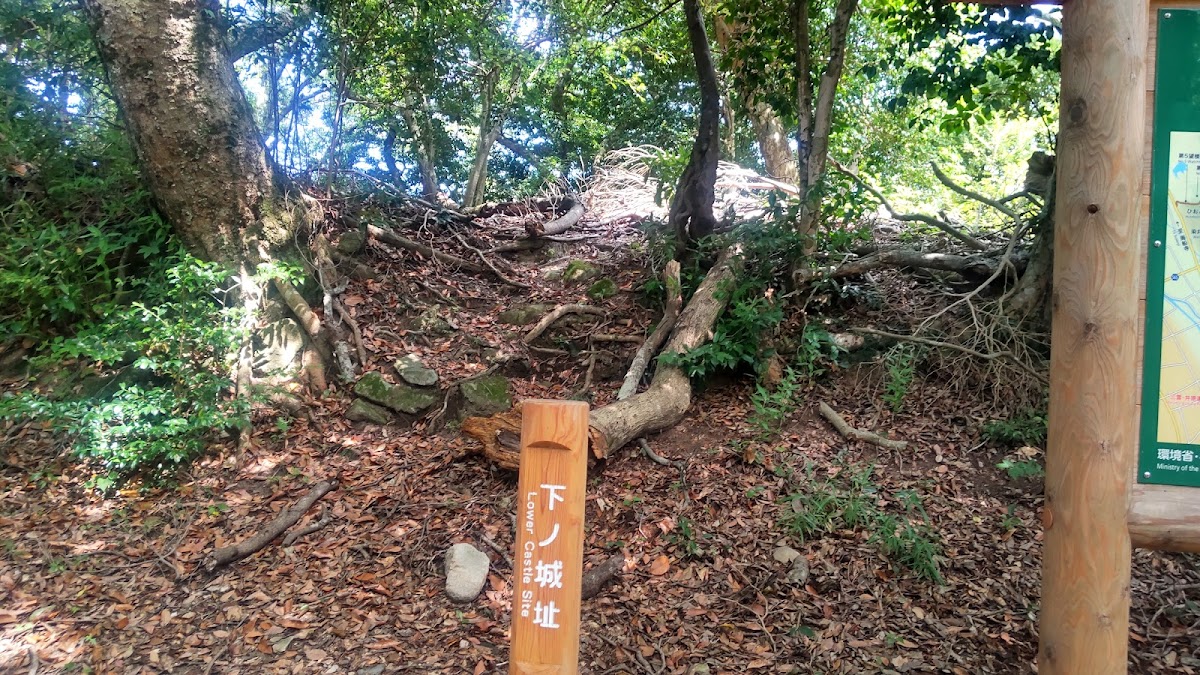
- Preservation Measures: Measures against damage to the remains due to weathering and tree roots
- Improved Access: Improving the convenience of public transportation
- Information Dissemination: Increasing recognition as a tourist resource
- Utilization of VR/AR Technology: Recreating the appearance of the site in its heyday using restored CG, etc.
Things to Know Before Visiting Goshogaya Jinryoseki
Recommended Prior Study
To gain a deeper understanding of Goshogaya Jinryoseki, we recommend studying the following before your visit:
- The Battle of Baekgang and the East Asian Situation in the 7th Century
- Types and Characteristics of Ancient Mountain Castles (Differences between Korean-style mountain castles and Jinryoseki-type mountain castles)
- Ancient Civil Engineering Techniques such as Rammed Earth Construction
- Overall Picture of the Dazaifu Defense Line
Related materials can be viewed at the Yukuhashi City Library and the Fukuoka Prefectural Library. Basic information can also be found on the official Yukuhashi City website.
Photography Tips
Here are some photography tips for your visit to Goshogatani Jinryoseki.
- Stone Wall of the Middle Gate: The main highlight, worth photographing from various angles.
- Cross-section of the Earthwork: The areas where the rammed earth layers are visible are valuable historical records.
- View from the Summit: A panoramic view of the Kyoto Plain.
- Water Gate Remains: Close-up shots reveal the ingenious drainage structure.
- Spring Cherry Blossoms and Ruins: A collaboration of cherry blossoms in the nature park and history.
Interaction with the Local Community
Visiting Goshogatani Jinryoseki allows you to experience the local history and culture. Interacting with locals and dining at restaurants in Yukuhashi City are also enjoyable aspects of your visit.
Yukuhashi City also boasts a wealth of local specialties, such as “Yukuhashi Yuzu Pepper,” making souvenir shopping a fun experience.
Summary: A Historic Site Evoking Ancient Romance
Goshogatani Jinryoseki is a valuable historical site that preserves the appearance of an ancient mountain castle built over 1300 years ago. Spread across Mt. Hotogi (246.9m above sea level), this large-scale site, with a circumference of approximately 3km, is evidence of Japan’s efforts for national defense amidst the tense international situation following the Battle of Baekgang.
In particular, the stone walls of the central gate are highly regarded as a remarkable structure among Jinryoseki-type mountain castles, due to their scale (7.5m high, 18m long) and the sophisticated two-tiered stonework technique. Visitors can also witness firsthand the excellent ancient civil engineering techniques, such as earthworks constructed using the rammed earth method and sluice gates with ingenious drainage systems.
Built in a strategic location overlooking the Kyoto Plain in eastern Fukuoka Prefecture, this mountain castle served as the easternmost point of the defense line centered on Dazaifu, telling the story of ancient Japan, which was at the mercy of the international situation in East Asia.
The surrounding area, developed as the Goshogatani Jinryoseki Nature Park, offers a place to enjoy historical exploration and hiking simultaneously. The seasonal beauty of the area, including cherry blossoms in spring and autumn foliage, is also a major draw.
While access is somewhat inconvenient—approximately 15 minutes by car from the Yukuhashi Interchange on the Higashi-Kyushu Expressway, or about 40 minutes by bus and on foot from JR Yukuhashi Station—the experience is all the more rewarding. This hidden gem in Fukuoka Prefecture is a must-visit for anyone interested in history, seeking a sense of ancient romance, or simply enjoying hiking in nature.
Goshogatani Jinryoseki, as a place where you can experience “living history” that you can’t learn from textbooks, will undoubtedly continue to convey the essence of ancient Japan to many people for years to come.