Katsura Castle (Akitakata City, Hiroshima Prefecture) Complete Guide: History and Highlights of the Castle of the Katsura Clan, a Senior Retainer of the Mori Clan
Katsura Castle is a Sengoku period mountain castle located in Katsura, Yoshida-cho, Akitakata City, Hiroshima Prefecture. Known as the residence of the Katsura clan, important vassals of the Mori clan, it is also known as Nakayama Castle and Mikasayama Castle. Protected as a designated historical site by Akitakata City, it is highly valued for its historical significance as one of the important branch castles within the Mori clan’s sphere of influence during the Sengoku period.
History of Katsura Castle and the Genealogy of the Katsura Clan
Establishment of the Katsura Clan and Katsura Hirozumi
The history of Katsura Castle begins in the early 16th century. The Katsura clan originated when Katsura Hirozumi branched off from the Saka clan, a branch of the Mori family, and established his residence in this area. The Saka clan held an important position as a branch of the Mori clan, but when Katsura Hirozumi became independent and established the Katsura clan, a new branch of the Mori clan was born.
It is believed that Katsura Castle was built during this period. Built on a hillside facing the Enokawa River, this castle was positioned opposite the Fukuhara clan’s Suzuno Castle on the opposite bank and functioned as an important subsidiary castle protecting the Mori clan’s main base, Yoshida-Koriyama Castle.
The Saka Clan Purge and the Tragedy of Katsura Hirozumi
The Saka clan purge was the most important turning point in the history of the Katsura clan. After Mori Motonari inherited the headship of the main Mori family, a movement arose within the Saka clan to support Motonari’s younger brother, Mori Mototsuna. When this plot was discovered, Motonari decided to purge the Saka clan.
Katsura Hirozumi, who was related to the Saka clan, could not escape the effects of this purge. Held responsible for the family’s involvement, Katsura Hirozumi was forced to commit suicide, threatening the very existence of the Katsura clan. However, Hirozumi’s eldest son, Katsura Motozumi, pledged his loyalty to Mori Motonari even after his father’s death, and succeeded in earning his trust.
Katsura Motozumi and His Role as a Senior Retainer of the Mori Clan
Overcoming his father’s tragedy, Katsura Motozumi became a highly valued senior retainer of Mori Motonari. Motozumi possessed exceptional military talent and played a crucial role in the Mori clan’s unification of the Chugoku region. Katsura Castle continued to serve as the Katsura clan’s residence, and its military importance increased as the Mori clan’s power expanded.
Thanks to Katsura Motozumi’s achievements, the Katsura clan established a firm position as hereditary vassals of the Mori clan. Motozumi’s descendants continued to serve the Mori clan for generations, and in the Edo period, they served as senior retainers of the Choshu Domain.
Structure and Layout of Katsura Castle
Location and Topographical Features
Katsura Castle is a typical medieval mountain castle built on the hilly terrain along the Kawai River. Although its elevation is relatively low, it was strategically positioned to overlook the surrounding area, utilizing the river as a natural moat. It was within sight of Suzuno Castle on the opposite bank, and a coordinated defense system for Yoshida-Koriyama Castle was in place.
The castle’s location was also a crucial transportation hub. It played a role in monitoring and defending the road leading north from Yoshida-Koriyama Castle, suggesting its function as an important base in the Mori clan’s control of their territory.
Layout Features
Katsura Castle’s layout is typical of a Sengoku period mountain castle. Multiple baileys (kuruwa) are arranged around the main enclosure, and defenses are strengthened by moats and earthworks.
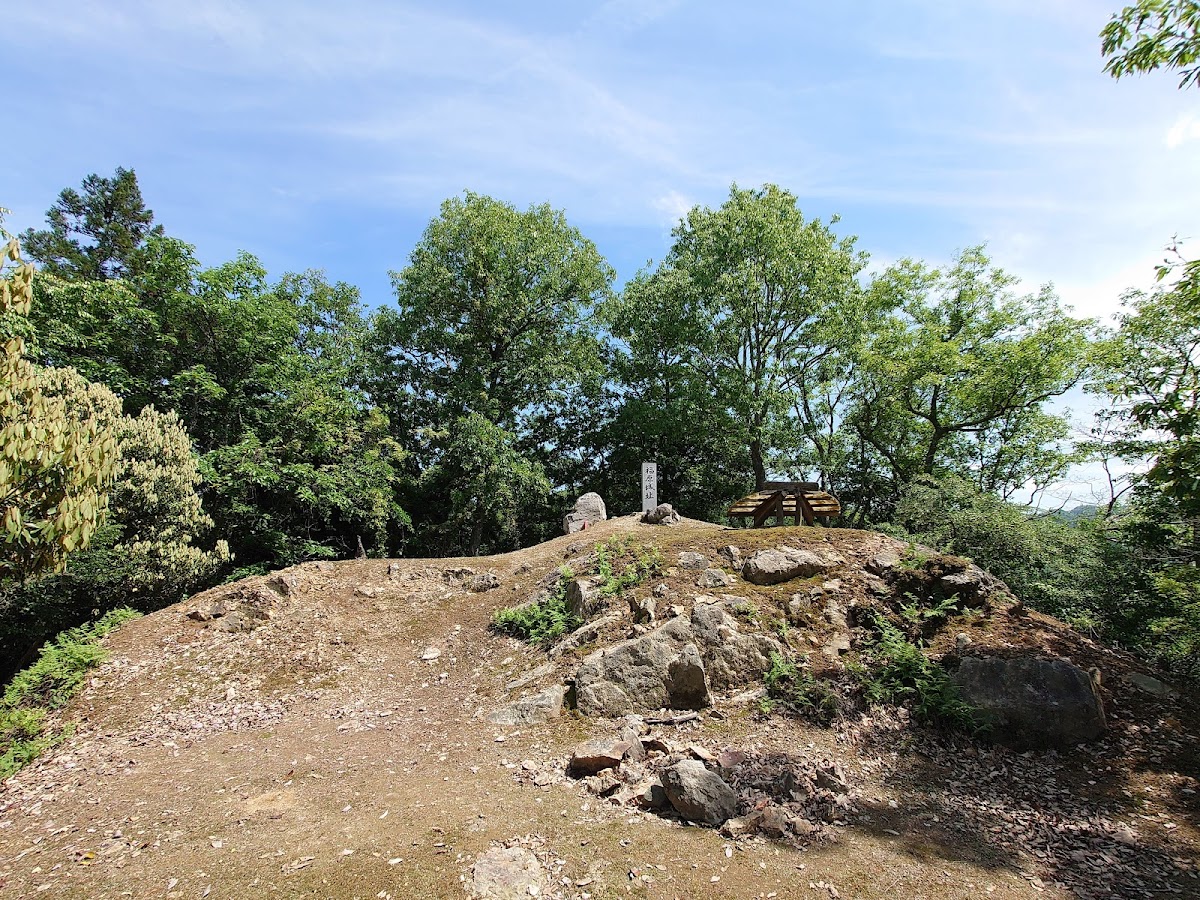
The main enclosure is located at the highest point of the castle, offering panoramic views of the surrounding area. The castle features a multi-layered defensive structure, with surrounding terraced enclosures to prevent enemy intrusion. The castle is of medium size, reflecting the power and status of the Katsura clan.
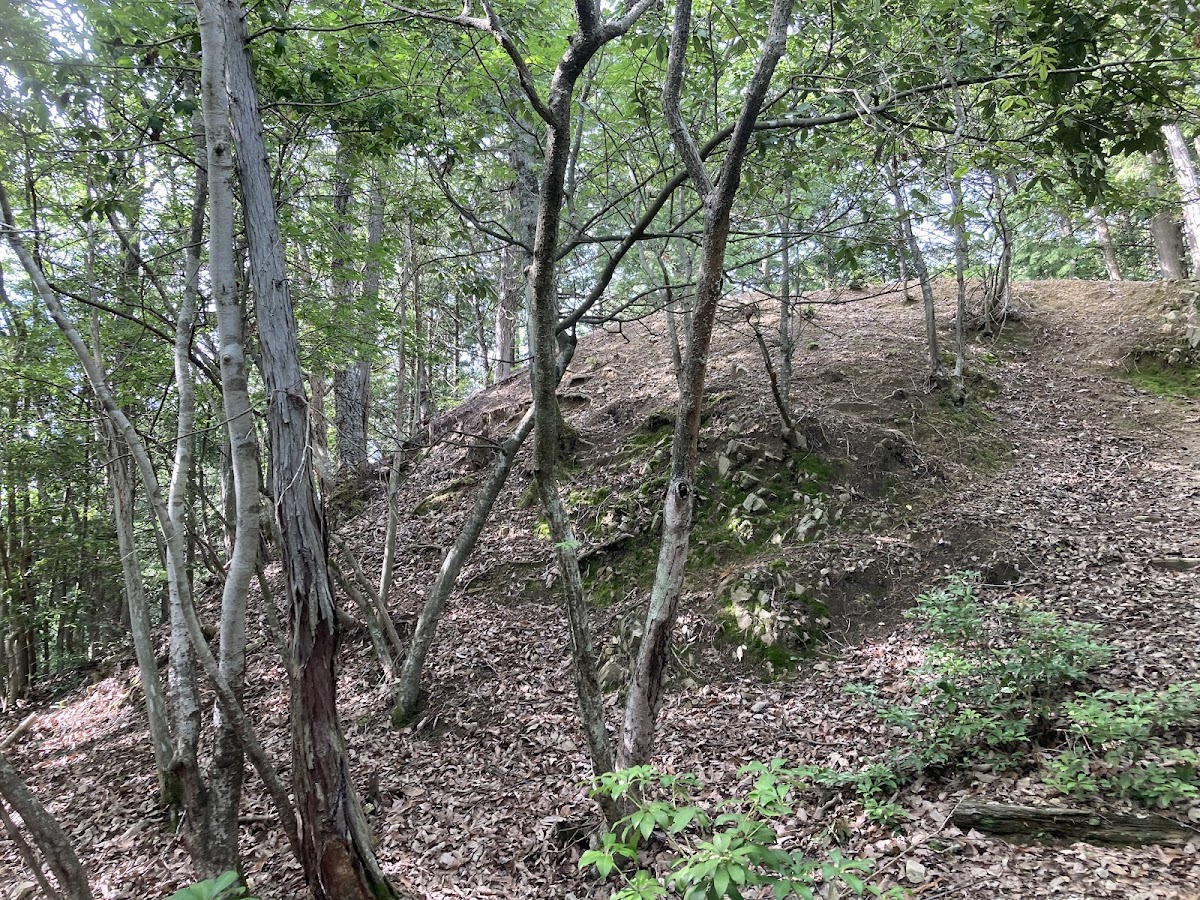
Even today, remnants of the main enclosure, terraced elevation changes, and trenches remain, allowing us to infer the castle’s structure in its heyday. Parts of the earthworks are also well-preserved, making it a valuable historical site for learning about Sengoku period castle construction techniques.
Defensive Structures and Military Functions
Katsura Castle possessed defensive structures typical of Sengoku period mountain castles. Trenches were constructed to cut across the ridges, limiting enemy intrusion routes. Vertical trenches have also been identified, demonstrating ingenuity in preventing attacks from slopes.
A koguchi (a type of fortified entrance) was provided at the castle entrance, serving as a key defensive point. The movement routes between enclosures were also complexly designed, preventing enemies from easily reaching the main enclosure.
Highlights of Katsura Castle
Main Enclosure and View
The greatest highlight of Katsura Castle is the view from the main enclosure. You can enjoy a panoramic view of the Kawai River and the surrounding mountains, experiencing the scenery that the castle lords of the Sengoku period saw. On a clear day, you can even see the ruins of Suzuno Castle on the opposite bank, giving you a glimpse into the network of branch castles of the Mori clan.
The main enclosure is relatively flat, suggesting that buildings once stood there. Although currently a grassy area, it still retains a strong sense of the castle’s atmosphere.
Preservation of the Remains
The remains of Katsura Castle are well-preserved, largely unaffected by development. The earthworks and moats, in particular, remain clearly visible, offering a valuable opportunity to directly observe Sengoku period castle construction techniques.
The elevation differences of the enclosures are also clearly defined, making it easy to understand the castle’s structure. While some areas are overgrown with trees, this actually helps protect the remains. For castle enthusiasts, it’s an attractive spot to stroll around while imagining its former appearance. ### Information Boards and Guides
An information board provided by Aki-Takata City is installed at the castle ruins, where you can obtain basic information about the history of Katsura Castle and the Katsura clan. The board also includes a layout map, which helps in understanding the castle’s structure.
Access Information
Access by Public Transportation
If you are visiting Katsura Castle by public transportation, you can use the following route:
- Take the JR Sanyo Main Line or Sanyo Shinkansen to Hiroshima Station.
- From Hiroshima Station, take the Hiroshima Electric Railway streetcar bound for “Hiroden Miyajimaguchi” or “Eba” and get off at “Kamiyacho Nishi” station.
- From the “Hiroshima Bus Center” (a short walk away), take the Hiroshima Electric Railway bus bound for “Hiroden Yoshida Branch Office”.
- Get off at the “Katsura Pass” bus stop and walk for about 1 minute.
Since the number of buses is limited, it is recommended to check the timetable in advance.
Access by Car
If you are visiting by car, it is about 10 minutes from the Takada IC on the Chugoku Expressway. Access from Hiroshima city center takes approximately 50 minutes via National Route 54.
While there is no dedicated parking lot around the castle ruins, there are spaces available for parking along the roadside. However, please be careful not to obstruct traffic.
Location
731-0501 Katsura, Yoshida-cho, Aki-Takata City, Hiroshima Prefecture
Notes for Visitors
Clothing and Equipment
As Katsura Castle is a mountain castle, the following equipment is recommended for your visit:
- Comfortable walking shoes (trekking shoes or sneakers)
- Long-sleeved shirt and long pants (to protect from plants and insects)
- Drinking water
- Insect repellent spray (especially in summer)
- Hat (for sun protection)
Best Time to Visit
Katsura Castle is accessible year-round, but the following times are especially recommended:
- Spring (late March to May): The weather is mild, and the fresh greenery is beautiful.
- Autumn (October-November): Enjoy the autumn foliage; the temperature is moderate, making it ideal for a stroll.
In summer, the vegetation is lush and there are many insects, so sufficient preparation is necessary for a visit. In winter, there is a possibility of snow, so it is recommended to check the weather beforehand.
Estimated Time Required
Allow approximately 30 minutes to 1 hour to explore the castle ruins. If you want to carefully observe the remains, it is recommended to allocate about 1.5 hours.
Related Historical Sites in the Surrounding Area
Yoshida-Koriyama Castle
If you visit Katsura Castle, we highly recommend also visiting Yoshida-Koriyama Castle, the base of the Mori clan. Located about 10 minutes away by car, it is one of the largest mountain castles in the Chugoku region, and was the base of Mori Motonari. It is designated as a national historic site, and its magnificent layout and abundant remains are highlights.
Suzuno Castle
Suzuno Castle, located on the opposite bank of the Kawai River, was the residence of the Fukuhara clan, a senior retainer of the Mori clan. Visiting Katsura Castle and this castle together will give you a deeper understanding of the Mori clan’s branch castle network.
Tajihisarugake Castle
This was the residence of the Tajihisa clan, a senior retainer of the Mori clan, and an important branch castle protecting the south of Yoshida-Koriyama Castle. Similar to Katsura Castle, you can learn about the role of branch castles within the Mori clan’s sphere of influence.
Katsura Castle and the Mori Clan’s Branch Castle Network
Katsura Castle played a crucial role in the branch castle network built by the Mori clan. Mori Motonari established a defense system for his territory by placing numerous branch castles in the surrounding hilly areas, centered around Yoshida-Koriyama Castle.
Katsura Castle, in particular, was responsible for the defense of the northern area and, along with Suzuno Castle, played a role in monitoring the Kawai River basin. This branch castle network was an indispensable military system for the Mori clan’s growth as the dominant power in the Chugoku region.
Each branch castle was staffed by members of the Mori family or hereditary senior retainers, who managed the territory in peacetime and worked in conjunction with Yoshida-Koriyama Castle for defense during wartime. The Katsura clan also played an important role in this system and contributed to the development of the Mori clan.
The Cultural Value of Katsura Castle
Katsura Castle is recognized as a cultural property, designated as a historical site by Aki-Takata City. Its value lies in its well-preserved structure as a Sengoku period mountain castle and its important position in understanding the Mori clan’s branch castle network.
In recent years, interest in Sengoku period mountain castles has increased, and the importance of small to medium-sized regional castles like Katsura Castle has been re-recognized. These castles provide valuable clues to understanding the regional society and military system of the time.
Aki-Takata City is focusing on the preservation and utilization of Mori clan-related historical sites, centered around Yoshida-Koriyama Castle, and Katsura Castle is protected as part of this effort. Further research and development are expected in the future.
The Later History of the Katsura Clan
The descendants of Katsura Motosumi continued to serve as important retainers of the Mori clan for generations. Even after the Mori clan unified the Chugoku region and were reduced to the two provinces of Suo and Nagato after the Battle of Sekigahara, the Katsura clan continued to serve as important retainers of the Choshu Domain.
Throughout the Edo period, the Katsura clan continued to play a crucial role in the politics and military affairs of the Choshu Domain. In the late Edo period, Katsura Kogoro (Kido Takayoshi) emerged from the Katsura family and played a central role in the Meiji Restoration.
Thus, the history of the Katsura clan, which began with Katsura Castle built by Katsura Hirozumi in the early 16th century, continued uninterrupted until the end of the Edo period and the Meiji Restoration.
Katsura Castle in Castle Research
In the field of castle research, Katsura Castle is considered an important case study for studying the Mori clan’s branch castle system. It provides clues to understanding the realities of regional control during the Sengoku period, including the relationship between the main castle, Yoshida-Koriyama Castle, and its branch castles, the cooperation between the branch castles, and the relationship between the local lords who ruled the castles and the main Mori family.
From the perspective of castle layout research, it is highly regarded as an excellent example of mountain castle structure from the early to mid-16th century. The fact that it has undergone few later alterations and retains its original form relatively well also enhances its research value.
Summary: The Historical Significance of Katsura Castle
At first glance, Katsura Castle may seem like nothing more than a small, local mountain castle. However, behind it lies the grand historical drama of the Mori clan’s unification of the Chugoku region, and the human drama of the rise and fall of the Katsura clan.
The history of the Katsura clan, who overcame the tragedy of the Saka clan’s purge and rose again as important retainers of the Mori clan, demonstrates not only the harshness of the Sengoku period but also the possibility of regaining status through ability and loyalty. The exploits of Katsura Motosumi have inspired many as a warrior who overcame his father’s tragedy.
Currently, the ruins of Katsura Castle stand quietly in the mountains, but its remains convey the spirit of the Sengoku period. When you visit Hiroshima Prefecture, why not also visit Katsura Castle along with Yoshida-Koriyama Castle and reflect on the history of the Mori and Katsura clans?
As you stroll through the castle ruins while listening to the gentle murmur of the Kawai River, you’ll likely imagine the figures of the warlords of the Sengoku period. Katsura Castle is a fascinating historical site well worth visiting for both history buffs and castle enthusiasts.