
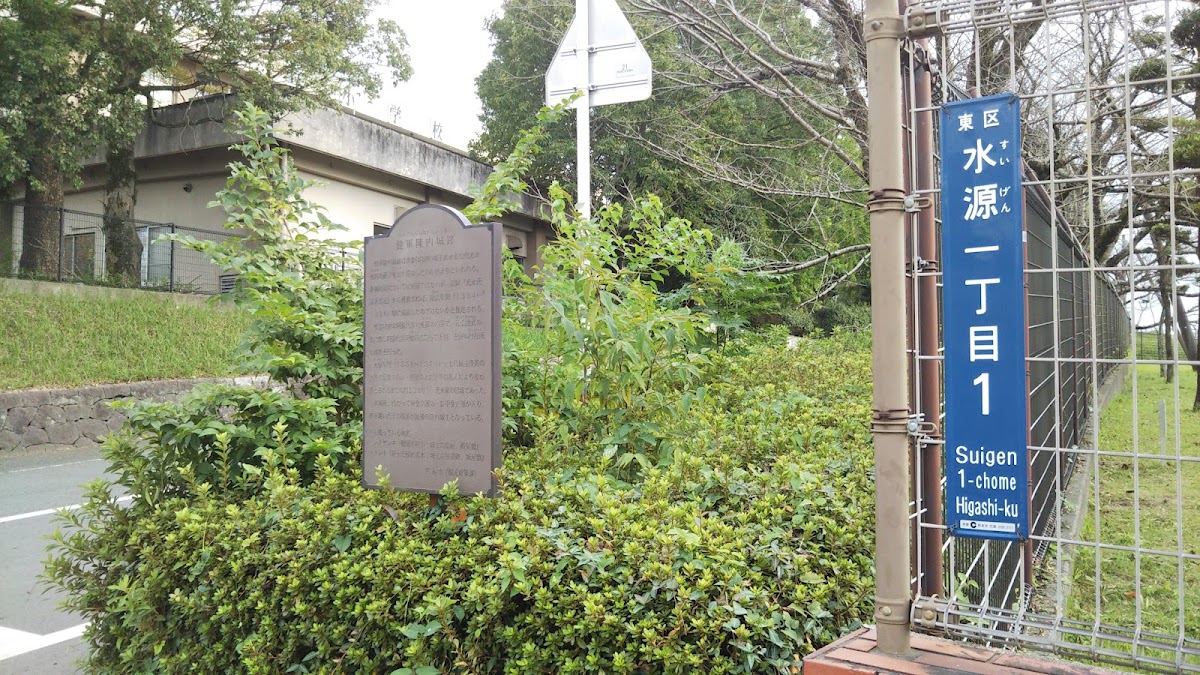
Jinnouchi Castle (Kumamoto Prefecture) Complete Guide | Konishi Yukinaga’s Land and Water Transportation Hub Castle, Designated as a National Historic Site
Located in Kosa-machi, Kamimashiki-gun, Kumamoto Prefecture, Jinnouchi Castle is a castle built by Konishi Yukinaga during the Azuchi-Momoyama period. It is an important historical site designated as a National Historic Site on October 11, 2021. Built at a key point for both water and land transportation on the Midorikawa River, this castle functioned as a strategic base for the control of Higo Province and remains remarkably well-preserved, conveying its original appearance to the present day.
Basic Information and Location of Jinnouchi Castle
Name and Common/Alternate Names
The official name is “Jinnouchi Castle Ruins (Jinnouchi-jo Ato),” and it is sometimes called “Jinnouchi-kan” or “Jinnouchi Castle.” The name “Jinnouchi” has been familiar to locals for a long time, and remnants of this name can still be seen in the current place name.
Location and Former Province
Location: Jinnouchi, Toyouchi, Kosa-machi, Kamimashiki-gun, Kumamoto Prefecture
Former Province: Higo Province
Located on a plateau approximately 100 meters above sea level, east of the Kosa Town Hall, it is built in a strategic location overlooking the Midorikawa River basin. Currently under the management of Kosa Town, it is being developed as a historical park.
Classification, Structure, and Scale
Classification: Hilltop Castle (Fortress on a Plateau)
Structure: Layout primarily consisting of earthworks and dry moats
Designated Area: 7.8422 hectares
The most striking features of Jinnouchi Castle are its large scale and the excellent state of preservation of its remains. Excavations have confirmed a large moat, approximately 5 meters deep and 20 meters wide, extending for approximately 400 meters. The scale of this moat is remarkably large even for a castle of that era, demonstrating Konishi Yukinaga’s construction skills and strategic importance.
History and Explanation of Jinnouchi Castle
Background of Construction and Konishi Yukinaga
Jinnouchi Castle is believed to have been built in 1588 (Tensho 16) by Konishi Yukinaga, who was granted the southern half of Higo Province. Konishi Yukinaga was a Christian daimyo who served Toyotomi Hideyoshi and ruled over 240,000 koku in southern Higo.
While using his main castle, Uto Castle (Uto City), as his base, Yukinaga established several branch castles to govern his territory. Jinnouchi Castle was built as a relay point within his territory, connecting Uto Castle and Yabe Castle (Aitoji Castle, Yamato Town) in the mountainous area, and as a base to control water transport on the Midorikawa River.
Location as a Key Point for Water and Land Transportation
The location of Jinnouchi Castle held extremely important significance as a key point for water and land transportation. The Midorikawa River is a rapid in its upper reaches, but downstream from this point, the flow becomes gentler, making it a starting point for river transport.
At the time, water transport was more efficient and capable of transporting larger quantities of goods than land transport. It is believed that Jinnouchi Castle functioned as a collection point for goods utilizing the Midorikawa River’s water transport, playing a role in securing a supply route to Uto Castle.
Simultaneously, it was located at a junction of major roads, functioning as a base for information dissemination and military maneuvers within the territory. This strategic value on both land and water was the primary reason why Konishi Yukinaga built a castle in this location.
Role in the Rule of Higo Province
Jinnouchi Castle was an important base used for a long period during Konishi Yukinaga’s rule of Higo Province. It is presumed to have functioned not only as a military facility but also as an administrative and economic center.
Archaeological excavations have unearthed not only castle-related remains but also numerous ceramics used in daily life, confirming that people resided there for a certain period. This indicates that Jinnouchi Castle functioned not as a temporary military base, but as a permanent administrative center.
Traces of the Aso Clan Era
Interestingly, archaeological excavations have uncovered artifacts predating the time of Konishi Yukinaga. Of particular note is the discovery of imported Chinese ceramics from the period when the Aso Grand Priest ruled.
The Aso clan was a powerful family in Higo Province during the medieval period, and this region is believed to have been under their influence. The strategic value of Jinnouchi Castle’s location was recognized even before Konishi Yukinaga, suggesting the possibility of some kind of facility existing there.
Konishi Yukinaga may have built Jinnouchi Castle by expanding and renovating an existing base, making this an important discovery demonstrating the historical continuity of this area.
Abandonment of the Castle and its Aftermath
The exact year of Jinnouchi Castle’s abandonment is not clearly recorded, but it is believed to have lost its function after Konishi Yukinaga’s defeat and execution in the Battle of Sekigahara in 1600 (Keicho 5), where he sided with the Western Army.
After the Battle of Sekigahara, Kato Kiyomasa took control of Higo Province, and the Konishi clan’s subsidiary castles were abandoned. Jinnouchi Castle was also abandoned around this time, and although the site was subsequently used for farming, its topographical features have been well preserved.
Remains and Highlights of Jinnouchi Castle
Structure of the Earthworks
The most prominent defensive feature of Jinnouchi Castle is its earthworks. Constructed along the edge of the plateau, the earthworks are still clearly visible today, consisting of continuous mounds of earth several meters high.
The construction techniques of the earthworks are consistent with the characteristics of Konishi Yukinaga’s subsidiary castle construction, resulting in a robust structure using the rammed earth technique. The rammed earth construction technique, which involves compacting layers of soil, was the most advanced castle-building technology of the time and a common feature found in castles built by Konishi Yukinaga.
Scale and Structure of the Dry Moat
The greatest highlight of Jinnouchi Castle is its large dry moat. Its size—approximately 5 meters deep, 20 meters wide, and 400 meters long—is remarkably large compared to castles of the same period, indicating the importance of this castle.
The moat was excavated across the plateau, forming a strong defensive line to prevent enemy intrusion. Archaeological excavations have confirmed that the moat’s cross-section is a box moat (a moat with a flat bottom), which also matches the characteristics of castle-building technology from Konishi Yukinaga’s era.
Even today, the shape of the moat remains clearly visible on the surface, allowing us to imagine its former appearance. Walking along the bottom of the moat allows us to truly appreciate its depth and scale, making it a valuable historical site.
Arrangement of the Enclosures
It is estimated that multiple enclosures (kuruwa: sections of the castle) were arranged on the plateau. The castle’s defensive system consisted of a series of baileys arranged in stages, centered around the main enclosure (honmaru).
At the site, the layout of the baileys can be deciphered from the topography, providing clues to understanding the overall castle plan.
Results of the Excavation
The excavation conducted by the Kosa Town Board of Education has confirmed not only castle remains but also a diverse range of unearthed artifacts.
- Ceramics: Imported ceramics from China, domestic pottery, Haji ware, etc.
- Metal Products: Iron nails, parts of sword fittings, etc.
- Building Materials: Fragments of roof tiles, traces of post holes, etc.
These artifacts provide important clues to understanding the daily life within the castle and the period of its use. In particular, the discovery of artifacts from the Aso clan period is a valuable finding demonstrating the historical continuity of this area.
Significance of National Historic Site Designation
Background of Designation
The Jinnouchi Castle Ruins were officially designated a National Historic Site by official gazette announcement on October 11, 2021. National Historic Sites are historical or academically significant sites designated by the Minister of Education, Culture, Sports, Science and Technology.
The designation was made possible through many years of research, study, and preservation activities by the Kosa Town Board of Education. The scale and structure of the castle revealed by archaeological excavations, its excellent state of preservation, and its historical importance in Konishi Yukinaga’s rule of Higo Province were highly evaluated.
Academic Value
The academic value of Jinnouchi Castle is multifaceted.
- Elucidation of Konishi Yukinaga’s Castle Construction Techniques: A Valuable Example Showing the Reality of the Branch Castle Network
- Research on the History of Land and Water Transportation: Elucidation of its Function as a Hub for Water Transportation on the Midorikawa River
- Elucidation of Local History: The Reality of the Power Transfer from the Aso Clan to the Konishi Clan
- Excellent State of Preservation: Minimal Later Alterations, Retaining Much of its Original Appearance
In particular, it is a nationally recognized site as a concrete example of Konishi Yukinaga’s branch castle construction style. Along with Uto Castle and Yabe Castle, it is an indispensable historical site for understanding the Konishi clan’s territorial control system.
Related Historical Sites in the Surrounding Area of Jinnouchi Castle
Relationship with Uto Castle
Uto Castle was Konishi Yukinaga’s main castle, a modern castle built at a strategic point for land and water transportation facing the Ariake Sea. Jinnouchi Castle is located inland to the east of Uto Castle and played a role in securing communication routes to the mountainous areas.
The route connecting the two castles was a major thoroughfare for transporting supplies and military movements, and Jinnouchi Castle functioned as a relay point. Visiting both Uto Castle and Jinnouchi Castle together provides a comprehensive understanding of Konishi Yukinaga’s territorial governance strategy.
Coordination with Yabe Castle (Aitoji Castle)
Yabe Castle was a branch castle of Konishi Yukinaga located in present-day Yamato Town (formerly Yabe Town), serving as a base for governing the mountainous region. Jinnouchi Castle was strategically located midway between Uto Castle and Yabe Castle, ensuring communication between the two castles.
Jinnouchi Castle was situated on a route for transporting timber and agricultural products from the mountainous region to Uto Castle, making its function as an economic logistics hub crucial.
Surrounding Castles
Several castles from the medieval to early modern periods exist around Jinnouchi Castle.
- Kenshida Castle: A medieval castle located within Kosa Town.
- Mifune Castle: A castle located in the center of Mifune Town.
By comparing these castles with Jinnouchi Castle, you can understand the changes in castle construction techniques over time and the changes in castles due to changes in feudal lords.
Access and Visiting Information for Jinnouchi Castle
Access Methods
Access by Car:
- Approximately 15 minutes from the Kyushu Expressway “Mifune IC”
- Head towards the Kosa Town Hall, then proceed to the plateau on the east side.
- Parking: Parking is available at the historical site park.
Public Transportation:
- Approximately 30 minutes by car from JR Kagoshima Main Line “Uto Station”
- Bus service is limited, so advance confirmation is necessary.
Visiting Points
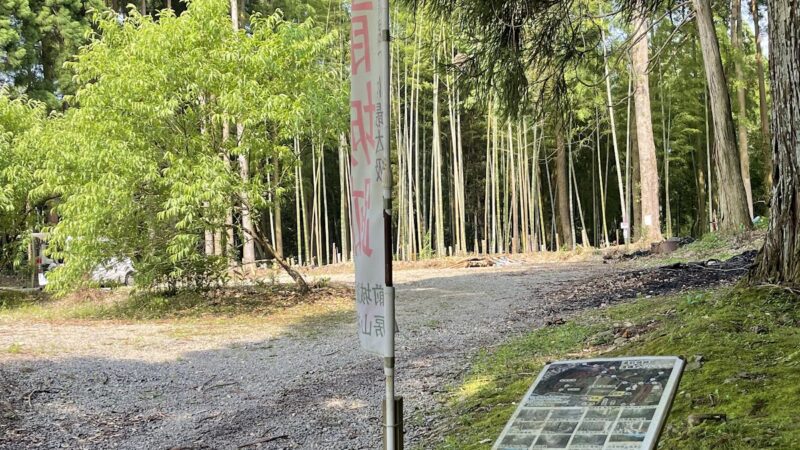
Jinnouchi Castle ruins are maintained as a historical site park and can be freely visited.
Points to Note During Your Visit:
- Comfortable shoes are recommended (the ground within the ruins is uneven).
- Insect repellent is necessary during the summer.
- Be careful as the ground can be slippery in rainy weather.
- Refer to the information boards and explanatory signs provided during your visit.
Estimated Visit Time: Approximately 30 minutes to 1 hour
Map and Surrounding Facilities
You can obtain pamphlets and maps of the Jinnouchi Castle Ruins at the Kosa Town Hall. The town’s cultural property department can also provide detailed explanations and advice for your visit.
Nearby, there are scenic spots along the Midorikawa River and facilities where you can learn about the history of Kosa Town. Visiting these together will deepen your understanding of the local history.
Future Preservation and Utilization of Jinnouchi Castle
Preservation and Development Plan
Following the designation as a National Historic Site, Kosa Town is currently formulating a preservation and development plan for the Jinnouchi Castle Ruins. While prioritizing the protection of the remains, efforts are underway to create an environment where visitors can safely and comfortably experience the historical site.
Specifically, plans include improving viewing paths, enhancing explanatory signs, and installing rest facilities, aiming for utilization in a way that does not diminish its value as a cultural property.
Educational Use and Regional Development
The Jinnouchi Castle ruins are also being used as a site for local history education. Local elementary and junior high schools provide opportunities for students to visit the Jinnouchi Castle ruins as part of their local history studies.
Furthermore, with its designation as a national historical site, its use as a tourist resource is also expected. Development of routes in collaboration with other castle historical sites in Kumamoto Prefecture and the holding of events for history enthusiasts are being considered, and contributions to regional development are anticipated.
Continued Research
Even after its designation as a national historical site, academic research continues. Many areas remain unexcavated, and new discoveries are expected through future investigations.
In particular, many issues remain to be clarified, such as the layout of buildings within the castle, the living conditions, and the changes in land use after the castle’s abandonment. Continued research will further reveal the historical value of Jinnouchi Castle.
Summary
Jinnouchi Castle is a valuable historical site that conveys the reality of Konishi Yukinaga’s rule over Higo Province. Due to its strategic location at a key point for land and water transportation, the large-scale remains such as moats and earthworks, and its excellent state of preservation, it was designated a National Historic Site in 2021.
Controlling the Midorikawa River’s water transport and functioning as a relay point connecting Uto Castle and Yabe Castle, Jinnouchi Castle was not merely a military facility but also played an important role as an administrative and economic center. The artifacts unearthed during archaeological excavations from the Aso clan era provide valuable evidence of the historical continuity of this area.
Among the castle historical sites in Kumamoto Prefecture, Jinnouchi Castle is particularly large in scale and well-preserved, making it a valuable place to experience the history from the Sengoku period to the Azuchi-Momoyama period. Visiting it in conjunction with related historical sites in the surrounding area will allow for a deeper understanding of Konishi Yukinaga’s territorial governance strategy and the state of Higo Province at that time.
Having been recognized as a national historical site, the Jinnouchi Castle ruins are expected to continue to be appropriately preserved and utilized, and their importance as a regional historical heritage site and as a subject of nationwide academic research is likely to increase.

.png)