Namioka Castle, Aomori: A Thorough Explanation of the Charm of the Kitabatake Clan’s Residence and One of Japan’s Top 100 Castles (Continued)
Located in the Namioka district of Aomori City, Aomori Prefecture, Namioka Castle is a flatland castle built in the mid-Muromachi period. It is a historically significant castle site, selected as one of Japan’s Top 100 Castles (No. 103) in 2017. Known as the residence of the Namioka Kitabatake clan, descendants of Kitabatake Chikafusa, who supported Emperor Go-Daigo during the Nanboku-cho period, it was a castle of such high status that it was respectfully referred to as “Namioka Gosho” (Namioka Palace). Currently, it is designated a National Historic Site and maintained as a historical park.
History of Namioka Castle and the Namioka Kitabatake Clan
Descendants of Kitabatake Chikafusa and the Background of the Castle’s Construction
The Namioka Kitabatake clan, who built Namioka Castle, are said to be descendants of Kitabatake Chikafusa, who played an active role in the Kenmu Restoration (1334-1336) during the Nanboku-cho period. Kitabatake Chikafusa was a senior retainer of the Southern Court who assisted Emperor Go-Daigo, and his son, Kitabatake Akiie, was active in the Tohoku region as the governor of Mutsu Province.
There are various theories about how the Namioka Kitabatake clan came to establish their base in this area, but it is generally believed that it began when Akiie’s descendants moved to this Tsugaru region. The most widely accepted theory is that the castle was built in the 1460s (between the Chōroku, Ōnin, or Bunmei eras) during the time of the fourth head of the clan, Kitabatake Akiyoshi. Akiyoshi died in 1493, so the castle is thought to have been built in the latter half of the 15th century.
Prosperity as Namioka Palace
Because the Namioka Kitabatake clan was descended from a prestigious noble family, they were respectfully referred to as “Gosho” (palace) by the locals and were highly respected as “Namioka Gosho.” During its peak in the first half of the 16th century, the Namioka Kitabatake clan actively interacted with Kyoto’s court nobles, bringing Kyoto’s culture to Tsugaru. The name of the Namioka Kitabatake clan is actually recorded in the diaries of Kyoto court nobles, demonstrating their significant influence.
During this period, the Namioka Kitabatake clan also focused on building temples and shrines, contributing to cultural development. It is believed that in 1373 (Buncho 2), before the construction of the castle, the Gion, Hachiman, Kamo, and Kasuga shrines were placed at the four corners of the site, modeled after Heian-kyo (Kyoto), indicating a city planning approach that consciously incorporated Kyoto’s culture.
The Kawara Gosho Rebellion and Decline
The Namioka Kitabatake clan’s prosperity continued until the mid-16th century, but in 1562 (Eiroku 5), the “Kawara Gosho Rebellion,” an internal conflict, occurred. This internal strife significantly weakened the Namioka Kitabatake clan’s power, causing them to lose influence in the Tsugaru region.
The Fall of Namioka Castle by Tsugaru Tamenobu
With the Namioka Kitabatake clan in decline, Oura Tamenobu (later Tsugaru Tamenobu), aiming to unify Tsugaru, launched an attack. In 1578, during the reign of the 9th head of the clan, Kitabatake Akimura, Namioka Castle was captured by Tsugaru Tamenobu’s forces, bringing an end to the approximately 100-year rule of the Namioka Kitabatake clan. This fall marked a new phase in the Sengoku period of the Tsugaru region.
Structure and Characteristics of Namioka Castle
Location and Size
Namioka Castle is a flatland castle built on a terrace on the right bank of the confluence of the Namioka River and the Shoheizu River, east of the center of the Namioka district. Located on a gentle hill along the Namioka River flowing to the south, its layout skillfully utilizes the natural terrain.
The castle grounds extend approximately 1,200 meters east to west and 600 meters north to south, covering a vast area of approximately 136,300 square meters. This expansive site speaks to the immense power of the Namioka Kitabatake clan and the castle’s importance as a fortress.
Arrangement of the Eight Enclosures
The most distinctive feature of Namioka Castle is its unique structure, where eight enclosures, separated by double moats 10 to 30 meters wide and approximately 5 meters deep, spread out like a fan. These fortifications are arranged as follows:
- Inner Fort: Located in the center of the castle, this is believed to be the core enclosure where the lord’s residence was located.
- North Fort: An important enclosure located north of the Inner Fort.
- West Fort: An enclosure located west of the Inner Fort.
- East Fort: An enclosure located on the east side, serving to protect the eastern edge of the castle grounds.
- New Fort: The easternmost enclosure.
- Sarugaku Fort: An enclosure with a distinctive name, possibly where cultural activities such as Noh theater took place.
- Kengyo Fort: An enclosure presumed to be the residence of a specific official.
- Unnamed Fort: An enclosure discovered through archaeological excavations.
These fortifications, while each an independent section, possess a complex structure connected by moats. This structure, with each fortification separated by moats, is highly characteristic of medieval castle architecture, combining defensive and residential functions.
Double Moat Defense System
The key to Namioka Castle’s defense was its double moat, approximately 20 meters wide and 5 meters deep. This moat not only separated the various residences but also played a crucial role in preventing enemy intrusion. It is believed to have functioned as a water moat, possibly drawing water from the Namioka River.
The double moat structure is based on the concept of multi-layered defense, where even if one moat is breached, the second provides defense, demonstrating the advanced castle construction techniques of the Sengoku period.
History of Excavation and Development
Designation as a National Historic Site and Commencement of Investigations
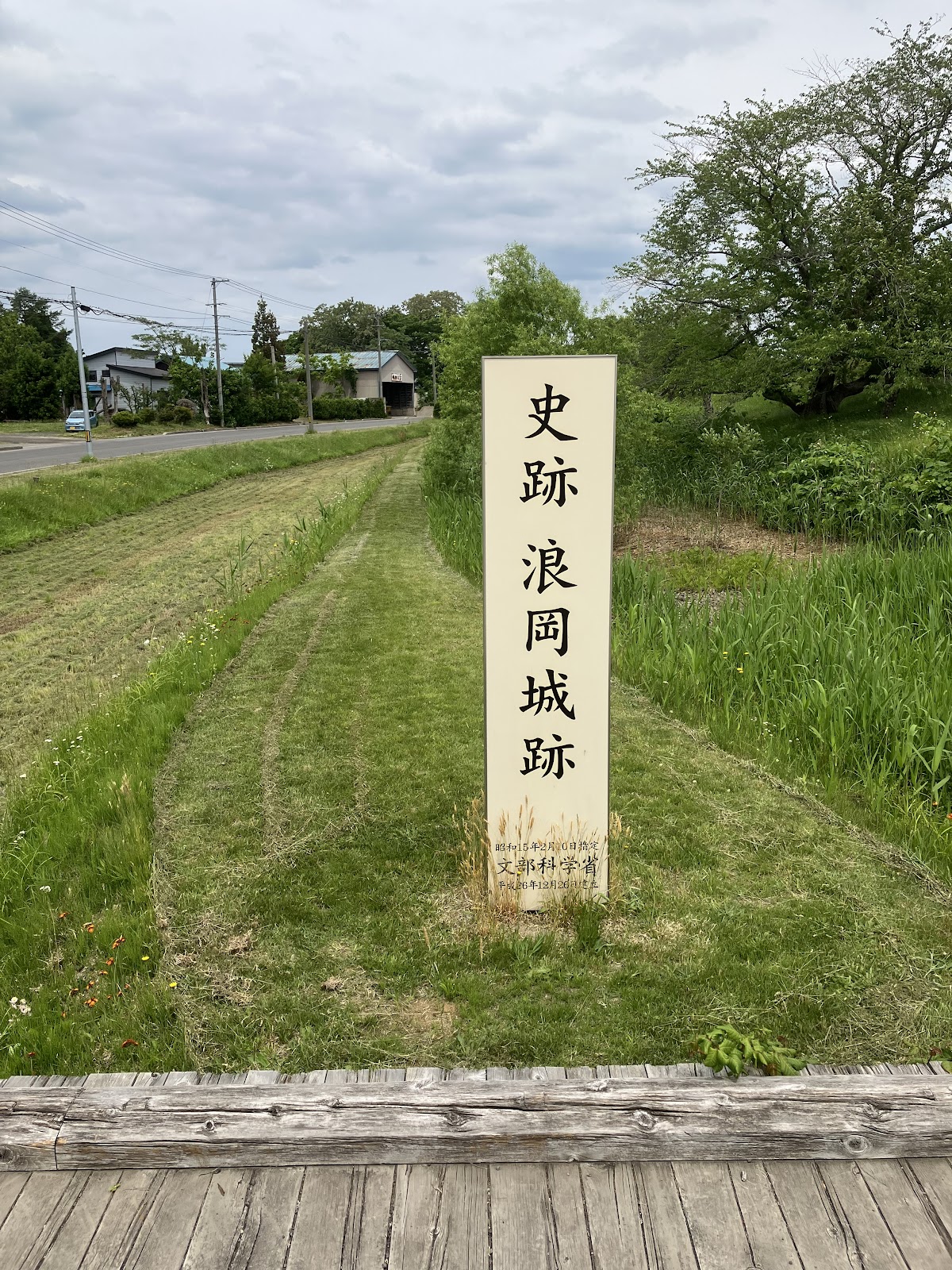
Namioka Castle ruins were designated as a National Historic Site on February 10, 1940, the first such designation in Aomori Prefecture. This indicates that the historical value of Namioka Castle was recognized early on.
After the designation as a National Historic Site, continuous excavation investigations have been conducted at Namioka Castle ruins. These investigations have gradually revealed the castle’s structure, including the discovery of an eighth unnamed residence. Excavations have revealed building remains, well remains, and post holes, providing valuable clues to understanding daily life at the time.
The True Image of the Castle as Seen from Excavated Artifacts
Excavations have unearthed a variety of artifacts, including ceramics, pottery, weapons, and daily life tools. The discovery of high-quality ceramics, particularly those transported from Kyoto, provides physical evidence of the close ties between the Namioka Kitabatake clan and Kyoto.
Furthermore, the discovery of weapons and horse tack indicates that the castle also functioned as a military base. The discovery of daily life tools provides valuable information about daily life within the castle.
Development as a Historical Park
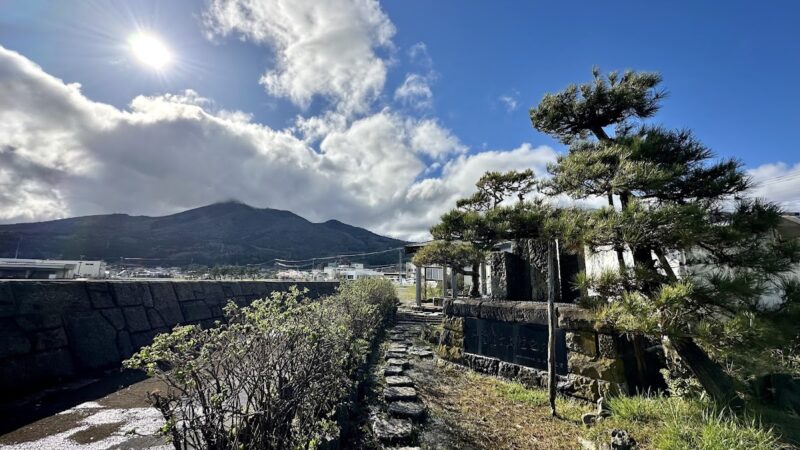
The Namioka Castle ruins are now developed as a historical park and are open to the public. Based on the results of the excavations, the development project included the restoration of moats and earthworks, the installation of walking paths, and the placement of information boards.
The park clearly displays the locations and structures of each building, making it easy for visitors to imagine the appearance of a medieval castle. In spring, cherry blossoms bloom, and the area is a popular place for citizens to relax.
Aomori City Medieval Museum
The “Aomori City Medieval Museum” is located adjacent to the Namioka Castle ruins. This facility functions as an information center for the Namioka Castle ruins and features exhibits related to Namioka Castle and the Namioka Kitabatake clan.
Exhibits
The Medieval Museum displays artifacts unearthed during archaeological excavations, a reconstructed model of Namioka Castle, and panel displays explaining the history of the Namioka Kitabatake clan. Video materials are also available, allowing visitors to learn about the history of Namioka Castle from multiple perspectives.
The reconstructed model, in particular, is a valuable resource for understanding the layout of the eight buildings in three dimensions. Furthermore, seeing the actual unearthed ceramics and daily life tools allows visitors to appreciate the high level of culture at the time.
Facility Information
The Medieval Museum serves as a base for visitors to the Namioka Castle ruins; stopping by before visiting the castle ruins will provide a deeper understanding. You can also receive a guided tour from the staff, where you can hear detailed explanations about the highlights and historical background of Namioka Castle.
Access and Tourist Information
Transportation Access
Access by Train
- Approximately 15 minutes on foot from JR Ou Main Line “Namioka Station”
- Approximately 30 minutes by train from central Aomori City
Access by Car
- Approximately 5 minutes from Tohoku Expressway “Namioka IC”
- Approximately 30 minutes from central Aomori City via National Route 7
- Free parking available
Visiting Information
Opening Hours
- Historical Site Park: Always open (free viewing)
- Aomori City Medieval Museum: 9:00 AM – 4:00 PM (may vary depending on the facility)
Closed Days
- Aomori City Medieval Museum: Mondays (or the following day if Monday is a public holiday), New Year holidays
Admission Fee
- Historical Site Park: Free
- Aomori City Medieval Museum: Free (some exhibits may require a fee)
Visiting Points
Namioka Castle Ruins are very vast, so it is recommended to allow 1-2 hours for your visit. The following route is recommended for efficient sightseeing:
- Gain background knowledge at the Aomori City Medieval Manor
- Begin your visit with the Inner Manor
- Visit the main manors: North Manor, West Manor, and East Manor
- Walk around the outer perimeter, observing the structure of the double moat
- Visit the outer manors, including the New Manor and Sarugaku Manor
The castle is especially beautiful during the cherry blossom season in spring and the autumn foliage season, allowing you to enjoy both historical sightseeing and nature appreciation simultaneously.
Value as one of the Continued Top 100 Japanese Castles
Namioka Castle was selected as the 103rd of the Continued Top 100 Japanese Castles on April 6, 2017. This selection recognized the following values of Namioka Castle:
Historical Value
As a castle built by descendants of Kitabatake Chikafusa, a prominent family from the Nanboku-cho period, it occupies an important position in the political and cultural history of the medieval period. This is a valuable historical site that shows the route by which Kyoto’s culture was transmitted to the Tsugaru region, and is an indispensable historical site for understanding the reception of aristocratic culture in the provinces.
Architectural Historical Value
The unique structure, with eight buildings separated by a double moat, retains many characteristics of medieval castle architecture and is an important example in castle research. Its complex defensive system, despite being a flatland castle, is valuable for understanding the castle-building techniques of the Sengoku period.
Excellent State of Preservation
Since its designation as a national historical site in 1940, appropriate preservation and management have been carried out, resulting in the well-preserved remains of the moats, earthworks, and other structures. Archaeological excavations are also continuously conducted, further increasing its academic value.
Tourist Attractions Around Namioka Castle
Historical Buildings in the Namioka Area
Shrines and temples associated with the Namioka Kitabatake clan are scattered around the Namioka Castle ruins. In particular, the Gion Shrine, Hachiman Shrine, Kamo Shrine, and Kasuga Shrine, located at the four corners, are interesting as remnants of urban planning modeled after Heian-kyo (Kyoto).
Apple Orchards and Rural Landscape
The Namioka area is one of Aomori Prefecture’s leading apple-producing regions. Apple orchards spread around the castle ruins, offering a beautiful landscape of bright red apples in autumn. Fresh apples and apple products can be purchased at local direct sales outlets.
Access to Tourist Attractions in Aomori City
Namioka Castle is approximately a 30-minute drive from the center of Aomori City. You can create a sightseeing plan combining Namioka Castle with major Aomori City attractions such as the Sannai-Maruyama Ruins, the Aomori Prefectural Museum of Art, and Nebuta House Wa-Rasse.
Map and Location Information
Namioka Castle is located in Okada, Namioka, Aomori City, Aomori Prefecture. It is situated in the southwestern part of Aomori City, near the center of the former Namioka town, and boasts a favorable water source at the confluence of the Namioka River and the Shoheizu River.
The castle ruins are surrounded by residential areas and farmland, making it unique in that medieval remains are preserved within a modern living space. Observing the surrounding terrain, it’s clear that the castle was built utilizing the terraces formed by the river.
Searching for “Namioka Castle Ruins” or “Aomori City Medieval Mansions” on your car navigation system or map app will provide accurate location information. Parking is available on the south side of the castle ruins, from where you can explore the various mansions on foot.
Summary: The Charm and Highlights of Namioka Castle
Namioka Castle is a historically significant castle ruin built by descendants of Kitabatake Chikafusa, a prominent figure from the Nanboku-cho period. It boasts many highlights, including its unique structure with eight mansions separated by a double moat, unearthed artifacts demonstrating cultural exchange with Kyoto, and its dramatic history of falling to Tsugaru Tamenobu.
Namioka Castle Ruins, the first national historical site in Aomori Prefecture and a recipient of the Continued Top 100 Japanese Castles list, is an essential historical site for studying medieval castle architecture. Now developed as a historical park, it’s easily accessible to everyone, allowing visitors to enjoy the changing seasons, including cherry blossoms in spring and autumn foliage.
Gaining some background knowledge at the Aomori City Medieval Museum before exploring the castle ruins will allow you to understand the history and structure of Namioka Castle more deeply. When you visit Aomori, be sure to visit the Namioka Castle ruins and experience the romance of medieval history.