Murakami Castle (Murakami City, Niigata Prefecture) Complete Guide | History, Highlights, and Access Explained in Detail
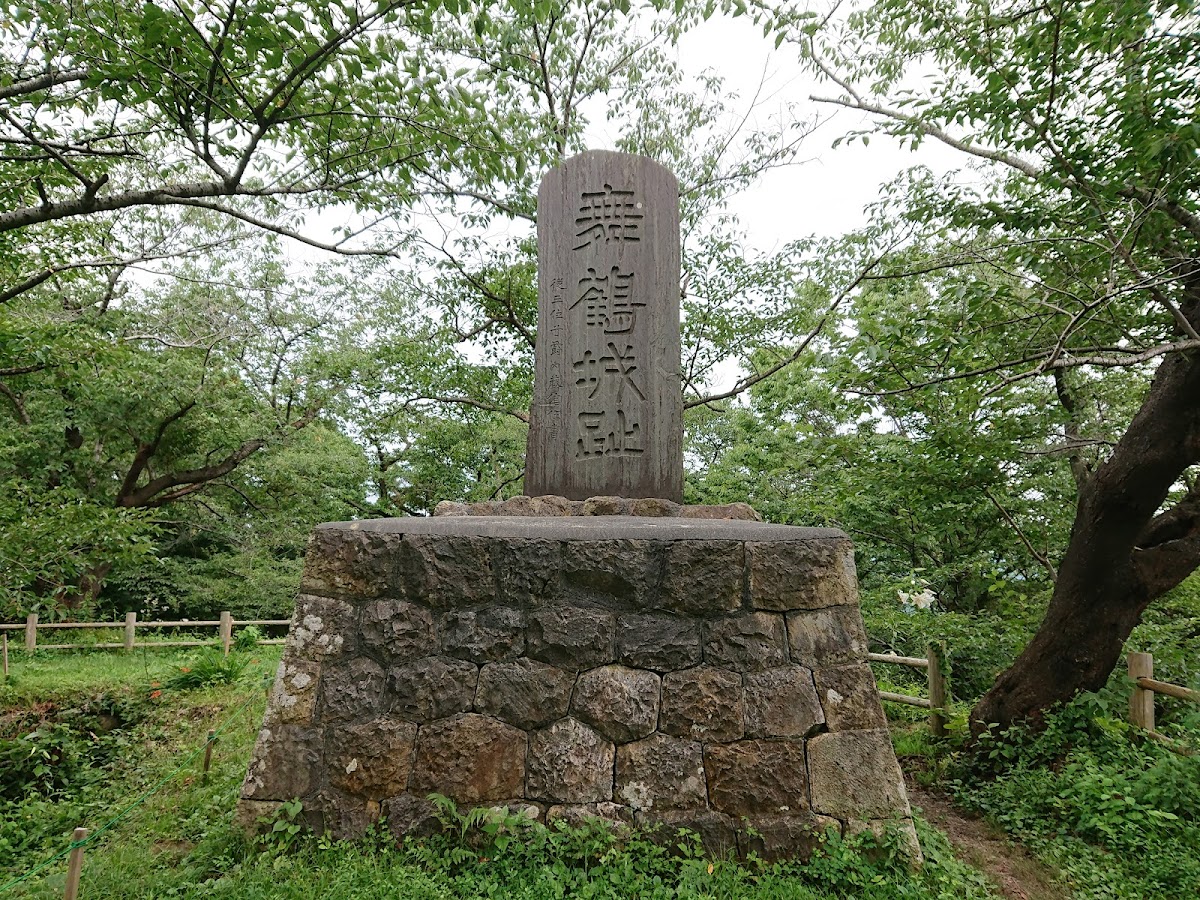
Murakami Castle, built on Mount Gagyū (elevation 135 meters) at the eastern edge of Murakami City, Niigata Prefecture, is a flatland castle that played an important role as a strategic point in northern Echigo from the Sengoku period to the Edo period. Also known as Maizuru Castle and Honjō Castle, it is currently designated as a national historic site. This article thoroughly explains everything you need to know before visiting Murakami Castle, from its history and highlights to access methods.
Overview of Murakami Castle
Murakami Castle is a flatland castle built on Mount Gagyū in Honmachi, Murakami City, Niigata Prefecture, located at the eastern edge of Murakami city. It has the typical structure of a flatland castle, with the main keep located at the summit (elevation 135 meters) and residences and samurai houses at the foot of the mountain.
The castle’s unique feature is the coexistence of remains from a Sengoku period mountain castle and stone walls from a modern castle built during the Edo period. From the mountaintop, one can enjoy a panoramic view of the Sea of Japan and the city of Murakami, still experiencing the same scenery enjoyed by the castle’s former lords.
Locally, it is affectionately called “Oshiro-yama” (Castle Mountain) and is a popular recreational spot for citizens. It was designated a national historic site in 2006 and selected as one of the Continued Top 100 Japanese Castles (No. 133) in 2017.
History and Background of Murakami Castle
Sengoku Period: Construction by the Honjo Clan
The exact construction date of Murakami Castle is unknown, but it is believed that a castle already existed in the first half of the 16th century (early Sengoku period). Initially called “Honjo Castle,” it was the residence of the Honjo clan, who ruled this region.
The Honjo clan was a powerful local family in the Agakita region of Echigo Province and wielded considerable influence as vassals of the Uesugi clan. Especially during the time of Honjo Shigenaga, the castle functioned as an important military base.
1568 (Eiroku 11): Siege against Uesugi Kenshin
The most famous event in the history of Murakami Castle is the rebellion of Honjo Shigenaga in 1568 (Eiroku 11). Shigenaga rebelled against his lord, Uesugi Kenshin, and resisted by barricading himself in Murakami Castle.
This siege was fierce, but ultimately a peace agreement was reached, and Shigenaga returned to serving as a vassal of the Uesugi family. This battle proved the strength of Murakami Castle and increased its military value.
1598 (Keicho 3): Entry of the Murakami Clan and Start of Renovation
In 1598 (Keicho 3), when the Honjo clan was transferred to Aizu, Murakami Yorikatsu, a vassal of Hori Hideharu, was appointed to the castle with a stipend of 90,000 koku. From this time onward, the castle came to be known as “Murakami Castle.”
During the time of the Murakami clan, large-scale construction began to transform the Sengoku period mountain castle into a modern fortress. This included the construction of stone walls and the expansion of the castle grounds, aiming for a modern castle design.
Hori Clan Era: Completion as a Modern Castle
After the Murakami clan, Hori Naoyori (son of Hori Hideharu) became the lord of the castle, and the reconstruction into a modern castle was completed. During the Hori clan’s era, a three-story, four-tiered keep was built, and the layout and arrangement of the castle town were also developed.
During this period, Murakami Castle was completed as a full-fledged modern castle, with the main keep at the mountaintop, the second and third baileys arranged around it, and residences and samurai houses located at the foot of the mountain.
Large-Scale Renovation by Matsudaira Naonori
In 1649 (Keian 2), Matsudaira Naonori, who was transferred from Himeji Castle, took up the domain with a stipend of 150,000 koku, and undertook a large-scale renovation of the castle. The entire castle complex was improved, including the strengthening of the stone walls and the reconstruction of buildings.
However, in 1667 (Kanbun 7), the keep was destroyed by lightning. Although the keep was never rebuilt, the castle continued to function as a castle.
From the Naito Clan to the Meiji Restoration
In 1702 (Genroku 15), Naito Kazunobu took up the domain with a stipend of 50,000 koku, and from then until the Meiji Restoration, nine generations of the Naito clan ruled the castle as lords of Murakami Domain. The Naito era was relatively peaceful, and it was a period when the culture of the castle town flourished.
After the Meiji Restoration, Murakami Castle was abandoned due to the abolition of the feudal domains and the establishment of prefectures, and the buildings within the castle were demolished in the early Meiji period. However, remnants such as stone walls and baileys remain to this day.
Layout and Structure of Murakami Castle
Main Bailey, Second Bailey, and Third Bailey at the Summit
The central part of Murakami Castle is located at the summit of Mount Gagyū. The main bailey is situated at the highest point, surrounded by the second and third baileys.
The main bailey measures approximately 50 meters east-west and 80 meters north-south, and once housed major buildings such as the keep and the main palace. Currently, only foundation stones and stone walls remain, allowing us to imagine its former appearance.
The second bailey is positioned to surround the north and west sides of the main bailey, and is thought to have contained offices for senior retainers and warehouses. The third bailey further encloses the outermost part, serving as a key defensive point.
Residences and Samurai Houses at the Foot of the Mountain
The “Otachi,” the residence of the feudal lord, was located at the foot of the mountain and served as the administrative center. Currently, the Murakami City Local History Museum (Oshagiri Hall) and other buildings stand on this site.
Around the residence were the samurai residences of senior retainers, and further outside were the residences of middle and lower-ranking samurai. The layout of the samurai district remains today, allowing visitors to experience the atmosphere of the past.
Structure of the Castle Town
The castle town of Murakami Castle was clearly divided into a samurai district and a merchant district. The samurai district was located around the castle, while the merchant district spread across the current city center.
In the merchant district, merchants set up shops, and the town prospered as a castle town. Even today, old merchant houses called “machiya” remain, and the historical landscape is being preserved through projects such as the Machiya Restoration Project.
Highlights of Murakami Castle
Impressive Stone Walls
The greatest highlight of Murakami Castle is the magnificent stone walls remaining on the mountaintop. Built during the Edo period, these walls remain remarkably strong even after more than 400 years, demonstrating the high level of stonework techniques of the time.
The stone walls around the main keep, in particular, reach heights of over 5 meters, creating a truly impressive sight. Many of the walls are constructed using the nozura-zumi (rough-stone masonry) method, allowing visitors to learn about castle construction techniques from the Sengoku period to the early Edo period.
The stone walls remaining at the entrances (gateways) such as the Yotsumon and Okanemon gates are also worth seeing, showcasing defensive ingenuity throughout.
Remains of the Sengoku Period: Vertical Moats and Trenches
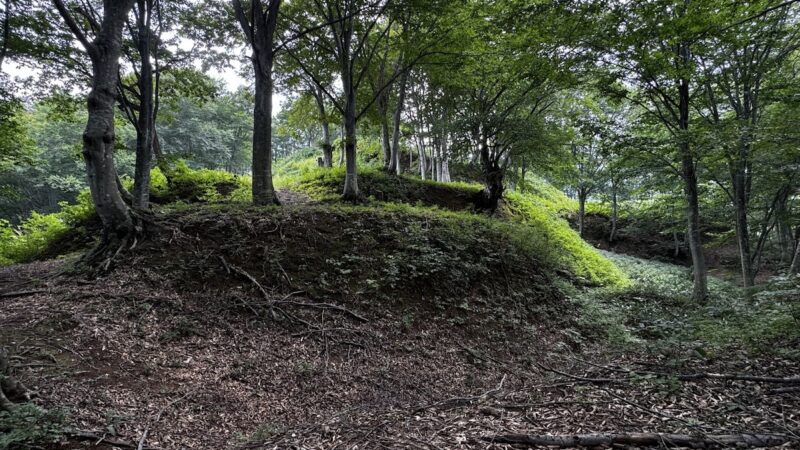
Beyond the mountaintop, remains of the Sengoku period mountain castle can be found on the mountainside. Of particular note are the vertical moats dug into the slopes.
Vertical trenches are defensive structures designed to prevent enemy lateral movement and divide attacks, and several vertical trenches have been identified at Murakami Castle. These are thought to be remnants from the Honjo clan era, making them valuable historical sites that convey the castle-building techniques of the Sengoku period.
Furthermore, trenches that divide the ridge remain, providing a good understanding of the castle’s defensive function as a mountain castle.
View from the Main Enclosure
From the main enclosure, at an altitude of 135 meters, you can see the town of Murakami, the Sea of Japan, and even Awashima Island in the distance. On clear days, Sado Island can also be seen, making it a popular spot for its spectacular views.
The castle lords likely gazed upon this view while praying for the prosperity of their territory. The view at sunset is particularly beautiful, with the sunset over the Sea of Japan being especially breathtaking.
In spring, cherry blossoms bloom, and in autumn, the mountains are colored with autumn leaves. You can enjoy a landscape where the changing seasons and historical remains harmonize.
Ascent to the Castle and Remains of the Enclosures
From the foot of the mountain to the main keep, it takes about 20 minutes to walk along the well-maintained ascent path. The path is a gentle winding route, making it relatively easy even for those who are not confident in their physical strength.
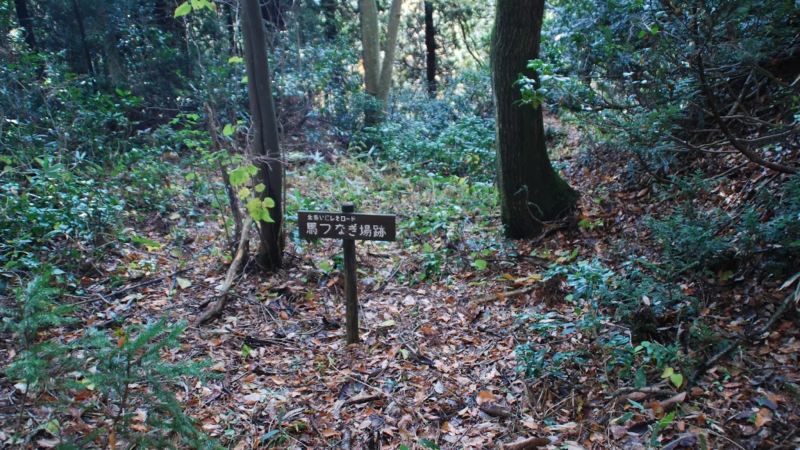
Along the ascent path, there are various points of interest, including the Seven Bends, medieval remains, and the remains of the Four Gates. Information boards are also installed, allowing you to enjoy a leisurely ascent while reading them.
At each enclosure site, you can stroll around while imagining the former building layout, which helps in understanding the overall structure of the castle.
Tourist Attractions Around Murakami Castle
Murakami City Local History Museum (Oshagiri Hall)
Located at the foot of the Murakami Castle ruins, the local history museum exhibits materials related to the history of Murakami Castle and the Murakami Domain. You can see a reconstructed model of the castle, excavated artifacts, and ancient documents, deepening your understanding of Murakami Castle.
Furthermore, the “Oshagiri” (floats) used in the Murakami Grand Festival are also on display, allowing visitors to experience Murakami’s traditional culture.
Samurai Residence Street
Within walking distance of the castle ruins, there is a street lined with samurai residences from the Edo period. Some samurai residences, such as the former Kato family residence and the former Fujii family residence, are open to the public, offering a glimpse into the lives of samurai of that era.
The cobblestone streets and hedges create a timeless atmosphere, making it a recommended spot for a stroll.
Machiya Area
Many old merchant houses called “machiya” remain in the Murakami city center. Through the Machiya Revitalization Project, these historical buildings are preserved and utilized, operating as cafes, galleries, and souvenir shops.
The area known as “Kurobei-dori” (Black Wall Street) is particularly famous for its beautiful scenery of black wooden fences. While exploring the machiya, visitors can enjoy local specialties such as “Murakami tea” and “shiohiki salmon.”
Temples and Shrines in Murakami City
Many temples and shrines remain in the former castle town of Murakami. In particular, the area known as “Teramachi” (Temple Town) is home to many historical temples, including Jōnenji, Daieiji, and Seigenji.
These temples were strategically placed during the formation of the castle town and also served as a defensive line for the castle. You can feel the history of the castle town while strolling through the tranquil temple grounds.
Access to Murakami Castle
Access by Public Transportation
By JR Train
- Get off at Murakami Station on the JR Uetsu Main Line, and it’s about a 20-minute walk to the castle entrance.
- It’s about a 5-minute taxi ride from Murakami Station to the castle entrance (approximately 700 yen).
- You can also rent a bicycle from Murakami Station (approximately 10 minutes).
By Bus
- Take the Senami Loop Bus from in front of Murakami Station and get off at “Murakami Castle Ruins Entrance”.
- However, since the number of buses is limited, it is recommended to check the timetable in advance.
Access by Car
By Expressway
- Approximately 10 minutes from the Murakami Senami Onsen IC on the Nihonkai Tohoku Expressway.
- Approximately 1 hour from Niigata via National Route 7.
- Approximately 1 hour 30 minutes from Yamagata via National Route 7.
Parking Information
- Murakami Castle Ruins Dedicated Parking: Free parking available at the foot of Mt. Gagyū (approx. 20 cars)
- Murakami City Local History Museum Parking: Free (approx. 30 cars)
- Murakami City Hall Parking: May be available on holidays
Parking near the castle entrance is limited, so early arrival is recommended during peak tourist season and holidays.
Precautions for Visiting the Castle
Clothing and Equipment
- Comfortable walking shoes (sneakers or trekking shoes) are essential as you will be walking on mountain paths.
- In summer, bring insect repellent, a hat, and drinking water.
- In winter, wear non-slip shoes due to the possibility of snow and ice.
Estimated Time
- From the entrance to the main keep: Approximately 20 minutes on foot
- Visiting and resting at the main keep: Approximately 20 minutes
- Descending: Approximately 15 minutes
- Total time: Approximately 1 hour to 1 hour 30 minutes
Other Precautions
- Be careful not to get too close to the stone walls, as there is a risk of collapse.
- Be careful as the ground can be slippery during and after rain.
- Cell phone reception is generally available at the summit, but there are some areas with unstable reception.
- Toilets are located near the entrance to the castle, but not at the summit, so please use the facilities beforehand.
Murakami Castle Visiting Information
Basic Information
Location
1-8 Honmachi, Murakami City, Niigata Prefecture (Castle Entrance)
Visiting Hours
- Open 24 hours (However, nighttime visits are not recommended due to safety concerns)
- Recommended visiting hours: Sunrise to sunset
Admission Fee
Free
Closed Days
None (However, it is recommended to refrain from visiting during bad weather)
Contact Information
Murakami City Board of Education, Cultural Administration Promotion Division
Phone: 0254-53-2111
Continued Top 100 Japanese Castles Stamp
Murakami Castle is selected as the 133rd castle in the Continued Top 100 Japanese Castles. The stamp is located at the following location.
Stamp Location
- Murakami City Local History Museum (Oshagiri Hall)
- Hours: 9:00 AM – 4:30 PM
- Closed: December 29th – January 3rd
Those collecting stamps are advised to visit the local history museum before or after visiting the castle.
Recommended Visiting Season
Spring (Early April – May)
During cherry blossom season, you can enjoy the cherry blossoms along the castle path and around the main keep. The contrast between the cherry blossoms and the stone walls is beautiful, making it ideal for photography.
Summer (June – August)
The fresh greenery is beautiful, and the view from the mountaintop is refreshing. However, temperatures are high and there are many insects, so heatstroke prevention and insect repellent are necessary.
Autumn (October – November)
The autumn foliage is beautiful, making this the most recommended season. Especially in early November, the autumn leaves are at their peak, creating a magnificent landscape in harmony with the stone walls.
Winter (December-March)
While snowfall can make climbing the castle difficult, the snow-covered stone walls possess a fantastical beauty. However, utmost caution is necessary for safety.
Cultural Property Designation and Preservation Activities of Murakami Castle
National Historic Site Designation
Murakami Castle ruins were designated a National Historic Site on January 26, 2006 (Heisei 18). The designated area covers approximately 20 hectares, centered on the summit of Gagyūzan Mountain, and includes major parts such as the main keep, second bailey, and third bailey.
With the designation as a National Historic Site, the preservation and development of the remains can now be systematically carried out, including the restoration of stone walls and the improvement of the climbing paths.
Preservation and Development Projects
Murakami City is proceeding with phased development based on the basic plan for the preservation and development of Murakami Castle ruins. The main initiatives include the following:
- Surveying and restoration of the stone walls
- Confirmation of remains through archaeological excavations
- Installation of information boards and explanatory signs
- Safety measures for the approach to the castle
- Landscape improvement through tree felling
These improvements create an environment where visitors can learn about the history of Murakami Castle more safely and in greater depth.
Preservation activities by local residents
The cooperation of local residents is essential for the preservation of the Murakami Castle ruins. Organizations such as the “Murakami Castle Ruins Preservation Association” conduct cleaning activities, guide visitors, and cooperate in research and studies.
Furthermore, the entire city of Murakami is working to preserve its historical landscape, and the preservation and utilization of townhouses and samurai residences in the castle town are also progressing. These efforts have been highly praised, including receiving the “Beautiful Townscape Award” at the Urban Landscape Awards in 2008 and being selected for “Project Future Heritage 2016” in 2016.
Murakami Castle and the History and Culture of Murakami
Murakami’s Salmon Culture
Murakami City is known as the “City of Salmon,” and its history dates back to the time of Murakami Castle. Salmon caught in the Miomote River became an important source of revenue for the domain during the Edo period, and salmon processing techniques developed within the Murakami domain.
Even today, over 100 types of salmon dishes, such as “shiohiki salmon” (salt-cured salmon) and “sake-marinated salmon,” are still passed down, and are must-try specialties when visiting the castle town.
The Tradition of Murakami Tea
Murakami is also known as the northernmost tea-producing region in Japan. It is said that the cultivation of tea began in the Edo period when the lord of the Murakami domain encouraged it, and it is still enjoyed today as “Murakami Tea.”
Grown in a cold climate, Murakami tea is characterized by its unique sweetness and aroma, and you can sample and purchase it at tea shops in the castle town.
Murakami Grand Festival and Oshagiri
The Murakami Grand Festival, held every July, is a traditional event that has continued since the castle town era. Magnificent floats called “Oshagiri” parade through the town, attracting many tourists.
This festival is an important event that conveys the prosperity of the castle town and the culture of Murakami to the present day.
Summary
Murakami Castle in Murakami City, Niigata Prefecture, is a historically valuable castle site where the remains of a mountain castle from the Sengoku period and the stone walls of a modern castle from the Edo period coexist. Built on Mt. Gagyūzan at an altitude of 135 meters, this flatland castle began with its construction by the Honjō clan, and after a long history including a siege against Uesugi Kenshin, reconstruction into a modern castle, and finally its abandonment during the Meiji Restoration, it is now preserved as a national historical site.
There are many highlights, including magnificent stone walls, vertical moats and trenches from the Sengoku period, and spectacular views from the mountaintop. The castle grounds are easily accessible, with the main keep just a 20-minute walk from the entrance. It’s a recommended spot not only for history buffs but also for those who enjoy nature and hiking.
When visiting Murakami Castle, be sure to also explore the surrounding samurai residences and townhouses to fully experience the history and culture of the castle town. Local specialties such as salmon dishes and Murakami tea are also a highlight.
If you have the opportunity to visit Niigata, why not visit the Murakami Castle ruins and experience the charm woven from the history and nature of Echigo?