Tomikuma Castle and Shimazu Yoshihisa: The History and Present State of the Castle Where the Conqueror of Kyushu Retired
Located in the Hamanoichi district of Sumiyoshi, Hayato-cho, Kirishima City, Kagoshima Prefecture, the Tomikuma Castle ruins were built by Shimazu Yoshihisa, who was forced into retirement during the Sengoku period when he was on the verge of unifying Kyushu, due to Toyotomi Hideyoshi’s Kyushu campaign. Yoshihisa spent approximately 10 years here, from 1595 to 1604, using Tomikuma Castle as his base to contribute to the development of Kokubu. This article comprehensively explains the historical background of Tomikuma Castle, its relationship with Shimazu Yoshihisa, and the current state of the castle ruins.
Who was Shimazu Yoshihisa?: A Sengoku Daimyo who aimed to conquer Kyushu
The Life and Achievements of Shimazu Yoshihisa
Shimazu Yoshihisa was born in 1533 (Tenbun 2) as the eldest son of Shimazu Takahisa and passed away in Kokubu in 1611 (Keicho 16) at the age of 79. As the 16th head of the Shimazu family, he aimed to unify Kyushu, leading a formidable group of retainers alongside his three capable younger brothers (Shimazu Yoshihiro, Toshihisa, and Iehisa).
Yoshihisa achieved the great feat of unifying Satsuma, Osumi, and Hyuga provinces, and conquering almost the entire Kyushu region. However, his ambitions were thwarted by Toyotomi Hideyoshi’s Kyushu campaign in 1587 (Tensho 15). Faced with an overwhelming difference in military strength, Yoshihisa shaved his head and surrendered to Hideyoshi, choosing the survival of the Shimazu family.
Defeat Just Before Unifying Kyushu
The Shimazu army, led by Shimazu Yoshihisa, achieved numerous victories throughout Kyushu, including defeating the Otomo clan at the Battle of Mimikawa and the Ryuzoji clan at the Battle of Okita-Nawate. By 1586, they had brought almost all of Kyushu under their control, reaching a point where they were “just one step away from unifying Kyushu.”
However, when Toyotomi Hideyoshi invaded Kyushu with an army said to number 200,000, the Shimazu army suffered repeated defeats, and ultimately Yoshihisa surrendered to Hideyoshi’s army. This defeat became a crucial turning point that led to the later construction of Tomikuma Castle.
Background to the Construction of Tomikuma Castle: Forced Retirement and Relocation
Toyotomi Hideyoshi’s Treatment of the Shimazu Family
After the Kyushu campaign, Toyotomi Hideyoshi imposed harsh measures on the Shimazu family. On June 29, 1595 (Bunroku 4), Hideyoshi issued a vermilion seal document granting land in Satsuma, Osumi, and Morokata districts of Hyuga provinces, following the Taiko land survey, addressed not to the head of the family, Yoshihisa, but to his younger brother, Yoshihiro.
This effectively forced Yoshihisa into retirement. Hideyoshi suggested that Yoshihisa retire to Oguchi in Satsuma Province, but Yoshihisa refused, choosing instead to build a new castle in Tomikuma in Osumi Province and move there.
Departure from Uchijo Castle
Forced to leave Uchijo Castle in Kagoshima, Satsuma Province, where he had resided until then, Yoshihisa hastily built a residence in Hamanoichi, located on the border between Satsuma and Osumi Provinces and near a port. This became Tomikuma Castle.
Yoshihisa, who moved to Tomikuma Castle in 1595 (Bunroku 4), used this location as his base for approximately 10 years until he moved to Maizuru Castle (Kokubu Shinjo) around 1604 (Keicho 9).
Structure and Characteristics of Tomikuma Castle
Tomikuma Castle as a Flatland Castle
The most distinctive feature of Tomikuma Castle is its structure, which differs from typical Shimazu castles. Castles in Satsuma Province were generally mountain castles boasting strong defenses, and it was customary to have a reserve mountain castle on the hillside behind them. However, Tomikuma Castle is a flatland castle built on a plain, and there is no such reserve mountain castle.
This structure is thought to be a sign of submission to Toyotomi Hideyoshi. By building a flatland castle that did not prioritize defense, it demonstrated that there was no intention to rebel against Hideyoshi.
Castle Size and Layout
Tomikuma Castle was a residence-type castle with a size of approximately 200 meters east-west and 150 meters north-south. Built on flat land, this castle possessed defensive features such as stone walls and moats, but lacked the robust defensive capabilities of a mountain castle.
Its location in the Hamanoichi district, close to the sea and convenient for transportation, was ideal for transporting goods and gathering information via the port. It is believed that Yoshihisa chose this location as a strategic decision to maintain real power within the Shimazu family even after his retirement.
“The Dual Lord System”: Yoshihisa’s Real Power After Retirement
Formal Retirement and Substantive Retention of Power
Although Yoshihisa formally handed over the family headship to his younger brother Yoshihiro at the command of Toyotomi Hideyoshi, he continued to hold the Shimazu family’s ancestral “sacred treasures.” As a result, Yoshihisa still held real power within the Shimazu territory.
This system was called the “Dual Lord System,” a unique form of governance in which Yoshihiro, the nominal head of the family, and Yoshihisa, the de facto ruler, coexisted. Tomikuma Castle functioned as Yoshihisa’s base within this Dual Lord System. ### Contribution to the Development of Kokubu
During his approximately 10 years residing at Tomikuma Castle, Yoshihisa dedicated himself to the development of the town of Kokubu. The roads, temples, shrines, and commercial facilities developed during this period formed the foundation for Kokubu’s later prosperity.
Around 1604 (Keicho 9), Yoshihisa moved from Tomikuma Castle to Maizuru Castle (Kokubu Shinjo). Then, in 1611 (Keicho 16), Yoshihisa passed away in Kokubu at the age of 79. A three-story stone pagoda dedicated to Yoshihisa was erected at the site of Kongoji Temple and is still revered by the local people today.
Historical Significance of Tomikuma Castle
Symbol of the Transition Period from the Sengoku Period to the Edo Period
Tomikuma Castle symbolizes the Shimazu family’s position during the transition period from the Sengoku period to the Edo period. The Shimazu family, who reigned as the rulers of Kyushu, came under the control of the Toyotomi regime, and then served as a base during the transition period for their survival as a daimyo under the Tokugawa shogunate.
The structure of Tomikuma Castle, a flatland castle that did not prioritize defense, represents a shift from rule by force to governance through political negotiation. The Shimazu family’s choice during this period laid the foundation for their continued existence as the Satsuma Domain throughout the Edo period and for their role as a driving force behind the Meiji Restoration.
The Shimazu Clan’s Place in Castle History
In the history of Shimazu clan castles, Tomikuma Castle occupies a unique position. While Tsurumaru Castle (Kagoshima Castle) is known as the residence of the Satsuma Domain during the Edo period, Tomikuma Castle can be seen as an experimental castle, a precursor to Tsurumaru Castle, representing the Shimazu family’s adaptation to a new era.
The shift from a mountain castle to a flatland castle, from a symbol of military power to a political center, was a change experienced by daimyo families throughout Japan, but Tomikuma Castle is a valuable historical site that clearly demonstrates this process.
Current Status of Tomikuma Castle Ruins
Development as Tomikuma Castle Ruins Park
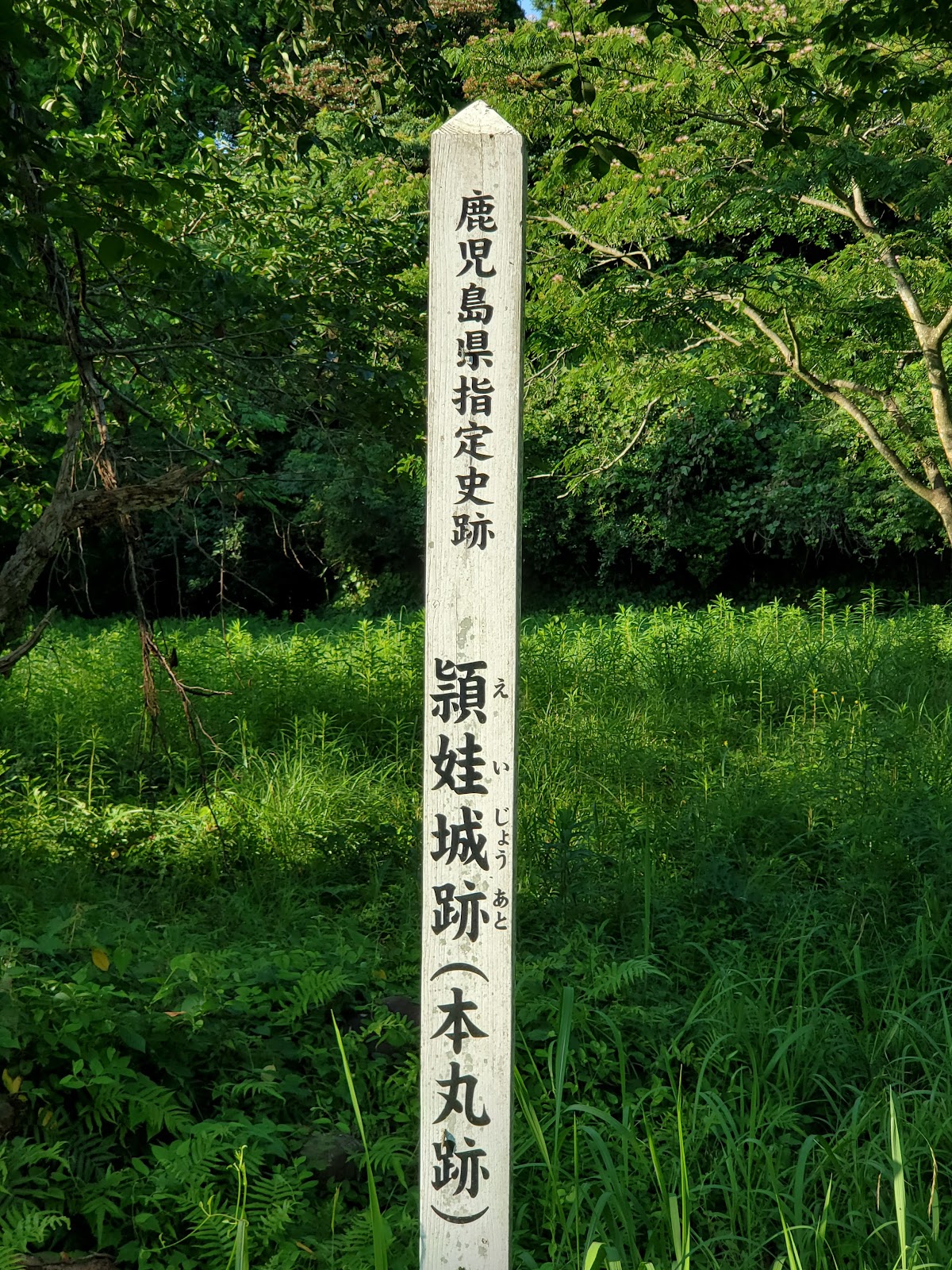
Currently, the Tomikuma Castle ruins are being developed as a historical park by Kirishima City. Located in the Hamanoichi district of Sumiyoshi, Hayato-cho, Kirishima City, Kagoshima Prefecture, this park serves as a place of relaxation for local residents and a site for historical learning.
Information boards are installed within the park, providing detailed information about the history of Tomikuma Castle and Shimazu Yoshihisa. In spring, cherry blossoms bloom, making it a popular spot for local cherry blossom viewing.
Current Status of the Remains
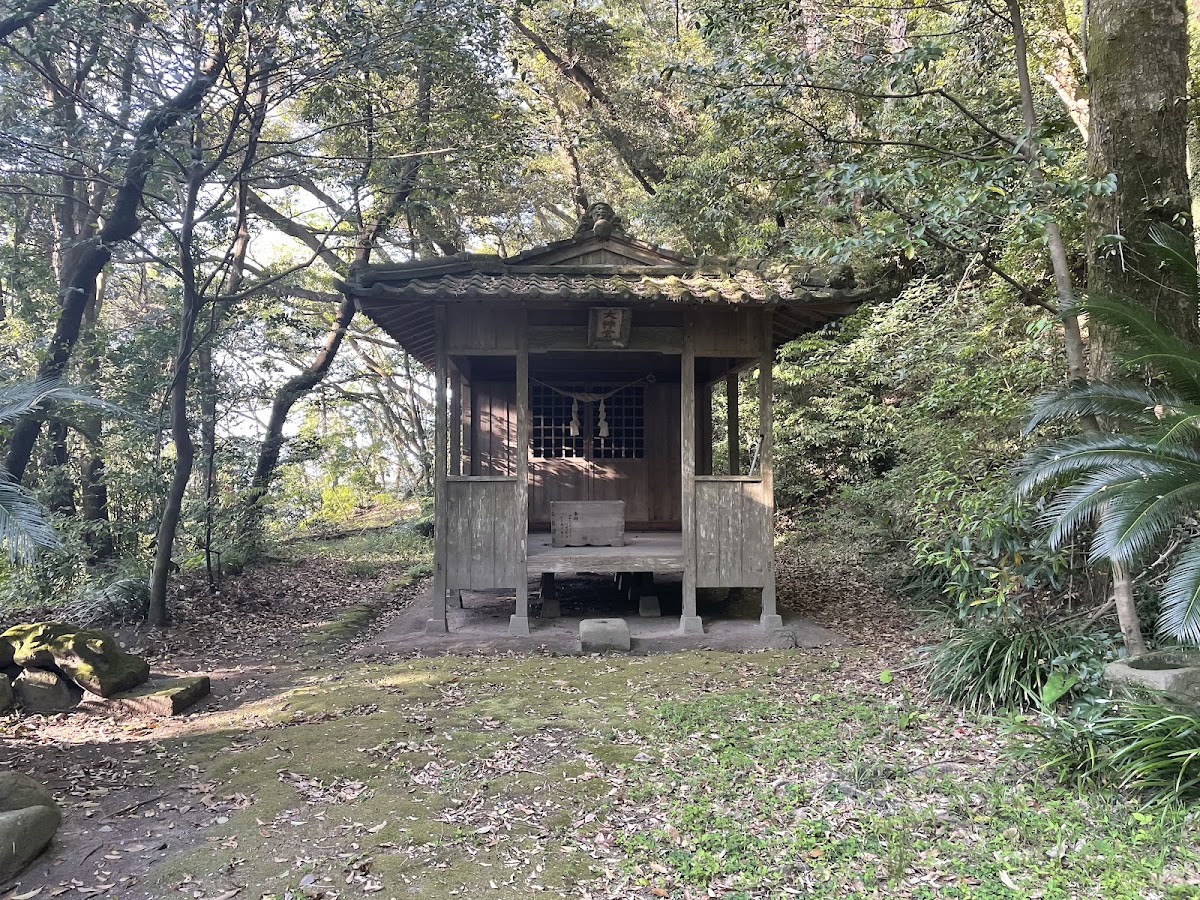
While no structures of Tomikuma Castle remain, traces of the original stone walls and topographical features can still be seen in parts of the castle site. Since the area was used for agriculture after the Edo period, there are few clear remains of the castle, but the topography and historical documents allow us to infer what it was like at the time.
Archaeological excavations have also been conducted, and the unearthed pottery and roof tiles are revealing aspects of the lifestyle and trade activities of Tomikuma Castle.
Access and Visiting Information
Tomikuma Castle Ruins are approximately a 10-minute drive from Hayato Station on the JR Nippo Main Line, or approximately a 20-minute drive from Kagoshima Airport. Parking is available, making it convenient to visit by car.
The park is open all day, and admission is free. Nearby, there are tourist facilities such as Hamanoichi Onsen (hot spring), allowing visitors to enjoy a combination of historical sightseeing and hot springs.
Historical Spots Around Tomikuma Castle
Historical Heritage of Kokubu
The ruins of Maizuru Castle (Kokubu Shinjo), which was relocated from Tomikuma Castle, also remain within Kirishima City. Furthermore, the three-story stone pagoda at the site of Kongoji Temple, dedicated to Yoshihisa, is preserved as an important historical site in the Kokubu area.
The Kokubu area retains numerous traces of temples, shrines, and roads that Shimazu Yoshihisa is said to have been involved in developing. Visiting these sites along with Tomikuma Castle Ruins allows you to trace Yoshihisa’s footsteps in Kokubu.
History and Culture of Hayato Town
Hayato Town is a region that has flourished as a transportation hub since ancient times, and it is also a region where the traditions of the Hayato people remain. Ancient ruins such as Hayatozuka are scattered around the Tomikuma Castle site, allowing one to feel the layered history from ancient times to the Sengoku period and the early modern period.
Historical Evaluation of Tomikuma Castle and Shimazu Yoshihisa
Advances in Research
In recent years, research on Tomikuma Castle and Shimazu Yoshihisa has advanced. Through the deciphering of ancient documents and archaeological investigations, the reality of the dual lord system, Yoshihisa’s life at Tomikuma Castle, and his specific contributions to the development of Kokubu are becoming clearer.
In particular, research on the Shimazu family’s position under the Toyotomi regime and the role that Tomikuma Castle played in building political networks in Kyushu is attracting attention.
Significance in the Region
For Kirishima City and Kagoshima Prefecture, the Tomikuma Castle site is an important historical heritage site. As the place where Shimazu Yoshihisa, one of the most important figures in Kyushu history, spent his later years, and as the starting point for the development of Kokubu, Tomikuma Castle plays a significant role in shaping the region’s identity.
In local history education, the story of Tomikuma Castle and Shimazu Yoshihisa is used as important teaching material, serving as a catalyst for increasing interest in local history.
Significance of Visiting Tomikuma Castle
Attraction for History Enthusiasts
While Tomikuma Castle ruins differ from those of castles with grand keeps and stone walls, they are an important historical site symbolizing a turning point in Japanese history. It’s a place worth visiting for history enthusiasts, as it allows one to feel the life of Yoshihisa, who, despite being on the verge of unifying Kyushu, succumbed to Toyotomi Hideyoshi, yet still managed to retain real power within the Shimazu family.
A Place for Quiet Historical Strolls
Because it’s not a large-scale tourist destination, Tomikuma Castle ruins offer a quiet place to reflect on history. In the lush, green environment of the park, one can contemplate the turning point between the end of the Sengoku period and the beginning of the Edo period.
Summary: Tomikuma Castle Tells the Story of Shimazu Yoshihisa’s Later Years
Tomikuma Castle was the base of operations for approximately 10 years during which Shimazu Yoshihisa, who reigned as the ruler of Kyushu but ultimately succumbed to Toyotomi Hideyoshi, lived in retirement. This period, from 1595 to 1604, was a crucial turning point for the Shimazu family and for the history of Kyushu.
The castle’s structure, a flatland castle that did not prioritize defense, demonstrates both submission to Hideyoshi and the Shimazu family’s search for a new role for a daimyo in the new era. While formally retired, Yoshihisa retained real power, using Tomikuma Castle as his base to contribute to the development of Kokubu and lay the foundation for the later prosperity of the Satsuma Domain.
Currently, the Tomikuma Castle site is maintained as a park and is cherished by local residents. While no spectacular remains are left, standing on this site allows one to feel the presence of Shimazu Yoshihisa, who lived through a major transition from the Sengoku period to the Edo period.
When you visit Kirishima City in Kagoshima Prefecture, be sure to stop by the Tomikuma Castle ruins and trace the footsteps of Shimazu Yoshihisa, who played a pivotal role in the history of Kyushu. In this tranquil park, you’ll feel the presence of history that lived over 400 years ago.