Complete Guide to Kochi Castle: History and Highlights of the Only Famous Castle with an Existing Keep and Main Palace
What is Kochi Castle?: An Overview of the Foremost Castle in the Nankaido Region
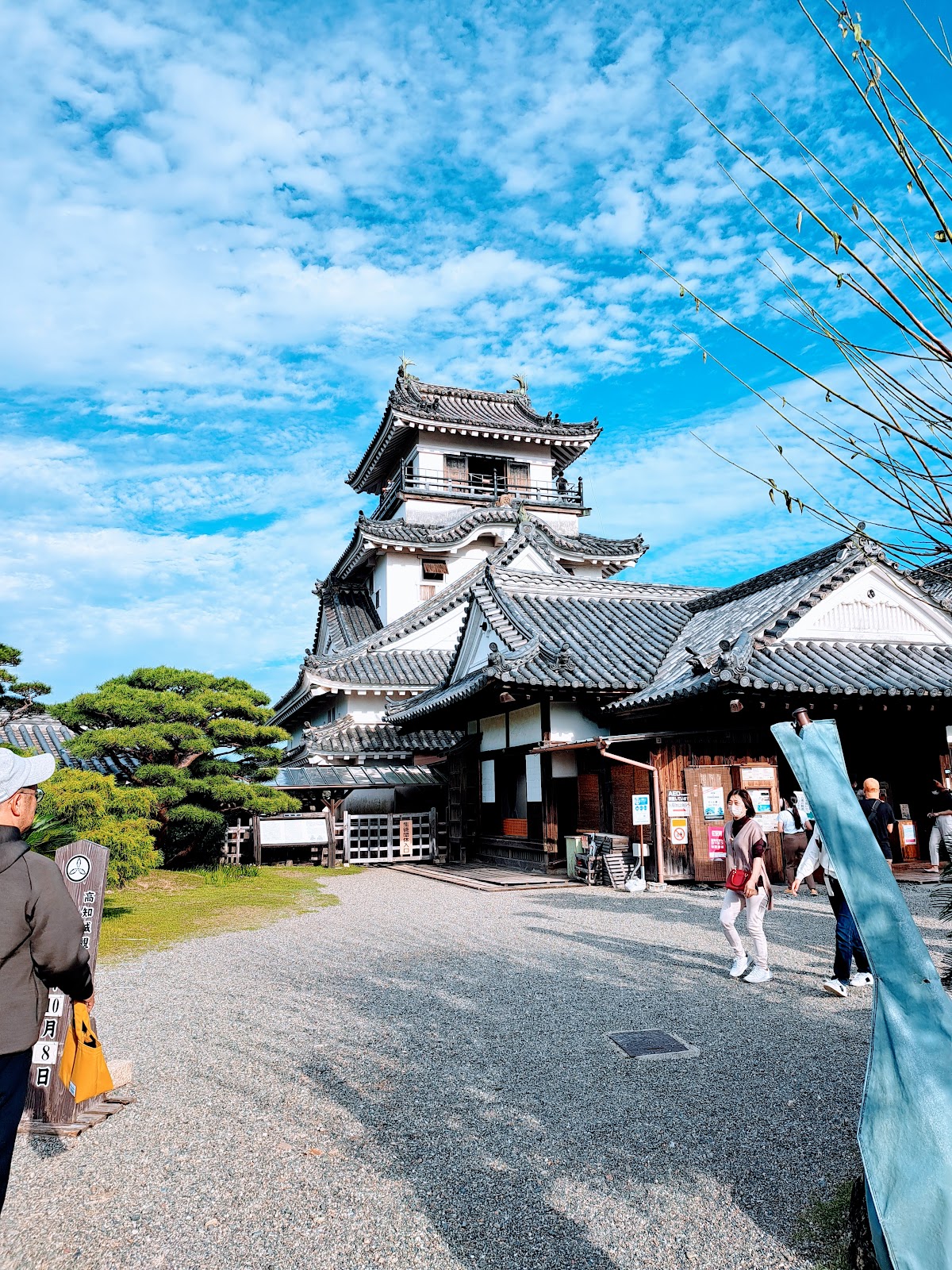
Kochi Castle is one of Japan’s most famous castles, towering over the heart of Kochi City, Kochi Prefecture. It has long been affectionately known as “Takajo” (Hawk Castle) by locals, due to the resemblance of its roof tiles and walls to the colors of a hawk’s feathers.
Kochi Castle’s greatest feature is that it is one of the “12 Existing Keeps” (a castle with an existing keep built during the Edo period), and also the only castle in Japan with both the main palace (Kaitokukan) and the keep still standing. Fifteen buildings, including the keep, main palace, and Otemon Gate, are designated as National Important Cultural Properties, and the entire castle site is protected as a National Historic Site.
Built on Mount Otakasaka, approximately 44 meters above sea level, Kochi Castle boasted a robust structure utilizing the Kagami River and Enokuchi River as outer moats. Throughout the Edo period, it served as the political center and administrative center of the Tosa Domain. Currently, it is maintained as Kochi Park and is a representative tourist spot in Kochi Prefecture, attracting many visitors throughout the year.
History of Kochi Castle: From Yamauchi Kazutoyo to the Present
Pre-Construction History: The Chosokabe Clan’s Otakasaka Castle
On Mount Otakasaka, where Kochi Castle was built, Chosokabe Motochika, who unified Tosa during the Sengoku period, constructed “Otakasaka Castle.” However, after the Battle of Sekigahara, when the Chosokabe clan was dispossessed, this area received a new lord.
Construction of Kochi Castle by Yamauchi Kazutoyo (1601-1601)
In the Battle of Sekigahara in 1600, Yamauchi Kazutoyo sided with the Eastern Army led by Tokugawa Ieyasu and was granted the entire province of Tosa for his service. In 1601, Kazutoyo began construction of a new castle on Mount Otakasaka.
It is said that, due to his affection for Kakegawa Castle, where he had resided for 10 years, Kazutoyo modeled the keep of Kochi Castle after that castle. In 1603, the stone walls of the main and second baileys and the main part of the main bailey were completed, and Kazutoyo entered the castle. In 1611, with the completion of the third bailey, the construction of the castle, which took approximately 10 years, was completed.
However, Kazutoyo himself died in 1605 (Keicho 10), ending his life without seeing the castle’s completion. The castle’s completion was achieved during the reign of the second lord, Yamauchi Tadayoshi.
The Great Kyoho Fire and Reconstruction (Kyoho 12 – Horeki 3)
In 1727 (Kyoho 12), a fire that started in the castle town spread to the castle, resulting in a major disaster where almost all buildings except the main gate and inner gate were destroyed. This “Great Kyoho Fire” caused catastrophic damage to Kochi Castle.
Reconstruction work began in 1730 (Kyoho 15) and continued for approximately 23 years until 1753 (Horeki 3). Many of the castle towers and main palaces seen today were rebuilt during this period. Emphasis was placed on faithfully recreating the castle’s appearance before the fire, preserving the original architectural style.
The Meiji Restoration and the Castle Abolition Order
With the arrival of the Meiji era, the Meiji government issued a castle abolition order, resulting in the demolition of many castles throughout Japan. Kochi Castle was no exception, and its survival was threatened by the order of 1873.
However, thanks to the enthusiastic preservation efforts of local volunteers and former samurai, the main buildings of Kochi Castle were saved from demolition. This ensured that this valuable collection of Edo-period architecture would be preserved for future generations.
Preservation and Restoration in the Showa Era
In 1934, 15 buildings of Kochi Castle, including the keep and the main gate, were designated as National Treasures (formerly National Treasures). They survived air raids during World War II, and in 1950, after the war, they were designated as Important Cultural Properties under the Cultural Properties Protection Law.
In 1948, the Nankai earthquake struck, damaging the castle tower and stone walls. However, subsequent restoration work restored it to its former glory. Continuous preservation and repair work has continued into the Heisei era, and it remains in excellent condition today.
Structure and Remains of Kochi Castle: A Thorough Explanation of Highlights
Castle Tower: A Watchtower-Type Tower with a Height of 18.5 Meters
Kochi Castle’s castle tower is a watchtower-type tower with a four-story exterior and a three-story, six-level interior. It stands approximately 18.5 meters tall and features a hip-and-gable roof covered with traditional tiles.
A watchtower-type castle tower is an early style of castle architecture, referring to a form where a watchtower is placed on top of a lower-story building. In Kochi Castle’s castle tower, the first and second floors were used as a kitchen and armory, while the third floor and above constitute the watchtower.
The interior of the castle tower is connected by steep staircases, and each floor contains exhibits of weapons and artifacts related to the castle. From the top floor, you can enjoy a panoramic view of Kochi city, and even see the Kagami River and the Pacific Ocean. From the castle tower’s windows, you can observe defensive features such as stone drops and loopholes.
Honmaru Palace (Kaitokukan): The Lord’s Official Residence
The Honmaru Palace, also known as “Kaitokukan,” was used as the residence and administrative center for the feudal lord. Kochi Castle’s Honmaru Palace has a unique structure, connected to the castle tower by a corridor, a feature found only in existing castle architecture.
The Honmaru Palace consists of the upper room, second room, third room, etc., and was used for high-ranking ceremonies and important administrative affairs. The interior features decorative elements such as coffered ceilings and transoms, showcasing the finest Edo period samurai architecture.
Currently, visitors can tour the interior, experiencing the lord’s life and administrative duties through tatami-floored rooms and restored furnishings from the period.
Otemon Gate: The Castle’s Main Gate
The Otemon Gate is a turret gate that serves as the main gate of Kochi Castle. It is one of the few structures that survived the Great Fire of Kyoho. Therefore, it is a valuable historical site that preserves the architectural style of the Keicho period, the time of the castle’s construction.
It is a magnificent gate with a two-story turret and a symbolic presence of Kochi Castle. The viewpoint where you can photograph both the Otemon Gate and the castle keep simultaneously is a popular photo spot representing Kochi Castle.
Stone walls are built on both sides of the gate, and its defensive function is enhanced by the structure of a masugata koguchi (square-shaped entrance). From inside the gate, you can observe the construction of the stone walls and the structure of the gate in detail.
Stone Walls: Nozurazumi and Uchikomi-tsugi (Dry Stone Masonry and Fitted Stone Joining)
The stone walls of Kochi Castle utilize different techniques during the construction and reconstruction periods. The older sections of the walls utilize the “nozura-zumi” technique, where natural stones are stacked as they are, while the newer sections employ the “uchikomi-hagi” technique, where the surface of the stones is processed before stacking.
The stone walls around the main keep, in particular, are built to great heights, and their height and slope are truly impressive. The corners of the stone walls employ a technique called “sangi-zumi,” a method designed to increase their strength.
When strolling through the castle grounds, observing the differences in the stone wall construction methods in various locations allows you to decipher the history of the castle’s construction and restoration.
Other Important Cultural Property Buildings
In addition to the main keep, the main palace, and the Otemon Gate, the following buildings at Kochi Castle are designated as Important Cultural Properties:
- Kurogane-mon Gate: The entrance gate to the main keep
- Tsumemon Gate: The gate separating the main keep from the second enclosure
- Koroka-mon Gate: The corridor connecting the main palace and the keep
- Higashi-Tamon and Nishi-Tamon Gates: Buildings in the style of a multi-story watchtower
- Nando-gura Storehouse: A storehouse for storing weapons and food
- Walls on the east, west, north, and south sides of the Kurogane-mon Gate
The preservation of these buildings as a whole allows for a comprehensive understanding of the castle’s appearance during the Edo period.
Cultural Property Designation and Evaluation of Kochi Castle
National Important Cultural Property (15 buildings)
The 15 buildings of Kochi Castle were designated as National Treasures (formerly National Treasures) in 1934 and as Important Cultural Properties in 1950. These are representative remains of Edo period castle architecture and possess extremely high historical and architectural value.
National Historic Site Designation
The Kochi Castle ruins are designated as a National Historic Site, and the entire castle complex is protected as a cultural property. The remains, such as the stone walls, moats, and baileys, are well-preserved and serve as important resources for understanding the structure of Edo period castles.
One of Japan’s Top 100 Castles
Kochi Castle is selected as number 84 in the “Japan’s Top 100 Castles” list compiled by the Japan Castle Association. This demonstrates its recognition as one of Japan’s most representative castles.
The 12 Existing Castle Towers
Only 12 castles in Japan have a castle tower that was built before the Edo period and has been preserved to this day. Kochi Castle is one of them. The other 12 castle towers are Himeji Castle, Matsumoto Castle, Inuyama Castle, Hikone Castle, Matsue Castle, Maruoka Castle, Bitchu Matsuyama Castle, Hirosaki Castle, Marugame Castle, Matsuyama Castle, and Uwajima Castle.
Kochi Castle holds special value as the only castle among these that still has its main palace (honmaru goten) along with its castle tower.
Kochi Castle Visitor Information
Opening Hours and Admission Fees
Opening Hours
- 9:00 AM – 5:00 PM (Last entry at 4:30 PM)
- Open year-round (except December 26th – January 1st)
Admission Fees
- Ages 18 and over: 420 yen
- Under 18: Free
- Group discounts available (20 or more people)
A combined ticket for Kochi Castle and the Kochi Castle History Museum is also available; purchasing the set is more economical.
Access Information
Public Transportation
- Approximately 10 minutes by tram (Tosaden Kotsu) from JR Kochi Station, get off at “Kochi Castle Mae” tram stop, 5-minute walk.
- Approximately 25 minutes on foot from JR Kochi Station.
- Approximately 30 minutes by limousine bus from Kochi Ryoma Airport, get off at “Kochi Station,” then transfer to the tram.
By Car
- Approximately 15 minutes from Kochi IC on the Kochi Expressway.
- Parking: Kochi Park parking lot (paid), several coin-operated parking lots nearby.
Estimated Visiting Time
If you want to explore the castle grounds at a leisurely pace, it will take approximately 1-2 hours. We recommend allocating at least 1 hour to see the main buildings such as the keep, the main palace, and the Otemon gate, and to complete a full tour of the castle.
If you also plan to visit the adjacent Kochi Castle History Museum, you should allow an additional 1-2 hours.
Photo Spots
Here are some of the most representative photo spots at Kochi Castle:
- In front of the Otemon Gate: A classic spot where you can capture both the Otemon Gate and the castle keep simultaneously.
- Near the Itagaki Taisuke Statue: A beautiful composition looking up at the castle keep.
- View from the Honmaru: A panoramic view of Kochi city.
- Top Floor of the Castle Keep: A 360-degree panoramic view.
- From the San-no-maru: The overlapping stone walls and the castle keep create an impressive sight.
Nearby Facilities
Kochi Castle History Museum: A museum adjacent to Kochi Castle, exhibiting valuable materials related to the Tosa Domain and the Yamauchi family. A combined ticket with Kochi Castle is recommended.
Kochi Park: A park centered around Kochi Castle, it is a popular cherry blossom viewing spot in spring, attracting many visitors.
Hirome Market
Located about a 5-minute walk from Kochi Castle, this food court-style establishment offers a variety of Kochi specialties, including seared bonito.
Points to Enjoy Kochi Castle
Seasonal Ways to Enjoy
Spring (March-May)
Kochi Park boasts approximately 400 cherry trees, making it a representative cherry blossom viewing spot in Kochi. The trees are illuminated at night, allowing visitors to enjoy the beautiful combination of the cherry blossoms and the castle tower.
Summer (June-August)
During the Yosakoi Festival (August), the area around the castle is enveloped in the festival’s energy. You can also enjoy watching the Yosakoi dance performances from the castle tower.
Autumn (September-November)
During the autumn foliage season, the trees within the castle grounds change color, creating a beautiful contrast between the stone walls and the vibrant autumn leaves.
Winter (December-February)
Winter-only illumination events are sometimes held, allowing you to enjoy the magical atmosphere of Kochi Castle at night.
To Deepen Your Understanding of History
To gain a deeper understanding of Kochi Castle’s history, we recommend utilizing the following facilities and events:
- Kochi Castle History Museum: You can learn in detail about the history of the Tosa Domain and materials related to the Yamauchi family.
- Volunteer Guides: Free guided tours by the Kochi Castle Tourist Guide Association (reservations required).
- Special Opening Events: Areas normally closed to the public may be opened.
Exploring Sites Associated with Sakamoto Ryoma
Around Kochi Castle, there are many sites associated with Sakamoto Ryoma, a prominent figure of the late Edo period. Visiting the Ryoma Birthplace Memorial Museum and the Sakamoto Ryoma Memorial Museum at Katsurahama Beach in conjunction with your Kochi Castle visit will give you a deeper understanding of Tosa’s history during the late Edo period.
Preservation and Passing on Kochi Castle to Future Generations
Continuous Preservation and Repair
Kochi Castle undergoes continuous repair work to preserve its important cultural property. Regular inspections and repairs are essential for wooden structures, and restoration work using traditional techniques is carried out by specialists.
Earthquake Countermeasures
Kochi Prefecture is located in the projected epicenter area of the Nankai Trough earthquake, making preparation for future major earthquakes a crucial issue. At Kochi Castle, seismic assessments and reinforcement work on the stone walls are being systematically carried out, and efforts to pass on this valuable cultural property to future generations continue.
Utilization as a Tourism Resource
Kochi Castle is a representative tourist resource of Kochi Prefecture and contributes significantly to the local economy. Sustainable operation is aimed at balancing cultural property preservation with tourism utilization.
In recent years, information dissemination utilizing new technologies has also progressed, such as the recreation of the Edo-period castle town using VR (virtual reality) technology and the introduction of a multilingual guidance system.
Summary: The Charm of Kochi Castle
Kochi Castle is a cultural asset of unparalleled value, being the only castle in Japan where both the Edo-period keep and the main palace still exist. For over 400 years since Yamauchi Kazutoyo began construction during the Keicho era, it has overcome numerous crises, including the Great Fire of Kyoho, the Meiji-era castle demolition decree, and the wartime destruction of the Showa era, and still stands today.
With 15 important cultural property buildings preserved as a single entity, it is a valuable place for comprehensively understanding Edo-period castle architecture. As one of the 12 remaining castle keeps and the most famous castle in the Nankaido region, it continues to fascinate many castle enthusiasts and history lovers.
Despite its prime location in the heart of Kochi City, Kochi Castle harmonizes with the surrounding landscape and is a beloved symbol of the region. Its elegant appearance evokes the spirit of the Edo period in visitors and conveys the splendor of Japanese castle culture.
When you visit Kochi, be sure to stop by Kochi Castle and experience the stone walls and buildings that bear the marks of 400 years of history. From the top floor of the castle tower, you can enjoy the panoramic view of Tosa city. The same view that successive feudal lords, including Yamauchi Kazutoyo, once saw still unfolds before you today.