Complete Guide to Hagi Castle: A Thorough Explanation of the History and Highlights of Hagi Castle, One of Japan’s Top 100 Castles, Built by Mori Terumoto
Located in Hagi City, Yamaguchi Prefecture, Hagi Castle is a castle that played a significant role in Japanese history. Built by Mori Terumoto after his defeat at the Battle of Sekigahara and subsequent relocation from Hiroshima Castle, this castle witnessed the turbulent times from the Edo period through the end of the Tokugawa shogunate and into the Meiji Restoration. Currently, it is maintained as Hagi Castle Ruins Shizuki Park and is a representative tourist spot in Yamaguchi Prefecture, attracting many visitors.
This article will thoroughly explain the charm of Hagi Castle, from its history and architectural features to existing remains and surrounding attractions.
History of Hagi Castle: The Glory and Hardships of the Mori Clan
The Battle of Sekigahara and the Relocation of the Mori Clan
The history of Hagi Castle begins with the Battle of Sekigahara in 1600 (Keicho 5). Mori Terumoto, who fought as the commander-in-chief of the Western Army, was defeated by the Eastern Army led by Tokugawa Ieyasu. His territory was drastically reduced from 1.12 million koku across eight provinces including Aki and Bingo to 360,000 koku across two provinces, Suo and Nagato.
Having lost his previous residence, Hiroshima Castle, Mori Terumoto was compelled to build a new base. Initially, Yamaguchi was considered, but he ultimately chose Hagi, facing the Sea of Japan, and began construction in 1604.
Construction History and Completion
The construction of Hagi Castle was a large-scale undertaking utilizing Mount Shizuki and its foothills. Mori Terumoto entered the castle in December 1604, while it was still unfinished, and construction continued afterward. Formal completion is considered to be 1608.
In constructing the castle, while drawing on the experience gained from Hiroshima Castle, it was necessary to satisfy the conflicting demands of both appeasing the shogunate and preparing for actual battle. As a result, a unique structure was created, combining the foothills, which housed the administrative offices during peacetime, with the mountaintop, which served as a fortified stronghold during times of conflict.
Hagi Castle and the Mori Clan in the Edo Period
Hagi Castle functioned as the headquarters of the Choshu Domain (Hagi Domain) throughout the Edo period. While the Mori clan, as an outside daimyo, was viewed with suspicion by the shogunate, they focused on reforming domain administration and improving education. In particular, the establishment of the domain school, Meirinkan, became the foundation for producing many talented individuals who played active roles in the later Bakumatsu and Meiji Restoration periods.
From the mid-Edo period onward, the military importance of Hagi Castle relatively declined, but it continued to function as the residence of the Mori clan and the political center of the Choshu Domain.
From the Bakumatsu to the Meiji Restoration
During the Bakumatsu period, the Choshu Domain became the center of the Sonno Joi (Revere the Emperor, Expel the Barbarians) movement, and the area around Hagi Castle experienced a turbulent era. Many of the patriots who spearheaded the Meiji Restoration, such as Yoshida Shoin, Takasugi Shinsaku, and Kido Takayoshi (Katsura Kogoro), grew up in the castle town of Hagi.
In 1867 (Keio 3), when the domain’s administrative center was moved to Yamaguchi, Hagi Castle’s political role came to an end. Then, in 1874 (Meiji 7), all of Hagi Castle’s structures were dismantled due to the castle demolition order. While the main keep and other buildings were lost, remnants such as the stone walls and moats remain to this day.
Structure and Architectural Features of Hagi Castle
Unique Layout Utilizing Mount Shizuki
The most distinctive feature of Hagi Castle lies in its unique layout utilizing Mount Shizuki, which rises to an altitude of 143 meters. The main keep, second bailey, and third bailey were located at the foot of the mountain, while a mountain castle called “Tsumemaru” or “Yamashiro Goshiro” was built at the summit.
This structure, where government affairs were conducted in a palace at the foot of the mountain during peacetime and the castle at the summit was a stronghold during times of conflict, is an Edo period adaptation of the Sengoku period mountain castle concept. Therefore, Hagi Castle is sometimes classified not as a flatland-mountain castle, but as a “complex of a flatland and mountain castle.”
Castle Built on a Delta
Hagi Castle is located at the tip of a delta between the Matsumoto River and the Hashimoto River. Surrounded on three sides by the sea and rivers, it was a natural stronghold with terrain well suited for defense. This is a point it shares with Hiroshima Castle, the former residence of Mori Terumoto.
The entire delta was developed as a castle town, with samurai residences, merchant districts, and temples and shrines systematically arranged. Much of this castle town remains today, and in 2015 it was registered as a World Heritage Site as part of the “Sites of Japan’s Meiji Industrial Revolution.”
Structure of the Main Enclosure and Keep
The main enclosure had a five-story, five-tiered keep in the Keicho period style. The castle tower was approximately 14.4 meters tall and is believed to have had a watchtower-type structure. In addition to the tower, there were other structures such as the main palace, multi-story watchtowers, and yagura (turrets).
Although the tower itself is now gone, the stone foundation remains in good condition. In recent years, services using VR (virtual reality) technology have been offered that recreate the tower’s appearance in its heyday on smartphones and tablets, allowing visitors to imagine its magnificent form in its heyday.
Characteristics and Techniques of the Stone Walls
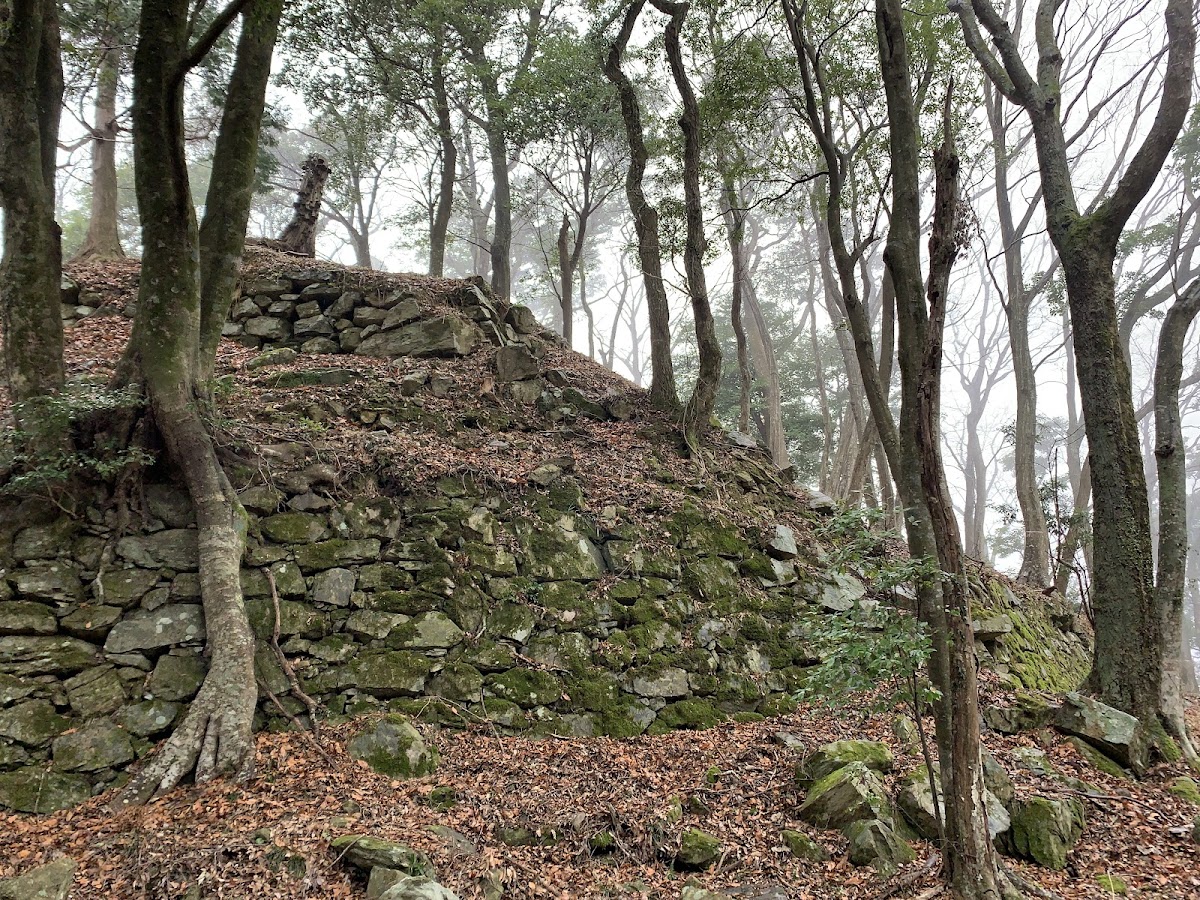
The stone walls of Hagi Castle are valuable relics demonstrating the castle construction techniques of the Keicho period. The stone walls around the main enclosure show transitional techniques from rough-hewn stonework to fitted stonework, making them important historical documents for castle architecture.
Of particular note are the remains of a quarry within the castle grounds. Here, clear traces of the stone quarrying for the walls remain, providing insight into the stone processing techniques of the time. Furthermore, numerous stones with markings remain, offering clues to identifying the daimyo families and stonemason groups that participated in the construction.
Tsumemaru (Mountain Castle on the Summit)
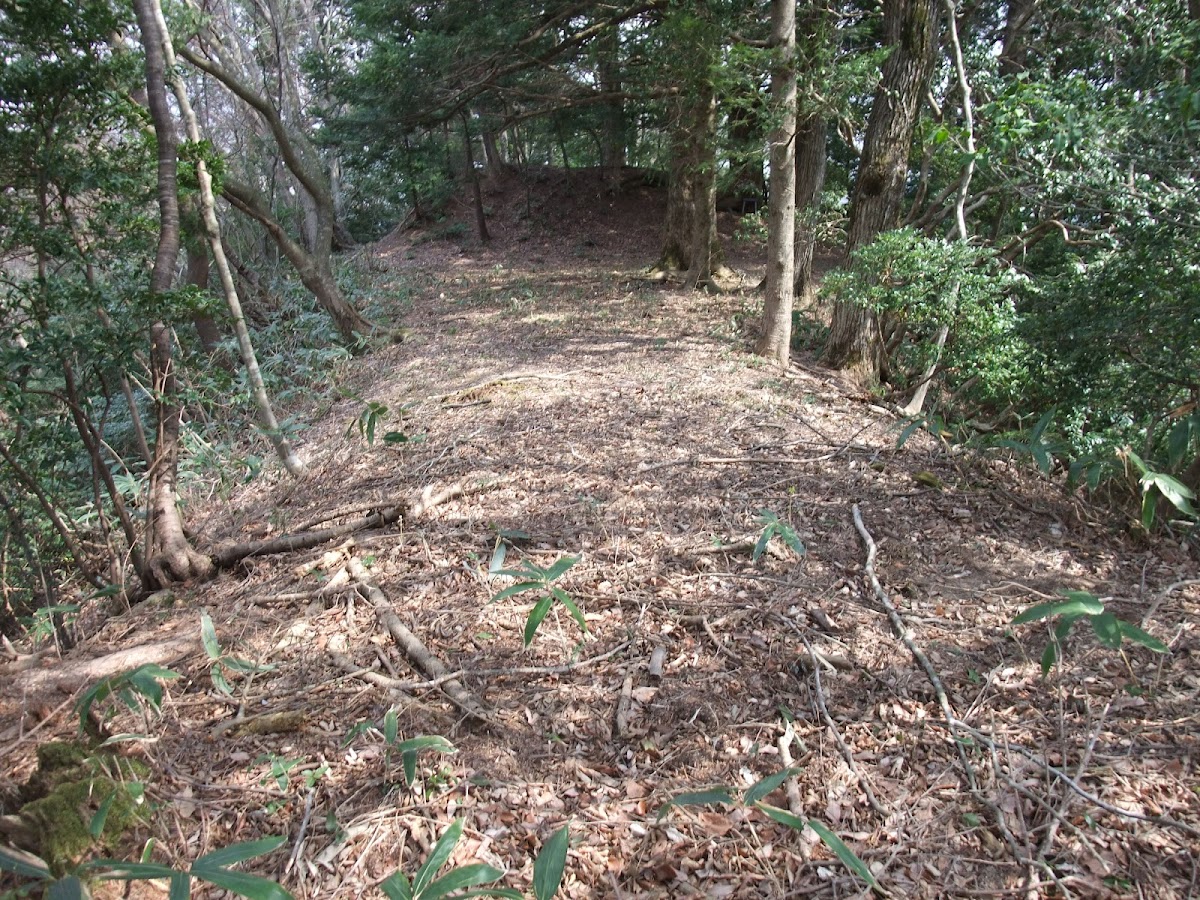
The Tsumemaru on the summit of Mt. Shizuki was designed to function as a full-fledged mountain castle. A fortified enclosure surrounded by stone walls was built on the summit, and a well was also dug. Although not used in peacetime, it was positioned as a final stronghold where the feudal lord and his retainers could take refuge in times of emergency.
A hiking trail is maintained to the summit, and it is still possible to climb it today. From the summit, you can enjoy a panoramic view of the castle town of Hagi and the Sea of Japan, truly appreciating the natural fortifications of the area. The climb takes approximately 20-30 minutes one way.
Highlights of Hagi Castle Ruins Shizuki Park
Tenshudai Site
When visiting Hagi Castle Ruins, be sure to first visit the Tenshudai site. The stone walls where the approximately 14.4-meter-tall, five-story Tenshu (castle tower) once stood remain in good condition. Climbing to the Tenshudai site offers views of the main enclosure and the Sea of Japan.
Using the aforementioned VR recreation service, you can experience the former appearance of the Tenshu on site. A QR code is provided; please scan it with your smartphone to access the information.
Honmaru Gate Ruins and Stone Walls
At the site of the Honmaru Gate, which was the entrance to the main keep, magnificent stone walls remain. The gate’s foundation stones also remain, allowing us to imagine the scale of the gate in its heyday. The surrounding stone walls are a magnificent testament to the advanced castle-building techniques of the time.
Shizukiyama Shrine
On the site of the main keep stands Shizukiyama Shrine, dedicated to the ancestors of the Mori family. Founded during the Meiji era, the shrine enshrines successive heads of the Mori family, including Mori Motonari. Visitors can pray in a tranquil atmosphere.
Hanae Tea House
In a corner of the main keep remains a tea house called Hanae Tea House. Built in 1856 by the 13th lord, Mori Takachika, it is one of the few remaining structures at Hagi Castle. This elegant sukiya-style building allows us to glimpse the cultural life of the daimyo of that time.
Inner Moat and Earthen Wall
The inner moat surrounding the main keep still holds water and retains much of its original appearance. Part of the earthen wall has also been restored along the moat, allowing visitors to experience the atmosphere of the castle.
Second Bailey Site
The second bailey was located outside the main keep. It is now a park and is known as a famous cherry blossom viewing spot. In spring, approximately 600 Somei Yoshino cherry trees bloom, attracting many visitors.
Stone Quarry Site
Within the park, the remains of a stone quarry used for stone walls can be seen. The traces of arrow holes (holes for splitting stones) are clearly visible, making it a valuable historical site where you can observe the stone processing techniques of the time up close. A must-see spot for castle enthusiasts.
Former Asa Mori Family Hagi Residence Nagaya
Just outside the park, nearby, remains the former Asa Mori Family Hagi Residence Nagaya. This is an important historical site showcasing Edo period samurai residence architecture, designated as a National Important Cultural Property. The long building, approximately 51.5 meters long, demonstrates the scale of samurai residences at the time.
Highlights of Hagi Castle Town
When visiting Hagi Castle, we recommend exploring the surrounding castle town as well. Hagi’s castle town retains its Edo period layout and is registered as a World Heritage Site as “Hagi Castle Town.”
Kikuya Family Residence
The residence of the Kikuya family, who were merchants serving the Hagi domain, is a valuable example of early Edo period upper-class merchant architecture. Designated as a National Important Cultural Property, five buildings—the main house, main storehouse, treasury, rice storehouse, and kitchen—are open to the public. Buildings from the early Edo period (over 400 years ago) still exist on a 2,000-tsubo (approximately 6,600 square meters) site.
Former Residence of Takasugi Shinsaku
This is the house where Takasugi Shinsaku, a prominent figure of the late Edo period, was born and raised. This wooden, tiled-roof samurai residence also displays materials related to Takasugi Shinsaku. It’s a must-see spot for anyone interested in the history of the late Edo period and the Meiji Restoration.
Former Residence of Kido Takayoshi
The birthplace of Kido Takayoshi (Katsura Kogoro), one of the three great figures of the Meiji Restoration, is also open to the public. Visitors can see his birth chamber and the rooms where he spent his childhood.
Hagi Museum
This museum offers a comprehensive look at the history and culture of Hagi. Exhibits include the history of Hagi Castle and the Mori clan, materials from the late Edo period and the Meiji Restoration, and Hagi ware. Visiting before visiting Hagi Castle will provide a deeper understanding.
Shoka Sonjuku
This private school, founded by Yoshida Shoin, produced many prominent figures who spearheaded the Meiji Restoration, including Takasugi Shinsaku, Kusaka Genzui, Ito Hirobumi, and Yamagata Aritomo. Although a small, single-story wooden building with a tiled roof, its influence on Japan’s modernization is immeasurable. It is one of the components of a World Heritage Site.
Basic Information and Access to Hagi Castle
Basic Information
Name: Hagi Castle Ruins Shizuki Park
Address: 1-1 Horiuchi, Hagi City, Yamaguchi Prefecture
Opening Hours:
- April to October: 8:00 AM to 6:30 PM
- November to February: 8:30 AM to 4:30 PM
- March: 8:30 AM to 6:00 PM
Closed Days: Open every day
Admission Fee:
- Adults: 220 yen
- Elementary and Junior High School Students: 100 yen
*Combined ticket available with the former Asa Mori family Hagi residence (long building)
Parking: Free parking available (approx. 50 cars)
Inquiries: Hagi City Tourism Association TEL 0838-25-1750
Access Method
Access by Train:
- Approximately 20 minutes on foot from JR San’in Main Line “Higashi-Hagi Station”
- From Higashi-Hagi Station, take the Hagi Loop Maaru Bus (westbound) and get off at “Hagi Castle Ruins/Shizuki Park Entrance” bus stop.
Access by Car:
- Approximately 20 minutes from the Edo IC on the Ogori-Hagi Road via the Mine-Higashi JCT on the Chugoku Expressway.
- Approximately 10 minutes from the Hagi IC on the Yamaguchi-Hagi Toll Road via the Yamaguchi JCT on the Chugoku Expressway.
Bicycle Rental:
Bicycle rentals are available at several locations within Hagi City. Bicycles are convenient for exploring the castle town, offering efficient sightseeing with their maneuverability.
Points to Enjoy Hagi Castle
Best Season to Visit
Spring (Late March to Early April):
The cherry blossom season is the most vibrant time for Hagi Castle Ruins/Shizuki Park. Approximately 600 Somei Yoshino cherry trees bloom, and the park is illuminated at night. The combination of the castle tower ruins and cherry blossoms is magnificent.
Summer (July-August):
This is a lush green season, ideal for hiking Mt. Shizuki. However, the sun is strong, so heatstroke prevention is necessary.
Autumn (November):
The trees on Mt. Shizuki change color during the autumn foliage season. The weather is mild, making it perfect for a stroll.
Winter (December-February):
There are fewer tourists, allowing for a peaceful exploration of the castle ruins. However, strong winds characteristic of the Sea of Japan coast can blow, so warm clothing is necessary.
Estimated Time Required
- Hagi Castle Ruins Shizuki Park only: 1-1.5 hours
- Including a hike to the summit of Mt. Shizuki: 2-2.5 hours
- Including a stroll through the surrounding castle town: Half a day to a full day
Recommended Sightseeing Courses
2-Hour Course:
- Hagi Castle Ruins Shizuki Park Entrance → Honmaru Gate Ruins → Tenshudai Ruins (30 mins)
- Shizukiyama Shrine → Hanae Tea House → Stone Quarry Ruins (30 mins)
- Stroll through the Ninomaru Ruins → Former Asa Mori Family Hagi Residence Nagaya (30 mins)
- Kikuya Residence (30 mins)
Half-Day Course:
In addition to the above, visit the former residence of Takasugi Shinsaku, the former residence of Kido Takayoshi, and the Shokasonjuku school.
Photography Tips
- Tenshudai Ruins: A composition with the stone walls and the Sea of Japan in the background is recommended.
- Main Gate Ruins: A magnificent frontal shot of the impressive stone walls.
- Cherry Blossom Season: A collaboration of the castle tower ruins and cherry blossoms.
- Shizukiyama Summit: A panoramic view of Hagi’s castle town and the Sea of Japan.
- Sunset: The silhouette of the castle ruins against the backdrop of the setting sun over the Sea of Japan.
Hagi Castle and the 100 Famous Castles of Japan Stamp
Hagi Castle is selected as the 75th of the “100 Famous Castles of Japan.” The 100 Famous Castles stamp can be obtained at the following locations:
Stamp Locations:
- Hagi Castle Ruins Main Entrance Ticket Office
- Hagi City Tourism Association “Tabi no Salon Navi Hagi” (in front of JR Higashi-Hagi Station)
If you are visiting the 100 Famous Castles, be sure to get a stamp as a memento of your visit. You can bring your own stamp book or purchase one on site.
Gourmet Information Around Hagi Castle
When visiting Hagi, be sure to enjoy the local cuisine. Hagi, facing the Sea of Japan, boasts an abundance of fresh seafood.
Hagi Local Cuisine
Hagi’s Seto-Aji (Horse Mackerel): Seto-aji caught off the coast of Hagi are exceptionally fatty and delicious. Enjoy them as sashimi or grilled with salt.
Hagi’s Kensaki Ika (Swordtip Squid): Characterized by its beautiful, translucent appearance and sweetness. Live sashimi is a popular dish.
Hagi’s True Pufferfish: Hagi is the second largest pufferfish producing area after Shimonoseki. Fresh pufferfish dishes can be enjoyed during the winter months.
Natsumikan (Summer Orange) Products: Hagi is also famous as a producer of summer oranges. Marmalade and jelly made with summer oranges make perfect souvenirs.
Recommended Restaurants
Around the castle town, there are many restaurants housed in renovated old houses and long-established eateries. Many offer local cuisine using Hagi ingredients, making them enjoyable to dine in conjunction with sightseeing.
Hagi Accommodations
There are various types of accommodations around Hagi Castle.
Hot Spring Inns
Hagi City boasts the Hagi Onsenkyo hot spring resort area, with several hot spring inns overlooking the Sea of Japan. Enjoy kaiseki cuisine featuring fresh seafood and relaxing hot springs.
Business Hotels
There are reasonably priced business hotels near Higashi-Hagi Station. They are convenient as a base for sightseeing.
Traditional Japanese House Accommodations
In recent years, the number of accommodations renovated from traditional Japanese houses in the castle town has increased. This offers a valuable experience of staying in a historical atmosphere.
Points to Note When Visiting Hagi Castle
Clothing and Items to Bring
- Comfortable Shoes: Since there are many cobblestone and gravel paths within the castle ruins, comfortable walking shoes such as sneakers are recommended. This is especially important if you plan to climb Mt. Shizuki.
- Sun Protection: The sun is strong in summer, so bring a hat and sunscreen.
- Drinks: Especially in summer, bring drinks to prevent heatstroke.
- Rain Gear: A folding umbrella is recommended to prepare for the sudden weather changes typical of the Sea of Japan coast. ### Precautions for Hiking Mt. Shizuki
When visiting the Tsumemaru ruins at the summit of Mt. Shizuki, please note the following:
- The hiking trail is well-maintained, but there are some steep slopes.
- The hike takes approximately 20-30 minutes one way.
- Insect repellent is recommended during the summer months.
- Be careful as the trail can be slippery during and after rain.
Summary: Fully Enjoy the Charms of Hagi Castle
Hagi Castle is one of Japan’s 100 Famous Castles, built by Mori Terumoto, who was defeated in the Battle of Sekigahara. Construction began in 1604 and was completed in 1608. Its unique layout utilizing Mt. Shizuki, its combination of flatland and mountain castle elements, and its design, which anticipated actual combat, reflect the Mori clan’s rebellious spirit and strategic thinking.
Although the castle buildings were dismantled in 1874, the remaining stone walls, moats, and castle tower base still convey the magnificent appearance of the castle at that time. Furthermore, the castle town retains its Edo-period layout and is registered as a component of the World Heritage Site “Sites of Japan’s Meiji Industrial Revolution.”
Visiting Hagi Castle is not simply about sightseeing the castle ruins; it’s an experience that allows you to touch upon the history of the Mori clan, the spirit of the Meiji Restoration, and the origins of Japan’s modernization. Enjoy the history and culture of Japan to the fullest at Hagi Castle Ruins Shizuki Park, which displays different expressions throughout the seasons—cherry blossoms in spring, lush greenery in summer, vibrant autumn leaves, and the tranquility of winter.
When visiting Yamaguchi Prefecture, be sure to visit Hagi Castle and its castle town to experience an important page in Japanese history.