Ryuo-zan Castle Ruins: A Complete Overview and Visitor Guide to a Representative Medieval Mountain Castle of Yamato
What is Ryuo-zan Castle?: A Medieval Mountain Castle Ruins of the Toichi Clan Overlooking Yamato
Ryuo-zan Castle Ruins is a medieval mountain castle built on the summit of Mt. Ryuo, located in Tenri City, Nara Prefecture, at an altitude of 586m. Situated on the highest mountain at the eastern foot of the Nara Basin, it played an important role in medieval Yamato Province as a strategically important location overlooking the entire Yamato Plain.
Also known as “Toichi Castle,” this castle is counted among the “Three Great Medieval Mountain Castles of Yamato” along with Matsunaga Hisahide’s Shigi-san Castle and Tsutsui Junkei’s Tsubakio Castle, and is highly regarded as a representative medieval castle of Yamato. While the relative height from the Fujii settlement is approximately 130m, the relative height from the central area (Nara Basin) is approximately 485m, surpassing Takatori Castle and boasting the highest relative height in Yamato Province.
Even today, the remains of earthworks and baileys are well-preserved on the mountaintop, making it a valuable historical site that retains much of the original form of a medieval mountain castle, attracting attention from history enthusiasts and castle researchers.
History of Ryuo-zan Castle: From the Tenbun Era to its Abandonment
Construction by Toichi Tōchū (Tenbun Era)
Ryūo-zan Castle was constructed during the Tenbun era (1532-1554) by Toichi Tōchū, who was based in the Toichi area of Kashihara City. The Toichi clan was a powerful family that was active in Yamato Province throughout the Muromachi and Sengoku periods, and their power grew most during Tōchū’s time.
At the height of the Toichi clan’s power, they formed a vast sphere of influence called “Toichi-gō,” extending from Toichi to the plains of Tenri City. Ryuo-zan Castle is believed to have been completed during this period and is thought to have functioned as a symbol of the Toichi clan’s power.
Rule and Renovation under Matsunaga Hisahide (Eiroku Era)
During the Eiroku era (1558-1570), Ryuo-zan Castle came under the control of Matsunaga Hisahide, who expanded his power into Yamato Province. Matsunaga Hisahide, known as a leading strategist of the Sengoku period, positioned Ryuo-zan Castle as a subsidiary castle of his own base, Shigi-san Castle, and carried out extensive renovations.
It is believed that these renovations significantly strengthened the castle’s defensive capabilities, transforming it into a more practical mountain castle. The ingenuity of Matsunaga Hisahide’s layout can still be seen in the remaining ruins.
Abandonment by Oda Nobunaga (Tensho 8)
In Tensho 8 (1580), when Oda Nobunaga reorganized his control over Yamato Province, he ordered the abolition of all castles in Yamato except for Koriyama Castle. This order led to the abandonment of Ryuo-zan Castle, bringing its approximately 50-year history as a castle to an end.
Although it lost its function as a military facility after being abandoned, its robust structure allowed the remains to be well preserved, and it remains a valuable historical site that conveys the appearance of a medieval mountain castle to this day.
Structure of Ryuo-zan Castle: Characteristic Layout of Two Castles, North and South
Two Castle Structure: North and South Castles
The most distinctive feature of Ryuo-zan Castle is its “separate castle, one enclosure” structure, divided into two castle areas, north and south. The north castle is thought to be the main castle, and the south castle the fortified castle. This two-castle structure speaks to the scale of the castle as the largest medieval mountain castle in Yamato Province.
It is believed that there was a difference in the construction period between the north and south castles, suggesting that they were expanded in stages. A valley exists between the two castles, and while each has its own independent defensive function, they are designed to cooperate to provide overall defense.
Structure and Key Points of the North Castle
The north castle is the central part of Ryuo-zan Castle, with multiple enclosures arranged around the main enclosure. A clear earthen rampart surrounds the main enclosure, demonstrating a typical defensive structure of a medieval mountain castle.
The enclosures are arranged in a stepped pattern, following the terrain, with steep slopes between each enclosure. These remains are well-preserved, making this a valuable point for experiencing the original layout.
Characteristics of the South Castle
The South Castle is slightly smaller than the North Castle, but played a crucial role as a final stronghold. The enclosures are arranged along the ridge, designed to function as a last line of defense in emergencies.
From the South Castle, one can overlook the southern part of the Nara Basin, suggesting it also served as a lookout post. Remains such as earthen ramparts and moats are also present, showcasing defensive ingenuity different from that of the North Castle.
Arrangement of Earthen Routai and Enclosures
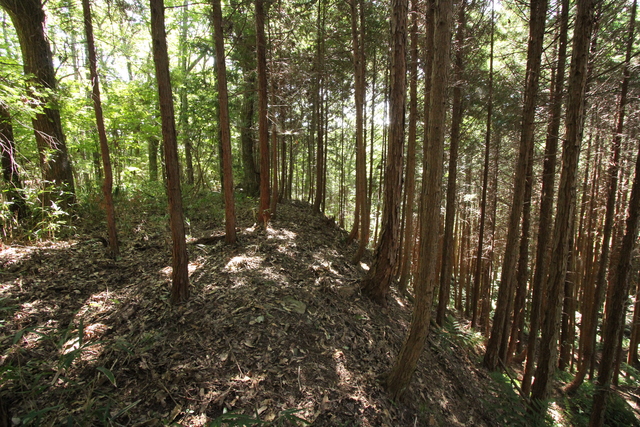
The earthen ramparts of Ryuo-zan Castle are constructed skillfully utilizing the natural terrain. The ramparts around the main enclosure, in particular, are about 2-3 meters high, demonstrating the advanced castle-building techniques of the time.
Over 20 baileys of varying sizes have been identified, each arranged in an organically interconnected layout. This complex fortification is believed to have been renovated during the refurbishment by Matsunaga Hisahide.
Highlights of Ryuo-zan Castle Ruins
View from the Main Bailey
The greatest attraction of Ryuo-zan Castle Ruins is the panoramic view of the Nara Basin from the main bailey. From an altitude of 586m, you can see the entire Yamato Plain, and on a clear day, you can even see from the Ikoma Mountains to the Kongo Mountains.
This view is the reason why Ryuo-zan Castle was considered a strategically important location, and the castle lords of the time likely observed the situation in Yamato Province while gazing at this scenery.
Well-Preserved Remains
At Ryuo-zan Castle Ruins, the major remains of a medieval mountain castle, such as earthworks, baileys, moats, and cliffs, are preserved in almost perfect condition. The earthworks around the main bailey are particularly clear, allowing you to imagine what the castle looked like when it was built.
Exploring the ruins allows visitors to learn about the structure of castles from the Sengoku period, making it a valuable learning opportunity for castle enthusiasts.
The History of Ryuo Shrine and Faith
The Ryuo Shrine, from which Mount Ryuo derives its name, is enshrined in the Yanagimoto and Tano areas. The mountain came to be called “Mount Ryuo” due to the existence of this shrine.
The fact that it appears as “Ryuo Castle” in medieval historical documents suggests a close connection between the castle and religious beliefs. The unique historical background of the coexistence of mountain worship and castle architecture is one of the intriguing characteristics of Ryuo Castle.
Access and Climbing Route to Ryuo-zan Castle Ruins
Access Data
Location: Tamachi and Yanagimoto-cho, Tenri City, Nara Prefecture
Nearest Station: Approximately 40 minutes on foot from Yanagimoto Station on the JR Manyo Mahoroba Line (Sakurai Line) to the trailhead
Access by Car: Approximately 15 minutes from Tenri IC on the Nishi-Meihan Expressway; parking available near the trailhead
Climbing Time: Approximately 40-60 minutes from the trailhead to the summit
Elevation: 586m (Relative Height: Approximately 130m from Fujii settlement, approximately 485m from the Nara Basin)
Recommended Climbing Route
There are several climbing routes to Ryuo-zan Castle Ruins, but the most common is the “Ryuo-zan History and Health Trail Course.” This course is a well-maintained hiking trail, making it safe even for beginners.
If starting from Yanagimoto Station, first head towards Fujii settlement. After leaving the village, you’ll find the trailhead, and from there, stone steps and mountain paths continue to the summit. There are signposts along the way, so you shouldn’t have much trouble getting lost.
Allow approximately 2-3 hours for the round trip to the castle. Especially in summer, it’s recommended to stay well-hydrated and wear appropriate equipment.
Surrounding Environment and Precautions
Mt. Ryuo is a mountain rich in nature, offering beautiful scenery throughout the seasons. The fresh greenery in spring and the autumn foliage are stunning, making it a popular hiking destination.
However, as it is a mountain castle site, some areas have unstable footing. Wear non-slip shoes such as hiking boots, and be especially careful during and after rain. Also, please be considerate of the preservation of the remains, and avoid damaging the earthworks and baileys.
Ryuo Castle Ruins and Surrounding Attractions
Historical Tourist Spots in Tenri City
When visiting the Ryuo Castle Ruins, we recommend also visiting other historical spots in Tenri City.
Isonokami Shrine: One of Japan’s oldest shrines, located at the foot of Mt. Ryuo. Known for housing the national treasure, the Seven-Branched Sword.
Kurozuka Tumulus: A keyhole-shaped burial mound dating from the late 3rd to early 4th century, famous for the discovery of 33 triangular-rimmed bronze mirrors.
Emperor Sujin’s Mausoleum: A massive burial mound believed to be the tomb of the 10th Emperor, located at the western foot of Mt. Ryuo.
A Tour of the Three Great Medieval Mountain Castles of Yamato
Ryuo-zan Castle is one of the “Three Great Medieval Mountain Castles of Yamato.” Visiting the other two castles will provide a deeper understanding of the characteristics of medieval castles in Yamato Province.
Shigi-san Castle: A mountain castle known as the base of Matsunaga Hisahide. You can compare Hisahide’s castle-building techniques, which he used to renovate Ryuo-zan Castle.
Tsubakio Castle: A mountain castle that functioned as a base for the Tsutsui clan. An important castle for understanding the power struggles of Yamato Province during the Sengoku period.
Cultural Value of Ryuo-zan Castle Ruins
Importance in Medieval Castle Research
Ryuo-zan Castle Ruins are an extremely important historical site for castle research, as they well preserve the original form of a medieval mountain castle. The structure of the two castles (north and south), the arrangement of earthworks, and the shape of the baileys provide a valuable example of Sengoku period castle construction techniques that can be observed firsthand.
In particular, the traces of renovations by Matsunaga Hisahide are of high academic value for understanding the realities of castle renovations during the Sengoku period, and many researchers visit the site for investigation.
Preservation as a Regional Historical Heritage Site
Tenri City has designated Ryuo-zan Castle Ruins as an important historical heritage site and is conducting preservation activities. Efforts are being made to create an environment where visitors can safely view the historical site, including the maintenance of hiking trails and the installation of information boards.
Local residents also conduct cleaning activities, and guided tours by historical guides are also carried out, continuing efforts throughout the community to protect and pass on the value of Ryuo-zan Castle Ruins.
Visitor Guide: Enjoying Ryuo-zan Castle Ruins
Best Time to Visit
Ryuo-zan Castle Ruins are accessible year-round, but the best times to visit are spring (late March to May) and autumn (October to November). The weather is mild during these periods, allowing you to enjoy the fresh greenery and autumn foliage as you ascend.
In summer, heat precautions are essential, and in winter, be aware of snow and ice. Especially during rainy weather, the ground can become slippery, so it’s recommended to visit on a day with good weather.
What to Bring and Wear
Please prepare the following equipment when visiting the castle:
- Hiking boots or trekking shoes: Non-slip shoes are essential for walking on mountain trails.
- Drinking water: Sufficient hydration is especially important in summer.
- Towel and hat: For sun protection and wiping away sweat.
- Rain gear: Mountain weather is unpredictable.
- Map and compass: A smartphone map app is also useful.
- Camera: For photographing views and ruins.
Clothing should be comfortable and easy to move in; long sleeves and long pants are recommended. Insect repellent spray is also useful.
Estimated Time Required
Please allow the following time for visiting Ryuo-zan Castle Ruins:
- Ascent Time: 40-60 minutes from the trailhead to the summit
- Visiting Time: 30-60 minutes for exploring the castle ruins
- Descent Time: 30-40 minutes from the summit to the trailhead
- Total: Approximately 2-3 hours
If you plan to carefully observe the remains or enjoy taking photographs, we recommend allowing more time.
Notes on Use
Ryuo-zan Castle Ruins are a valuable cultural asset. Please note the following points when visiting:
- Do not damage the ruins or collapse the earthworks.
- Please take all your trash with you.
- The use of fire is strictly prohibited.
- Collecting plants or feeding animals is prohibited.
- If visiting as a group, it is advisable to contact the Tenri City Board of Education in advance.
Photo Gallery: The Charm of Ryuo-zan Castle Ruins in Photos
Photo Spots
Ryuo-zan Castle Ruins offers the following photo opportunities:
View from the Main Enclosure: A spectacular viewpoint overlooking the Nara Basin. The scenery is especially beautiful in the early morning and at dusk.
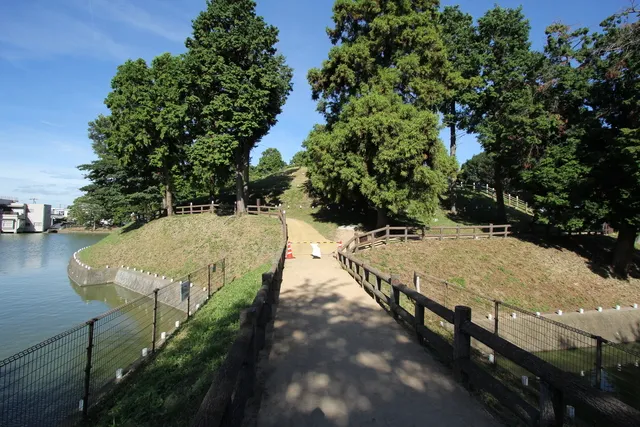
The Series of Earthworks: The well-preserved earthworks are excellent subjects for conveying the atmosphere of a medieval mountain castle.
The Terraces of the Enclosures: The stepped structure of the enclosures allows for a visual understanding of the castle’s defensive system.
Stone Steps and Mountain Path: The stone steps leading to the castle create an atmospheric scene that evokes a sense of history.
Seasonal Highlights
Spring: The fresh greenery is beautiful, and the entire mountain is enveloped in an atmosphere full of vitality.
Summer: The mountain castle ruins, covered in deep green, are the season when you can best feel the atmosphere of the Sengoku period.
Autumn: The autumn leaves color the mountain, and the harmony between the castle ruins and nature creates a beautiful landscape.
Winter: The shape of the remains becomes clearer with the fall of the leaves, making it the ideal season for castle research.
Summary: Historical Value and Charm of Ryuo-zan Castle Ruins
Ryuo-zan Castle Ruins is a medieval mountain castle built by Toichi Tōchū during the Tenbun era, renovated by Matsunaga Hisahide, and functioned as a strategically important location in Yamato Province for approximately 50 years until the castle’s demolition order by Oda Nobunaga in 1580.
Located at an altitude of 586m, offering panoramic views of the Nara Basin, the distinctive layout of the two castles (north and south), and the well-preserved remains such as earthworks and baileys, all convey the value of this castle as a representative medieval fortress of Yamato.
Ryuo-zan Castle Ruins is a historical stage where you can feel the spirit of the Sengoku period, and it’s also a great place to enjoy hiking. When you visit Tenri City, be sure to stop by this precious historical site. Along with the panoramic views of Yamato from the mountaintop, you can experience the romance of medieval history.