A Thorough Explanation of Tanabe Castle’s History and Highlights | From Hosokawa Yusai’s Siege to the Present
Located in the heart of Maizuru City, Kyoto Prefecture, Tanabe Castle is a flatland castle that flourished as the political and military center of Tango Province from the Sengoku period to the Edo period. Also known as Bugaku Castle, this castle, built by Hosokawa Fujitaka (Yusai), is etched in Japanese history as the site of the “Battle of Tanabe Castle,” a preliminary battle to the Battle of Sekigahara.
This article will comprehensively explain the historical value and charm of Tanabe Castle, from its origins to its current state.
What is Tanabe Castle? | A Flatland Castle Built at a Strategic Point in Tango Province
Tanabe Castle is a flatland castle built on a plain surrounded by the Isatsu River and Takano River. It is believed to have originated in 1582, after the Honnoji Incident, when Hosokawa Fujitaka (Yusai) built it as his retirement residence.
The castle’s location was advantageous for water transport, and it was a crucial transportation hub facing Wakasa Bay and Maizuru Bay. This geographical advantage formed the basis for Tanabe Castle’s function as the center of Tango Province’s governance for approximately 290 years.
Origin of Tanabe Castle’s Alternate Name, “Maizuru Castle”
Tanabe Castle is also known by the elegant alternative name “Maizuru Castle (Bugaku-jo).” This name is said to originate from the castle’s graceful appearance, which resembled a descending crane. The current place name, Maizuru City, is also derived from this alternative name.
History of Tanabe Castle | From the Hosokawa Clan to the Makino Clan
The history of Tanabe Castle began by inheriting the lineage of the Tango provincial governor’s office during the Muromachi period. Here, we will examine in detail the changes from its construction to its abandonment.
The Tango Provincial Governor’s Office and the Isshiki Clan in the Muromachi Period
Before Tanabe Castle was built, this area was home to the Hatta Provincial Governor’s Office of the Isshiki clan, who had served as the governor of Tango Province since the Muromachi period. The Isshiki clan ruled Tango Province as a powerful daimyo under the Muromachi Shogunate, but their power declined amidst the turmoil of the Sengoku period.
In 1579 (Tensho 7), a combined force of Hosokawa Fujitaka and Akechi Mitsuhide, acting on orders from Oda Nobunaga, invaded Tango, and the Isshiki clan was destroyed. After this, Tango Province was granted to Hosokawa Fujitaka.
Construction of the Castle by Hosokawa Fujitaka (Yusai)
In 1580 (Tensho 8), Hosokawa Fujitaka made Miyazu Castle his residence. However, after the Honnoji Incident in 1582 (Tensho 10), Fujitaka retired, adopted the name Yusai, and handed over the family headship to his eldest son, Hosokawa Tadaoki. It was at this time that Tanabe Castle was built as Yusai’s retirement residence.
Yusai was known as a warrior excelling in both military and literary arts, and was particularly knowledgeable in waka poetry and classical literature, being a leading cultural figure of his time who inherited the “Kokin Denju” (a secret teaching of classical poetry). Tanabe Castle functioned not merely as a military base, but also as a cultural center.
The Battle of Tanabe Castle: A Prelude to Sekigahara
In 1600 (Keicho 5), just before the Battle of Sekigahara, a battle that would determine the course of Japanese history, Tanabe Castle became a crucial battlefield.
While Hosokawa Tadaoki was on the Eastern Army’s campaign against Aizu under Tokugawa Ieyasu, Ishida Mitsunari of the Western Army planned an attack on Hosokawa territory. Yusai and approximately 500 soldiers were holed up in Tanabe Castle, but they were besieged by a large army of 15,000 men led by Onogi Shigekatsu and Maeda Shigekatsu of the Western Army.
Despite the overwhelming difference in troop numbers, Yusai, through skillful tactics and the castle’s strong defenses, held out for approximately two months. This siege, known as the “Battle of Tanabe Castle,” indirectly contributed to the Eastern Army’s victory at the Battle of Sekigahara by pinning down the main force of the Western Army.
Notably, because Yusai was the sole successor to the “Kokin Denju” (a secret teaching of classical poetry), the castle was ordered to surrender by imperial decree of Emperor Go-Yōzei. This siege is remembered as a rare example where cultural value outweighed military judgment.
The Kyōgoku Clan Era
After the Battle of Sekigahara, in 1600 (Keichō 5), Hosokawa Tadaoki was transferred to the Buzen Kokura Domain, and Kyōgoku Takatomo took his place as the lord of Miyazu Castle in Tango Province. Members of the Kyōgoku clan were stationed at Tanabe Castle, and it continued to function as a branch castle in Tango Province.
In 1622 (Genna 8), when the Kyogoku clan was transferred to the Toyooka Domain in Tajima Province, Tanabe Castle temporarily became a territory directly controlled by the shogunate.
Rule by the Makino Clan and Until the End of the Edo Period
In 1624 (Kanei 1), Makino Chikashige became the lord of the Tanabe Domain with a stipend of 35,000 koku. From then until the Meiji Restoration, the Makino clan ruled Tanabe Castle for 11 generations.
Under the Makino clan’s rule, Tanabe Castle and its surrounding town were developed, becoming the political and economic center of western Tango Province. Throughout the Edo period, Tanabe Castle enjoyed a peaceful era without being involved in major wars, and continued to function as a base for governing the domain.
Abolition of the Castle After the Meiji Restoration and the Present Day
With the abolition of the feudal domains and establishment of prefectures in 1871 (Meiji 4), the Tanabe Domain was abolished, and Tanabe Castle was also abandoned. Since the Meiji era, many of the castle’s structures have been demolished, and the castle site has become urbanized.
Excavations conducted since 1981 have partially revealed the castle’s structure, and currently, parts of the main keep and second bailey are maintained as “Maizuru Park.” In 1992, the main gate and a replica of the two-story turret were restored, allowing visitors to imagine its former appearance.
Structure and Characteristics of Tanabe Castle | A Strong Flatland Castle Surrounded by a Moat
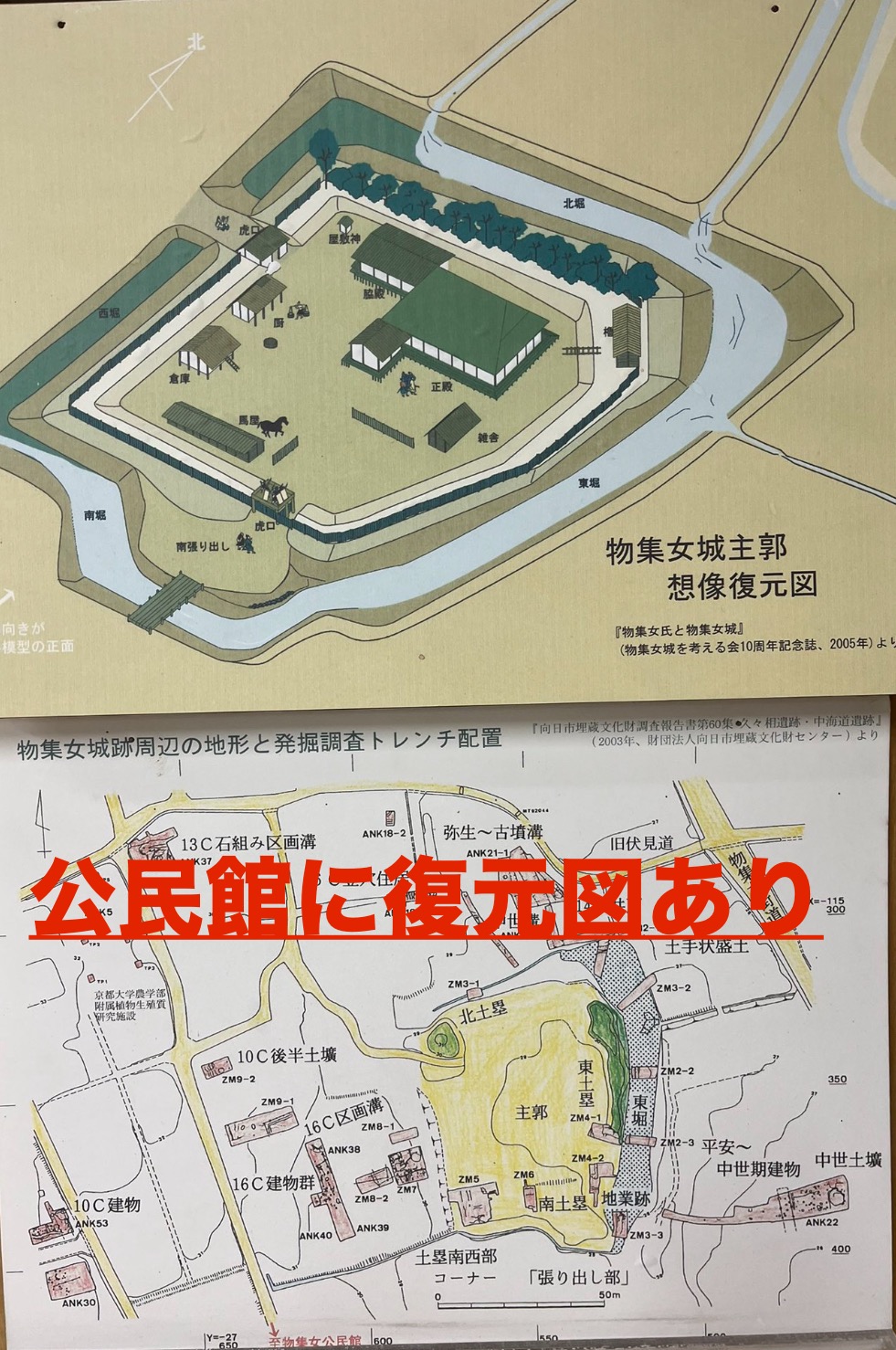
Tanabe Castle, as a typical flatland castle, possessed a defensive structure that skillfully combined a moat and earthworks.
Layout and Castle Structure
Tanabe Castle had a concentric layout with the main keep at its center, surrounded by the second and third baileys. The entire castle area boasted a size of approximately 400 meters east-west and 350 meters north-south, and was surrounded by a wide moat.
A keep base was provided in the main keep, but historical sources differ on whether a keep was actually built there. However, it is highly likely that the multi-story turrets functioned as a substitute for the main keep.
Stone Walls and Castle Gates
The stone walls of Tanabe Castle combined the techniques of “nozurazumi” (plain stone masonry) and “uchikomi-tsugi” (mortar-cut stone masonry), which used somewhat processed stones. Even today, a portion of the original stone wall remains on the east side of the second bailey, preserving the castle-building techniques from the late Sengoku period to the early Edo period.
The castle had multiple gates, including the main gate. The currently reconstructed main gate is a recreation of its original appearance based on the results of archaeological excavations.
Moat Defense System
The most distinctive feature of Tanabe Castle was its moat system, which utilized the natural topography of the Isatsu River and Takano River. The wide moat surrounding the castle served as a crucial defensive line, making it difficult for attacking forces to approach.
It can be said that the fact that a mere 500 soldiers were able to withstand a 15,000-strong army for two months during the “Battle of Tanabe Castle” was due to this robust moat defense. ## Highlights of Tanabe Castle | Existing Remains and Restored Structures
Several points of interest remain at the current Tanabe Castle site (Maizuru Park).
Reconstructed Main Gate and Mock Double Turret
The main gate, reconstructed in 1992, is a symbolic structure of Tanabe Castle. It was rebuilt based on the location of the foundation stones revealed by archaeological excavations, and referenced Edo period drawings.
Adjacent to the main gate is a mock double turret, which houses the “Tanabe Castle Museum,” displaying exhibits on the history of Tanabe Castle, materials related to Hosokawa Yusai, and the history of the Battle of Tanabe Castle. It’s a must-see for castle enthusiasts.
Existing Stone Walls
Edo period stone walls still exist on the east side of the second bailey, allowing for close observation of the castle construction techniques of the time. The rough, unrefined stonework clearly demonstrates the characteristics of castle architecture from the Sengoku period to the early Edo period.
Remains of the Castle Tower Base
On the south side of the main enclosure, the remains of the castle tower base can be seen. While it’s unclear if a castle tower actually stood here, looking out over the town from this base gives a real sense of Tanabe Castle’s strategic location, offering panoramic views of the surrounding area.
Shinshuen Garden
On the site of the second enclosure is Shinshuen Garden, associated with Hosokawa Yusai. Yusai was deeply knowledgeable in the tea ceremony, and this garden is a valuable relic that conveys his cultured side. A stroll through this tranquil garden allows you to experience the refined spirit of a warrior who lived through the turbulent Sengoku period, excelling in both military and literary arts.
Development as Maizuru Park
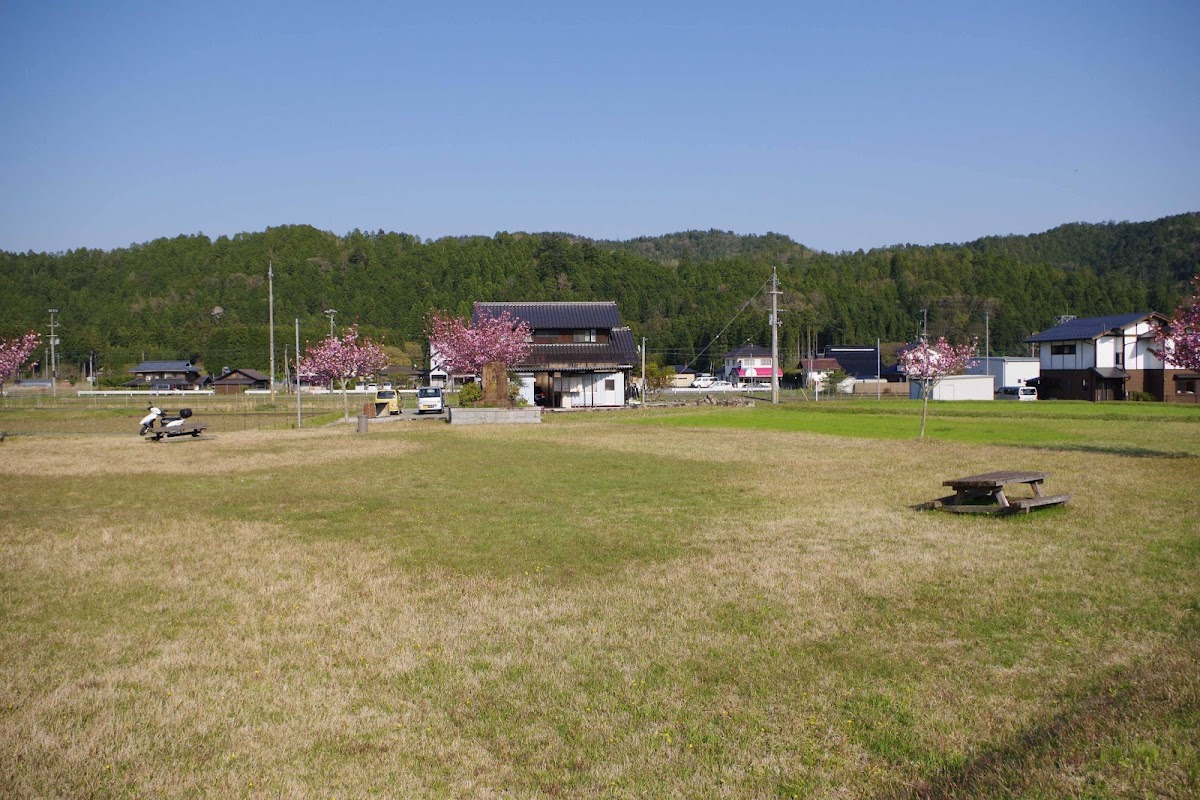
The Tanabe Castle ruins are now Maizuru Park, a place of relaxation for citizens. In spring, cherry blossoms bloom, making the castle ruins a popular spot for cherry blossom viewing. This space, where historical value and daily life are harmoniously integrated, is a fine example of modern castle site utilization. ## Tanabe Castle Museum | Learning about Hosokawa Yusai and the History of Tanabe Castle
The Tanabe Castle Museum is an exhibition facility located inside the reconstructed replica of the castle’s two-story turret.
Exhibits
The museum features panel displays introducing the history of Tanabe Castle in chronological order, artifacts unearthed during archaeological excavations, and materials related to the Battle of Tanabe Castle. The exhibits on the life and achievements of Hosokawa Yusai are particularly extensive, allowing visitors to learn about his multifaceted charm not only as a military commander but also as a cultural figure.
There are also explanations of the Kokin Denju (a system of classical Japanese poetry) and introductions to waka poems composed by Yusai, making it a valuable learning opportunity for those interested in the cultural history of the Sengoku period.
Opening Hours
The opening hours and closing days of the Tanabe Castle Museum may vary depending on the season, so it is recommended to check the latest information on the Maizuru City official website before visiting. The admission fee is relatively reasonable, making it a cost-effective facility for castle enthusiasts.
Historical Sites Around Tanabe Castle | A Tour of Tango Province’s Historical Sites
Visiting Tanabe Castle and the surrounding historical sites will deepen your understanding of Tango Province’s history.
Miyazu Castle Ruins
Located approximately 20 kilometers northeast of Tanabe Castle, Miyazu Castle was the first residence of Hosokawa Fujitaka. Currently, parts of the castle ruins remain, conveying the history of Miyazu City. Visiting both Miyazu Castle, the base of the Hosokawa clan’s rule over Tango, and Tanabe Castle, their retirement residence, provides a comprehensive picture of the Hosokawa clan’s administration of Tango.
Red Brick Warehouses
Maizuru City developed as an important naval port city on the Sea of Japan coast after the Meiji era. Around Maizuru Port, red brick warehouses built during the Meiji and Taisho periods still exist and are preserved as modern industrial heritage. Visiting both the medieval and early modern history of Tanabe Castle and the modern history of the red brick warehouses allows you to experience the multi-layered history of Maizuru.
Kongoin Temple
Kongoin Temple, located in Maizuru City, is an ancient temple founded during the Heian period. It houses a national treasure, a three-story pagoda, and important cultural property, Buddhist statues. While not directly related to the history of Tanabe Castle, it is a representative temple of Tango Province’s Buddhist culture and is worth including in a historical walking tour.
Access | How to Get to Tanabe Castle and Parking Information
Here’s how to access the Tanabe Castle Ruins (Maizuru Park).
Access by Train
The nearest station is Nishi-Maizuru Station on the JR Maizuru Line. The Tanabe Castle Ruins are about a 10-minute walk from the station, making access easy. From Kyoto Station, it takes about 1 hour and 30 minutes by express train, and from Osaka, it takes about 2 hours via Fukuchiyama Station.
From Nishi-Maizuru Station to the Tanabe Castle Ruins, head north along the main street in front of the station. After passing through the city center, you will see a sign for Maizuru Park. The route is flat and easy to walk, so even first-time visitors are unlikely to get lost. ### Access by Car
If traveling by car, the nearest interchange is the Maizuru-Nishi Interchange on the Maizuru-Wakasa Expressway. It’s approximately a 10-minute drive from the interchange to the Tanabe Castle ruins.
From Kyoto, the most common route is via the Kyoto Jukan Expressway and the Maizuru-Wakasa Expressway. From Osaka, the route is via the Chugoku Expressway and the Maizuru-Wakasa Expressway. The journey takes approximately 1 hour and 30 minutes from Kyoto city and approximately 2 hours from Osaka city.
Parking Information
Maizuru Park has a dedicated free parking lot. It can accommodate approximately 30 regular-sized cars. However, it can get crowded during cherry blossom season and on holidays, so it’s recommended to allow ample time for your visit.
There are also several coin-operated parking lots in the surrounding area, but it’s a good idea to check their locations in advance in case the park’s parking lot is full.
Tanabe Castle Photography Spots | How to Take Castle Photos
The Tanabe Castle ruins offer numerous attractive subjects for castle photography enthusiasts.
Photographing the Otemon Gate
The reconstructed Otemon Gate is a representative photography spot of Tanabe Castle. Photographing it from the front highlights the gate’s imposing presence and the beauty of the turret. Photographing in the soft morning light beautifully captures the texture of the wooden architecture.
In spring, compositions combining cherry blossoms and the Otemon Gate are popular, attracting many photographers. While it gets crowded during cherry blossom season, visiting early in the morning allows for a quieter, less crowded atmosphere for photography.
Detail Photography of the Stone Walls
The existing stone walls on the east side of the Ninomaru (second bailey) convey the impressive construction techniques of the Sengoku period when photographed in detail. The rough texture of the natural stones and the weathering over many years make it a subject that evokes a sense of history.
Photographing in the afternoon when the light is oblique emphasizes the unevenness of the stone walls, resulting in a three-dimensional photograph.
View from the Castle Tower Base
From the castle tower base, you can overlook the city of Maizuru. This composition visually illustrates why Tanabe Castle was built in such a strategic location, with the expansive castle town and distant mountain ranges in the background.
Using a wide-angle lens to capture the vast landscape is a good option, while a telephoto lens to capture the details of the city would also be interesting.
Precautions and Manners When Visiting Tanabe Castle
Since Tanabe Castle ruins are also a place of relaxation for local residents, please observe some manners when visiting.
Protection of Remains
Please be careful not to touch or climb on the existing stone walls or remains. Consideration from each visitor is necessary to pass on this valuable cultural asset to future generations.
Considerations When Taking Photos
When taking photographs, please be considerate of other visitors and local residents. Especially during crowded times such as cherry blossom season, please try not to occupy the same spot for extended periods.
Taking Your Trash Home
Please be sure to take all your trash home with you. Please be mindful of proper etiquette when visiting, in order to maintain the beautiful historical site.
The Charm of Tanabe Castle | A Cultural Heritage Left Behind by a Samurai Master of Both Military and Cultural Arts
The greatest charm of Tanabe Castle lies in the fact that it was not merely a military facility, but also a center of culture.
Hosokawa Yusai was a leading poet of his time, inheriting the “Kokin Denju” (a secret teaching of classical poetry), and a cultured man well-versed in tea ceremony, Noh theater, and incense ceremony. Tanabe Castle was the base of Yusai’s cultural activities, a place that preserved and passed down culture in a time of war.
The anecdote that the castle was ordered to surrender by imperial decree during the “Battle of Tanabe Castle” demonstrates that Yusai’s personal cultural values transcended military judgment. This is an extremely rare instance in Japanese history and should be remembered as a symbolic event in which the power of culture stopped war.
Visiting the current Tanabe Castle ruins, one can feel the spirit of the Sengoku period from the reconstructed main gate and existing stone walls, while the tranquil atmosphere of the Shinshuen garden conveys Yusai’s refined spirit. Tanabe Castle, possessing both military and cultural aspects, exudes a unique charm among Japanese castles.
Summary | Tanabe Castle: A Special Castle Site Where History and Culture Intersect
Tanabe Castle was built by Hosokawa Yusai, a warrior skilled in both military and literary arts, and served as the important historical stage for a preliminary battle of the Battle of Sekigahara. Afterward, it functioned as the center of governance for Tango Province for approximately 290 years, serving as the residence of successive feudal lords, including the Kyogoku and Makino clans.
Currently, it is maintained as Maizuru Park, with numerous points of interest including the reconstructed main gate, existing stone walls, the remains of the castle tower, and the Shinshuen garden. The Tanabe Castle Museum offers detailed information on the history of Hosokawa Yusai and Tanabe Castle, providing a fulfilling visit experience for both castle enthusiasts and general tourists.
Its convenient access, approximately a 10-minute walk from JR Nishi-Maizuru Station, is also a major draw, making day trips from Kyoto and Osaka entirely feasible. When you visit Maizuru City, be sure to stop by the Tanabe Castle ruins and reflect on the culture and history of the Sengoku period.
The flame of culture that Hosokawa Yusai preserved continues to shine quietly at the Tanabe Castle ruins.