Ida Castle (Owariasahi City, Aichi Prefecture) Complete Guide: History, Lords, and Archaeological Excavations
Ida Castle, located in Ida-cho, Owariasahi City, Aichi Prefecture, is an important castle site that tells the history of the Owari region from the medieval period to the Sengoku period. Currently, it is maintained as Hattanda Park, but archaeological excavations in 1978 revealed traces of earthworks and moats, as well as numerous artifacts, clarifying the castle’s structure at the time. This article comprehensively explains the history of Ida Castle, the changes in its lords, the results of the excavations, and its current state.
Overview and Location of Ida Castle
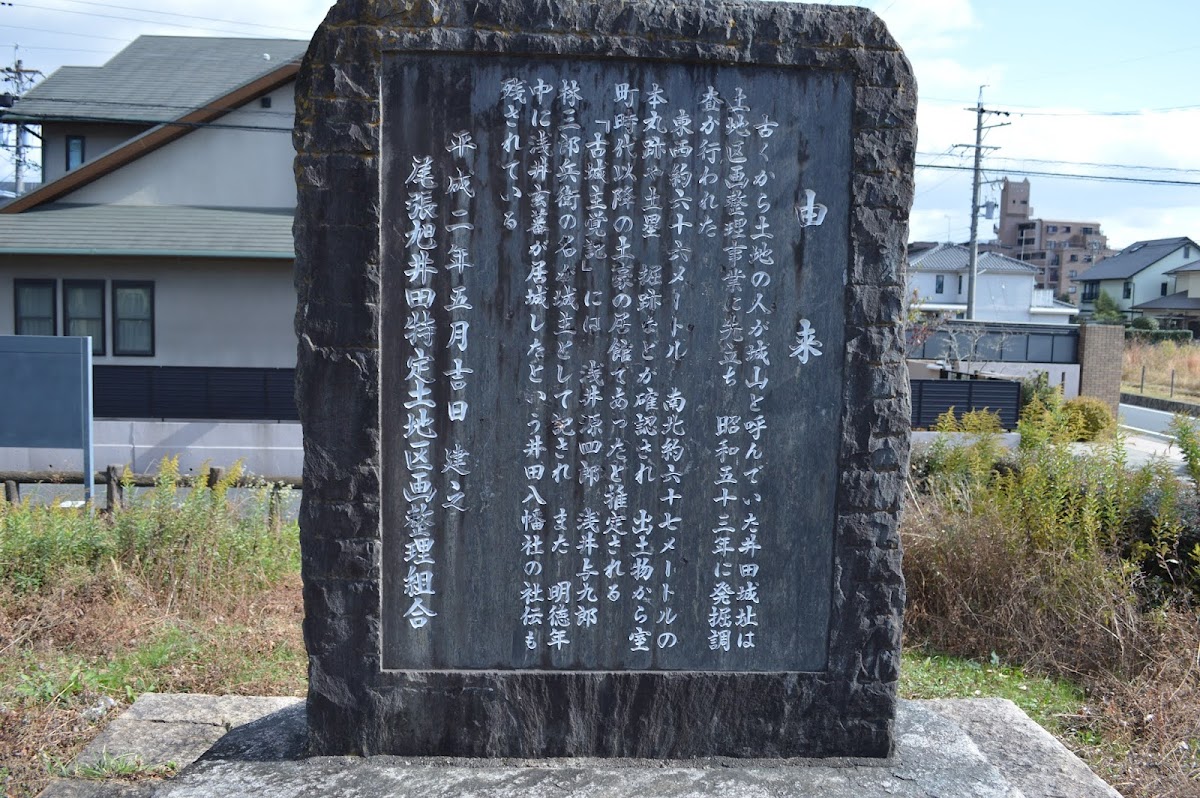
Ida Castle was a flatland castle located in Ida-cho 4-chome, Owariasahi City, Aichi Prefecture. Currently, the castle site is maintained as Hattanda Park, a place of relaxation for local residents. A monument marking the castle site stands within the park, commemorating the former presence of the castle.
Basic Information
- Location: 4-chome, Ida-cho, Owariasahi City, Aichi Prefecture (within Hattanda Park)
- Castle Classification: Flatland Castle
- Construction Period: Estimated to be around the Meitoku era (1390-1393)
- Abandonment Period: Before the Kanbun era (1661-1673)
- Remains: None (Earthworks and moat remains confirmed in archaeological excavations)
- Cultural Property Designation: Owariasahi City Designated Historic Site
The size of Ida Castle was determined by archaeological excavations in 1978 to be approximately 66 meters east-west and 67 meters north-south. It was a small to medium-sized castle with a nearly square layout.
History of Ida Castle
Construction and Early Lords
According to the records of Ida Hachiman Shrine, Ida Castle was built during the Meitoku era (1390-1393) by Asai Genba. This is the oldest record of Ida Castle.
Details about Asai Genba are scarce, and many aspects of his origins and career remain unknown. However, he is believed to have been a local lord who ruled this area in the early Muromachi period. At that time, the Owari region was under the control of the Shiba clan, the shugo (military governor), and local lords had small castles and residences throughout the area. Ida Castle is presumed to have functioned as one of these.
Rule of the Asai Clan
The historical document “Old Castle Lords’ Memorandum” records the names of Asai Genshiro and Asai Yokuro as lords of Ida Castle. These individuals are believed to be descendants of Asai Genba, indicating that the Asai clan ruled Ida Castle for several generations.
The Asai clan established themselves in the Ida area and governed the surrounding region. From the mid-Muromachi period to the early Sengoku period, the Oda clan, who served as shugodai (deputy governors) in the Owari region, expanded their power, and local lords sought to survive by building relationships with the Oda clan.
Sengoku Period: Becoming the Residence of the Hayashi Clan
At the start of the Sengoku period, Ida Castle became the residence of Hayashi Saburobei Masatoshi. Hayashi Masatoshi was a samurai who served Oda Nobuhide (father of Oda Nobunaga) and played an important role in the Oda clan’s unification of Owari.
While there are no clear records of how the Hayashi clan came to possess Ida Castle, it is believed that the rulers changed from the Asai clan to the Hayashi clan as the Oda clan’s power expanded. During the time of Hayashi Masatoshi, Ida Castle functioned as a branch castle of the Oda clan and was one of the key strongholds in northeastern Owari Province.
The Hayashi clan also played an important role as retainers during the time of Oda Nobunaga, but it is unclear how long Ida Castle itself was in use. It is presumed that in the late Sengoku period, larger castles were built, and the military importance of Ida Castle, a small flatland castle, declined.
Abandonment and Deterioration of Castles
The “Kanbun Village Records” (compiled during the Kanbun era: 1661-1673) lists Ida Castle as an “ancient castle site.” This confirms that it had already been abandoned by the early Edo period.
While the exact date of abandonment is unknown, many medieval castles were abandoned during the process of the Owari region becoming the territory of Tokugawa Yoshinao (Owari Domain) after Tokugawa Ieyasu’s transfer to the Kanto region in 1590, following the rule of Oda Nobuo and Fukushima Masanori. It is highly likely that Ida Castle was abandoned around this time.
Results of the 1978 Excavation
Overview of the Excavation
In 1978, prior to the development of Hattanda Park, the Owariasahi City Board of Education conducted an archaeological excavation of the Ida Castle site. This excavation revealed the true nature of Ida Castle, which had previously only been known through legend.
The following remains and artifacts were discovered during the excavation:
Discovered Remains
Earthwork Remains
Traces of an earthwork that surrounded the castle were confirmed. Earthworks played an important role as defensive structures for castles, indicating that Ida Castle was not merely a residence, but a fortress equipped with defensive functions.
While there is limited publicly available information regarding the scale and structure of the earthwork, it is thought to have been a typical earthwork for flatland castles from the medieval to Sengoku periods.
Moat Remains
Traces of a moat were also discovered along with the earthwork. The moat encircled the castle’s perimeter, preventing enemy intrusion and also serving as a source of soil for constructing earthworks.
Considering the castle’s size (approximately 66 meters east-west and 67 meters north-south), the moat of Ida Castle is thought to have been relatively small, only a few meters wide.
Hearth Remains
The remains of a hearth were discovered within the castle grounds. This is important evidence indicating that daily life was conducted within the castle. The number and arrangement of the hearths can help estimate the number of residents and the layout of the buildings.
Well Remains
The discovery of a well remains was a significant finding, revealing how water was secured within the castle. In medieval castles, securing a water source during a siege was a matter of life and death, and the presence of a well confirms the castle’s function.
Excavated Artifacts
More than 400 pottery artifacts were unearthed during the excavation. These artifacts provide valuable clues about life within the castle and the period of its use.
Breakdown of Pottery Excavated
The excavated pottery is thought to have included the following:
- Tokoname ware: Pottery widely used in the Owari region during the medieval period
- Seto ware: Pottery produced in nearby Seto
- Bowls and plates: Everyday tableware
- Jars and jars: Storage containers
Dating analysis of these pottery pieces confirmed that Ida Castle was in use from the Muromachi period to the Sengoku period.
Clarification of the Castle’s Structure
Based on the results of the excavation, the structure of Ida Castle is estimated as follows:
- Castle area: Approximately 66 meters east-west x 67 meters north-south
- Shape: Almost square, single-enclosure type
- Defensive facilities: Defense by earthworks and moats
- Internal facilities: Residential buildings, hearths, wells
Given its size and structure, Ida Castle is thought to have functioned as both a residence and a castle for a local lord. This castle was not designed to withstand large-scale battles, but rather served as a base for daily administration, possessing sufficient defensive capabilities to handle minor conflicts.
Ida Higashi Castle, Often Confused with Ida Castle
In Ida-cho, Owariasahi City, there is also a legend of a castle site called “Ida Higashi Castle,” separate from Ida Castle. These two castles are sometimes confused, but they are believed to be separate castles.
About Ida Higashi Castle
Details about Ida Higashi Castle are scarce, and its exact location, lord, and construction period are unknown. It is presumed to have been called “Ida Higashi Castle” because it was located east of Ida Castle, but no archaeological excavations have been conducted, and its true nature remains shrouded in mystery.
One theory suggests it may have functioned as a subsidiary or outpost of Ida Castle, but there is no conclusive evidence. Further research is expected to shed light on the true nature of Ida Higashi Castle.
Current Site of Ida Castle: Hattanda Park
Park Development
Currently, the Ida Castle site has been developed into Hattanda Park and is a popular spot for local residents. The park features playground equipment and open spaces, serving as a children’s play area and a venue for local events.
After the excavation, the remains were backfilled, and no castle structures are visible on the surface. However, a careful observation of the park’s topography reveals slight undulations that allow us to imagine the terrain of the past.
Castle Site Monument and Information Board
A monument marking the site of Ida Castle stands within the park. This monument plays an important role in conveying to future generations the fact that a castle once stood on this site.
An information board, installed by the Owariasahi City Board of Education, also provides a concise explanation of the history of Ida Castle and the results of the excavation. Reading this board will help visitors understand the history of Ida Castle.
Visitor Guide
Access Methods
Public Transportation
- Approximately 20 minutes on foot from Owariasahi Station on the Meitetsu Seto Line
- Approximately 10 minutes on foot from Misato Station on the Meitetsu Seto Line
- Asapi-go (community bus) is available
By Car
- Approximately 15 minutes from Kasugai IC on the Tomei Expressway
- Street parking is available around the park (no dedicated parking lot)
Points to Note When visiting Ida Castle Ruins, please pay attention to the following points:
- Castle Site Monument: Check the castle site monument installed in the park
- Information Board: Learn about the history of Ida Castle and the results of archaeological excavations
- Topographical Observation: Imagine the castle as it once was based on the park’s micro-topography
- Surrounding Environment: Observe the relationship with the Yadagawa River and the surrounding topography
Precautions During Visits
- The park is open 24 hours, but please refrain from visiting at night
- The remains are preserved underground, so they cannot be seen on the surface.
- Please observe park etiquette and view quietly.
- Photography is permitted, but please be considerate of other visitors.
Historical Environment Around Ida Castle
Ida Hachiman Shrine
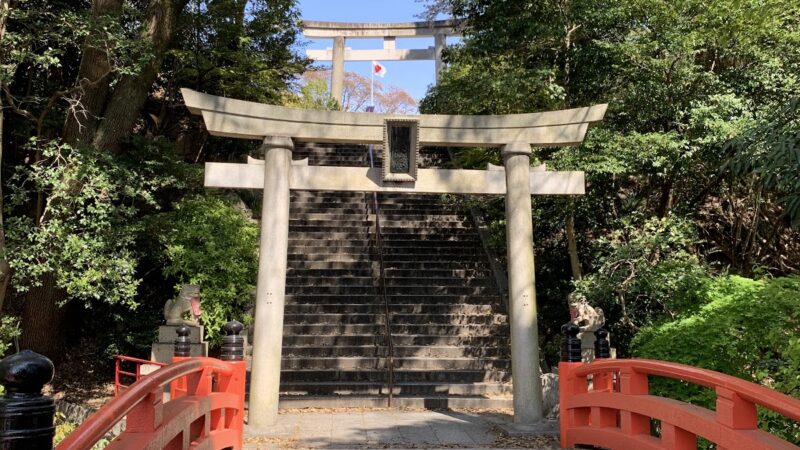
Near the Ida Castle ruins stands the Ida Hachiman Shrine. This shrine is thought to have had a deep connection with Ida Castle and was revered by the castle lord and his people.
The shrine’s records contain descriptions of Ida Castle and are important historical materials for understanding the castle’s history. When visiting the Ida Castle ruins, it is recommended to also visit the Ida Hachiman Shrine.
Location of the Castle and the Yadagawa River
Ida Castle was located on the south bank of the Yadagawa River. The Yadagawa River belongs to the Kiso River system and has long functioned as an important waterway in the Owari region.
The following reasons are considered for the castle being built near the Yadagawa River:
- Convenient Water Transport: Advantageous for transporting goods and trading
- Natural Moat: The river functioned as a defensive structure
- Securing Water Sources: Securing water for daily life and agriculture
- Important Transportation Point: Monitoring and controlling roads along the river
Other Castle Sites in Owariasahi City
It is believed that several other castle sites existed within Owariasahi City besides Ida Castle:
- Inba Castle: A castle located in the Inba district of the city
- Kami-no-Kiri Castle: Castle site with unknown details
These castle sites indicate that numerous small castles existed in the Owari region from the medieval period to the Sengoku period.
Historical Significance of Ida Castle
Local Lord Rule in Medieval Owari
Ida Castle is a valuable example of the form of rule by local lords in medieval Owari. From the Muromachi period to the Sengoku period, numerous local lords in the Owari region, under the rule of the Shugo Shiba clan and Shugodai Oda clan, established small castles and residences.
Ida Castle is a typical example of such a local lord’s castle and is an important historical site for understanding the realities of regional governance at the time.
Expansion of the Oda Clan’s Sphere of Influence
Ida Castle, which became the residence of the Hayashi clan during the Sengoku period, is also important evidence of the Oda clan’s expansion of power. During the unification of Owari by Oda Nobuhide and his son Nobunaga, many local lords came under the Oda clan’s control, and their vassals came to possess castles in various locations.
The Hayashi clan’s possession of Ida Castle indicates that the Oda clan’s rule extended to the northeastern part of Owari.
Archaeological Value
The excavation survey in 1978 made Ida Castle an archaeologically important site. The results of the excavation provide valuable data for understanding the structure and living conditions of flatland castles from the medieval to the Sengoku period. In particular, the discovery of over 400 pottery artifacts provides crucial information for studying the material culture and distribution economy of the time.
Current Status and Challenges of Ida Castle Research
Limitations of Historical Sources
Historical sources concerning Ida Castle are limited, leaving many uncertainties regarding the castle’s detailed history and the lineage of its lords. In particular, important historical facts, such as the origins of the Asai clan and the circumstances of the transfer of rule to the Hayashi clan, remain unclear.
Future discoveries of new historical sources and comparative studies with surrounding castles are expected to shed more light on the history of Ida Castle.
The Need for Continued Excavation
The excavation in 1978 was limited and conducted in conjunction with park development. A detailed investigation of the entire castle area has not been carried out, and much information may still be buried underground.
In the future, more detailed excavations could potentially provide more information about the castle’s structure, changes, and period of use.
Preservation and Utilization
Currently, the Ida Castle ruins are used as a park, but efforts to more widely communicate its value as a historical site are also important. Various possibilities can be considered, such as improving explanatory signs, using digital technology to create CG reconstructions of the castle in its heyday, and utilizing it for local history education.
As a valuable cultural asset of Owariasahi City, the appropriate preservation and utilization of the Ida Castle ruins will continue to be required.
Summary
Ida Castle was a flatland castle located in Owariasahi City, Aichi Prefecture, from the medieval to the Sengoku period. It functioned as the residence of local lords such as the Asai and Hayashi clans, as well as vassals of the Oda clan. Currently, it is maintained as Hattanda Park, and no remains are visible on the surface. However, an excavation survey in 1978 uncovered earthworks, moats, hearth remains, and well remains, and more than 400 pieces of pottery were unearthed.
The castle measured approximately 66 meters east-west and 67 meters north-south, and was a small to medium-sized single-enclosure flatland castle. Although the castle had already been abandoned during the Kanbun era, its remains are preserved underground and are designated as an important cultural property of Owariasahi City.
The Ida Castle ruins are an important historical site that demonstrates the rule of local lords in medieval Owari and the expansion of the Oda clan’s power. Further research and appropriate preservation and utilization are expected in the future. When you visit Owariasahi City, be sure to stop by Hattanda Park and reflect on the castle that once stood on this site.