Anjo Old Castle: The Site of the Shiki Manor and the History of the Wada Clan, Dating Back to the Heian Period
Overview
Anjo Old Castle (Anjo Kojō) is a Japanese castle site located in Shaguchidō, Anjo-chō, Anjo City, Aichi Prefecture. Also written as Anshō Old Castle, it functioned as the political and economic center of the region from the late Heian period to the Muromachi period.
More accurately described as a residence site than a castle, this site began as the manor of the Shiki Manor, developed into the residence of the local steward during the Kamakura period, and then into the base of the five generations of the Wada clan during the Muromachi period. After the Eikyō Rebellion in 1438 (Eikyō 10), Wada Chikahira built Anshō Castle and moved his residence there, leading to the abandonment of Anjo Old Castle and the end of its role.
Currently, the castle site has been developed into a small park, with information boards installed at the remaining earthworks. Located south of Meitetsu Minami-Anjo Station, beside a main road, it is approximately 700 meters west of Anjo Castle in a straight line.
History of Anjo Castle
Heian Period: As the Manor House of Shiki Manor
The origins of Anjo Castle date back to the late Heian period. There are various theories regarding the construction date, with some suggesting 1032 and others 1166. In any case, it is believed to have begun with the establishment of the Shiki Manor house in the late Heian period.
Shiki Manor was a manor located in Hekikai District, Mikawa Province, and was the center of economic activity in the region. The manor house served as the residence of the manor official who managed the manor, and was responsible for functions such as collecting land tax, managing farmers, and maintaining public order. Anjo Castle functioned as a base for regional control within this manorial system.
Kamakura Period: The Ando Clan and the Jito System
With the establishment of the Jito system during the Kamakura period, Anjo Castle came to be used as the residence of a Jito. It is said that during this time, the Ando clan ruled this area as Jito and established their residence there.
The Jito was an official appointed by the Kamakura Shogunate, possessing military and police powers, responsible for managing manors, collecting taxes, and maintaining public order. It is believed that Anjo Castle evolved from a mere residence into a strong administrative center for regional control.
Muromachi Period: The Five Generations of the Wada Clan’s Base
During the Muromachi period, Anjo Castle became the base of the Wada clan. The Wada clan traced its ancestry to Munemoto, the second son of Hatakeyama Kunikiyo, and was a powerful samurai family in Mikawa Province.
The Wada clan used Anjo Castle as their base for five generations, reigning as a powerful local clan. The castle is presumed to have been the site of a residence surrounded by a single moat and earthen ramparts, suggesting it served more as a residential and administrative center than as a defensive structure.
Its location, utilizing the topography of the edge of a tongue-shaped plateau, also functioned as a natural stronghold. The difference in elevation with the surrounding lowlands likely enhanced its defensibility and ensured the safety of the residence.
The Eikyo Rebellion and Relocation to Anjo Castle
In 1438 (Eikyo 10), the Eikyo Rebellion broke out in the Kanto region. This conflict arose from the rivalry between Ashikaga Mochiuji, the Kamakura Shogun, and Uesugi Norizane, the Kanto Kanrei (deputy shogun of the Kanto region), and its effects extended to the Mikawa region.
During this period, Wada Chikahira decided to construct a new castle, Anjo Castle, and relocate his residence. Anjo Castle, built approximately 500 meters east of the old Anjo Castle, was designed as a more defensible fortress. When the Wada clan moved their base, Anjo Old Castle was abandoned, bringing its long history to an end.
The relocation to Ansho Castle reflects the need for a stronger defensive base during a turbulent era foreshadowing the arrival of the Sengoku period (Warring States period).
The Relationship Between Anjo Old Castle and the Matsudaira Clan
Even after its abandonment, the remains of Anjo Old Castle were not completely discarded. During the Sengoku period, this region became the battleground for the Matsudaira and Oda clans.
It is said that the Matsudaira clan frequently used the former site of Anjo Old Castle during the battles for Ansho Castle. Even in ruins, the remaining earthworks and moats retained military value. It is believed to have been used as a base for encampments and supply depots.
In particular, it has been suggested that the Matsudaira clan may have used the Anjo Old Castle site as a base to recapture the area after Ansho Castle fell into the hands of the Oda clan. Thus, even after its abandonment, Anjo Castle continued to play a certain role in the Sengoku period history of the Mikawa region.
Structure and Characteristics of Anjo Castle
Location and Topography
Anjo Castle was built on the edge of a tongue-shaped plateau. This topography functioned as a natural stronghold, and being surrounded on three sides by lowlands enhanced its defensive capabilities. Its location on a plateau also protected the residence from natural disasters such as floods.
While it is difficult to completely reconstruct its appearance from the current topography, the surrounding microtopography suggests that it was positioned to utilize the edge of the plateau.
Castle Structure
Anjo Castle is thought to have been a residence surrounded by a single moat and earthen ramparts, rather than a full-fledged castle. It lacked complex layouts and multiple defensive structures, and appears to have had a relatively simple structure.
The earthen ramparts are thought to have been arranged to surround the residence, with a moat encircling the outside. This is a typical residence style from the Heian to Kamakura periods, and exhibits characteristics of castles that developed from manors. While detailed records of the buildings are scarce, it is believed that multiple buildings, including the main hall, were arranged within the site, serving as residences for estate officials, local administrators, and samurai.
Existing Remains
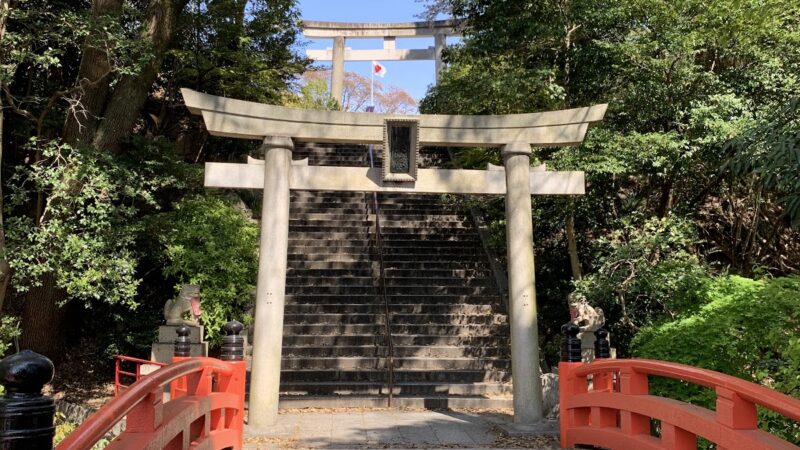
Currently, the Anjo Old Castle site has been largely developed into residential land, and very few clear remains exist. A small earthen mound remains in a small park within the residential area, on which a shrine is enshrined.
An information board is installed in the park, providing information about the history and overview of Anjo Old Castle. Although the earthen mound has shrunk considerably from its original size, it is preserved as a valuable trace indicating the site of a medieval residence.
Location and Access
Location
- Address: Shaguchido, Anjo-cho, Anjo City, Aichi Prefecture
- Location: South of Meitetsu Minami-Anjo Station, along the main road
- Distance from Anjo Castle: Approximately 700 meters west in a straight line
Access Method
Access by Train
- Get off at Meitetsu Nagoya Main Line “Minami-Anjo Station,” approximately 10 minutes on foot
- Head south from the station; the shrine located along the main road is a landmark.
Access by Car
- From National Route 1 or National Route 23, head towards the city center
- There is no dedicated parking lot; please use nearby public parking lots.
Points to Note When Visiting
Anjo Old Castle Ruins are maintained as a small park and can be freely visited at any time. However, since it is located within a residential area, consideration for the surrounding residents is necessary.
The information board contains detailed information about the history of Anjo Old Castle; reading it before your visit will deepen your understanding. Furthermore, visiting Anjo Castle ruins in conjunction with the nearby Anjo Castle ruins allows for a more comprehensive understanding of the medieval history of this region.
Historical Significance of Anjo Castle
Position in the Medieval History of Mikawa Region
Anjo Castle is an important archaeological site for understanding the medieval history of the Mikawa region. It is a valuable example of a single site where the transition from the Heian period’s manorial system to the Kamakura period’s jitō system, and finally to the Muromachi period’s samurai rule, can be traced.
The progression from a manor house of Shiki Manor, to a jitō residence, then the base of the Wada clan, and finally to Anjo Castle, represents a typical pattern in the history of medieval Japanese castles.
Relationship with Anjo Castle
The relationship between Anjo Castle and Anjo Castle is a good example of the development process of castles during the transition from the medieval period to the Sengoku period. The relocation from Anjo Castle, which had a strong residential character, to Anjo Castle, which emphasized defense, was a strategic decision made in response to changing times.
Anjo Castle later became the stage for fierce battles between the Matsudaira and Oda clans, and played a crucial role in the life of Tokugawa Ieyasu. Anjo Old Castle, as a precursor to Anjo Old Castle, is indispensable when discussing the history of the Mikawa Matsudaira clan.
Contribution to the Study of the Manor System
Anjo Old Castle, as the site of the Shiki Manor, is an important historical site for studying the Japanese manor system. It provides clues to how manors were managed and what kinds of facilities were located there.
Studying sites like Anjo Old Castle is essential for understanding the nature of local governance from the late Heian period to the Kamakura period, the roles of manor officials and jitō (land stewards), and the formation process of samurai society.
Nearby Historical Spots
Anjo Castle Ruins
Anjo Castle Ruins, located approximately 700 meters east of Anjo Old Castle, is a must-see spot. This castle was built by Wada Chikahira and later became the residence of the Matsudaira clan. During the time of Matsudaira Hirotada, the father of Tokugawa Ieyasu, it was an important strategic point known as the “key to Mikawa.”
Currently, it is maintained as Anjo Castle Ruins Park, and the remains such as the main keep, earthworks, and dry moats are well preserved. The Anjo Castle Ruins Museum is also located on the premises, where you can learn about the medieval history of this region.
Honsho-ji Temple
Honsho-ji Temple, located in Nodera-cho, Anjo City, is known as a castle-like temple from the Sengoku period. The temple grounds, surrounded by a triple moat, are truly like a castle, and it played an important role as a base for the Ikkō-ikki rebellion.
This temple, which was the stage for the conflict between the Matsudaira clan and the Hongan-ji forces, has a different character from Anjo Old Castle and Anjo Castle, being a military base for religious forces.
Anjo City History Museum
This facility provides a comprehensive learning experience about the history of Anjo City. The museum also features exhibits on Anjo Castle and Ansho Castle, allowing visitors to gain a deeper understanding of the region’s medieval history through excavated artifacts, historical documents, and reconstructed models.
Preservation of Anjo Castle and Future Challenges
Current Preservation Status
Due to residential development, most of the Anjo Castle ruins have been lost. Currently, only a small portion of the earthwork remains within a small park remain. Although information boards are in place, it is difficult to grasp the scale and structure of the castle in its heyday.
Importance of Preservation
Anjo Castle is a valuable historical site that illustrates the realities of local governance from the Heian period to the Muromachi period. Given the current situation where many remains have already been lost, it is crucial to appropriately preserve the remaining earthwork remains and pass on its historical value to future generations.
Future Prospects
Detailed confirmation of the remains through archaeological excavations and comprehensive preservation of the historical environment, including the surrounding area, are desirable. Furthermore, the development of a historical route that allows for a unified understanding of the region’s medieval history, in conjunction with the Ansho Castle ruins, is also anticipated.
Virtual restoration using digital technology and the recreation of its appearance in its heyday using AR (augmented reality) are also worth considering as future applications.
Summary
Anjo Old Castle played a central role in this region from the late Heian period to the Muromachi period, serving as the manor house of Shiki Manor, the residence of the local steward, and the base of the Wada clan. After the Eikyo Rebellion of 1438, Wada Chikahira built Ansho Castle and moved there, leading to the abandonment of Anjo Old Castle. However, it continued to be used by the Matsudaira clan.
Although much of the remains have been lost due to residential development, the few remaining earthworks are valuable traces that tell the story of the medieval history of the Mikawa region. Anjo Old Castle holds important historical significance as a precursor to the development of Ansho Castle, and for understanding the Japanese manorial and steward systems.
Its convenient location within walking distance of Meitetsu Minami-Anjo Station makes it a worthwhile spot to visit for anyone interested in the history of the Mikawa region. Visiting this site in conjunction with the Ansho Castle ruins will allow you to gain a deeper understanding of the historical flow of this region from the medieval period to the Sengoku period.